
Ergonomics
Desk, work setup, and task advice


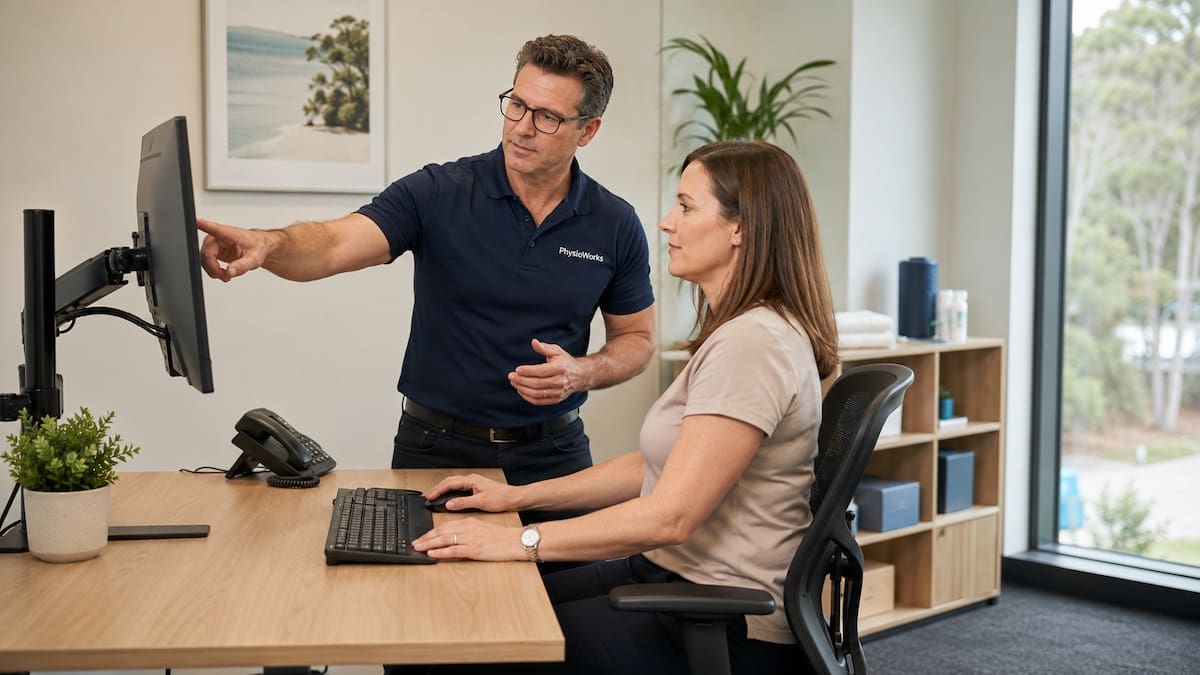
Ergonomics means fitting the task to the person. A poor work setup may add strain to your neck, back, arms, wrists, or hands.
A review looks at how you sit, stand, reach, lift, type, and use tools. It can suit desk work, home work, driving, study, and manual work. For a focused desk check, see our desk review service.
Quick Summary
- Fit the task to your body.
- Change your set-up before strain builds.
- Move often. Do not hold one pose all day.
- Get help if pain keeps coming back.
What Is Ergonomics?
Ergonomics is the way we fit work, tools, and space to the person doing the job. It looks at your body size, strength, job needs, gear, and work habits.
Small changes can help. These may include desk height, chair height, screen level, mouse use, tool choice, load height, or task breaks.
How Can Ergonomics Help Work Pain?
Ergonomics can help find the work habits that may add to pain. Common triggers include long sitting blocks, low screens, awkward reach, heavy lifts, and repeat hand work.
Work-related muscle and joint problems can affect the neck, back, arms, wrists, and hands. Safe Work Australia has a useful guide to work-related musculoskeletal disorders. A physio review can link that advice to your role and symptoms.

Desk habits can add repeated strain over time.
What Happens During a Work Review?
A work review starts with your symptoms, job tasks, and work setup. Your physio then checks the tasks that matter most, such as sitting, lifting, reaching, typing, driving, or tool use.
The review may include:
- chair, desk, screen, keyboard, and mouse setup
- posture and movement during work tasks
- lifting style and load position
- repeat task analysis and break planning
- simple work setup changes
- movement or strength tips where useful
Some roles need a more detailed work role check. In that case, a work role check may suit better.
Common Work Setup Issues
| Task | Common issue | First step |
|---|---|---|
| Desk work | Low screen or long sitting | Raise the screen and move often |
| Laptop work | Bent neck and raised shoulders | Use a stand, keyboard, and mouse |
| Manual work | Load held too far away | Keep the load close |
| Repeat work | Too much of the same task | Swap tasks and take short resets |
Who Can Get Help From Ergonomics?
Work setup advice may help if pain links to a desk, tool, vehicle, bench, lift, or repeat task. It is often useful for people with neck pain, lower back pain, RSI, text neck, or tennis elbow.
Workplaces may also use these checks to support staff comfort and safer job design. Linked services include workplace health, workplace wellness, and pre-hire work check.
Can Ergonomics Help at Home?
Yes. Home work areas often use laptops, dining chairs, small desks, or shared rooms. Simple changes can make the task easier on your body.
You may raise your screen, add a mouse, use a keyboard, support your feet, fix glare, or plan short walk breaks. If posture is a key issue, see our posture guide.
Which Work Service Suits You?
- Desk pain or home office issues: start with a desk review.
- Job demands or return-to-work planning: consider a work role check.
- Workplace-wide support: review workplace wellness options.
When Should You Book a Review?
Book a review when your work setup causes pain, stiffness, fatigue, or loss of work comfort. It is also useful after a new job, new desk, home office change, or return to work after injury.
Seek urgent care for severe pain, spreading weakness, numbness, symptoms after trauma, or signs that do not match a work setup issue.
Is This the Right Service?
This service may suit you if your symptoms link to a clear work task or setup. It can help you choose what to change first.
If your pain is strong, spreading, or not linked to work, book a normal physio review first.
Linked Work Services
Frequently Asked Questions
Why is work setup important?
A good work setup helps reduce strain from poor fit between you and your task. It may improve comfort, ease, and work tolerance.
Can ergonomics help neck and back pain?
It may help when pain links to sitting, screen height, lifting, reach, or repeat tasks. It works best with movement breaks, strength work, and physio advice when needed.
Who needs a review?
Anyone with work pain, repeated strain, or a poor work setup may get help. This includes desk staff, home workers, drivers, trades, and health staff.
What does the review include?
It reviews your setup, work tasks, posture, movement, and symptom triggers. You then get clear changes to try.
Do I need expensive gear?
Not always. Many people start with simple changes, such as screen height, chair setup, a keyboard, a mouse, or work breaks.
Can this apply outside office work?
Yes. It can apply to workshops, clinics, cars, homes, schools, and shared work areas.
What to Do Next
If your work setup or daily tasks keep causing discomfort, book a work review. Your physio can check the main triggers and help you choose clear next steps.
If symptoms keep coming back, read more about lower back pain, neck pain, and RSI.
Choose your clinic and appointment pathway
Select a PhysioWorks clinic to continue to live booking, an appointment request or reception assistance.


References
- Greggi C, Bernetti A, Luzzi S, et al. Work-Related Musculoskeletal Disorders: A Systematic Review and Meta-Analysis. Healthcare (Basel). 2024;12(12):1222. doi:10.3390/healthcare12121222
- Choi J, Mackey MG, Hush JM, et al. An ergonomic intervention to minimise physical and physiological stresses in the office standing workstation. Ergonomics. Published online 2024. doi:10.1080/00140139.2024.2417159
- Chim JMY, Chen TL, Xu RH, et al. Prediction of Work from Home and Musculoskeletal Discomfort: An Investigation of Ergonomic Factors in Work Arrangements and Home Workstation Setups Using the COVID-19 Experience. Int J Environ Res Public Health. 2023;20(4):3050. doi:10.3390/ijerph20043050
