
Hip Adductor Tendinopathy
Hip Adductor Tendinopathy


Hip adductor tendinopathy can cause upper inner-thigh or groin pain during running, kicking, cutting, lunging and other activities that load the adductors. Symptoms often develop gradually when tendon load exceeds its current capacity. Assessment can help identify the likely pain source and guide progressive rehabilitation.
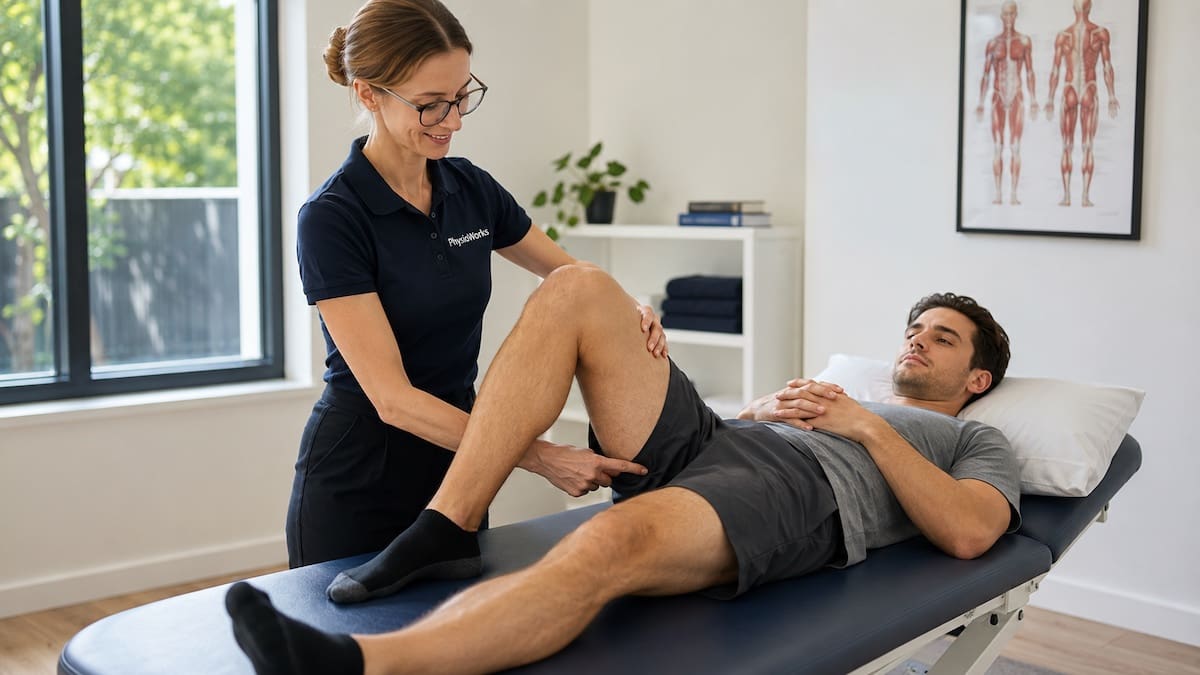
Assessment helps identify whether the adductor tendon or another hip or groin structure may be contributing to pain.
What Is Hip Adductor Tendinopathy?
Hip adductor tendinopathy is pain associated with an adductor tendon, usually near its attachment at the upper inner thigh and pelvis. The adductor muscles help control the hip and generate force during running, kicking, side-stepping and change-of-direction movements.
Symptoms often build gradually rather than starting with the sudden sharp pain more typical of an acute groin strain. Tendon pain can develop when repeated sport, exercise or work demands exceed the tendon’s current capacity and recovery.
What Are the Symptoms of Hip Adductor Tendinopathy?
The symptom pattern varies between people. Pain is commonly felt high in the inner thigh or groin and tends to become more noticeable when the adductors work harder.
- upper inner-thigh or groin pain
- pain or discomfort during sprinting, cutting or kicking
- pain during resisted adduction or inner-thigh squeezing
- stiffness or aching after rest
- symptoms after lunges, stairs, longer walks or sport
- reduced confidence with acceleration or change of direction
Some people notice that symptoms ease as they warm up but return after activity or later that day. This pattern can provide a useful clue, but it does not confirm the diagnosis on its own.
Hip Adductor Tendinopathy or Groin Strain?
Adductor tendinopathy
Symptoms commonly develop gradually and are linked to repeated tendon loading. Pain may persist or recur when training demands continue to exceed current capacity.
Groin strain
A muscle strain more often follows a recognisable acute event, such as sprinting, kicking or rapidly changing direction. Sudden pain and early loss of function may be more prominent.
The two presentations can overlap, and other structures can also cause groin pain. Assessment helps determine which findings are most relevant to your rehabilitation.
What Causes Hip Adductor Tendinopathy?
Hip adductor tendinopathy is usually associated with a mismatch between the load placed on the adductor tendon and its current ability to tolerate and recover from that load. There is rarely one single cause.
Factors that may contribute include:
- a rapid increase in running speed, kicking volume or change-of-direction training
- heavy or rapidly progressed adductor exercises
- returning to sport after a period of reduced training
- limited recovery between demanding sessions
- previous groin pain or reduced adductor strength
- sport or exercise demands that exceed current hip, trunk or lower-limb capacity
These factors do not prove that the tendon is the source of pain. They help build the overall clinical picture.
What Else Can Feel Like Adductor Tendinopathy?
Groin pain can arise from several structures around the hip, pelvis, abdomen and thigh. Depending on your history and examination, your physiotherapist may consider an adductor strain, hip flexor-related pain, pubic or osteitis pubis-related pain, femoroacetabular impingement syndrome or a hip labral tear.
Other causes of groin pain may require medical investigation. Symptoms that are severe, unexplained, rapidly worsening or not behaving like a typical musculoskeletal problem should be assessed appropriately.
How Do Physiotherapists Assess Hip Adductor Tendinopathy?
A physiotherapy assessment considers your symptom history, recent activity and training loads, the location of your pain and how the hip and groin respond to movement and resistance.
Your assessment may include:
- adductor squeeze or resisted adduction testing
- assessment of tenderness around the upper adductor region
- hip movement and strength testing
- functional tasks such as squatting, lunging or single-leg movements
- running, kicking or change-of-direction testing when appropriate
- a review of recent changes in sport, gym or work load
No single symptom or physical test proves adductor tendinopathy. Instead, your clinician combines the history and examination findings while considering other possible sources of groin pain.
Ultrasound or MRI may be useful when symptoms persist, the diagnosis remains unclear or another condition is suspected. However, many people can begin an appropriate rehabilitation program without imaging.
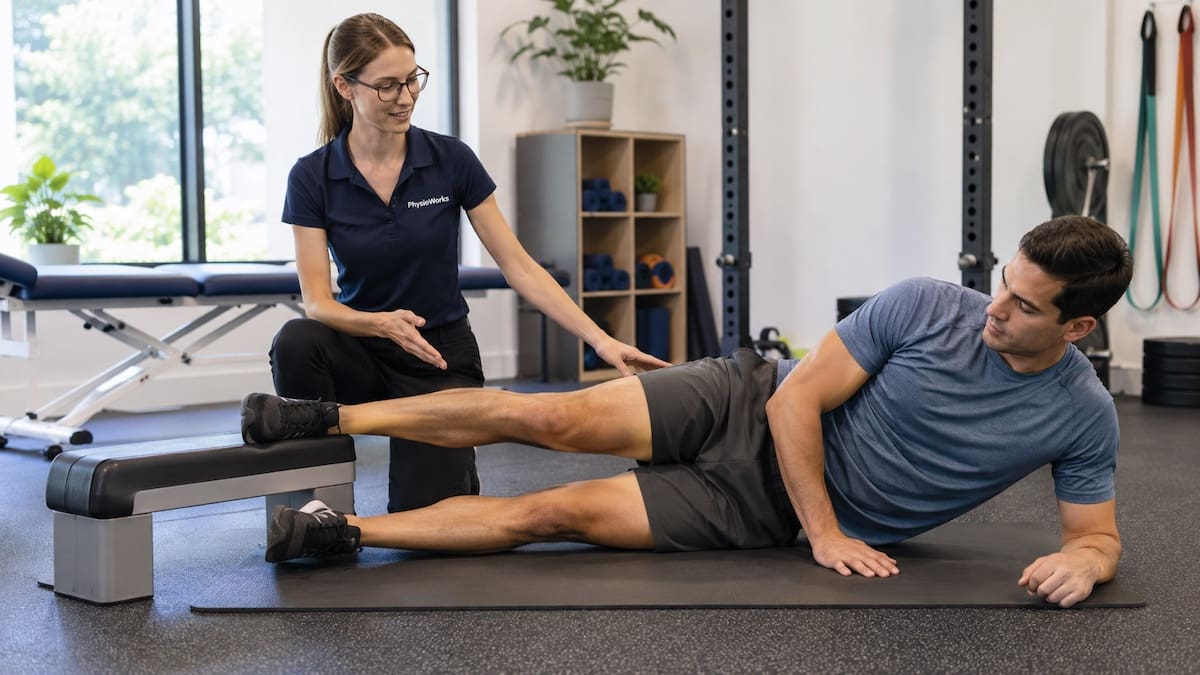
Progressive strengthening can help rebuild adductor capacity for exercise and sport.
How Does Physiotherapy Help Hip Adductor Tendinopathy?
Rehabilitation usually aims to find a manageable starting load and progressively rebuild the strength and capacity needed for your usual activities. The exact program depends on your symptoms, current strength, goals and sport or work demands.
A physiotherapist may use:
- progressive exercise for the adductors, hips and trunk
- temporary changes to aggravating training or exercise loads
- graded progression of running, sprinting, kicking and change-of-direction tasks
- movement and strength assessment to guide exercise progression
- education about recovery, training load and symptom response
- short-term symptom-management strategies when appropriate
Hands-on physiotherapy treatment or remedial massage may help some people manage associated muscle soreness or movement restrictions. However, passive treatment does not replace the progressive loading needed to rebuild tendon and muscle capacity.
Some people with persistent symptoms discuss injection options with their GP or sports physician. These decisions depend on the individual presentation and should sit within an appropriate rehabilitation plan. Read more in our cortisone and PRP injections guide.
How Is Hip Adductor Tendinopathy Rehabilitated?
Rehabilitation is usually progressive rather than based on a fixed timetable. The aim is to build enough capacity for everyday activity first, then progressively prepare the adductors for higher-force tasks when these are relevant to your goals.
-
Manage aggravating load
Temporarily reduce or modify activities that repeatedly provoke a significant flare-up. This may include sprinting, kicking, cutting, deep lunges or demanding adductor exercises.
-
Rebuild adductor strength
Begin strengthening at a level you can tolerate and progressively increase resistance, range or exercise difficulty as capacity improves.
-
Restore higher-load movement
Progress towards faster and more demanding tasks such as lateral movement, acceleration, deceleration and change of direction when these match your activity needs.
-
Return to training and sport
Gradually restore the running speed, kicking, cutting and overall training volume required for your sport rather than moving directly from rehabilitation exercises to unrestricted competition.
Can You Keep Exercising With Hip Adductor Tendinopathy?
Complete rest is not always necessary. Many people can continue some exercise while temporarily modifying the activities that cause a substantial or lasting increase in symptoms.
During exercise
Monitor how the groin responds as load, speed and exercise difficulty increase. A marked increase in pain or altered movement can indicate that the current task needs modification.
After exercise
Consider whether symptoms settle after the session or remain noticeably worse. Your response helps guide the next training dose.
Next day
A clear increase in pain, stiffness or loss of function may indicate that the previous load exceeded your current tolerance.
There is no single pain threshold or 24-hour rule that suits everyone. Your physiotherapist can help determine an appropriate level of activity and progression for your presentation.
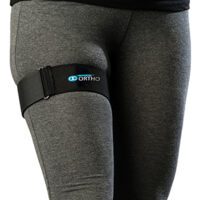
A groin strap may help some people feel more comfortable during selected activities. It should not replace progressive rehabilitation.
Why Can Adductor Tendon Pain Persist?
Adductor tendon symptoms can change according to training load, current strength and capacity, recovery and the demands of your activity. Pain does not necessarily progress through a predictable series of tendon stages, and symptoms do not always match the amount of structural change seen on imaging.
Rest may reduce symptoms temporarily, but prolonged unloading can also leave the adductors less prepared for demanding activity. Rehabilitation therefore aims to identify a tolerable starting point and progressively rebuild capacity.
Long-standing symptoms may require more time and structured progression, particularly when your goal involves sprinting, kicking, rapid direction changes or high training volumes.
When Should You Seek Further Assessment?
Related Groin and Hip Conditions
Hip & Groin Pain
Explore common causes of hip and groin pain and the next useful steps.
Groin Strain
Learn about acute adductor muscle injuries, symptoms and rehabilitation.
Hip Flexor Pain
Compare another common source of pain around the front of the hip and groin.
Tendinopathy
Learn more about tendon pain, loading and rehabilitation principles.
Frequently Asked Questions
What causes hip adductor tendinopathy?
Hip adductor tendinopathy commonly develops when repeated loading exceeds the adductor tendon’s current capacity and recovery. Changes in sprinting, kicking, cutting, gym loading or overall training can contribute. Previous groin pain and reduced adductor capacity may also be relevant.
How do you treat hip adductor tendinopathy?
Rehabilitation commonly combines temporary load modification with progressive adductor strengthening and a graded return to higher-load activities. The program should match your symptoms, current capacity and activity goals.
Can I run with hip adductor tendinopathy?
Some people can continue running while adjusting speed, distance, hills or other aggravating loads. Others need a temporary reduction before rebuilding. Your symptom response during and after running can help guide progression.
Is hip adductor tendinopathy the same as a groin strain?
No. Adductor tendinopathy involves tendon-related pain that commonly develops gradually, while a groin strain is an acute muscle injury that often follows a recognisable event. The presentations can overlap, so assessment can help distinguish them.
How long does hip adductor tendinopathy take to recover?
Recovery varies. Some people improve over weeks, while long-standing symptoms or high sporting demands may require several months of progressive rehabilitation. Progress depends on factors such as symptom duration, strength, training demands and consistency with rehabilitation.
Do I need an MRI or ultrasound for hip adductor tendinopathy?
Not always. Many people can begin rehabilitation after a clinical assessment. Imaging may be considered when symptoms persist, the diagnosis is unclear or another cause of groin pain is suspected.
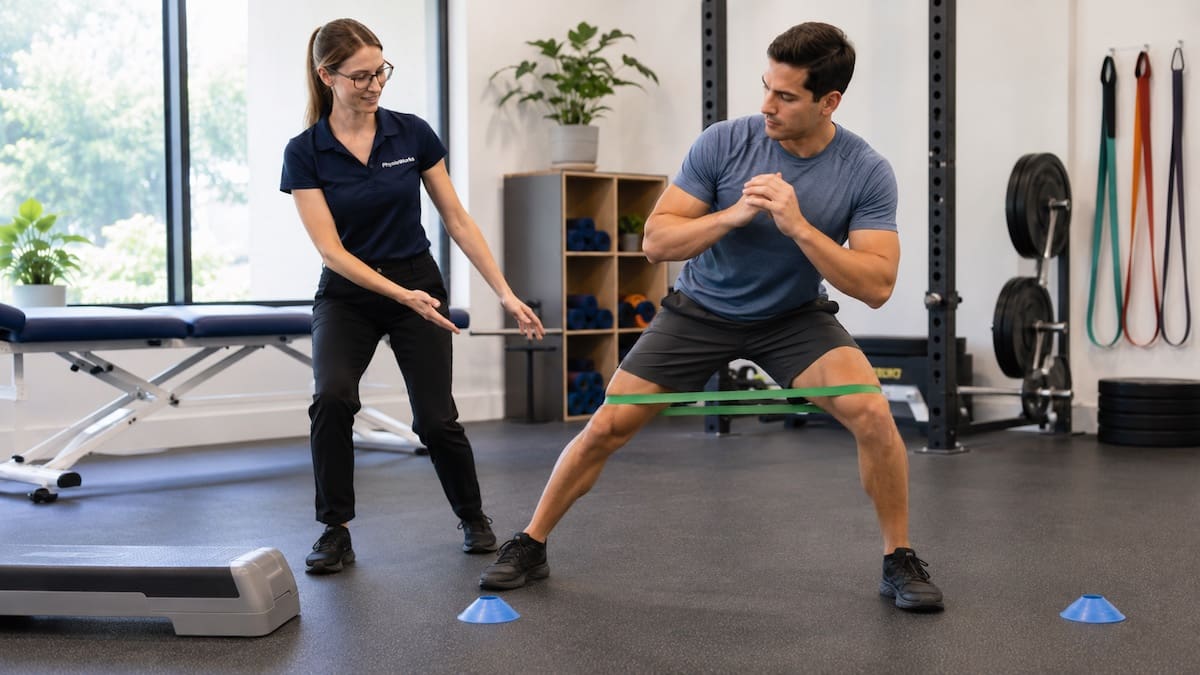
Later rehabilitation can prepare the hip and groin for higher-load movement and return to sport.
What to Do Next
If groin pain keeps returning, limits your running, gym training or sport, or you are unsure whether the adductor tendon is the source, a physiotherapy assessment can help clarify the presentation.
Your physiotherapist can assess your hip and groin, review the loads that provoke your symptoms and develop a progressive rehabilitation plan based on your current capacity and goals.
Choose your clinic and appointment pathway
Select a PhysioWorks clinic to continue to live booking, an appointment request or reception assistance.
Groin Products
These groin products are commonly used by our physiotherapists to improve groin pain, strength, balance, proprioception, endurance and flexibility, plus assist home exercise programs.
- Liniments & Gels, Massage Liniments, Pain Management
Fisiocrem
$16.95 – $39.95Select optionsQuick View -

-
-
-
-
-
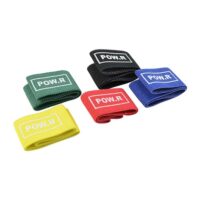 Exercise Equipment, Knee, Resistance Band
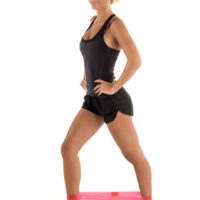
POW.R Fabric Mini Loop Bands
$12.00 – $55.00Select optionsQuick View -
-
-
-
 Exercise Equipment, Resistance Band
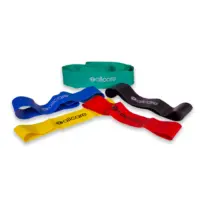
AllCare Powerloop Bands
$24.95 – $79.95Select optionsQuick View -
-
-
 Ankle, Back, Braces & Supports, Calf, Foot, Groin, Heel, Hip, Knee, Thigh, Walking
Forearm Crutches
$64.00Select optionsQuick View




Follow PhysioWorks
Follow PhysioWorks for practical information about injury rehabilitation, exercise and returning to activity.


References
- Burton I, McCormack A, Reeve A, et al. Blood flow restriction resistance training in tendon rehabilitation and healthy tendons: a systematic review. Front Sports Act Living. 2022;4:879860.
- Thorborg K. Current clinical concepts: exercise and load management of adductor strains, adductor ruptures, and longstanding adductor-related groin pain. J Athl Train. 2023;58(7-8):589-601. doi:10.4085/1062-6050-0496.21.
- Dinis J, Oliveira JR, Choupina B, et al. Athletes with adductor-related groin pain: a narrative review. Cureus. 2024;16(9):e68625.
- Escriche-Escuder A, Casaña J, Cuesta-Vargas AI. Load progression criteria in exercise programmes in lower limb tendinopathy: a systematic review. BMJ Open. 2020;10(11):e041433.
