
Softball Injuries
Softball Injuries
Understand common softball injuries, warning signs, rehabilitation priorities and how to return gradually to throwing, batting, running and fielding.


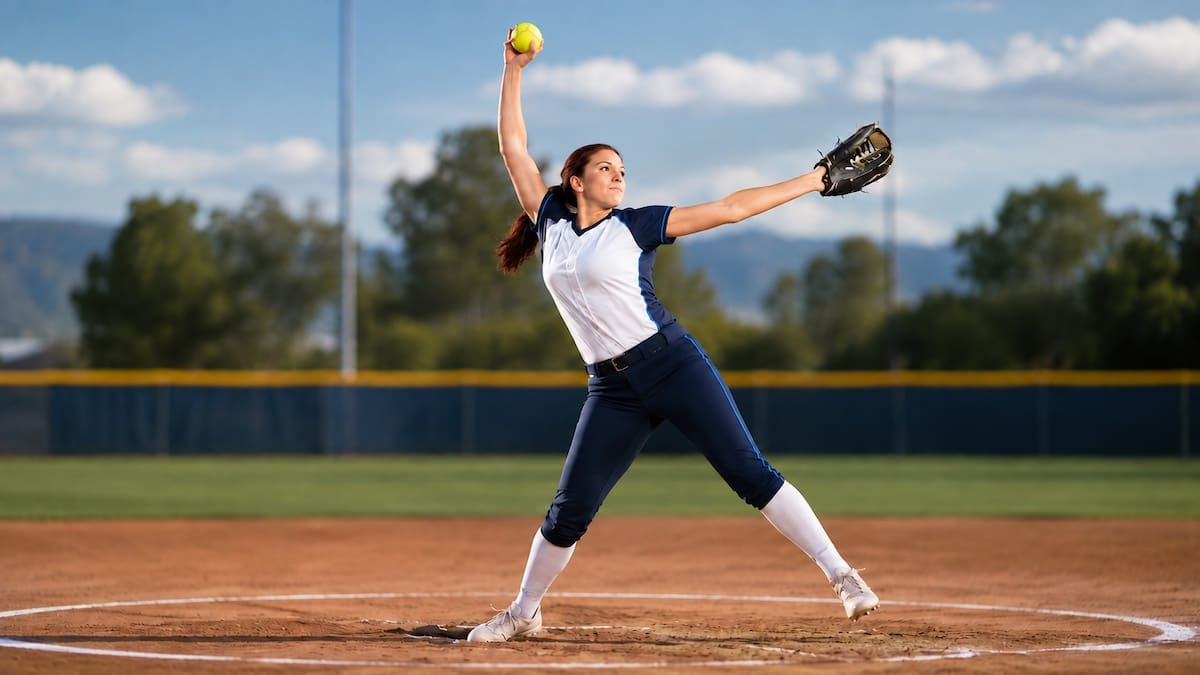
What are softball injuries?
Softball injuries can occur during pitching, throwing, batting, sprinting, changing direction, sliding and fielding. These actions repeatedly load the shoulder, elbow, trunk, hips and legs.
Some injuries follow one clear incident, such as an ankle sprain while changing direction. Others build gradually, including rotator cuff pain after repeated throwing.
This guide explains common softball injury patterns, contributing factors, rehabilitation priorities and when professional assessment may help.
What softball injury signs should you watch for?
Symptoms can vary with the injured area and the demands of your position. Common warning signs include:
-
shoulder pain during throwing or after games;
-
elbow soreness, stiffness or reduced throwing power;
-
hand or wrist pain after catching, batting or ball impact;
-
knee or ankle pain during sprinting, pivoting or sliding;
-
hamstring, calf, groin or lower-back tightness;
-
swelling, bruising or reduced movement after an impact;
-
reduced throwing speed, distance or accuracy; and
-
pain that continues into the next day or changes normal training.
Throwing injuries
The shoulder and elbow may become painful when repeated throwing exceeds current strength, control or recovery capacity.
Running injuries
Sprinting, stopping and changing direction can load the ankle, knee, calf, hamstring and groin.
Impact injuries
Ball contact, sliding, falls and player collisions can cause bruising, fractures, joint injuries or concussion.
What are the physical demands of softball?
Softball combines brief periods of explosive movement with repeated technical actions. Players may need to accelerate rapidly, throw at speed, rotate through batting, squat while fielding and change direction under pressure.
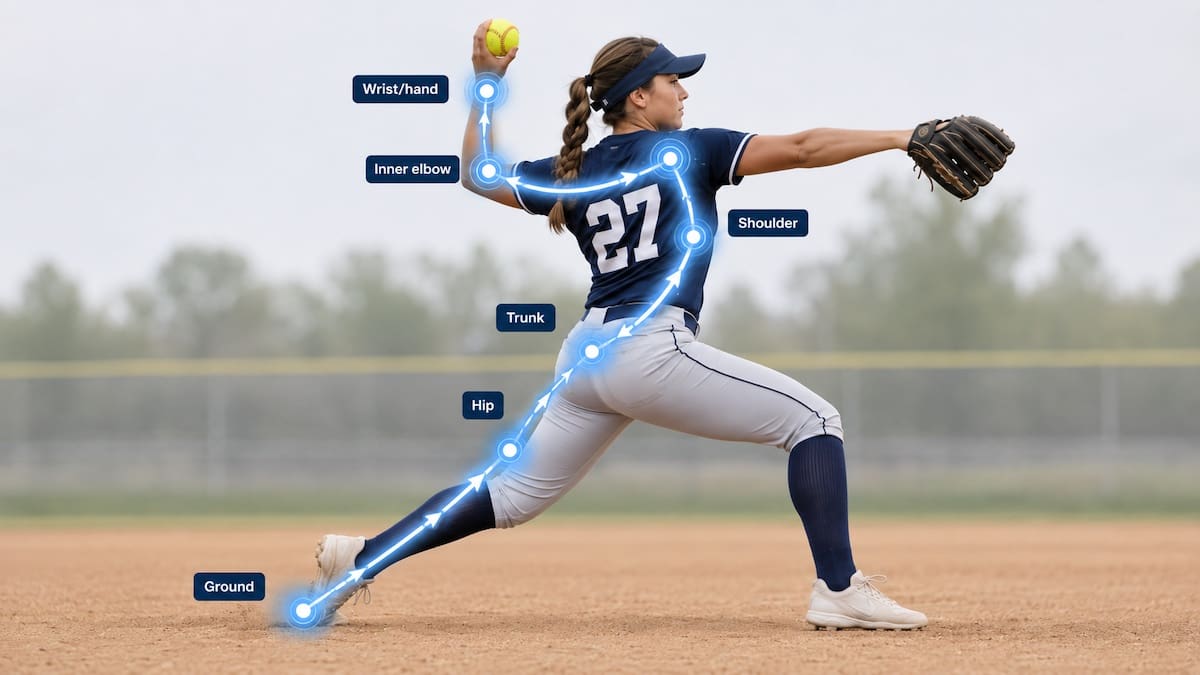
Throwing transfers force from the legs and hips through the trunk to the shoulder, elbow, wrist and hand. Batting also relies on lower-limb force, trunk rotation and coordinated upper-limb movement.
Running between bases, chasing the ball and sliding place different demands on the hips, knees, ankles and lower-leg muscles. Catchers may also spend prolonged periods in a deep squat.
As part of the wider sports injuries group, softball injuries overlap with problems seen in throwing, running and other team sports.
What are the most common softball injuries?
Softball injury patterns depend on playing position, age, training history and match demands. Common presentations include:
Shoulder injuries
Repeated pitching and field throwing can irritate the rotator cuff, shoulder joint and muscles that control the shoulder blade.
Elbow injuries
The inner or outer elbow may become painful when throwing volume, force or fatigue exceeds current capacity.
Hand and wrist injuries
Catching, batting, diving and ball impact can cause sprains, bruising, tendon pain or fractures.
Knee injuries
Pivoting, rapid stopping, awkward landings and sliding can affect knee ligaments, cartilage, tendons and surrounding muscles.
Ankle sprains
An ankle may roll during base running, fielding or rapid direction changes, particularly on an uneven or slippery surface.
Muscle strains
Explosive sprinting and batting can strain the hamstring, calf, groin, abdominal or lower-back muscles.
Head or facial impacts can also occur after contact with the ball, ground or another player. Follow an appropriate concussion assessment and return-to-sport process after a suspected concussion.
Why do softball injuries happen?
Injury risk can rise when the demands of softball exceed the player’s current physical capacity. This mismatch may develop suddenly or accumulate over several training sessions and games.
Sudden incidents
Falls, sliding, collisions, awkward pivots and ball impact can cause an immediate injury.
Repeated throwing load
Pitching and frequent field throwing may gradually irritate the shoulder or elbow when recovery is insufficient.
Rapid workload changes
Extra training, tournament schedules or playing for several teams can increase load faster than the body adapts.
Incomplete rehabilitation
Returning before strength, movement control or sport confidence has recovered may contribute to recurring symptoms.
Technique, conditioning, sleep, previous injury, playing surface and equipment may also influence the load placed on an individual player.
Why is throwing a whole-body movement?
A softball throw does not come from the shoulder alone. Force develops through the legs and hips before transferring through the trunk, shoulder, elbow, wrist and hand.
When one area contributes less effectively, another region may need to absorb or produce more force. For example, reduced hip or trunk contribution may increase the demand placed on the throwing arm.
A throwing assessment may therefore consider lower-limb strength, trunk rotation, shoulder movement, elbow control and the player’s overall throwing volume.
Why do softball players develop shoulder and elbow pain?
Repeated throwing places high demands on the shoulder muscles, shoulder blade control and elbow structures. Symptoms may develop when throwing volume, speed, fatigue or technique changes faster than the arm can tolerate.
Players may notice pain during acceleration, release or follow-through. Others report stiffness after a game, reduced accuracy or a loss of throwing distance.
Possible presentations include rotator cuff injuries, shoulder joint irritation, shoulder impingement symptoms and elbow tendon or ligament overload.
The location of pain alone does not confirm the diagnosis. An assessment may be useful when pain persists, alters throwing technique or returns whenever throwing load rises.
Are softball pitchers at different injury risk?
Fastpitch softball pitching uses a windmill action rather than the overarm action used by most fielders. However, repeated pitching can still place substantial load on the shoulder, upper arm, trunk and hips.
Pitchers may face high cumulative workloads during training, tournaments and representative competition. Fatigue can affect movement timing and reduce the contribution of the legs or trunk.
Persistent pain, reduced control, slower pitching or symptoms that continue into the next day may indicate that workload needs to change. A gradual pitching progression should account for intensity, total pitches, innings, games and recovery between sessions.
How do lower-limb softball injuries occur?
Lower-limb injuries often occur during acceleration, rapid stopping, direction changes, fielding and sliding. These actions place substantial load on the hips, knees, ankles and lower-leg muscles.
Ankle sprains may occur when a player lands or pivots awkwardly. Knee injuries may follow twisting, sudden deceleration or contact. Hamstring and calf strains can develop during explosive sprinting, particularly when a player has had limited recent running exposure.
Rehabilitation should restore more than straight-line jogging. Players usually need to rebuild acceleration, deceleration, lateral movement, fielding positions and sliding-related confidence before returning to unrestricted play.
Can sliding cause softball injuries?
Sliding can cause impact injuries, ankle or knee sprains, skin abrasions and hand or finger injuries. Risk may rise when the player reaches towards the base with an extended arm, catches a foot in the ground or uses an unfamiliar sliding technique.
Where appropriate, players should practise sliding skills in a controlled setting before using them at match speed. Protective equipment, field condition and competition rules also influence sliding safety.
Can equipment and field conditions contribute to injury?
Equipment does not explain every injury, but it can alter the forces applied to the body. Footwear should suit the playing surface and provide appropriate traction without unnecessarily restricting movement.
Bat size and weight may influence swing timing and upper-limb load. Gloves, protective equipment and catcher’s equipment should fit correctly and suit the player’s role.
Wet, uneven or poorly maintained playing surfaces can affect footing during sprinting, fielding and sliding. Players and coaches should address unsafe field conditions before play where possible.
How may softball players reduce injury risk?
No strategy can prevent every softball injury. However, appropriate preparation and workload planning may improve a player’s capacity to tolerate training and competition.
-
Build throwing and pitching load gradually
Increase distance, speed and total volume progressively rather than changing every variable at once.
-
Use a structured warm-up
Include general movement, running drills, shoulder preparation and a progressive throwing sequence.
-
Strengthen the whole movement chain
Train the shoulder, upper back, trunk, hips and legs rather than focusing only on the painful area.
-
Practise sport-specific movement
Include acceleration, stopping, lateral movement, landing, fielding and sliding skills where appropriate.
-
Monitor recovery
Review soreness later that day and the following morning, particularly during tournaments or workload increases.
How are softball injuries treated?
Treatment depends on the injured structure, severity, playing position and stage of the season. Early management may involve protecting the injured area, reducing aggravating load and restoring comfortable movement.
Rehabilitation usually progresses towards strength, power, balance, running, throwing and position-specific skills. The aim is not simply to settle pain. The player also needs enough capacity to tolerate softball training and competition.
A physiotherapist may assess the injury and contributing factors before developing an individual physiotherapy treatment and rehabilitation plan.
Throwing rehabilitation
May include shoulder and shoulder-blade strength, trunk control, lower-limb force and a graded throwing program.
Running rehabilitation
May include calf, hamstring, quadriceps and hip strength followed by acceleration and change-of-direction drills.
Fielding rehabilitation
May include squatting, reaching, lateral movement, ground-ball drills and repeated position-specific actions.
Healthdirect provides further general information about the role of physiotherapy in assessment and rehabilitation.
When can you return to softball after an injury?
Return time varies with the injury, its severity and the player’s role. A pitcher may need a different progression from a catcher, infielder or base runner.
Before unrestricted competition, the player should usually tolerate the important tasks of their position with suitable movement control and an acceptable response afterwards.
-
Restore daily movement and basic strength
Walking, stairs, lifting and routine arm movement should be manageable before higher sporting loads begin.
-
Rebuild running and direction changes
Progress from straight-line running to acceleration, stopping, lateral movement and base-running demands.
-
Start a graded throwing or pitching program
Begin with controlled efforts and increase distance, speed or volume one variable at a time.
-
Add batting and fielding drills
Reintroduce ground balls, catching, batting, reaching and repeated position-specific movement.
-
Complete controlled team training
Build exposure to normal training pace, decision-making, fatigue and recovery before unrestricted competition.
Some discomfort during rehabilitation does not always mean further injury. However, sharp pain, increasing swelling, altered technique or a worsening next-day response may indicate that the progression is too fast.
When should a softball injury be assessed?
Arrange an assessment when pain affects throwing, batting, running, fielding or normal training. Earlier review may also help when symptoms repeatedly settle with rest but return as soon as softball load increases.
-
Shoulder or elbow pain continues after throwing.
-
Throwing speed, distance or accuracy has dropped.
-
A joint feels unstable, catches or locks.
-
Swelling, bruising or marked tenderness develops.
-
Pain affects walking, running or weight-bearing.
-
Numbness, pins and needles or weakness appears.
-
A young athlete develops recurring shoulder or elbow symptoms.
-
Symptoms continue despite an appropriate reduction in training load.
What should you do next?
If softball pain is affecting your throwing, pitching, batting, sprinting or fielding, an assessment may help clarify the injury and identify the next rehabilitation step.
PhysioWorks physiotherapists can assess the painful area, review relevant softball movements and guide a rehabilitation plan matched to your position, current capacity and playing goals.
Choose your clinic and appointment pathway
Select a PhysioWorks clinic to continue to live booking, an appointment request or reception assistance.
Softball injury FAQs
What are the most common softball injuries?
Softball injuries commonly affect the shoulder, elbow, hand, wrist, knee, ankle, hamstring, calf and lower back. Ball impact, falls and player contact can also cause facial injuries, fractures or concussion.
Why does my shoulder hurt after throwing a softball?
Repeated throwing can overload the rotator cuff, shoulder joint and muscles that control the shoulder blade. Throwing volume, fatigue, reduced strength, previous injury and changes in technique may contribute.
Can softball pitching cause shoulder or arm pain?
Yes. Repeated windmill pitching can place substantial load on the shoulder, upper arm, trunk and hips. Persistent pain, reduced control or soreness that continues into the following day should not be ignored.
Should I keep throwing when my shoulder or elbow hurts?
Stop high-effort throwing when pain is sharp, worsening or changing your speed, accuracy or technique. Complete rest is not always necessary, but throwing load may need to be reduced until the cause and safe progression are clearer.
How long should I rest from softball throwing after an injury?
The appropriate rest period depends on the injury and its severity. Return usually works better through a graded throwing or pitching program than through a fixed number of rest days.
When can I return to softball after an ankle or knee injury?
Return is more appropriate when you can run, stop, change direction, field and complete position-specific drills with suitable strength and control. You should also recover acceptably after training.
Can I reduce my risk of another softball injury?
No strategy prevents every injury. Gradual workload increases, suitable strength training, a structured warm-up, sport-specific movement practice and complete rehabilitation may reduce avoidable risk.
When does a softball injury need urgent medical care?
Seek urgent care after an obvious deformity, suspected fracture or dislocation, severe swelling, loss of circulation or sensation, significant head impact, worsening concussion symptoms or an inability to use the injured limb.
References
- Feeley BT, Schisel J, Patel N, et al. Fastpitch softball injuries: epidemiology, biomechanics, and injury prevention. Curr Rev Musculoskelet Med. 2024;17(3):135-145. doi:10.1007/s12178-024-09919-z.
- Veillard KL, Clifton DR, Onate JA, et al. Epidemiology of injuries in National Collegiate Athletic Association softball, 2014-2015 through 2018-2019. J Athl Train. 2021;56(7):734-741. doi:10.4085/1062-6050-0365.20.
- Shanley E, Rauh MJ, Michener LA, Ellenbecker TS. Incidence of injuries in high school softball and baseball players. J Athl Train. 2011;46(6):648-654. doi:10.4085/1062-6050-46.6.648.
