

- Description
- Additional information
Description
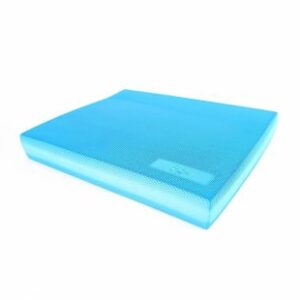
66fit Balance Pad, balance pad for physiotherapy, ankle rehabilitation, core stability training
Why use the 66fit Balance Pad?
Balance issues often show up after an ankle sprain, knee injury, or time away from activity. Even when pain settles, your body can lose proprioception (your awareness of joint position and movement). As a result, you may feel unsteady, react slower, or roll an ankle again on uneven ground.
The 66fit Balance Pad helps by creating a safe, slightly unstable surface that makes your stabilising muscles work harder. That matters for rehab and injury prevention because better joint control supports more confident walking, running, jumping, and direction changes. Physiotherapists often include balance training as part of ankle rehab planning, and it commonly features in advice for a sprained ankle recovery plan because it helps restore control alongside strength and movement work.
How does it work?
The 66fit Balance Pad uses high-density foam that compresses under your body weight. This creates controlled “wobble” without a harsh or unpredictable surface. Consequently, your ankles, knees, hips, and trunk must make constant small corrections to keep you steady, which trains coordination and reaction time.
Additionally, the textured non-slip surface helps reduce slip risk during exercise. The pad is lightweight, water-resistant, and easy to clean, so it suits clinic use as well as home programs. You can also progress difficulty without adding heavy load, which helps early rehab stages and technique-focused training. For extra trunk support work, many people pair balance drills with a structured core stability training plan, especially if posture and control limit performance or comfort.
What is it used for?
The 66fit Balance Pad suits rehab, training, and general movement quality. It works well for:
- Ankle rehabilitation: single-leg stands, stepping drills, and return-to-running prep after an ankle sprain.
- Knee control training: balance and landing-control progressions after ligament irritation, guided by your clinician, and supported by broader knee stability education in the knee ligament injury guide.
- Core and postural control: squats, lunges, and anti-rotation tasks on an unstable surface to increase stabiliser activation.
- Warm-ups and muscle activation: short balance sets before sport, gym sessions, or runs.
- Seated posture training: as a sitting aid to encourage active trunk engagement during desk work or home study.
Who does it suit, and when is it most helpful?
This pad suits beginners through to athletes because you can scale the task. Beginners can start with two-leg standing near a bench or wall, then progress to single-leg balance once they can hold steady. Athletes often use the pad for faster reaction drills, landing control, and change-of-direction preparation. It is particularly helpful early-to-mid rehab, when you need more challenge than flat ground but you still want a controlled environment.
Daily use can be simple. Start with 2–3 sets of 30–60 seconds of balance work, and progress gradually to mini-squats, reach tasks, or stepping patterns. If pain spikes, swelling increases, or you feel unstable, a physiotherapist can adjust your plan and confirm what is safe for your stage of recovery.
Progressions and add-ons (non-competing associated products)
If you want a higher-level balance challenge, progress to a wobble board once you can control the pad confidently. The AllCare Wobble Board adds multi-direction movement and suits later-stage rehab or ongoing injury prevention. For strength progressions that support hip and knee control, add resistance work with POW.R Fabric Mini Loop Bands, which pair well with glute activation and lower-limb alignment drills.
Key benefits
- Improves balance, coordination, and reaction time
- Supports proprioception retraining after ankle and knee injuries
- Boosts stabiliser muscle activation without heavy loading
- Non-slip, water-resistant, and easy to clean
- Lightweight and portable for home, clinic, or gym use
Size
- Dimensions: 48cm x 40cm x 6.2cm
FAQs: 66fit Balance Pad
What is a balance pad used for?
A balance pad helps improve proprioception, joint control, and coordination by making you stabilise on a slightly unstable surface. Physiotherapists often include it in lower-limb rehab and injury prevention programs, particularly when someone needs better ankle and knee control. If your balance work relates to an ankle sprain, the guidance in the sprained ankle recovery guide can help you plan safe progressions based on symptoms and goals.
Is a balance pad good for ankle rehabilitation?
Yes. After an ankle sprain, people often lose joint position sense and reaction speed. A balance pad retrains these systems so the ankle responds faster to small slips or uneven surfaces. Over time, this can support confidence and reduce repeat “rolling” episodes, and the chronic ankle instability guide explains why ongoing balance work matters when instability keeps returning.
Can beginners use a balance pad safely?
Most beginners can start safely with simple drills, such as standing with both feet on the pad near a stable support. Progression matters, so build from steady holds to single-leg work and then to dynamic tasks. If you feel unstable, a physiotherapist can tailor an exercise plan that targets core and control while keeping your workload appropriate.
Does a balance pad strengthen your core?
A balance pad can increase activation of deep trunk muscles because your body has to keep you upright while your feet shift slightly. That said, it works best as part of a broader strength plan, and a structured core stability training program can help you progress from basic holds to functional movement patterns.
How often should I use a balance pad?
Many rehab programs include balance work 3–4 days per week. Some early programs use short daily sessions, especially if you tolerate them well. Start with brief sets, then increase duration or complexity before adding lots of extra volume, because quality matters more than fatigue for balance training.
Is a balance pad useful for knee control and ligament rehab?
It can be, especially for improving coordination and movement control during squats, stepping drills, and landing preparation. Knee rehab often needs a blend of strength, control, and graded exposure to sport tasks. For a practical overview of ligament-related symptoms and return-to-activity planning, the knee ligament injury guide provides helpful context that supports safer exercise choices.
Related PhysioWorks Articles
Sprained Ankle Treatment & Recovery — Learn what to do early and how to progress rehab safely.
Core Stability Training — Build trunk control that supports balance and movement quality.
Chronic Ankle Instability — Why ankles keep rolling and how to restore confidence.
External Evidence Link
PubMed evidence on balance and proprioception training for ankle injury prevention is available via Balance Training and Ankle Injury Prevention (PubMed), and it supports the role of structured balance work as part of injury risk reduction.
What to do next
If you want faster progress and fewer setbacks, book a physiotherapy assessment so your clinician can confirm your stage, set the right progressions, and match balance work to your sport or daily demands. Start simple, progress gradually, and aim for quality control on every repetition so your balance training transfers into real-life movement.
Additional information
| Weight | .7 kg |
|---|---|
| Dimensions | 20 × 60 × 60 cm |