
Lumbar Facet Joint Pain


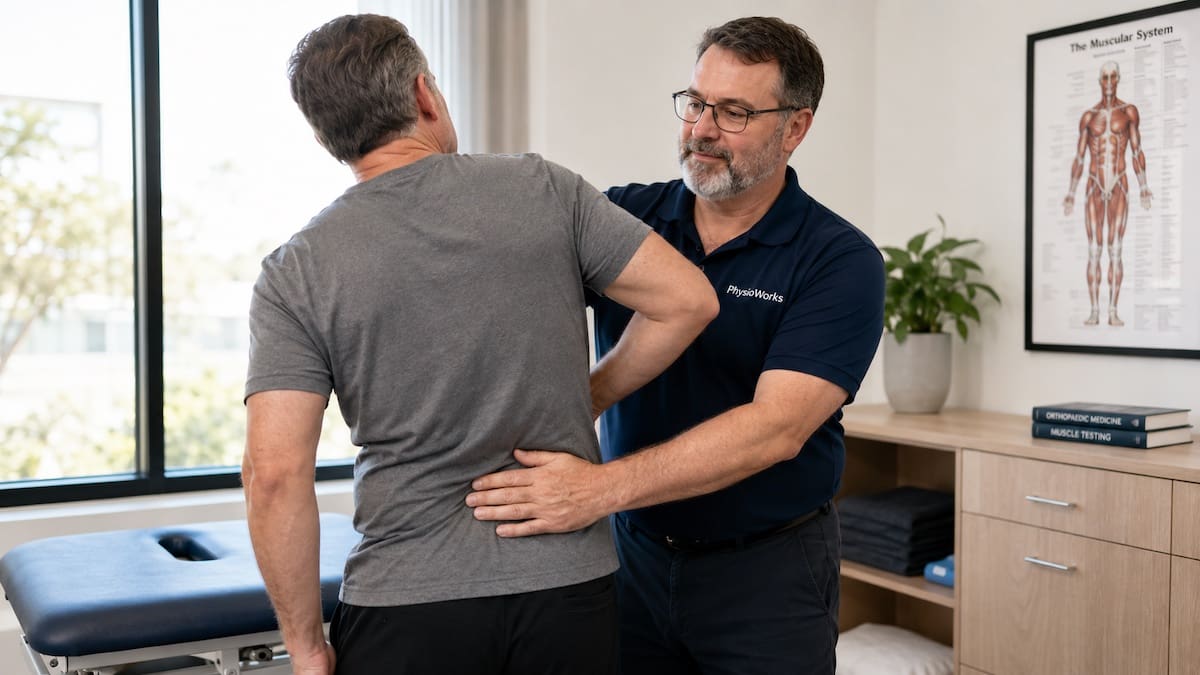
Lumbar facet joint pain can feel sharp, one-sided, and worse when you arch backwards, twist, roll in bed, or stand after sitting. It often causes local stiffness and tenderness beside the lower spine. Pain may also refer into the buttock, hip, or upper thigh.
Facet joints sit at the back of the lumbar spine. They help guide extension, rotation, and side-bending. Because discs, nerves, muscles, and sacroiliac joints can cause similar pain, a clear assessment helps identify the most likely driver. For broader context, see our lower back pain overview and sciatica guide.
Quick answer: lumbar facet joint pain usually causes local low back pain that is worse with arching, twisting, prolonged standing, or moving after rest.
Best next step: keep moving within comfort, avoid repeated end-range arching during a flare, and seek assessment if pain persists, keeps returning, or spreads with pins and needles, numbness, or weakness.
What Is Lumbar Facet Joint Pain?
Lumbar facet joint pain is low back pain linked to irritation, stiffness, or overload of the small joints at the back of the lumbar spine. These joints guide spinal movement. When they become sensitive, nearby muscles may tighten to protect the area.
Many people describe a “caught”, “pinching”, or “locked” feeling in one spot. The pain often feels worse when the lower back moves into extension or rotation. This pattern helps separate facet-related pain from some forms of disc-related back pain, although symptoms can overlap.
Common Symptoms of Lumbar Facet Joint Pain
- One-sided low back pain, often beside the spine
- Pain with arching backwards, twisting, or rolling in bed
- Morning stiffness or pain after sitting
- Tenderness over the lower lumbar joints
- Referred ache into the buttock, hip, or upper thigh
- Muscle spasm that makes movement feel guarded
Facet-related pain usually does not travel below the knee. If symptoms include pins and needles, numbness, calf pain, or weakness, a physiotherapist may screen for nerve irritation, including sciatica or a pinched nerve.
Why Does Lumbar Facet Joint Pain Happen?
Facet joints can become painful when they are overloaded, compressed, stiff, or irritated. Sometimes the trigger is obvious, such as an awkward lift, sudden twist, fall, or training spike. At other times, symptoms build gradually with repeated postures or reduced trunk capacity.
Common Contributing Factors
- Repeated back arching, twisting, or extension-based loading
- Prolonged sitting followed by sudden movement
- Reduced hip strength or trunk endurance
- Work, gym, garden, or sport load increases
- Sleep disruption, stress, and poor recovery
- Age-related joint change, including facet joint arthropathy or spondylosis
Arthritic changes may appear on scans, but imaging alone does not prove that the facet joint is the main pain source. A good clinical assessment looks at symptoms, movement behaviour, tenderness, strength, nerve signs, and daily loading patterns.
Locked Facet Joint vs Facet Irritation
A “locked” facet joint feeling often means pain and protective spasm are restricting comfortable motion. It may happen after a twist, awkward lift, sudden reach, or unexpected step. The joint may feel stuck, but the restriction usually relates to pain and guarding, not a joint being permanently out of place.
Facet irritation can be less dramatic. It may feel like a recurring low back niggle that worsens with arching, standing, lifting, or rotating. Over time, the body may compensate through nearby joints, hips, or muscles. This can keep lumbar facet joint pain active unless the full movement pattern is addressed.
Can Lumbar Facet Joint Pain Cause Sciatica?
Lumbar facet joint pain usually causes local low back, buttock, hip, or upper thigh pain. It is less likely to cause true sciatica, which involves nerve irritation and may travel down the leg.
However, facet-related pain can feel “sciatica-like” when muscle spasm, joint irritation, or altered movement affects nearby tissues. If pain travels below the knee, or you notice pins and needles, numbness, or weakness, seek assessment promptly.
How Is Lumbar Facet Joint Pain Diagnosed?
A physiotherapist will start with your history and a targeted physical examination. They will usually check spinal movement, hip movement, joint stiffness, muscle control, functional tasks, and nerve-related signs. This helps separate facet-related pain from disc, nerve, sacroiliac joint, hip, or muscle-related pain.
Imaging such as X-ray, CT, or MRI may show joint change, but scan findings must match your symptoms. In persistent cases, doctors may use diagnostic medial branch blocks to help confirm facet-mediated pain before considering procedures such as radiofrequency ablation.
For people with wider symptoms, it can also help to review related back pain patterns, including spinal stenosis, sacroiliac joint pain, and pulled back muscle.
Treatment Options for Lumbar Facet Joint Pain
Most people start with conservative care. Physiotherapy usually focuses on easing pain, restoring comfortable movement, improving trunk and hip control, and building tolerance for the activities that matter to you.
| Treatment focus | Why it helps | Common examples |
|---|---|---|
| Settle pain and spasm | Helps you move more freely and sleep more comfortably. | Gentle mobilisation, soft tissue work, heat, walking, pacing. |
| Restore movement | Reduces guarding and helps the spine and hips share load. | Mobility drills, hip movement, graded lumbar motion. |
| Build control and capacity | Improves tolerance for lifting, standing, sport, and work tasks. | Core control, hip strength, progressive loading. |
| Prevent repeat flare-ups | Targets the habits and loads that keep symptoms returning. | Exercise progression, posture changes, ergonomic advice. |
1) Restore Comfortable Movement
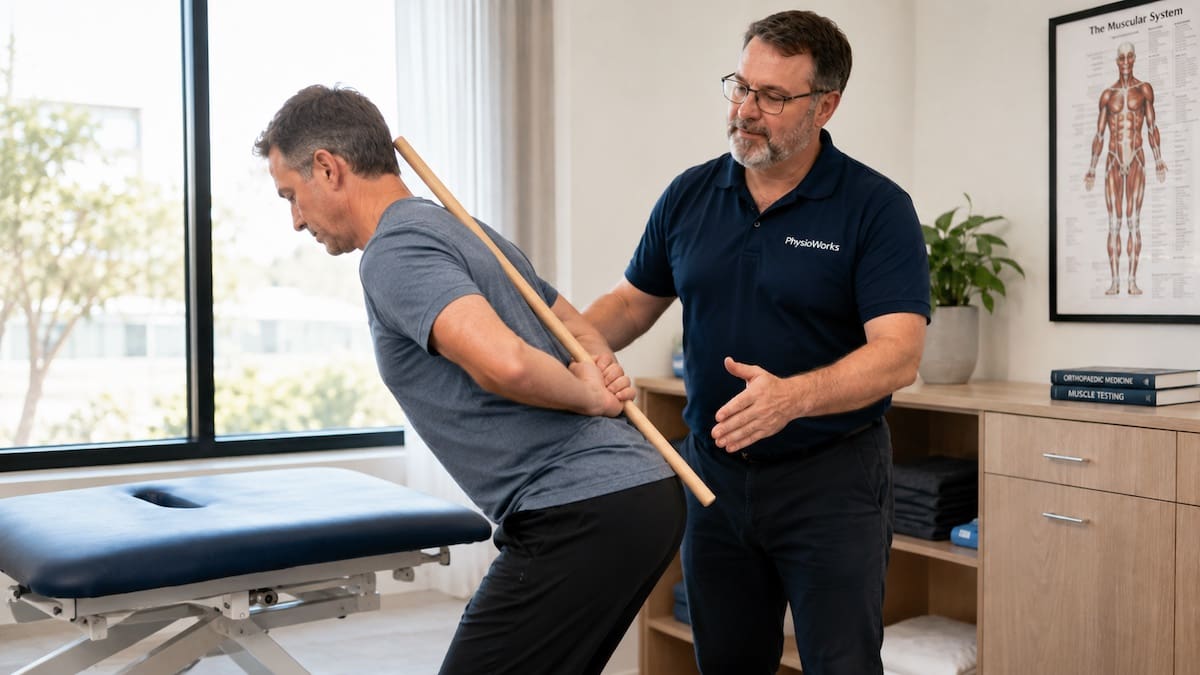
If your back feels stuck or guarded, your physiotherapist may use gentle joint mobilisation and soft tissue techniques to help settle spasm. They will usually combine this with active movement so the improvement carries into walking, sitting, lifting, and exercise.
See common physiotherapy treatment techniques for a broader overview of treatment options.
2) Build Core Control and Hip Strength
Recurring lumbar facet joint pain often needs more than short-term relief. A targeted program may include trunk endurance, hip strength, breathing control, and graded return to lifting or sport. Start with our core stability exercises and core stability guide.
3) Improve Posture and Daily Load Habits
Posture does not need to be perfect. However, long static positions, repeated end-range arching, and sudden load spikes can irritate sensitive facet joints. Small changes to desk setup, driving posture, lifting habits, and exercise programming can reduce repeat flare-ups.
For practical setup ideas, see posture correction and ergonomics.
4) Settle Muscle Spasm and Sensitivity
Some people find short-term relief from back massage and other soft tissue approaches. In selected cases, acupuncture or dry needling may help reduce muscle tightness as part of a broader plan.
5) Injections and Radiofrequency Procedures
If pain persists despite good conservative care, a doctor may discuss diagnostic blocks, injections, or radiofrequency ablation for selected cases. These procedures may help some people when diagnostic blocks suggest facet-mediated pain. Results vary, and symptoms can return over time.
Even when procedures help, rehabilitation still matters. Strength, movement control, and load management help improve capacity and may reduce repeat flare-ups.
Should You Keep Exercising?
In most flare-ups, complete rest is not the answer. Aim for comfortable movement that does not significantly increase pain during or after activity.
- Green light: walking, gentle mobility, and light strengthening that settles within 24 hours.
- Amber light: mild discomfort that eases quickly and does not worsen the next day.
- Red light: worsening leg symptoms, pins and needles, numbness, weakness, or pain that keeps escalating.
What Results Can You Expect?
Many people improve over days to weeks with the right mix of movement, pacing, strengthening, and symptom-calming strategies. If symptoms have lasted longer or keep returning, progress often comes from rebuilding capacity rather than relying on passive care alone.
A physiotherapist can also help you identify repeated triggers, such as sitting patterns, gym technique, lifting habits, work setup, or sport-specific loads.
When Should You Seek Help?
Book an assessment if pain is limiting sleep, work, sport, or daily movement. Also seek help if symptoms persist beyond 1–2 weeks, return often, or feel different from your usual back pain.
Seek urgent medical care if you develop new bladder or bowel changes, numbness around the saddle area, unexplained fever, major trauma, unexplained weight loss, or progressive leg weakness.
Lumbar Facet Joint Pain FAQs
What is lumbar facet joint pain?
Lumbar facet joint pain is low back pain linked to irritation or overload of the small joints at the back of the lumbar spine. It often feels local and may worsen with arching backwards, twisting, standing, or moving after sitting.
What does a locked lumbar facet joint feel like?
A locked lumbar facet joint feeling often presents as sudden one-sided low back pain, stiffness, and difficulty moving in one direction. The joint may feel stuck, but the restriction usually relates to pain, spasm, and guarding.
Can lumbar facet joint pain go into the leg?
Lumbar facet joint pain can refer into the buttock, hip, or upper thigh. Pain below the knee, pins and needles, numbness, or weakness may suggest nerve involvement and should be assessed promptly.
What exercises help lumbar facet joint pain?
Helpful exercises usually start with comfortable mobility, walking, and gentle trunk control. As symptoms settle, a physiotherapist may progress hip strength, core endurance, and functional loading exercises.
How long does lumbar facet joint pain take to settle?
Many flare-ups improve over days to weeks with the right plan. Longer-lasting or recurring pain often needs a progressive strengthening and load-management program rather than rest alone.
When should I see a physiotherapist for lumbar facet joint pain?
Consider physiotherapy if pain limits sleep, work, exercise, or daily movement. Also seek help if pain persists beyond 1–2 weeks, keeps returning, or spreads with pins and needles, numbness, or weakness.

What to Do Next
If lumbar facet joint pain is limiting your movement, a physiotherapy assessment can help clarify the likely driver and map out a simple plan. The aim is to settle the flare, restore comfortable movement, then build strength and confidence for daily life, work, or sport.
- Keep moving within a comfortable range.
- Avoid repeated end-range arching while symptoms are flared.
- Use short, frequent walks to reduce stiffness.
- Start gentle core and hip strength work once pain settles.
- Book an assessment if pain persists, keeps returning, or spreads into the leg.
Choose your clinic and appointment pathway
Select a PhysioWorks clinic to continue to live booking, an appointment request or reception assistance.
Back Support Products
These back support products are commonly used by our physiotherapists to help reduce back pain, improve comfort, and support your recovery at home.
-
-
 Braces & Supports, Back, Maternity, SIJ
Maternity Support Belt – OPPO 4062
$37.00Select optionsQuick View -
-
-
 Back, Braces & Supports, Maternity, SIJ
Core Stability Support – OPPO 3462
$54.00Select optionsQuick View -
 Back, Braces & Supports, Maternity, Posture
Maternity Back Support – OPPO 2062
$60.00 – $64.00Select optionsQuick View - Braces & Supports, Back, Maternity, SIJ
AOM38 AllCare Ortho Core Stability Belt
$49.95Select optionsQuick View -

 Back, Braces & Supports, Maternity, Posture
Pregnancy Belly Band & C-Section 3-in-1
$94.99Select optionsQuick View

Back Pain Tips: 7 Evidence-Based Ways to Move Better, Hurt Less & Recover Faster
A Physiotherapist’s Guide to a Stronger, Healthier Back
Discover practical, research-based strategies to ease back pain, move with confidence, and build long-term strength. Written by physiotherapist John Miller, this concise guide blends science and decades of clinical experience to help you recover faster and stay active for life.
- Clear, actionable advice grounded in current research
- Whole-person approach: movement, sleep, mindset and care team
- Includes a quick flare-up plan, FAQs and daily habits

Related Back Pain Articles
- Lower Back Pain: Broader causes, symptoms, and physiotherapy options for low back pain.
- Facet Joint Arthropathy: How joint change can relate to recurring spinal pain.
- Sciatica: How nerve irritation differs from facet-related back pain.
- Spinal Stenosis: Why walking tolerance and leg symptoms matter.
- Sacroiliac Joint Pain: A common source of nearby lower back and buttock pain.
- Pulled Back Muscle: How muscle strain can overlap with back pain symptoms.
- Core Stability: Why trunk control matters for recurring low back pain.
- Back Pain Relief: Practical strategies that may help ease back pain.


References
- Hayden JA, Ellis J, Ogilvie R, Malmivaara A, van Tulder MW. Exercise therapy for chronic low back pain. Cochrane Database Syst Rev. 2021;9(9):CD009790. doi:10.1002/14651858.CD009790.pub2
- George SZ, Fritz JM, Silfies SP, et al. Interventions for the management of acute and chronic low back pain: revision 2021. J Orthop Sports Phys Ther. 2021;51(11):CPG1-CPG60. doi:10.2519/jospt.2021.0304
- Narenthiran P, Granville Smith I, Williams FMK. Does the addition of manual therapy to exercise therapy improve pain and disability outcomes in chronic low back pain: a systematic review. J Bodyw Mov Ther. 2025;42:146-152. doi:10.1016/j.jbmt.2024.12.010
- Occhigrossi F, Carpenedo R, Leoni MLG, et al. Delphi-based expert consensus statements for the management of percutaneous radiofrequency neurotomy in the treatment of lumbar facet joint syndrome. Pain Ther. 2023;12(3):863-877. doi:10.1007/s40122-023-00512-2
