
What Causes Back Pain For No Reason?
What Causes Back Pain For No Reason?



Back pain can seem to appear for no reason, but it usually develops from a combination of factors rather than one obvious injury. In many cases, symptoms relate to back pain or lower back pain that builds gradually from reduced load tolerance, stiffness, posture habits, stress, poor sleep, or a recent change in activity.
This can feel confusing or even worrying, especially when you cannot pinpoint a cause. However, in most cases, there is a clear pattern once your symptoms are properly assessed.
Sometimes the trigger is small enough that you do not notice it at the time. A long drive, extra gardening, a new gym session, repeated bending, a poor night’s sleep, or a stressful week can all contribute. Even when the exact cause feels unclear, your symptoms still deserve a sensible assessment and a practical recovery plan.
Back pain may be more likely if you have:
- ✔ a recent change in lifting, exercise, work, or sitting time
- ✔ reduced physical activity or deconditioning
- ✔ poor sleep, stress, anxiety, or low mood
- ✔ smoking or higher body weight
- ✔ recurrent episodes of lumbar joint irritation, sciatica, or muscle overload
What causes back pain for no reason?
Back pain that seems to come from nowhere is usually caused by a combination of factors such as reduced activity, posture strain, stress, poor sleep, or a sudden increase in load. It rarely comes from one clear injury.
Back pain that seems to come from nowhere usually develops because several small contributors add up over time. Common factors include reduced activity, posture strain, stress, poor sleep, smoking, higher body weight, repetitive loading, or a recent spike in activity rather than one obvious injury.
Why can back pain start without an injury?
Your back handles load all day, so symptoms do not always begin with a single dramatic event. Instead, the issue may build from repeated bending, prolonged sitting, awkward lifting, poor recovery, or stiffness after inactivity. In other cases, the pain system becomes more sensitive, so normal movements feel sore even without clear tissue damage.
This is one reason many people describe pain that “just started”. A physiotherapist looks at how your symptoms behave, what activities changed recently, and whether the pattern fits a common presentation such as lower back pain, sciatica, or lumbar facet joint pain.
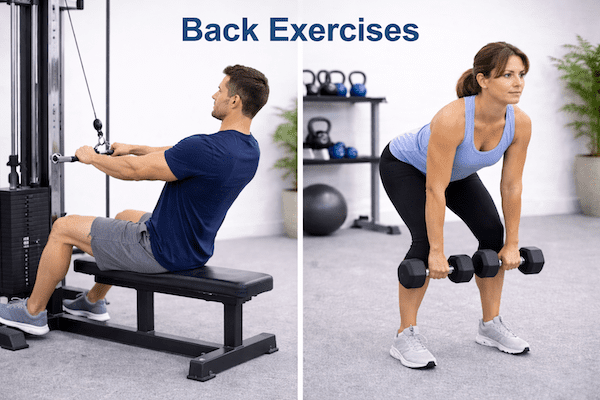
Movement and strengthening exercises can help restore spinal support and reduce recurrence risk
What patients often notice before back pain starts:
- they have been sitting more than usual
- they changed gym, work, sport, or lifting habits recently
- they feel stiffer first thing in the morning or after driving
- they have been more stressed, tired, or sleeping poorly
- they had a few small warning signs before the pain became harder to ignore
These patterns do not always mean something serious is wrong. Instead, they often suggest that your back has become irritated, overloaded, or less tolerant of normal movement and activity.
Common causes of back pain that seems to come from nowhere
Several modifiable and non-modifiable factors may increase your risk:
- Reduced physical activity: Lower activity levels can reduce your back’s load tolerance and make everyday tasks feel harder.
- Prolonged sitting or posture strain: Static positions may increase stiffness and irritation, especially if you do not vary your position.
- Activity spikes: Weekend sport, housework, gym changes, or lifting more than usual can aggravate your back.
- Higher body weight and smoking: These are recognised risk factors for non-specific low back pain.
- Stress, anxiety, low mood, and poor sleep: These can increase muscle tension, pain sensitivity, and slower recovery.
- Age or underlying spinal change: As you get older, joints, discs, and surrounding tissues may become more sensitive to load.
When should you worry about back pain?
You should seek prompt medical review if back pain comes with severe trauma, fever, unexplained weight loss, night pain that does not settle, new bladder or bowel changes, saddle numbness, or progressive leg weakness.
If your pain also travels below the knee, causes pins and needles, or is linked to numbness or weakness, review our sciatica page. For broader guidance, see our Back Pain FAQs.
How can physiotherapy help when the cause feels unclear?
Physiotherapy helps by identifying the most likely pain drivers, ruling out more concerning patterns, and building a practical recovery plan. Treatment may include advice, movement guidance, hands-on therapy, exercise, load management, and return-to-activity planning.
Many people improve when they keep moving within tolerable limits, rebuild strength gradually, and avoid the boom-bust cycle. See best back pain treatment and physiotherapy.
Back pain FAQs
Is it normal to get back pain without doing anything obvious?
Yes. Back pain often develops from accumulated load, stiffness, inactivity, stress, poor sleep, or posture habits rather than one clear incident.
Can stress really cause back pain?
Stress can increase muscle tension, reduce recovery, and make pain feel stronger as part of a broader pattern.
Should I rest or keep moving?
Gentle movement is usually better than prolonged rest. Short walks and light mobility often help recovery.
What if my back pain keeps coming back?
Recurrent back pain often means your back needs better load management and strength. A physiotherapist can guide this.
What to do next
If your back pain has started without a clear reason, assess it properly with physiotherapy rather than guessing. A physiotherapist can guide you through the right mix of movement, treatment, and recovery planning.
If your pain is persisting, recurring, or limiting your activity, book your physiotherapy assessment with PhysioWorks.
Choose your clinic and appointment pathway
Select a PhysioWorks clinic to continue to live booking, an appointment request or reception assistance.


Back Support Products
These back support products are commonly used by our physiotherapists to help reduce back pain, improve comfort, and support your recovery at home.
-

-
-

 Back, Braces & Supports, Maternity, Posture
Pregnancy Belly Band & C-Section 3-in-1
$94.99Select optionsQuick View -
- Braces & Supports, Back, Maternity, SIJ
AOM38 AllCare Ortho Core Stability Belt
$49.95Select optionsQuick View -
 Back, Braces & Supports, Maternity, Posture
Maternity Back Support – OPPO 2062
$60.00 – $64.00Select optionsQuick View -
 Back, Braces & Supports, Maternity, SIJ
Core Stability Support – OPPO 3462
$54.00Select optionsQuick View -
 Braces & Supports, Back, Maternity, SIJ
Maternity Support Belt – OPPO 4062
$37.00Select optionsQuick View

Learn more about back pain
- Back Pain
- Lower Back Pain
- Understanding the Common Causes of Lower Back Pain
- Best Back Pain Treatment: What Actually Helps?
- Back Pain FAQs
References
- World Health Organization. Low back pain. 2023.
- GBD 2021 Low Back Pain Collaborators. Global, regional, and national burden of low back pain, 1990-2020, its attributable risk factors, and projections to 2050: a systematic analysis of the Global Burden of Disease Study 2021. Lancet Rheumatol. 2023;5(6):e316-e329.
- Australian Commission on Safety and Quality in Health Care. Low Back Pain Clinical Care Standard.