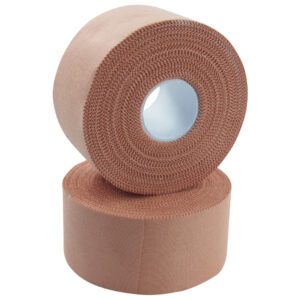
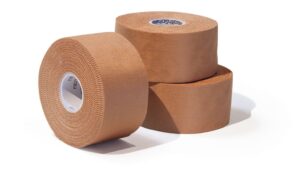
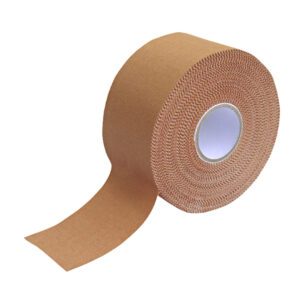
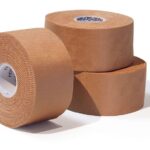
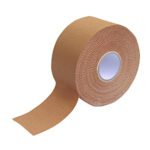
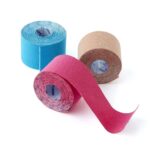
- Description
- Additional information
Description
Rigid strapping tape joint support plays a practical role in injury prevention, joint control, and safe return to activity. Physiotherapists commonly use rigid strapping tape to limit excessive joint movement, protect healing tissues, and improve confidence during sport or physical work.
Why use rigid strapping tape?
Joints that experience high loads or rapid direction changes are vulnerable to strain, ligament stress, and repeat injury. Ankles, knees, wrists, thumbs, and shoulders are particularly exposed during sport, manual work, or training.
Rigid strapping tape provides firm external support that helps control unwanted joint motion. As a result, it can reduce stress on ligaments, improve joint positioning, and support safer movement patterns. Physiotherapists often apply rigid tape as part of injury management, early rehabilitation, or return-to-sport planning.
For people who train regularly, this type of taping can also improve confidence. Feeling supported allows athletes and active individuals to move more freely while protecting vulnerable structures.
How does rigid strapping tape work?
This rigid strapping tape uses a strong, non-elastic backing combined with a porous zinc oxide adhesive. Together, these features create firm mechanical support that restricts excessive joint movement without completely immobilising the area.
The porous adhesive allows airflow to the skin, which helps reduce irritation during activity. Pinked edges make the tape easier to tear by hand, allowing quick and controlled application without scissors. This design suits both clinical settings and home use.
Physiotherapists often layer rigid strapping tape over an underwrap or foam tape to protect the skin, then apply specific taping techniques to suit the joint and activity. These techniques aim to support ligaments, guide joint motion, and reduce strain during dynamic movement.
If you are unsure how taping fits into injury care, these guides may help:
how to strap an ankle,
ankle injury overview, and
knee pain causes and treatment.
What is rigid strapping tape used for?
Rigid strapping tape suits a wide range of injury prevention and support needs across sport, work, and daily activity.
Common uses include ankle taping for lateral ligament support, knee strapping during sport, wrist or thumb support for contact or grip-heavy activities, and shoulder strapping for training control. Physiotherapists also use rigid tape in early rehabilitation phases to protect healing tissues while maintaining movement.
This tape is available in three practical widths:
50 mm for larger joints such as knees and shoulders,
38 mm for ankles, elbows, and wrists, and
25 mm for smaller joints including fingers, thumbs, and toes.
For best results, apply tape to clean, dry skin. Remove after activity and monitor the skin for irritation. If pain persists or movement feels restricted, seek professional advice.
Who benefits most from rigid strapping tape?
This product suits athletes, active individuals, and workers who place repetitive or high loads on their joints. It is also useful during early return-to-sport phases following ligament injuries, sprains, or joint instability.
Rigid strapping tape works best when combined with a structured rehabilitation plan. Learn more about injury recovery and joint care at
sports injury management
or
soft tissue injury healing.
Key benefits of rigid strapping tape
- Provides firm joint support during high-stress activities
- Helps reduce ligament strain and unwanted joint movement
- Supports injury prevention and safer return to activity
- Porous adhesive improves comfort during exercise
- Easy hand-tear design for quick application
What to do next
If you are managing joint pain, instability, or repeat injuries, rigid strapping tape can be a helpful short-term support tool. However, ongoing symptoms often benefit from guided assessment and rehabilitation.
Physiotherapists at :contentReference[oaicite:0]{index=0} can assess joint stability, movement control, and recovery progress to guide safe taping and exercise strategies.
Related articles
- How to strap an ankle – Practical guidance for ankle support and stability.
- Ankle injury guide – Common causes, treatment, and prevention strategies.
- Knee pain and injury overview – Learn how taping fits into knee care.
Additional information
| Weight | 0.1 kg |
|---|---|
| Dimensions | 50 × 10 × 10 cm |
| Size | 25mm, 38mm, 50mm |