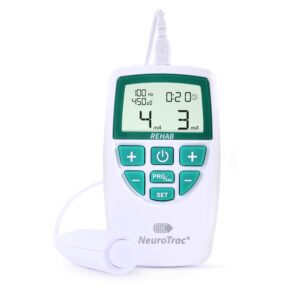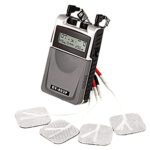

NeuroTrac Rehab (TENS Machine + EMS)
$299.95
- Description
- Additional information
Description
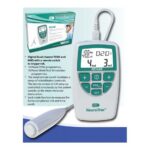
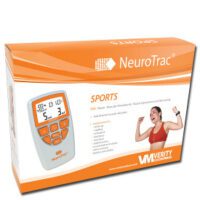
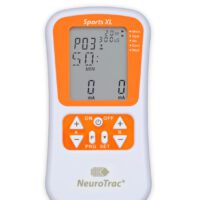
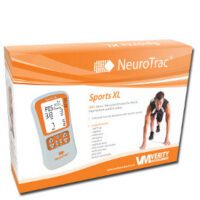
NeuroTrac Rehab TENS EMS Machine, combined pain support and muscle activation device. The NeuroTrac Rehab combines TENS and EMS in one portable unit for people who need guided pain support, muscle activation, or home rehabilitation between physiotherapy sessions.
This product may suit you if: you have been advised to use both TENS for pain relief and EMS for muscle activation as part of a rehabilitation plan.
Consider advice first if: you have a pacemaker, implanted electronic device, epilepsy, pregnancy, new unexplained pain, altered skin sensation, or symptoms that are worsening.
Is This the Right TENS EMS Machine for You?
You need pain support
TENS may help provide modest short-term pain relief during or after use.
You need muscle activation
EMS may help produce a visible muscle contraction when guided rehabilitation needs extra support.
You only need basic TENS
A simpler TENS-only machine may be enough if you do not need EMS muscle stimulation.
Clinically Useful For
The NeuroTrac Rehab may suit people who need a combined TENS and EMS option for home use under appropriate guidance.
- TENS pain relief between treatment sessions
- Muscle activation after injury, surgery, or a period of reduced movement
- Early rehabilitation where normal muscle contraction feels difficult
- Back pain, neck pain, shoulder pain, or knee pain where TENS has been recommended
- Home exercise programs that include guided electrotherapy support
Key Benefits
- Two functions in one unit: combines TENS for pain support and EMS for muscle activation.
- Rehabilitation-focused design: suitable for home use when a clinician has shown you where to place the electrodes.
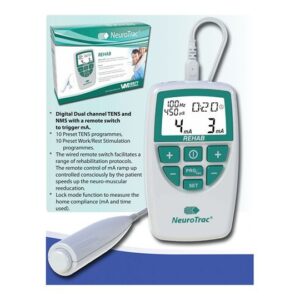
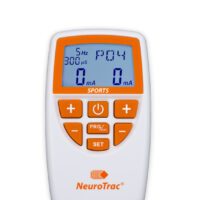
- Portable and practical: compact unit with clear display, remote hand switch, and large keypad buttons.
- Program choice: includes preset TENS and neuromuscular stimulation programs for different goals.
- Home compliance support: lock mode can help record treatment time and intensity use.
Product Features
- Digital dual-channel TENS and NMES unit
- 10 preset TENS programs
- 10 preset neuromuscular stimulation programs
- 2 customisable TENS programs
- 1 customisable remote stimulation program
- Remote hand switch for easier intensity control
- Clear backlit LCD screen
- Large keypad buttons for easier operation
- Compact, lightweight design for home or clinic use
- Lock mode for measuring and recording usage time and intensity
Why Use the NeuroTrac Rehab?
Pain, muscle inhibition, and reduced strength can slow rehabilitation. Some people struggle to exercise well because pain limits movement. Others struggle because the target muscle is difficult to activate after injury, surgery, swelling, or reduced use.
The NeuroTrac Rehab gives you one device for two different goals. TENS may help provide modest short-term pain relief. EMS, also called electrical muscle stimulation or NMES, may help produce controlled muscle contractions when muscle activation needs extra support.
This device should support a broader plan. It should not replace diagnosis, exercise rehabilitation, or advice from your physiotherapist if symptoms are severe, new, spreading, or not improving.
How Does the NeuroTrac Rehab Work?
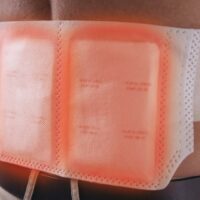
The NeuroTrac Rehab uses surface electrodes placed on the skin. The device sends mild electrical impulses through the pads. The sensation should be strong but comfortable, and the settings should match the goal of the session.
TENS mainly targets sensory nerves. It may help reduce pain sensitivity during or after use, which can make movement and exercise feel easier for some people.
EMS targets motor nerves to help produce a visible muscle contraction. This can be useful when a muscle is difficult to recruit during early rehabilitation or when your physiotherapist wants you to practise a controlled contraction pattern.
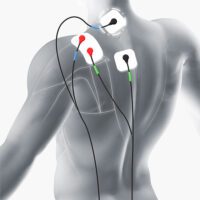
Correct electrode placement matters. Read the manual before use and follow the program and placement advice given by your healthcare professional.
What Is the NeuroTrac Rehab Used For?
Physiotherapists may recommend a combined TENS and EMS device for selected rehabilitation goals. Common uses include short-term pain support, muscle activation, home rehabilitation, post-injury exercise support, and guided recovery where loading tolerance is still limited.
The NeuroTrac Rehab may be used around areas such as the back, knee, shoulder, ankle, calf, or thigh when the setup has been explained. Do not place electrodes over the front of the neck, eyes, chest, broken skin, infected skin, or areas where sensation is poor unless a suitably qualified clinician has specifically advised you.
Who Is This Product Best Suited To?
This product suits people who want more than a basic TENS machine. It may be a better option if your clinician wants you to use both pain relief settings and muscle stimulation settings during rehabilitation.
If you only want a simple pain relief device, compare the NeuroTrac TENS Machine or Pro TENS Machine before buying.
Sizing, Fit and Use Notes
This is a portable electronic device, not a sized brace or garment. The product is not left or right specific. Correct use depends on electrode placement, program selection, intensity, session time, and your rehabilitation goal.
- Use only with compatible electrodes and leads.
- Replace electrodes when they lose stickiness or stimulation feels uneven.
- Do not overuse high intensity settings to chase a stronger result.
- Stop use if you notice skin irritation, dizziness, unusual symptoms, increased pain, or discomfort that does not settle.
- Ask for professional guidance if you are unsure where to place the electrodes.
Safety check before use:
- Do not use this device without medical advice if you have a pacemaker, implanted electronic device, epilepsy, pregnancy, cancer in the treatment area, blood clot concerns, reduced skin sensation, or new unexplained pain.
- Do not place electrodes over the front of the neck, eyes, head, chest, broken skin, infected skin, or areas with poor sensation unless your healthcare professional has specifically advised you.
- Stop use and seek advice if stimulation feels painful, symptoms worsen, skin irritation occurs, or you feel dizzy or unwell.
Frequently Asked Questions
Is the NeuroTrac Rehab a TENS machine or an EMS machine?
It is both. The NeuroTrac Rehab combines TENS and EMS in one unit. TENS is usually used for pain support. EMS is used to help activate muscles during rehabilitation. This makes it more versatile than a basic TENS-only machine.
Who should buy the NeuroTrac Rehab?
This device may suit people who have been advised to use electrotherapy for both pain relief and muscle activation. It is often more suitable for guided rehabilitation than for people who only need a simple pain relief unit.
Can I use the NeuroTrac Rehab every day?
Daily use may be appropriate for some rehabilitation plans, but session timing and intensity should match your condition and treatment goal. Follow the manual and the advice given by your physiotherapist or healthcare professional.
Can I use it after surgery?
Only use it after surgery if your surgeon, physiotherapist, or healthcare professional has confirmed that it is suitable. Post-operative use depends on the procedure, wound healing, sensation, swelling, and your stage of recovery.
Where should I place the electrodes?
Electrode placement depends on whether you are using TENS for pain relief or EMS for muscle activation. Read the manual and use the placement plan given by your clinician. Avoid unsafe areas such as the front of the neck, eyes, chest, broken skin, or areas with poor sensation.
How does this compare with a basic TENS machine?
A basic TENS machine mainly supports pain relief. The NeuroTrac Rehab adds EMS muscle stimulation, which may suit people who need guided muscle activation as well as pain support. If you only need pain relief, a simpler TENS machine may be enough.
Related PhysioWorks Articles
- Electrotherapy and Local Modalities – explains where electrotherapy fits within physiotherapy care.
- TENS Machine for Pain Relief – explains how TENS may support short-term pain relief.
- How to Use a TENS Machine – gives general setup and safety guidance.
- What Is EMS? – explains electrical muscle stimulation in plain English.
Related Products
- NeuroTrac TENS Machine – a simpler option if you only need TENS pain support.
- Pro TENS Machine – a value option for straightforward home TENS use.
- PALS Platinum TENS Electrodes – replacement electrodes for ongoing device use.
What To Do Next
Choose the NeuroTrac Rehab if you need a combined TENS and EMS device for guided rehabilitation. Check that you understand electrode placement, program selection, and safety precautions before first use.
If your pain is new, worsening, spreading, associated with numbness or weakness, or you are unsure whether EMS is suitable, seek professional advice before using this device.
References
- Johnson MI, Paley CA, Jones G, Mulvey MR, Wittkopf PG. Efficacy and safety of transcutaneous electrical nerve stimulation for acute and chronic pain in adults: a systematic review and meta-analysis. BMJ Open. 2022;12(2):e051073.
- Teoli D, An J. Transcutaneous Electrical Nerve Stimulation. StatPearls. Updated 2024.
- Healthdirect Australia. TENS. Accessed 11 June 2026.
- Neurotek Australia. NeuroTrac Rehab product overview. Accessed 11 June 2026.
Additional information
| Weight | 0.6 kg |
|---|---|
| Dimensions | 10 × 43 × 20 cm |