
How Do You Know If Your Hip Pain Is Serious?


Serious hip pain is more likely when it starts after a fall or accident, stops you from walking or bearing weight, looks deformed, or comes with swelling, bleeding, fever, or constant rest pain. However, most hip pain is not an emergency and is more often linked to muscle, tendon, bursa, or joint irritation.
This page focuses on urgent warning signs. For a broader overview of hip pain causes and location patterns, visit our hip hub. If your symptoms are concerning but not clearly urgent, see when to worry about hip or groin pain.
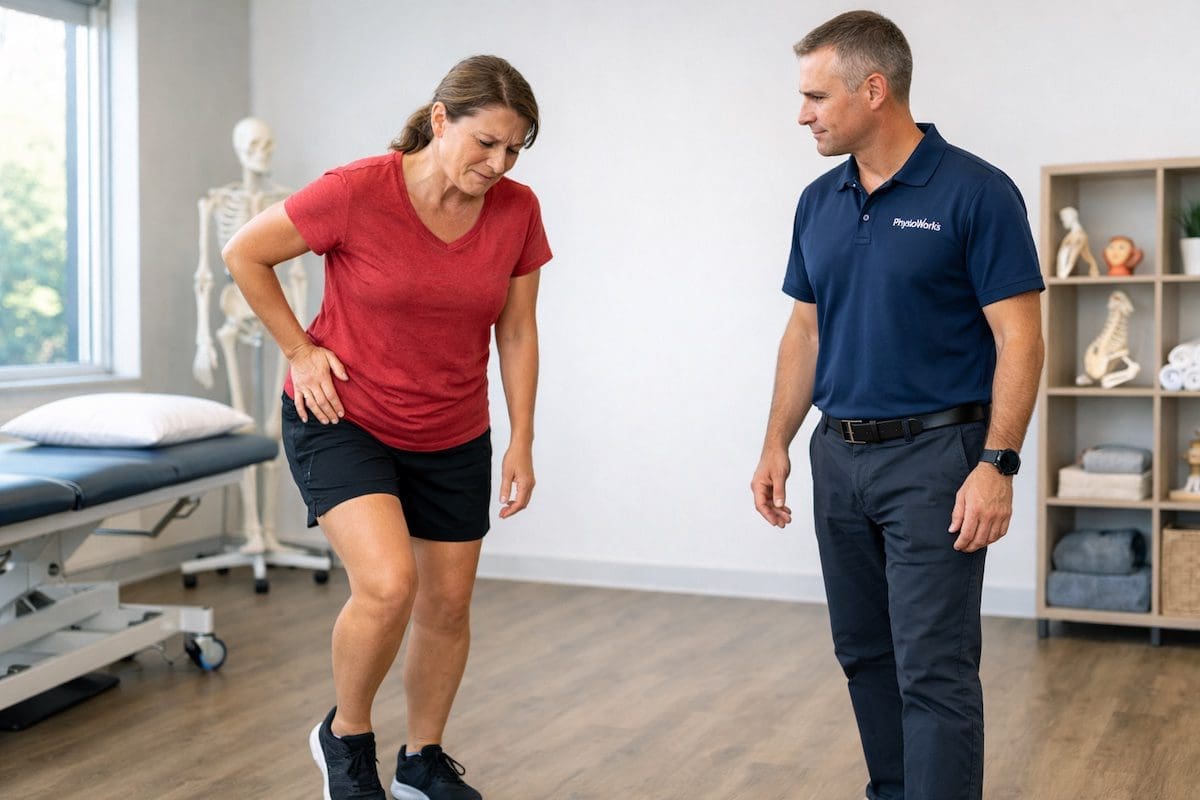
Difficulty standing or walking can signal a more serious hip injury.
Red flags for serious hip pain
- Hip pain started after a fall, twist, or direct blow
- You cannot stand, walk, or bear weight properly
- Your hip, leg, or joint looks deformed
- You have swelling, bleeding, or severe bruising
- The pain is sudden, intense, or rapidly worsening
- You have fever, marked warmth, or redness around the joint
- You have constant night pain or pain at complete rest
Can you walk on hip pain?
You can often walk on mild hip pain, but you should stop and seek assessment if walking becomes difficult, painful, or unstable.
- ✅ Safe to continue: mild discomfort, improves with movement, no limp
- ⚠️ Modify activity: moderate pain, stiffness, or worsening with walking
- ❌ Stop and seek help: unable to bear weight, severe pain, limping, or sudden onset after injury
If you are unsure, reduce load and get assessed early.
When does hip pain need urgent medical help?
Hip pain needs urgent review when it follows trauma, prevents weight-bearing, or comes with deformity, bleeding, fever, or severe pain.
In older adults, even a simple fall can cause a fracture. In younger people, sport or twisting injuries can also lead to serious damage.
Urgent assessment also matters with fever, swelling, or a hot joint.
For a public-health overview, see Healthdirect.
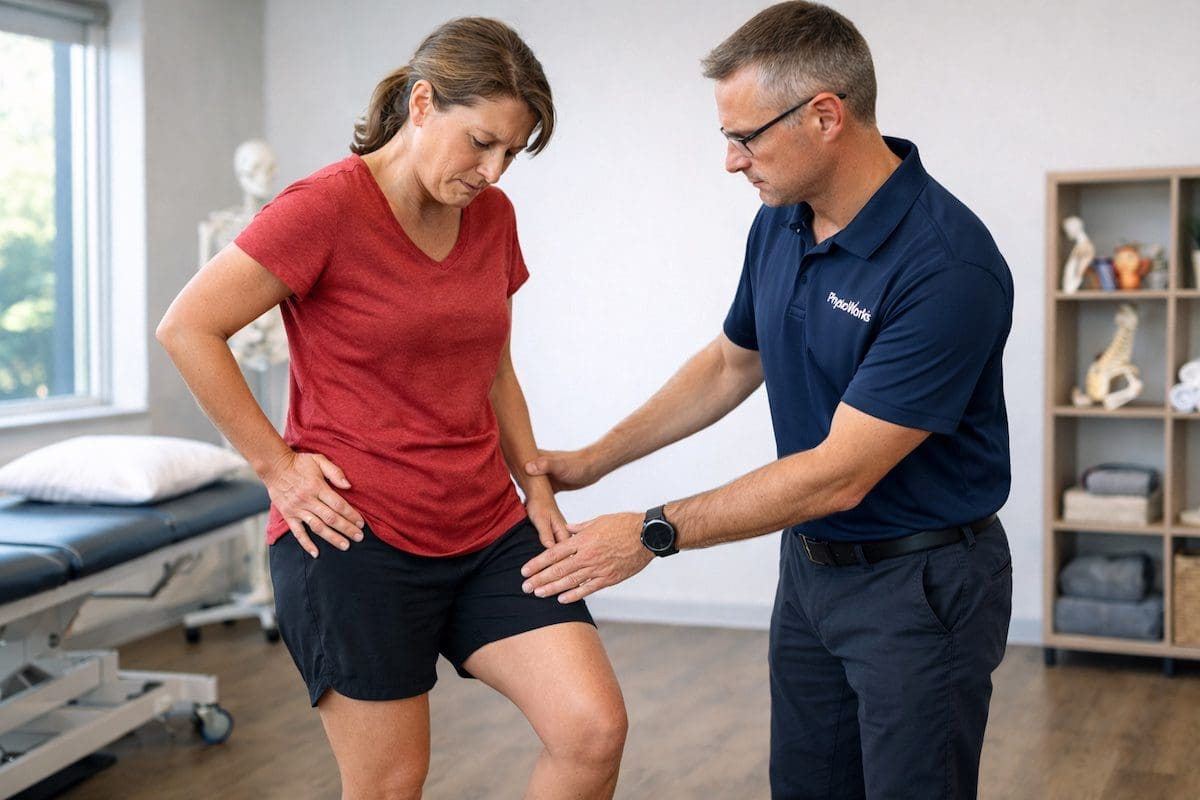
A structured assessment helps identify the cause of hip or groin pain.
What symptoms can suggest serious hip pain?
Key warning signs include severe pain, inability to bear weight, swelling, or worsening symptoms.
Hip pain vs lower back pain
| Feature | Hip | Back / Sciatica |
|---|---|---|
| Pain location | Groin, outer hip | Back, buttock, leg |
| Trigger | Walking, stairs | Bending, sitting |
| Radiation | Local | Down leg |
| Key sign | Pain with weight-bearing | Pain with spine movement |
Hip pain can overlap with lower back pain or sciatica.
Common hip causes include arthritis, gluteal tendinopathy, hip flexor strain, groin strain, and bursitis.
Luckily, most hip pain is not serious
Most cases are manageable with the right diagnosis and rehabilitation plan.
What should you do?
Stay active within comfort, avoid overload, and seek assessment if symptoms persist.
When should you book a physiotherapy assessment?
Book if symptoms persist, worsen, or limit activity.

Most hip pain improves with the right diagnosis and rehabilitation plan.
What to do next
Seek urgent care if red flags are present. Otherwise, physiotherapy can guide recovery.
Book your appointment – 24/7
Choose your preferred PhysioWorks clinic and book online.
References
Frequently asked questions
Is hip pain worse at night serious?
Night pain is not always serious, but persistent or worsening night pain should be assessed.
Can I walk on hip pain?
Mild pain may be safe, but difficulty weight-bearing or limping needs assessment.