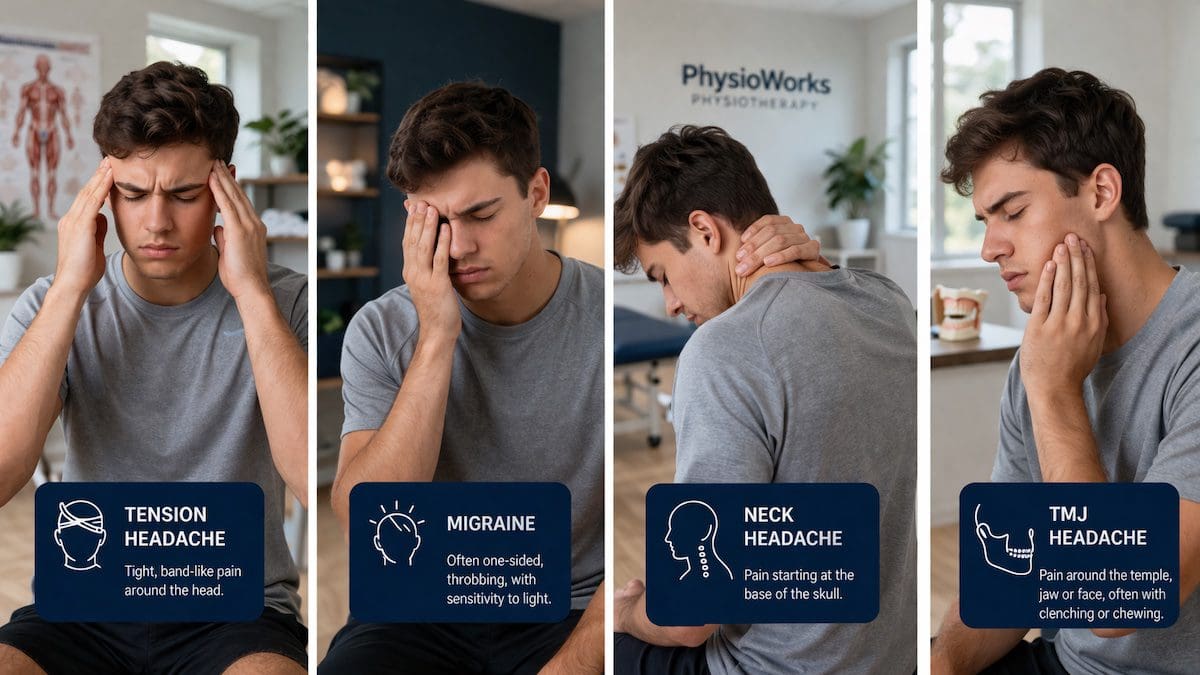
Common headache types and pain locations.
What are the most common headache causes?
Headache causes usually fall into two groups. Primary headaches are headache conditions themselves. Secondary headaches happen when another issue contributes to the pain.
Common headache causes include migraine, tension-type headache, cluster headache, neck headache, jaw-related headache, illness, medication overuse, or head and neck injury.
If you are trying to work out what type of headache you have, start with the broader headache physiotherapy guide. Compare where the pain sits, what it feels like, what triggers it, and whether you also have nausea, light sensitivity, neck pain, jaw pain, dizziness, or recent injury.
The International Headache Society groups headaches using the ICHD-3 classification. This framework separates primary headache disorders from headaches caused by another health issue.
Quick clues that may help narrow the cause:
- One-sided throbbing pain with nausea or light sensitivity often fits migraine.
- A tight band-like ache across the forehead or into the neck often fits tension-type headache.
- Pain starting in the upper neck or base of the skull may fit a cervicogenic neck headache.
- Jaw pain, clicking, or clenching may point to a TMJ headache.
- Headache after a hit to the head or neck needs consideration of concussion.
How are headache causes classified?
Headache causes are usually classified as primary or secondary. Primary headaches include migraine, tension-type headache, and cluster headache. Secondary headaches happen because something else is contributing to the pain, such as neck dysfunction, jaw irritation, concussion, illness, medication overuse, or another medical problem.
This distinction matters because the best plan depends on the likely driver. For example, a migraine plan differs from care for a neck headache or a jaw-related headache.
Common headache causes
Common headache causes include primary headache disorders, such as migraine, tension-type headache, and cluster headache. They also include secondary causes, such as neck joint irritation, muscle tension, jaw dysfunction, concussion, infection, sinus symptoms, medication overuse, and other medical conditions.
Primary headache causes
Migraine often causes moderate to severe head pain, commonly on one side, with nausea, light sensitivity, sound sensitivity, or visual disturbance. Tension-type headaches more often feel like a tight or pressing band and may link with stress load, muscle tension, posture habits, or poor sleep. Cluster headaches are usually severe, one-sided, and focused around one eye.
Secondary headache causes
Secondary headaches happen when another issue refers pain into the head. Common examples include cervicogenic headaches, TMJ headaches, headache after concussion, and headache related to illness, medication use, or broader medical conditions. Some people also have more than one headache type at the same time.
How can headache symptoms point to the cause?
Headache symptoms often give useful clues, although they do not confirm a diagnosis on their own. Location, intensity, duration, timing, triggers, and associated symptoms all help narrow the likely cause.
How to identify your headache type quickly:
- Temple or forehead pressure often fits a tension-type headache.
- One-sided throbbing with light sensitivity often fits migraine.
- Pain starting in the neck often fits a cervicogenic headache.
- Jaw or temple pain with chewing or clenching often fits a TMJ headache.
- Severe eye pain with tearing may suggest cluster headache.
Headache cause comparison
| Pattern | Common clues | Useful next step |
|---|---|---|
| Migraine | Throbbing pain, nausea, light sensitivity, aura, or sound sensitivity. | Compare symptoms with the migraine guide. |
| Tension-type headache | Band-like pressure across the forehead, temples, neck, or shoulders. | Review the tension headache guide. |
| Neck headache | Pain starts near the upper neck or base of the skull. | Check the cervicogenic neck headache guide. |
| Jaw headache | Jaw pain, temple pain, clicking, clenching, chewing pain, or stiffness. | Read about TMJ headache. |
| Concussion headache | Headache after a head, face, or neck impact. | Use the concussion return-to-sport guide. |
Tension-type headache
A tension-type headache often feels like a steady, non-throbbing band across the forehead, temples, or upper neck. Neck and shoulder tightness are common. Unlike migraine, severe nausea and strong light sensitivity are usually less prominent.

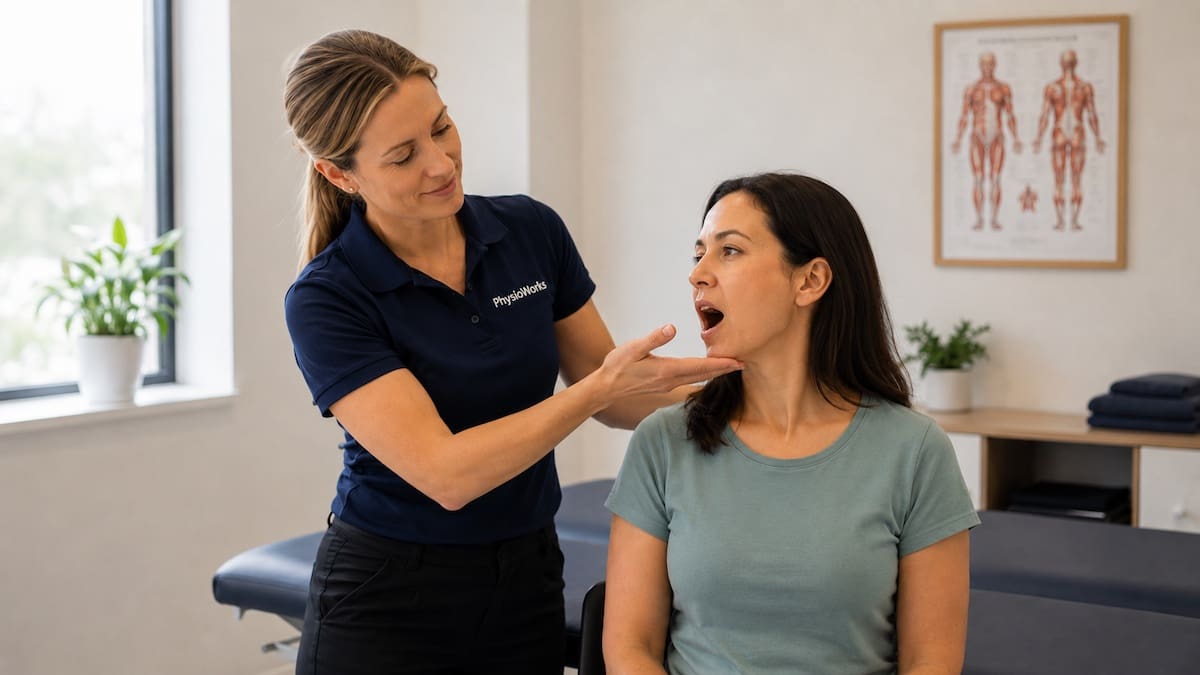
Jaw movement assessment may help identify TMJ-related headache symptoms.
Jaw headache
A jaw-related or TMJ headache is often felt around the temple, jaw, ear, or one side of the face. It may be aggravated by clenching, chewing, yawning, or long dental appointments. Clicking, locking, or jaw stiffness can also be present.
Neck headache
A neck headache often starts in the upper neck or base of the skull and can spread toward the forehead, eye, or top of the head. It may worsen with sustained posture, neck movement, desk work, or poor sleep positions.
Cluster headache
Cluster headache usually causes intense one-sided pain around the eye, often with a red eye, tearing, blocked or runny nose, or restlessness. These headaches commonly arrive in repeated bursts or clusters.
Concussion headache
Headache after a blow to the head, face, or neck may be linked to concussion. If the headache worsens, or comes with confusion, vomiting, seizure, slurred speech, unusual behaviour, weakness, or drowsiness, urgent medical review is important.
When should you worry about a headache?
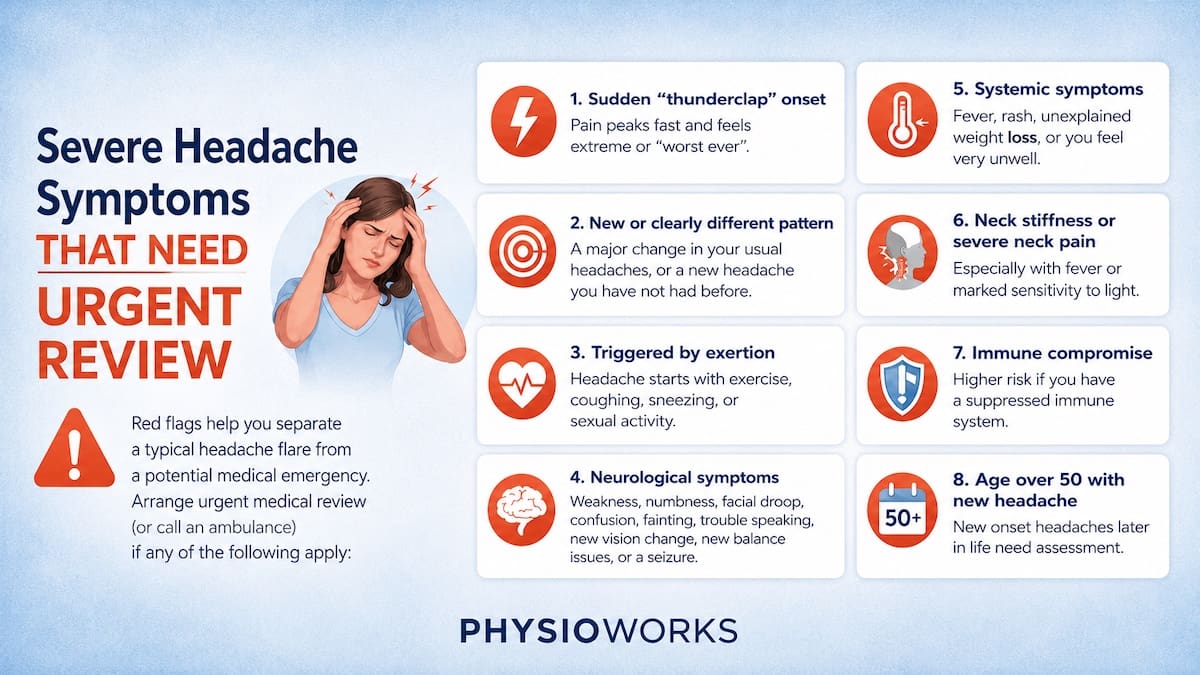
You should worry about a headache when it is sudden and severe, clearly different from your usual pattern, follows trauma, or comes with fever, seizure, confusion, weakness, vision loss, or fainting. Those features need urgent medical assessment rather than self-management.
Seek urgent medical care if your headache:
- starts suddenly and is extremely severe
- follows a head or neck injury
- comes with fever, neck stiffness, confusion, or seizure
- includes weakness, numbness, fainting, or vision loss
- is a major change from your normal headache pattern
For a fuller guide, see severe headache symptoms and red flags.
Could your neck or jaw be causing your headache?
Yes. Neck joints, upper cervical muscles, jaw joints, and jaw muscles can all refer pain into the head. That is why some headaches feel worse with posture, desk work, jaw clenching, chewing, or limited neck movement.
If your symptoms seem linked to the neck, read what causes cervicogenic headache or how to get rid of a neck headache. If chewing, clenching, or jaw stiffness are part of the picture, a TMJ headache becomes more likely.
Related information
- Headache physiotherapy
- Migraine
- Tension-type headache
- Cluster headache
- Cervicogenic neck headache
- Vestibular migraine
- TMJ headache
- Primary vs secondary headaches
Frequently asked questions about headache causes
What is the most common cause of headaches?
Common headache causes include migraine, tension-type headache, neck-related headache, jaw-related headache, illness, and head or neck injury. Tension-type headache is one of the most common primary headache patterns, but the right diagnosis depends on your symptoms and history.
Can neck pain cause a headache?
Yes. Upper neck joints, muscles, and surrounding tissues can refer pain into the head. This pattern is often described as a cervicogenic headache or neck headache, especially when neck movement or posture aggravates symptoms.
Can jaw problems cause headaches?
Yes. Jaw clenching, TMJ irritation, grinding, and chewing overload can all contribute to headache symptoms. A TMJ headache often sits around the temple, jaw, ear, or one side of the face and may come with clicking or stiffness.
How do I know if it is migraine or tension headache?
Migraine more often causes throbbing pain, nausea, light sensitivity, or aura. Tension-type headache more often feels like a steady band or pressure without strong nausea. Some people have overlapping features, so assessment can still help.
Are all headaches serious?
No. Most headaches are not caused by serious disease. However, a sudden severe headache, headache after trauma, or headache with neurological or systemic symptoms needs urgent medical review. That is why recognising headache red flags matters.
Who should assess headache causes?
Your GP, neurologist, dentist, or physiotherapist may all play a role depending on the suspected cause. Physiotherapists commonly help assess headaches linked to the neck, jaw, posture, muscle tension, movement control, or recovery after minor neck injury.
What matters most:
- Headache causes are best identified by location, triggers, and associated symptoms.
- Neck, jaw, migraine, and tension headaches often overlap, so patterns matter more than single signs.
- Red flag symptoms always override self-diagnosis and need urgent medical review.
When to monitor vs act:
- Monitor: familiar headache pattern, mild to moderate symptoms, settles with rest or usual care
- Book assessment: persistent, recurring, or unclear headache cause
- Urgent care: sudden severe headache, neurological symptoms, or headache after injury
What to do next
If you are not sure what is causing your headaches, compare your symptom pattern rather than guessing from one sign alone. The most useful clues are the pain location, symptom behaviour, associated features, and whether the problem seems linked to the neck, jaw, trauma, illness, or a known migraine pattern.
If your headache seems related to your neck, jaw, posture, muscle tension, or a previous injury, a physiotherapist may help assess the source and guide the next step. If red flags are present, seek urgent medical review first.

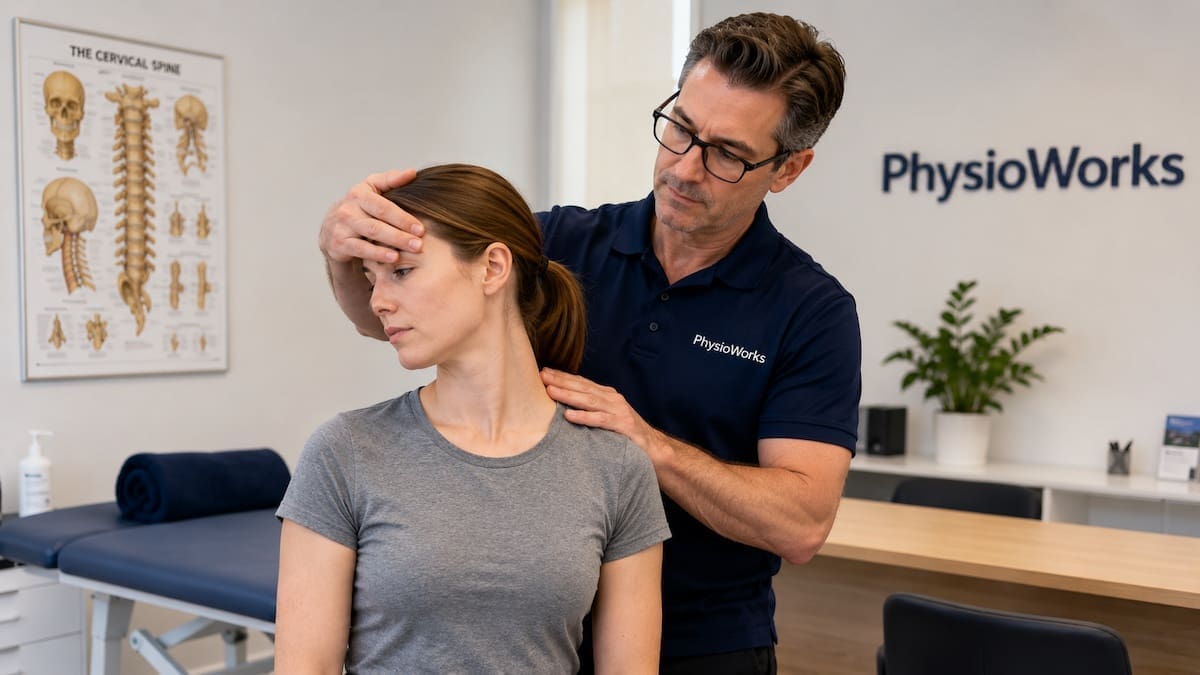
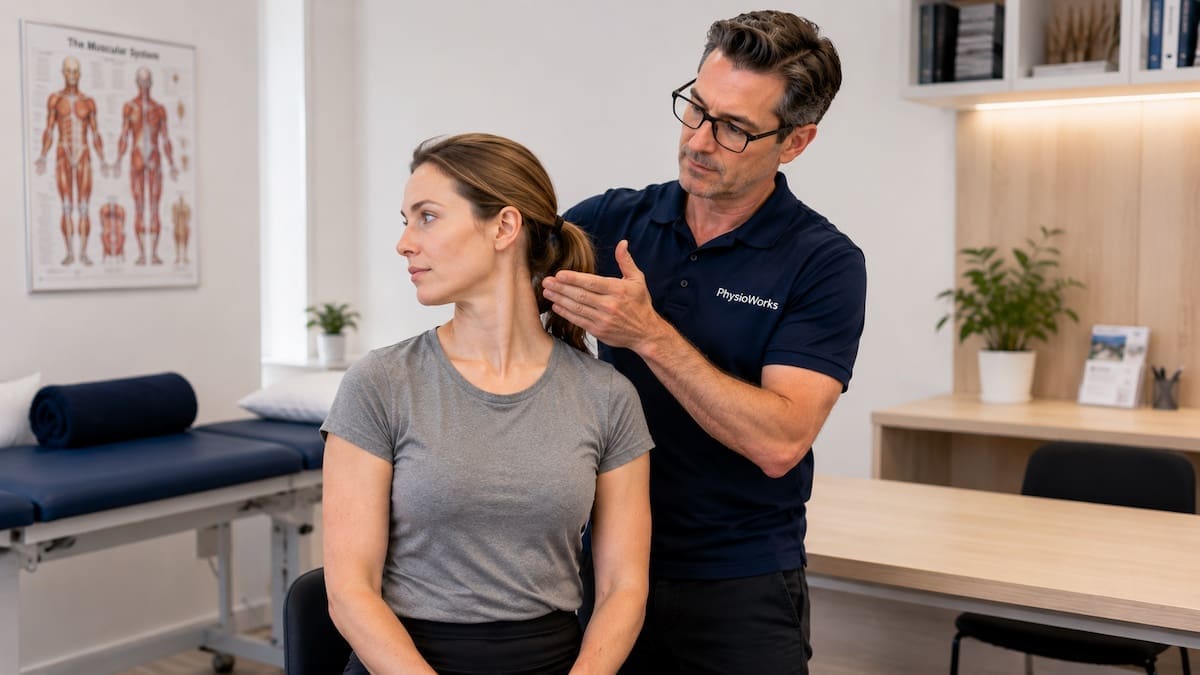
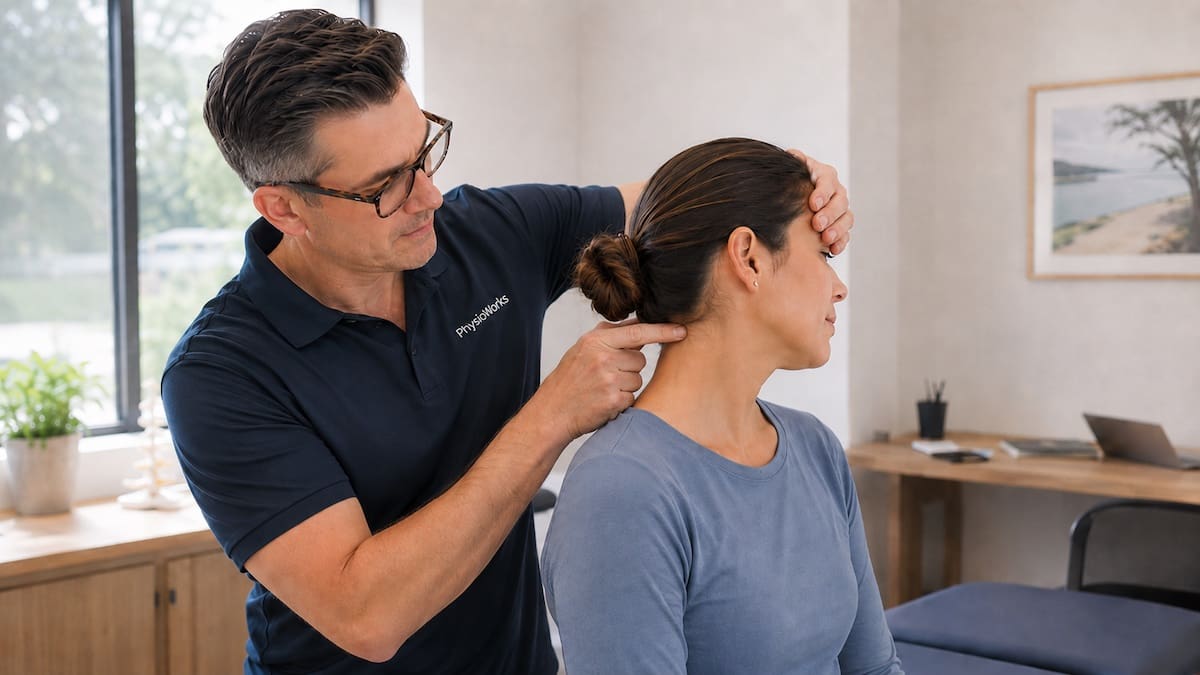
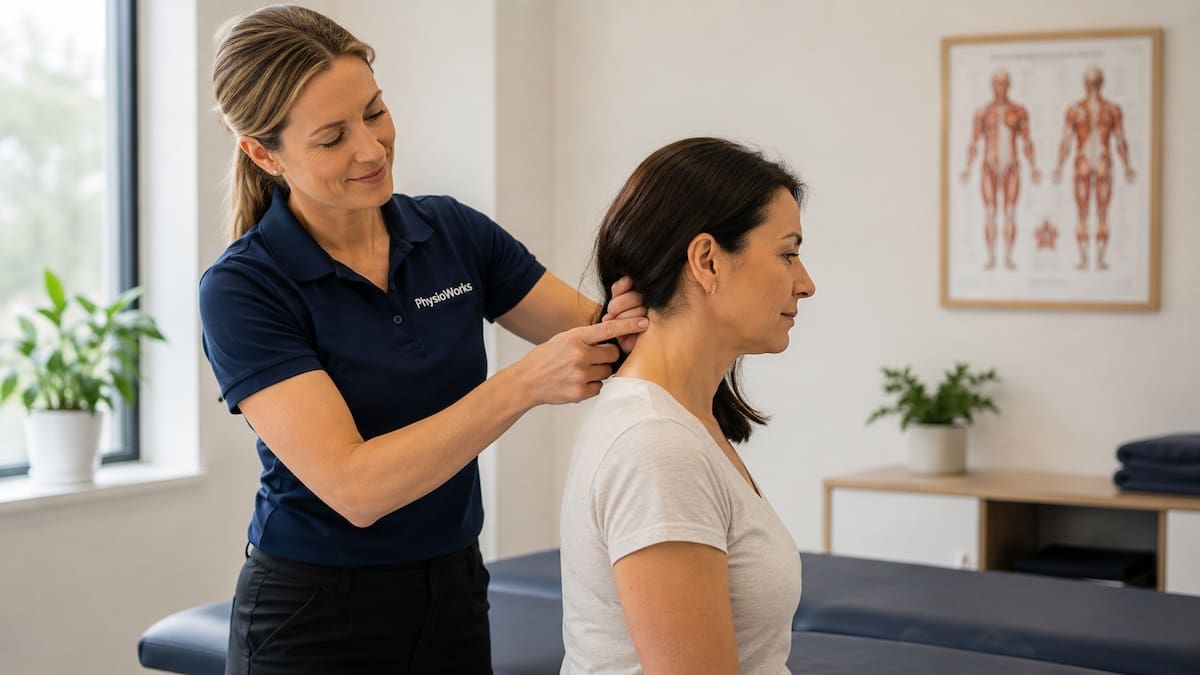
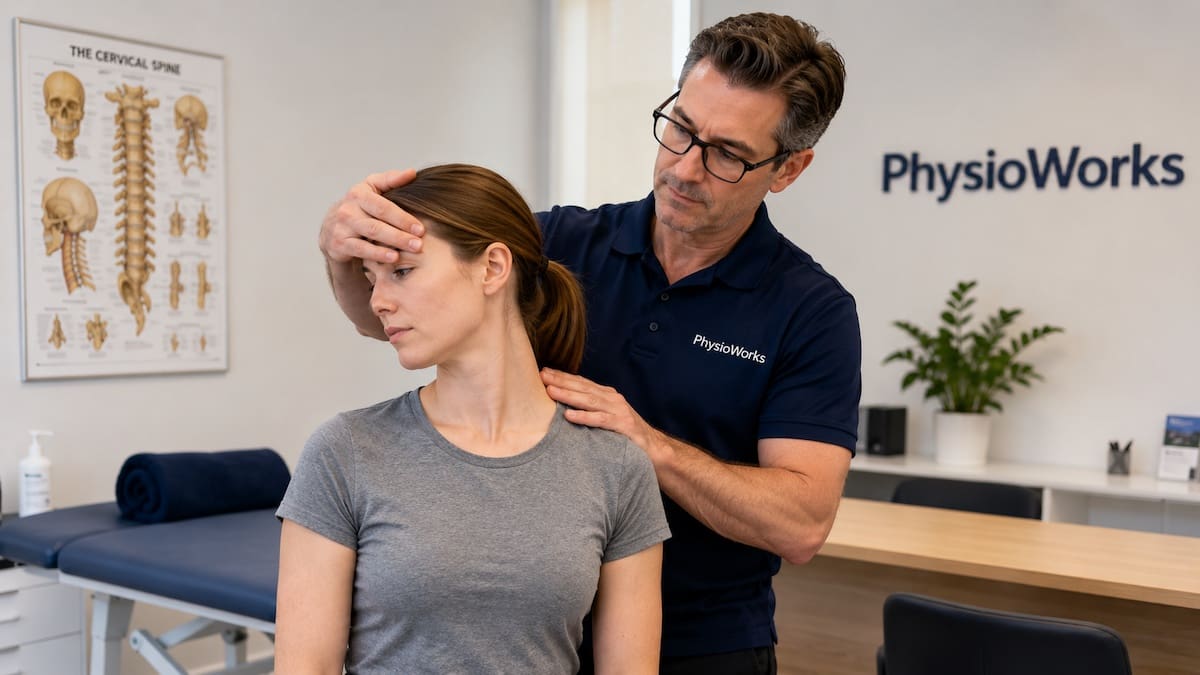
Physiotherapy may help when neck and shoulder tension contributes to headache symptoms.
Choose your clinic and appointment pathway
Select a PhysioWorks clinic to continue to live booking, an appointment request or reception assistance.


References
- Headache Classification Committee of the International Headache Society (IHS). The International Classification of Headache Disorders, 3rd edition. Cephalalgia. 2018;38(1):1-211. doi:10.1177/0333102417738202.
- Lee HJ. Update on Tension-type Headache. Headache Pain Res. 2025;26(1):38-47. doi:10.62087/hpr.2024.0025.
- Sico JJ, Sandbrink F, Oskoui M, et al. 2023 U.S. Department of Veterans Affairs and U.S. Department of Defense Clinical Practice Guideline for the Management of Headache. Ann Intern Med. 2024;177(12):1675-1694. doi:10.7326/ANNALS-24-00551.
- World Health Organization. Migraine and other headache disorders. Updated October 24, 2025. Accessed March 31, 2026.