
Trochanteric Bursitis (Hip Bursitis)
Hip Bursitis (Trochanteric Bursitis)
Pain on the outside of your hip, particularly when lying on your side, walking or climbing stairs, can be related to trochanteric bursitis. Nearby gluteal tendons often contribute to the same symptoms.


Quick answer
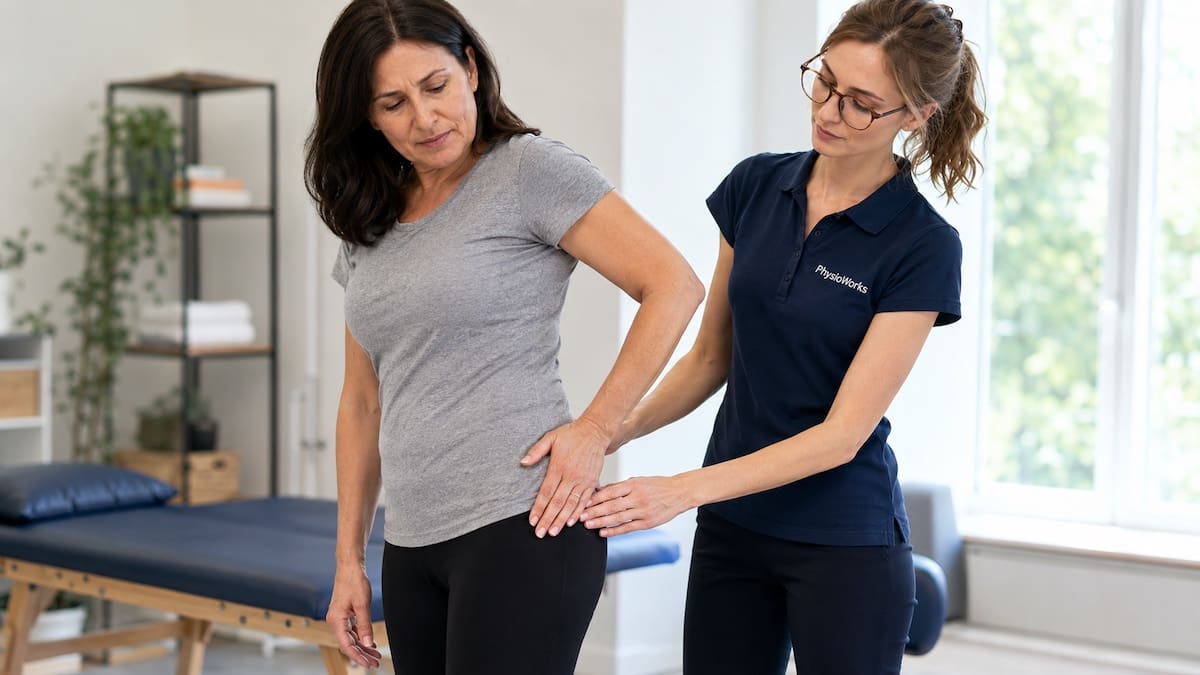
Trochanteric bursitis describes irritation of a fluid-filled cushioning sac on the outside of the hip. Outer hip pain frequently involves the gluteal tendons as well, so clinicians may use the broader term greater trochanteric pain syndrome (GTPS). Treatment generally starts with reducing painful compression, adjusting activity and gradually rebuilding hip strength.
Where it hurts
On the bony outside of the hip, sometimes extending down the outer thigh.
Common triggers
Side lying, prolonged walking, hills, stairs and standing on one leg.
What often helps
Reducing compression, adjusting activity and progressive strengthening.
What Is Trochanteric Bursitis?
A bursa is a small, fluid-filled sac that helps tissues move over one another. Several bursae sit near the greater trochanter, the prominent bone on the outside of the upper thigh. Irritation in this region can cause local tenderness and pain with pressure or activity.
Not all pain over the greater trochanter comes from an inflamed bursa. The nearby gluteus medius and gluteus minimus tendons are frequently involved. This is why a broader diagnosis of GTPS or gluteal tendinopathy may better describe persistent lateral hip pain.
What Are the Symptoms of Hip Bursitis?
The most common symptom is an ache or sharp pain over the outer hip. Pain may spread along the outside of the thigh, sometimes towards the knee.
- Pain or tenderness when pressing the bony outside of the hip.
- Discomfort when lying on the affected side or disturbed sleep.
- Pain during longer walks, hills, stairs or running.
- Symptoms when standing with most of your weight on one leg.
- A flare after an abrupt increase in exercise or walking distance.
Why Does Hip Bursitis Hurt at Night?
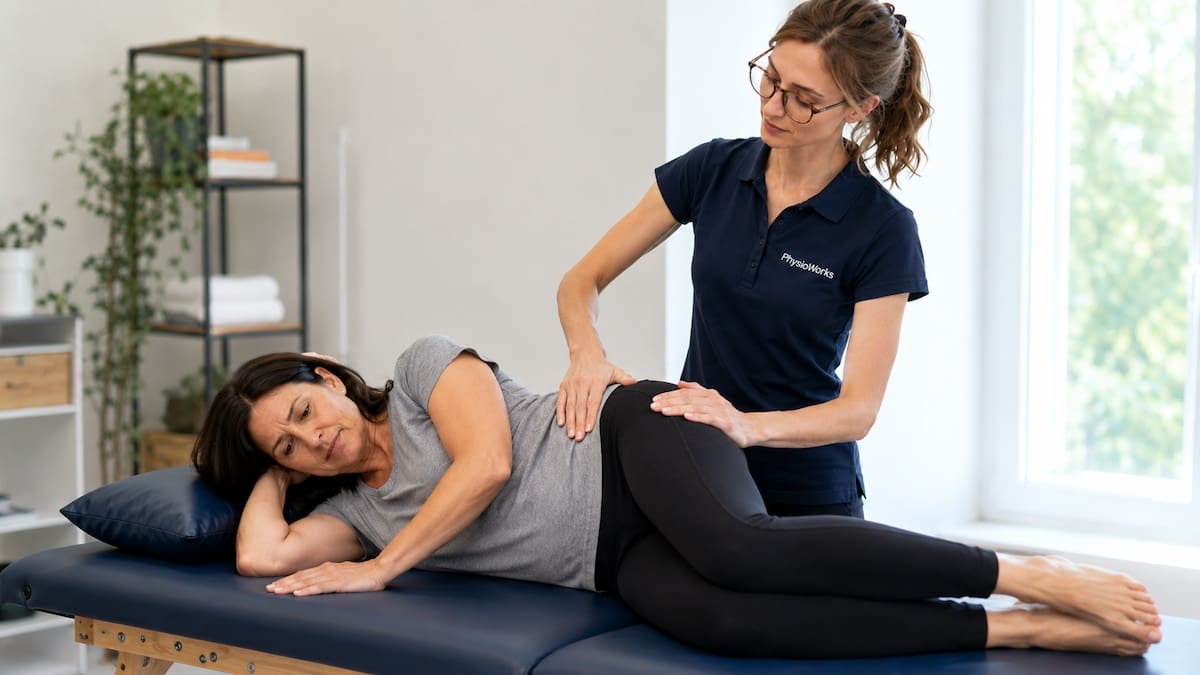
Lying directly on the painful hip compresses sensitive tissue. Even lying on the other side may increase compression if the upper leg drops across the body. Try lying on your back or placing a pillow between your knees when side sleeping. Adjust your position if it increases symptoms.
What Causes Trochanteric Bursitis?
Outer hip pain can develop after a change in how much the hip is loaded or compressed. There is not always one identifiable cause. Contributing factors may include:
- A sudden increase in walking, running, hills or stair climbing.
- Repeated pressure on the outer hip when side sleeping.
- Standing for long periods with weight shifted onto one hip.
- Reduced hip muscle capacity relative to everyday or sporting demands.
- A direct fall or impact on the outside of the hip.
GTPS is commonly seen in middle-aged adults and is more frequently reported in women. However, age, body shape or muscle weakness alone cannot confirm the diagnosis.
Is Outer Hip Pain Always Bursitis?
No. Pain location is a useful clue, but several conditions can feel similar. A physiotherapist may consider these patterns:
Outer hip tenderness
Bursal irritation, gluteal tendinopathy or GTPS.
Groin pain and stiffness
May suggest a problem within the hip joint, such as hip osteoarthritis.
Back pain or altered sensation
May indicate lumbar referred pain or nerve involvement.
These patterns are not diagnostic tests. New weakness, tingling, numbness or pain extending below the knee warrants assessment for other causes.
How Is Trochanteric Bursitis Diagnosed?
Diagnosis begins with your symptom history, activity changes and physical examination. Assessment may include palpating the outer hip, checking hip movement and strength, observing walking and standing on one leg, and screening the lower back and hip joint.
Ultrasound or MRI is not routinely necessary for straightforward cases. Imaging may be considered when the diagnosis remains uncertain, recovery is not progressing, or a significant tendon injury or another condition is suspected. Scan findings need to be interpreted alongside your symptoms and examination.
How Is Hip Bursitis Treated?
Management depends on whether the main problem is bursal irritation, gluteal tendon pain or a combination. Many people improve with a combination of practical activity changes and progressively challenging exercise rather than prolonged rest.
-
Reduce irritating compression
Avoid lying directly on the painful hip. Use a pillow between the knees and avoid repeatedly hanging on one hip while standing.
-
Adjust activity, not all movement
Temporarily shorten walks, choose flatter routes and reduce repeated stairs if they provoke pain. Keep activity at a tolerable level.
-
Build hip strength progressively
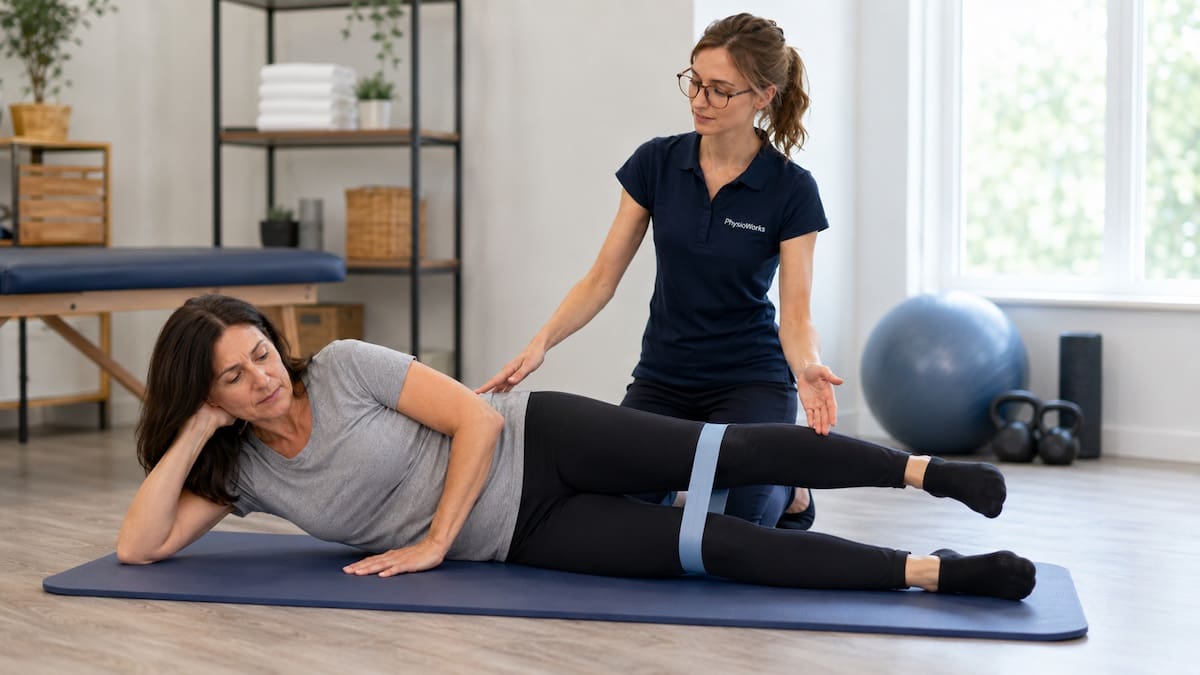
Your physiotherapist may prescribe exercises tailored to symptoms and capacity, beginning with comfortable loading and progressing to stronger single-leg and functional tasks.
-
Return to your normal routine gradually
Increase walking, hills, work demands and sport in manageable steps, monitoring symptoms during activity and the following day.
-
Review if recovery stalls
Reassess the diagnosis, loading plan and any contributing back or hip-joint problems if symptoms continue or worsen.
Physiotherapy for Hip Bursitis
Physiotherapy can help establish the likely pain source, guide exercise load management, tailor strengthening and plan a return to normal activity. Exercises should match your presentation rather than follow one routine for everyone.
Do Injections Help Hip Bursitis?
A GP or specialist may discuss suitable pain relief or a corticosteroid injection in selected cases. An injection may provide short-term relief, but the benefits vary and it does not address reduced strength or load tolerance. Discuss potential risks, benefits and alternatives with your treating clinician. Rehabilitation often remains important for longer-term function.
Should You Keep Walking With Hip Bursitis?
Often, yes. Walking can remain part of recovery if the amount is manageable. A useful guide is how your hip responds during the walk, later that day and the next morning.
Continue
Symptoms stay manageable and settle to your usual level afterwards.
Modify
Pain increases with hills, stairs or distance, or you have a clear overnight flare.
Seek assessment
Walking is becoming progressively harder, you develop a limp, or symptoms do not settle with modification.
Severe pain or inability to bear weight requires urgent medical assessment rather than a walking trial.
How Long Does Hip Bursitis Take to Heal?
Recovery varies. A recent, mild episode may improve over several weeks, while persistent GTPS involving gluteal tendons may take months of carefully progressed rehabilitation. There is no reliable single healing deadline.
Progress is better judged by improving sleep, walking tolerance, strength and the ability to return to normal tasks. If symptoms are not improving, review the diagnosis and treatment plan rather than simply pushing harder.
Can Hip Bursitis Be Prevented?
Not every episode is preventable. You may reduce the chance of recurrent symptoms by building walking or running distances gradually, maintaining hip strength, adjusting habitual side-lying pressure and responding early to significant increases in symptoms.
When Should You Seek Medical Help?
Seek urgent medical care if hip pain follows a significant fall and you cannot bear weight, or if the hip is suddenly very painful, red, hot or swollen, particularly with fever or feeling unwell. New severe weakness or neurological symptoms also warrant prompt assessment.
Arrange a clinical review if pain repeatedly disrupts sleep, walking is becoming more difficult, unexplained symptoms are developing or you are not improving with sensible activity changes.
What Can You Do Next?
Choose your clinic and appointment pathway
Select a PhysioWorks clinic to continue to live booking, an appointment request or reception assistance.
Hip Bursitis FAQs
Is walking good for hip bursitis?
Walking is often helpful if the amount does not trigger a significant flare. Try shorter, flatter walks and build up gradually as your symptoms settle.
What is the fastest way to improve hip bursitis?
There is no guaranteed quick fix. Reducing direct hip compression, adjusting aggravating activities and following an appropriate strengthening program are sensible early steps. Seek advice if symptoms persist.
Will hip bursitis go away on its own?
Some mild episodes settle with activity changes. Ongoing or recurrent outer hip pain may involve the gluteal tendons and benefit from individual assessment and progressive rehabilitation.
Can hip bursitis cause pain down the leg?
Outer hip pain may spread down the outside of the thigh towards the knee. Numbness, tingling, marked weakness or pain below the knee can suggest another cause, including referred nerve pain.
Is hip bursitis the same as gluteal tendinopathy?
No. Bursitis refers to irritation of a bursa, while gluteal tendinopathy involves nearby tendons. They may overlap within greater trochanteric pain syndrome (GTPS).
When should I worry about hip bursitis?
Seek urgent medical attention after significant injury if you cannot bear weight, or for a red, hot, very painful hip with fever or feeling unwell. Arrange an assessment for ongoing night pain, worsening walking tolerance or symptoms that do not improve.
Evidence and Further Reading
- Pianka MA et al. Greater trochanteric pain syndrome: evaluation and management of a wide spectrum of pathology. SAGE Open Medicine. 2021.
- Wang Y et al. Corticosteroid injection for greater trochanteric pain syndrome: a systematic review and meta-analysis. Journal of Orthopaedic Surgery and Research. 2022.
- Cordeiro TTP et al. Effects of exercise-based interventions on gluteal tendinopathy. Scientific Reports. 2024.
- MedlinePlus: Bursitis. General patient information.