
Perimenopause
Perimenopause Physiotherapy
Perimenopause can affect more than your menstrual cycle. Changes in hormones, sleep and recovery may coincide with joint or tendon pain, reduced strength, changes in bone health, balance concerns and pelvic floor symptoms.


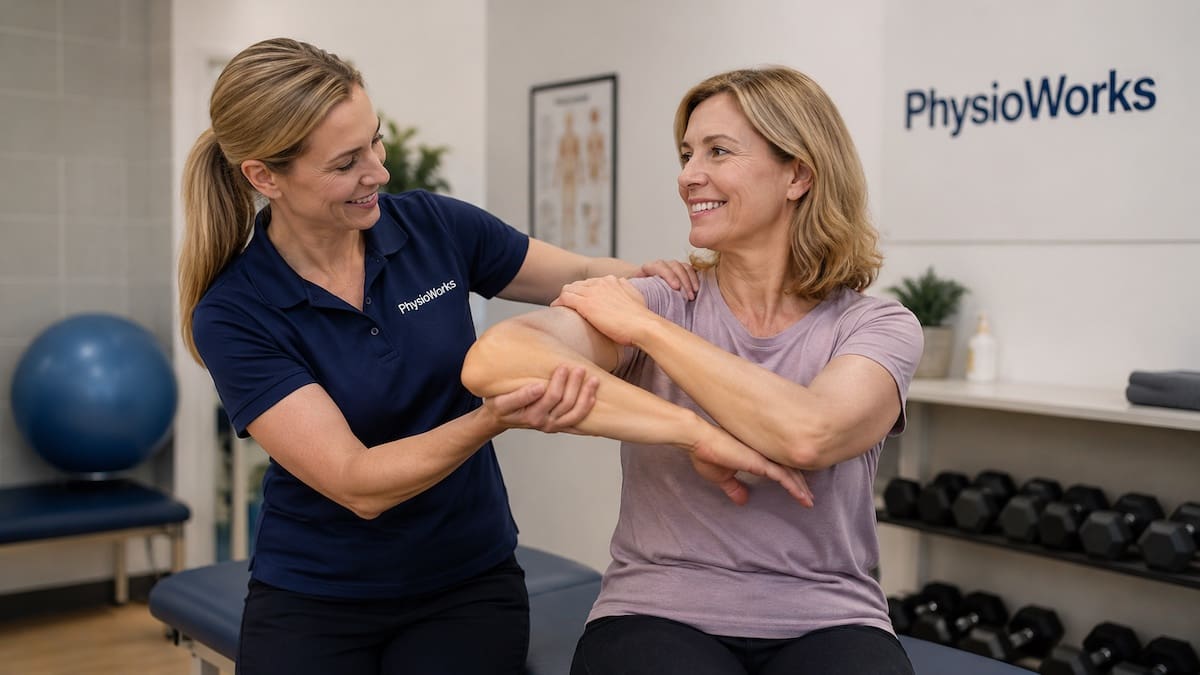
Physiotherapy can help manage some of the physical effects experienced during perimenopause. Your physiotherapist can assess movement, strength, tendon and joint loading, balance and pelvic floor needs, then develop an individual exercise and activity plan.
A physiotherapist does not diagnose perimenopause. Your GP can assess whether broader symptoms fit perimenopause, consider other possible causes and discuss medical treatment when appropriate.
What is perimenopause physiotherapy?
Perimenopause physiotherapy focuses on physical symptoms and changes that may occur during the years leading up to menopause. Care may include strength training, tendon rehabilitation, bone-loading exercise, balance work, pelvic floor rehabilitation and activity planning.
The aim is not to attribute every ache or injury to hormones. Instead, your physiotherapist considers the whole picture, including your symptoms, health history, activity levels, loading history, strength, movement, bladder control, sleep and recovery.
What physical changes can occur during perimenopause?
Perimenopause affects people differently. Some women notice changes in their periods alongside symptoms that influence exercise, work, sleep and everyday activity.
Joints and tendons
Joint stiffness, tendon pain or muscle aches may become more noticeable, particularly when activity, training load, sleep or recovery has also changed.
Strength and fitness
Some women notice reduced strength, power, exercise tolerance or confidence with lifting, stairs, running or sport.
Bone health
Declining oestrogen levels can contribute to accelerated bone loss around menopause, making long-term strength and bone-loading exercise increasingly important.
Pelvic floor
Bladder leakage, urgency, pelvic heaviness or prolapse symptoms may appear or become more noticeable.
Balance and confidence
Reduced strength, fatigue or changes in activity can affect balance, walking confidence and confidence with more demanding exercise.
Recovery
Hot flushes, night sweats, poor sleep and fatigue can make exercise and recovery feel different from before.
Why can joint and tendon symptoms become more noticeable?
Hormonal change during perimenopause may influence muscle, tendon, bone and recovery. However, symptoms usually have more than one possible contributor.
A painful shoulder, hip, knee or heel may also relate to a sudden increase in activity, reduced strength, previous injury, training changes or another health condition. For this reason, new or persistent pain should be assessed rather than automatically attributed to perimenopause.
Common conditions that may need assessment include gluteal tendinopathy, rotator cuff tendinopathy, Achilles tendinopathy and knee arthritis.
How does perimenopause affect bone, muscle, tendons and the pelvic floor?
Bone health
Falling oestrogen levels can contribute to faster bone loss around menopause. Resistance exercise, appropriate impact loading, balance training and medical assessment of fracture risk can all form part of a long-term bone-health plan.
Learn more about osteoporosis and osteopenia.
Muscle health
Maintaining muscle strength and power becomes increasingly important through midlife. Reduced activity, poor sleep, pain or inconsistent training can make stairs, lifting, running and other higher-load activities feel harder.
Tendon health
Tendons respond to load. Symptoms may flare when activity increases faster than the tendon can tolerate. A graded strengthening program can help rebuild capacity while avoiding repeated cycles of overload and prolonged rest.
Pelvic floor health
Bladder leakage, urinary urgency, pelvic heaviness or prolapse symptoms should not simply be accepted as part of ageing. A physiotherapist with pelvic health experience can assess contributing factors and provide appropriate management.
See our information about pelvic floor exercises and stress incontinence.
How is perimenopause assessed?
A GP can assess whether your broader symptoms fit perimenopause and determine whether other medical causes should be investigated. Physiotherapy assessment focuses on how your symptoms affect movement and physical function.
Your physiotherapy assessment may include:
- joint movement and mobility assessment
- muscle strength and functional strength testing
- tendon loading and symptom assessment
- walking, stair or movement assessment
- balance testing where appropriate
- discussion about exercise, training load and recovery
- bone-health and falls-risk screening
- pelvic floor assessment when bladder or pelvic symptoms are relevant
Which type of care may suit you?
Joint or tendon pain
A physiotherapy assessment can help identify contributing factors and develop an appropriate graded loading program.
Bladder leakage, urgency or pelvic heaviness
A women’s health or pelvic floor physiotherapy assessment may help identify pelvic floor, bladder and pressure-management factors.
Reduced strength or fitness
Physiotherapy or exercise physiology may help you rebuild strength, fitness and confidence through a structured exercise plan.
Bone health or balance concerns
A strength, bone-loading and balance program may be appropriate, with GP input when medical assessment or bone-density testing is indicated.
How can physiotherapy help during perimenopause?
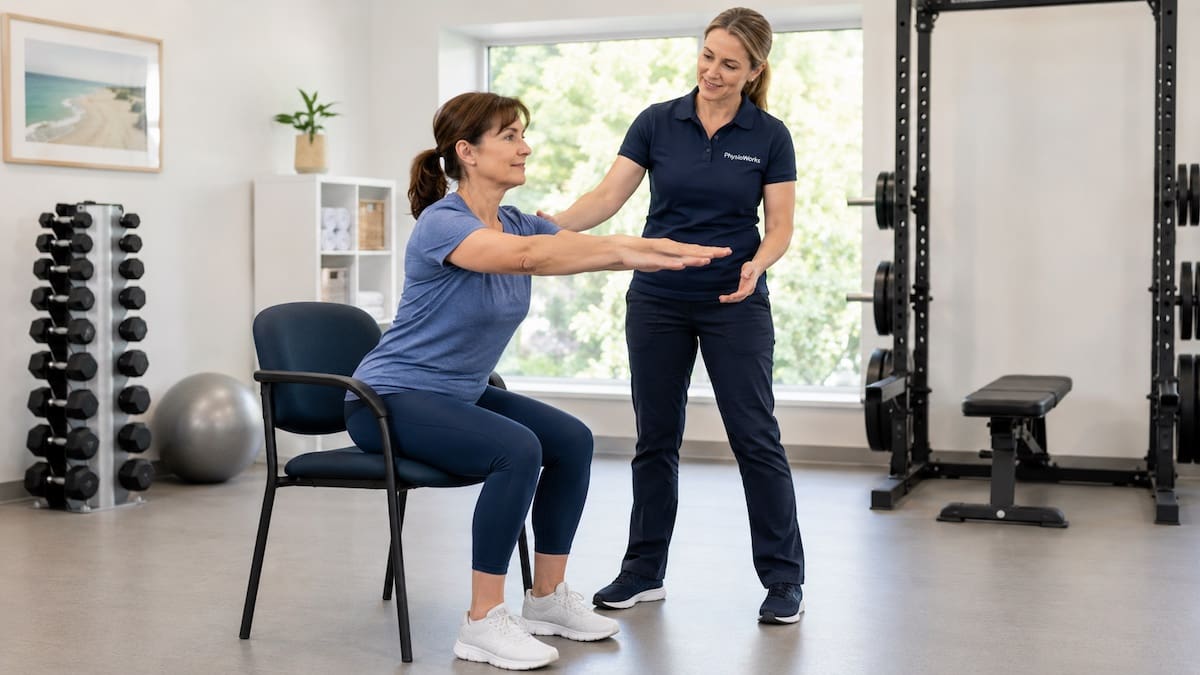
Treatment depends on your symptoms, health history, current activity and goals. Your plan may combine education, exercise, load management and selected hands-on treatment where it adds value.
- progressive strength training for muscle, tendon and bone health
- graded tendon-loading programs
- appropriate impact and weight-bearing exercise
- pelvic floor retraining and bladder-management strategies
- balance and falls-prevention exercise
- movement and activity modification during symptom flare-ups
- graded return to exercise, running, sport or gym training
- manual therapy when stiffness or movement restriction makes it clinically useful
- advice about pacing, recovery and sustainable exercise habits
Can exercise physiology help during perimenopause?
Yes. Exercise physiology can complement physiotherapy when longer-term supervised exercise, strength development, bone loading or general conditioning is the main priority.
Exercise physiology may be particularly useful if you feel deconditioned, fatigued, unsure about progressing gym exercise or concerned about safely increasing training load.
What exercise can you do during perimenopause?
A useful exercise plan usually combines several types of activity rather than relying on one form of exercise.
- complete strength training two to three times per week where appropriate
- include regular weight-bearing activity such as walking or stairs
- use impact exercise when suitable for your bone health, joints and fitness
- practise prescribed pelvic floor exercises when indicated
- include balance and lower-limb strengthening
- break up long periods of sitting
- adjust training when poor sleep or significant fatigue affects recovery
- progress gradually rather than making sudden large increases in exercise load
Healthy Bones Australia provides further information about resistance, impact and balance exercise for bone health. Read the Healthy Bones Australia exercise guidance.
When should you see your GP or seek medical care?
Consider physiotherapy assessment when pain, weakness, bladder symptoms, balance changes or reduced confidence are affecting your work, exercise or everyday activities.
Your GP remains an important part of perimenopause care. Medical assessment may be appropriate for broader menopausal symptoms, bone-health risk, unexplained symptoms or discussion about medical treatment.
Perimenopause physiotherapy FAQs
Can physiotherapy help with perimenopause symptoms?
Physiotherapy may help with physical effects associated with perimenopause, including joint and tendon pain, reduced strength, pelvic floor symptoms and balance changes. Treatment commonly focuses on movement, strength, load management and practical activity strategies.
Why do my joints and tendons feel worse during perimenopause?
Hormonal change may influence recovery and musculoskeletal tissues, but symptoms can also relate to activity changes, training load, strength, previous injury, sleep and other health factors. Persistent or significant pain should therefore be assessed rather than automatically attributed to hormones.
Can perimenopause affect the pelvic floor?
Yes. Some women experience bladder leakage, urgency, pelvic heaviness or prolapse symptoms during this life stage. A pelvic floor physiotherapist can assess relevant muscle function, bladder habits, pressure management and other contributing factors.
What exercise is best during perimenopause?
A balanced program often includes progressive strength training, weight-bearing activity, balance exercise and sufficient recovery. The most appropriate program depends on your health, symptoms, fitness, bone health, pelvic floor function and current exercise capacity.
Do I need to see a GP as well as a physiotherapist?
Often, yes. A GP can assess whether broader symptoms fit perimenopause, discuss medical options and investigate other possible causes. Physiotherapy focuses on the associated movement, strength, musculoskeletal, balance and pelvic floor issues.
When should I think about bone health during perimenopause?
Bone health deserves particular attention if you have fracture risk factors, a family history of osteoporosis, low body weight, early menopause, low activity levels or other medical risks. Your GP can advise whether bone-density testing or further assessment is appropriate.
What to do next
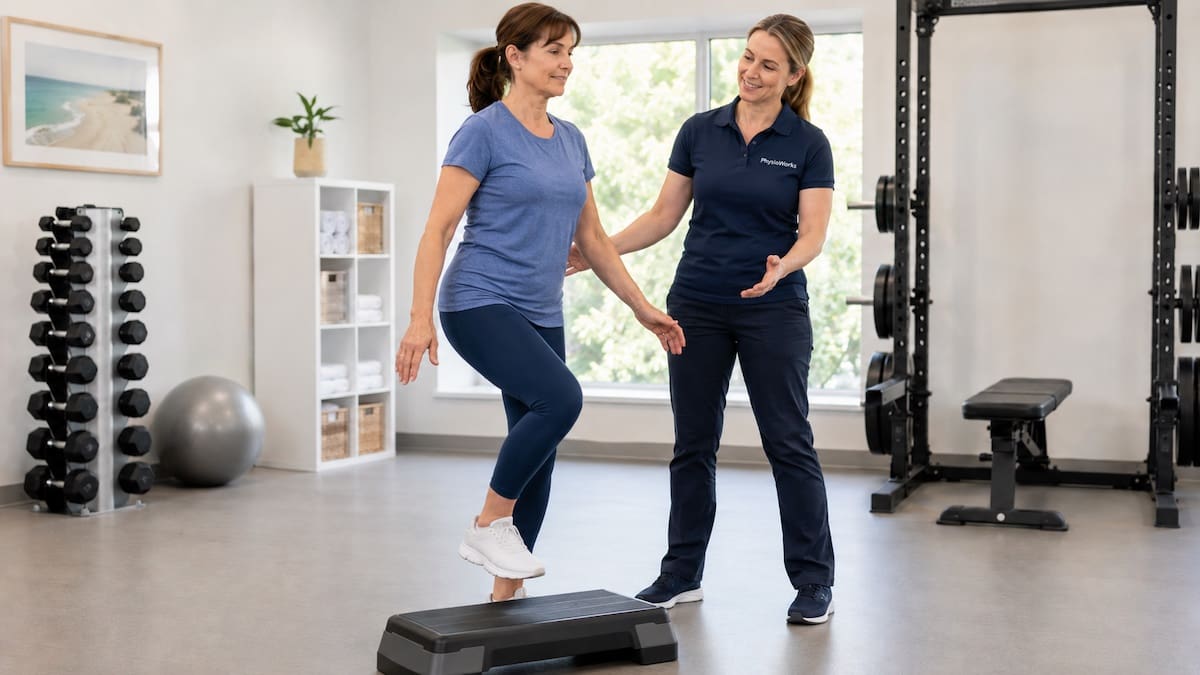
If perimenopause-related physical changes are affecting your movement, exercise, bladder control or confidence, a physiotherapy assessment can help identify the main factors contributing to your symptoms.
Your physiotherapist can develop an individual plan and, where appropriate, work alongside your GP or coordinate care with exercise physiology or women’s health physiotherapy.
Choose your clinic and appointment pathway
Select a PhysioWorks clinic to continue to live booking, an appointment request or reception assistance.
Related PhysioWorks information
References
- National Institute for Health and Care Excellence. Menopause: identification and management. NICE guideline NG23. Updated 15 April 2026.
- Pyne Y, Burgin J, Hickey M. Towards a more accurate global picture of perimenopause. Bulletin of the World Health Organization. 2024;102(12):922–924. doi:10.2471/BLT.24.292659.
- Wright VJ, Schwartzman JD, Itinoche R, Wittstein J. The musculoskeletal syndrome of menopause. Climacteric. 2024;27(5):466–472. doi:10.1080/13697137.2024.2380363.
- Santo JE, Simões RS, Jesus RLAD, et al. The efficacy of manual therapy on musculoskeletal pain in menopausal women: a systematic review. Healthcare. 2024;12(18):1841. doi:10.3390/healthcare12181841.
- Healthy Bones Australia. Exercise Prescription to Support the Management of Osteoporosis. 2024.