
Persistent Postural-Perceptual Dizziness (PPPD)
Persistent Postural-Perceptual Dizziness (PPPD)
Why persistent rocking, unsteadiness and visual motion sensitivity occur—and how rehabilitation may help.


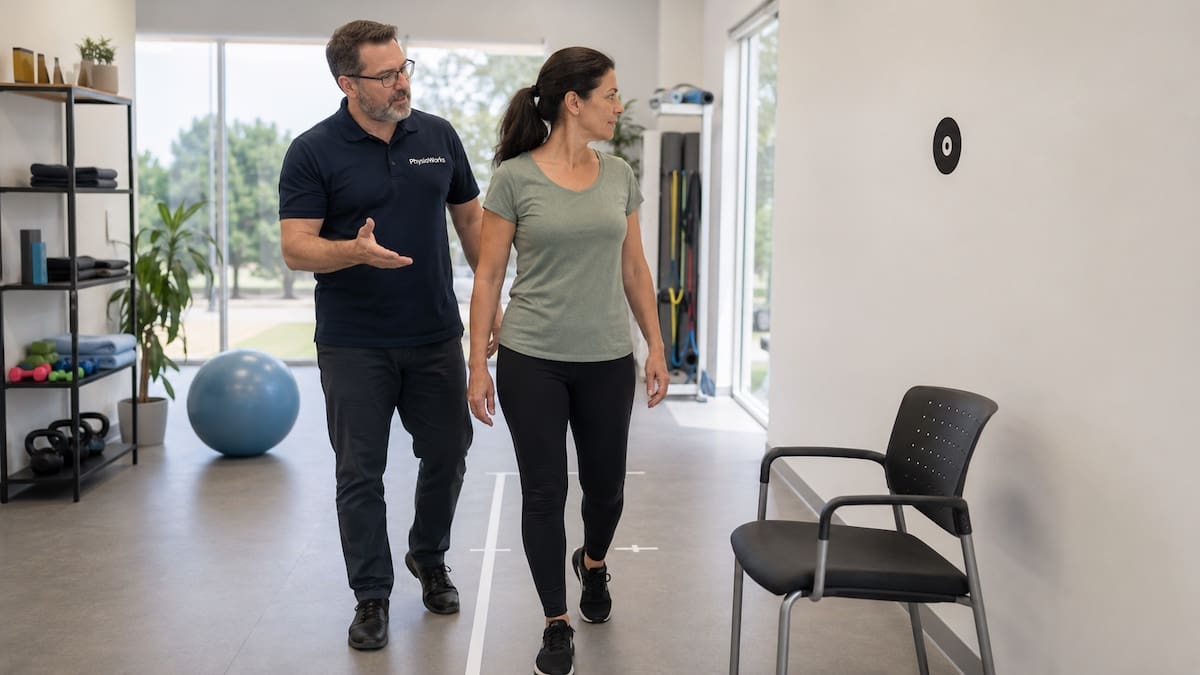
Graded walking and visual-target exercises may help rebuild movement confidence with PPPD.
Quick answer
Persistent Postural-Perceptual Dizziness (PPPD) is a recognised cause of ongoing non-spinning dizziness, rocking, swaying or unsteadiness. Symptoms occur on most days for at least three months and often worsen when you are upright, moving or surrounded by complex visual information.
Many people improve with an individualised plan that may include Vestibular Rehabilitation Therapy, education, pacing and gradual exposure to movements or environments that trigger symptoms.
Could your symptoms fit PPPD?
Persistent sensations
Rocking, swaying, floating, light-headedness or feeling “off balance” for hours at a time.
Upright sensitivity
Symptoms increase during standing, walking, turning, bending or prolonged activity.
Visual sensitivity
Supermarkets, crowds, patterned floors, traffic and scrolling screens feel difficult.
Reduced confidence
Driving, exercise, public places or normal movement may start to feel less predictable.
What is Persistent Postural-Perceptual Dizziness?
Persistent Postural-Perceptual Dizziness is a chronic vestibular disorder that causes non-spinning dizziness, unsteadiness or altered motion sensations on most days for at least three months.
Symptoms usually worsen with upright posture, active or passive movement and visually complex environments. Examples include shopping centres, moving traffic, escalators, patterned surfaces and scrolling screens.
PPPD sits within the broader vestibular physiotherapy cluster. It differs from many forms of vertigo and dizziness because it usually feels like swaying, floating, disconnection or movement sensitivity rather than brief spinning.
No single scan or blood test confirms PPPD. Instead, a clinician considers the symptom pattern, how long symptoms have lasted, what triggers them and whether another condition better explains the presentation.
Recognised clinical pattern
How is PPPD identified?
A diagnosis generally requires the following features to occur together.
- 1 Persistent symptoms
Dizziness, unsteadiness or non-spinning vertigo occurs on most days for at least three months.
- 2 Upright posture makes symptoms worse
Standing and walking are often more difficult than sitting or lying down.
- 3 Movement increases symptoms
Active movement or passive motion, such as riding in a vehicle, may aggravate dizziness.
- 4 Complex visual information is difficult
Moving scenes, crowds, patterned surfaces or screen use may increase symptoms.
- 5 A trigger commonly occurs first
Symptoms may follow vertigo, migraine, concussion, illness, panic or another balance disruption.
- 6 Daily life is affected
Symptoms cause distress or restrict walking, work, shopping, exercise, driving or social activity.
- 7 Another disorder does not fully explain the pattern
Other vestibular, neurological, hearing-related, cardiovascular or medical causes must be considered.
These features summarise the Bárány Society consensus criteria. Assessment remains important because PPPD can overlap with other vestibular conditions.
What are the symptoms of PPPD?
Symptoms vary. However, many people describe a persistent “not right” feeling rather than clear, brief spinning attacks.
- ongoing unsteadiness or light-headedness
- rocking, swaying, floating or internal motion sensations
- feeling disconnected from the floor or surrounding environment
- symptoms that persist for hours and change in intensity
- difficulty walking through crowds or shopping centres
- sensitivity to patterned floors, traffic or moving scenes
- symptoms during turning, bending or quick head movements
- fatigue or difficulty concentrating
- reduced confidence with driving, exercise or public places
Some people also have features of vestibular migraine, cervicogenic dizziness or an earlier episode of BPPV.
PPPD versus vertigo: what is the difference?
PPPD usually causes non-spinning dizziness, rocking, swaying, unsteadiness or visual motion sensitivity. These symptoms linger on most days.
In contrast, vertigo commonly describes a false spinning or rotational sensation. Depending on the cause, vertigo may occur in brief attacks or during specific head movements.
The distinction matters. Treatment for PPPD often uses graded movement, visual exposure, balance retraining and education. Meanwhile, some causes of brief positional vertigo require a specific repositioning technique.
PPPD may still begin after a separate vestibular event. For example, an episode of BPPV or vestibular migraine may settle, but persistent visual sensitivity or unsteadiness may remain.
Symptom comparison
How does PPPD differ from other dizziness conditions?
Different vestibular conditions can overlap. The patterns below provide general guidance, but they cannot replace an individual assessment.
PPPD
Persistent sensitivity
- Common feeling
- Rocking, swaying, floating, unsteadiness or non-spinning dizziness.
- Usual timing
- Present for hours and on most days for at least three months.
- Common triggers
- Standing, walking, movement and visually complex environments.
- Hearing symptoms
- Not a defining PPPD feature.
BPPV
Position-triggered vertigo
- Common feeling
- Brief spinning or tumbling sensation.
- Usual timing
- Often lasts seconds after a particular head movement.
- Common triggers
- Rolling in bed, looking up, lying down or getting up.
- Hearing symptoms
- Usually absent.
Vestibular migraine
Migraine-related dizziness
- Common feeling
- Vertigo, imbalance, motion sensitivity or altered spatial awareness.
- Usual timing
- Episodes may last minutes to hours and sometimes longer.
- Common triggers
- Visual stimulation, poor sleep, stress and individual migraine triggers.
- Hearing symptoms
- Ear symptoms may occur, but progressive hearing loss is not typical.
Ménière’s disease
Vertigo with ear symptoms
- Common feeling
- Distinct attacks of spinning vertigo or marked imbalance.
- Usual timing
- Episodes commonly last longer than BPPV attacks.
- Common triggers
- Attacks may occur without a clear movement trigger.
- Hearing symptoms
- Fluctuating hearing loss, tinnitus or ear pressure may occur.
Cervicogenic dizziness
Neck-related presentation
- Common feeling
- Unsteadiness, disorientation or light-headedness with neck symptoms.
- Usual timing
- Often varies with neck pain, posture and movement.
- Common triggers
- Neck positions, sustained posture or restricted neck movement.
- Hearing symptoms
- Not usually expected from a neck-related cause.
A person can have PPPD alongside migraine, a previous vestibular disorder or another health condition. Assessment should consider whether one diagnosis, several overlapping conditions or a non-vestibular cause best explains the symptoms.
Why does PPPD feel worse in busy places?
Your balance system combines information from your inner ears, eyes, neck and body. After a balance-disrupting event, the nervous system may start relying too heavily on vision and consciously monitoring normal movement.
Busy environments provide a large amount of moving visual information. Therefore, supermarkets, crowds, patterned carpets, escalators, traffic and scrolling screens may feel overwhelming or destabilising.
This response does not necessarily mean that the environment is damaging your balance system. Instead, it may reflect an over-sensitive system that needs carefully graded retraining.
How the balance system works
Why can normal movement start to feel uncomfortable?
Your brain normally combines information from your eyes, inner ears, neck and body without requiring conscious effort. After a balance-disrupting event, this process may become more sensitive and visually dependent.
Inner ears
Detect head movement, acceleration and your position relative to gravity.
Vision
Provides information about movement, distance and the surrounding environment.
Neck and body
Provide position and pressure information from joints, muscles and the feet.
Combines the three information sources
The nervous system decides where you are, whether you are moving and how to keep you stable.
Three situations commonly aggravate PPPD
Standing and walking require continuous balance processing and postural control.
Turning, bending, walking or travelling in a vehicle can increase sensory demand.
Crowds, supermarkets, traffic, patterned floors and scrolling provide large amounts of moving information.
Important: A symptom increase does not automatically mean that movement or visual exposure is causing injury. It may reflect a balance system that has become over-sensitive and needs carefully graded retraining.
What can trigger PPPD?
PPPD often begins after an event that temporarily disrupts balance or changes how safe movement feels.
Vestibular event
BPPV, vestibular neuritis, labyrinthitis or another episode of vertigo may occur first.
Migraine
Migraine or vestibular migraine can increase sensitivity to motion, light and visual information.
Injury or illness
Concussion, infection, surgery or another illness may temporarily disrupt movement confidence.
Stress response
A panic episode or intense period of stress may increase body vigilance and dizziness sensitivity.
How is PPPD assessed?
A clinician assesses PPPD by matching your symptoms to a recognised pattern and considering other possible causes. Your assessment may cover:
- how long the symptoms have been present
- whether symptoms occur on most days
- movement, posture and visual triggers
- the event that first started the dizziness
- migraine, hearing and neurological symptoms
- balance confidence and walking stability
- eye and head movement control
- neck symptoms and movement
- falls risk and the effect on daily activity
Your physiotherapist may also screen for positional vertigo, vestibular hypofunction, migraine-related dizziness, neck-related dizziness or signs that need GP, ENT, neurology or emergency review.
Do you need scans or specialist tests?
Not everyone with suspected PPPD needs imaging. The diagnosis mainly depends on the symptom pattern and clinical assessment.
However, medical or specialist tests may be appropriate when symptoms are unusual, the history remains unclear, hearing has changed or neurological signs are present. Tests can help identify or exclude another condition, but a normal scan does not by itself confirm PPPD.
What does physiotherapy for PPPD involve?
Physiotherapy aims to improve movement tolerance, balance confidence and the way your nervous system responds to motion and visual information.
A program may include:
- Vestibular Rehabilitation Therapy
- gaze-stability or eye-head coordination exercises
- balance and walking retraining
- graded exposure to motion and visually busy environments
- pacing that avoids repeated boom-and-bust cycles
- education about persistent dizziness and symptom flares
- gradual return to work, exercise, shopping or driving tasks
- management of relevant neck or migraine-related factors
Treatment should challenge the balance system without repeatedly overwhelming it. Your program should match your current tolerance, goals and symptom behaviour rather than using the same exercises for everyone.
Can Vestibular Rehabilitation Therapy help PPPD?
Vestibular rehabilitation may help improve dizziness-related disability, balance and movement confidence for some people with PPPD. However, the research remains varied, and treatment needs to be individualised.
Exercises should progress gradually. An aggressive approach that repeatedly produces large or prolonged symptom flares may reduce confidence and make the plan difficult to follow.
Coordinated care
Who may be involved in PPPD treatment?
Some people benefit from care involving more than one health professional.
Vestibular physiotherapist
Assesses movement, balance, visual sensitivity and walking, then guides graded rehabilitation.
GP or medical specialist
Reviews medical causes, hearing changes, migraine, medication and the need for further testing.
Psychological support
May help when fear, avoidance, panic or ongoing distress is maintaining activity restrictions.
Shared management
Coordinates migraine, sleep, neck symptoms, general health and safe return to normal activity.
What can you do between appointments?
Your treatment plan should remain individual. Still, several general strategies may support recovery:
- stay gently active instead of completely avoiding movement
- break difficult activities into manageable stages
- increase visual and movement exposure gradually
- avoid pushing hard on good days and stopping completely after a flare
- use short, regular practice rather than occasional intense sessions
- track which environments trigger symptoms and how long they take to settle
- address sleep, migraine and general conditioning where relevant
A temporary increase in symptoms does not always mean harm. However, the response should remain manageable and settle within an agreed timeframe. Discuss repeated or prolonged flares with your treating clinician.
Can PPPD be prevented?
You cannot always prevent PPPD. However, early assessment after a vestibular event may identify problems that need targeted treatment.
Remaining safely active, avoiding prolonged movement shutdown and receiving a clear explanation of the original condition may also reduce fear and unnecessary avoidance.
When migraine, neck pain or deconditioning contributes to the presentation, treating those factors may support the broader recovery plan.
Consider other causes
When might your symptoms not fit PPPD?
Some symptom patterns point more strongly towards another vestibular, neurological, cardiovascular, hearing-related or medical cause.
This pattern may fit positional vertigo such as BPPV more closely.
Hearing-related symptoms may require audiology, GP or ENT assessment.
Blood-pressure, medication or cardiovascular factors may need consideration.
A neck-related contribution may need to be assessed alongside vestibular causes.
Migraine features may suggest vestibular migraine or overlap with PPPD.
Weakness, numbness, speech changes or severe coordination problems need urgent medical review.
Do not use an online symptom comparison to diagnose yourself. A clinician should consider your full history, examination findings and medical risk factors.
When should you seek urgent help for dizziness?
Seek urgent medical care when dizziness occurs with any of the following:
- facial droop, new weakness or numbness
- slurred speech, confusion or collapse
- new double vision or marked loss of coordination
- a sudden severe headache
- new inability to stand or walk safely
- sudden hearing loss
- fainting, chest pain or unexplained breathlessness
PPPD does not explain every dizziness presentation. New, severe or unusual symptoms need appropriate medical assessment.
Persistent Postural-Perceptual Dizziness FAQs
Is PPPD the same as vertigo?
No. PPPD usually causes non-spinning dizziness, swaying, rocking or unsteadiness rather than true spinning. Some people develop PPPD after an earlier vertigo episode, but the lingering daily symptom pattern is different.
Can PPPD happen after BPPV or vestibular neuritis?
Yes. PPPD can begin after BPPV, vestibular neuritis, labyrinthitis, migraine, concussion or another balance-disrupting event. The first condition may settle while persistent visual sensitivity or unsteadiness remains.
How long does PPPD last?
By definition, symptoms occur on most days for at least three months. Recovery time varies. Some people improve steadily with treatment, while others need a longer program when symptoms are longstanding or overlap with migraine, neck pain or strong movement-related fear.
Can physiotherapy help Persistent Postural-Perceptual Dizziness?
Physiotherapy may help improve movement tolerance, gaze stability, balance and walking confidence. Treatment may combine vestibular rehabilitation, education, pacing and graded exposure to visual or movement triggers.
What makes PPPD worse?
Symptoms often increase when you are upright, walking, turning, rushing, tired, stressed or in visually busy environments. Examples include supermarkets, crowds, patterned floors, traffic and scrolling screens.
Do I need scans or specialist tests for PPPD?
Not always. Clinicians usually diagnose PPPD from the symptom pattern and clinical assessment. Medical tests may still be needed when hearing changes, neurological signs, unusual symptoms or an unclear history suggest another cause.
Choose your clinic and appointment pathway
Select a PhysioWorks clinic to continue to live booking, an appointment request or reception assistance.


References
- Staab JP, Eckhardt-Henn A, Horii A, et al. Diagnostic criteria for persistent postural-perceptual dizziness (PPPD): Consensus document of the committee for the classification of vestibular disorders of the Bárány Society. J Vestib Res. 2017;27(4):191-208. doi:10.3233/VES-170622.
- Hall CD, Herdman SJ, Whitney SL, et al. Vestibular rehabilitation for peripheral vestibular hypofunction: An updated clinical practice guideline from the Academy of Neurologic Physical Therapy of the American Physical Therapy Association. J Neurol Phys Ther. 2022;46(2):118-177. doi:10.1097/NPT.0000000000000385.
- Li Y, Pei X, Ding R, et al. Effect of vestibular rehabilitation therapy in patients with persistent postural perceptual dizziness: A systematic review and meta-analysis. Front Neurol. 2025;16:1599201. doi:10.3389/fneur.2025.1599201.
- Piatti D, De Angelis S, Paolocci G, et al. The role of vestibular physical therapy in managing persistent postural-perceptual dizziness: A systematic review and meta-analysis. J Clin Med. 2025;14(15):5524. doi:10.3390/jcm14155524.
