
Exercise Oncology
Exercise Oncology Brisbane

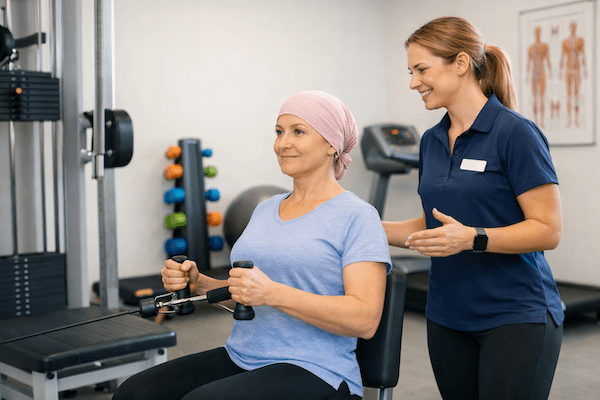
Tailored exercise oncology may help support strength, energy, and recovery during cancer care.
Exercise oncology Brisbane services at PhysioWorks may help support strength, fatigue management, mobility, and confidence during cancer treatment, recovery, and survivorship. This service sits within our broader Exercise Physiology Brisbane pathway and is available through selected PhysioWorks clinics, including Exercise Physiology Clayfield and Exercise Physiology Sandgate.
Living with cancer can affect stamina, muscle strength, balance, mood, and day-to-day function. Cancer-related fatigue and deconditioning are common. However, an accredited exercise physiologist can tailor an exercise oncology program to your diagnosis, treatment stage, current symptoms, and personal goals so activity feels safe, realistic, and sustainable.
- fatigue and reduced exercise tolerance
- strength loss and deconditioning
- balance changes and reduced confidence with movement
- safe return to activity during recovery and survivorship
Australian guidance recommends that clinicians discuss exercise, recommend it, and refer people with cancer to appropriately trained professionals as part of routine care. See the Clinical Oncology Society of Australia (COSA) exercise in cancer care position statement. ESSA also provides a position statement on exercise in cancer management.
What Is Exercise Oncology?
Exercise oncology is the use of structured, individual exercise as part of cancer care. It may include aerobic training, strength work, mobility exercises, balance practice, and functional retraining matched to your health, treatment stage, and current capacity.
Importantly, exercise oncology is not about pushing through exhaustion. Instead, it uses symptom-guided progression. On lower-energy days, sessions may be shorter, lighter, or more recovery-focused. On stronger weeks, your exercise physiologist can progress load, duration, or complexity gradually.
Should You Exercise During Chemotherapy?
Many people can continue exercising during chemotherapy, radiotherapy, hormone therapy, immunotherapy, or after surgery, but the plan often needs modification. That may include lower intensity, fewer repetitions, more recovery time, or closer supervision during periods of fatigue, dizziness, pain, neuropathy, or increased infection risk.
Why Does Exercise Oncology Matter During Cancer Care?
Exercise oncology matters because cancer treatment often affects physical capacity, confidence, and routine. A well-planned program may help reduce treatment-related decline and keep you moving more safely through difficult phases of care.
- Fatigue management: Exercise may help reduce cancer-related fatigue and improve daily function.
- Muscle preservation: Resistance training can help maintain muscle mass and physical capacity.
- Balance and mobility: Targeted practice may help if treatment has affected steadiness or walking confidence.
- Mood and sleep: Regular activity may support mental wellbeing, sleep quality, and routine.
- Long-term health: Exercise supports broader physical health during and after treatment.
How Does Exercise Physiology Support Oncology Care?
Your exercise physiologist builds a safe and progressive exercise oncology program based on your current health, treatment stage, symptoms, and goals. The aim is to keep exercise helpful and practical rather than generic or overly demanding.
What your program may include
- baseline assessment of strength, mobility, balance, and endurance
- individualised strength and aerobic exercise prescription
- modifications around fatigue, nausea, neuropathy, weakness, pain, or reduced confidence
- progression timed around chemotherapy cycles, surgery recovery, or radiotherapy demands
- guided home exercise or links to broader exercise programs where appropriate
If treatment has affected steadiness or walking confidence, structured Balance Training may form part of your plan. Some people with broader long-term function issues may also benefit from related neurological rehabilitation.
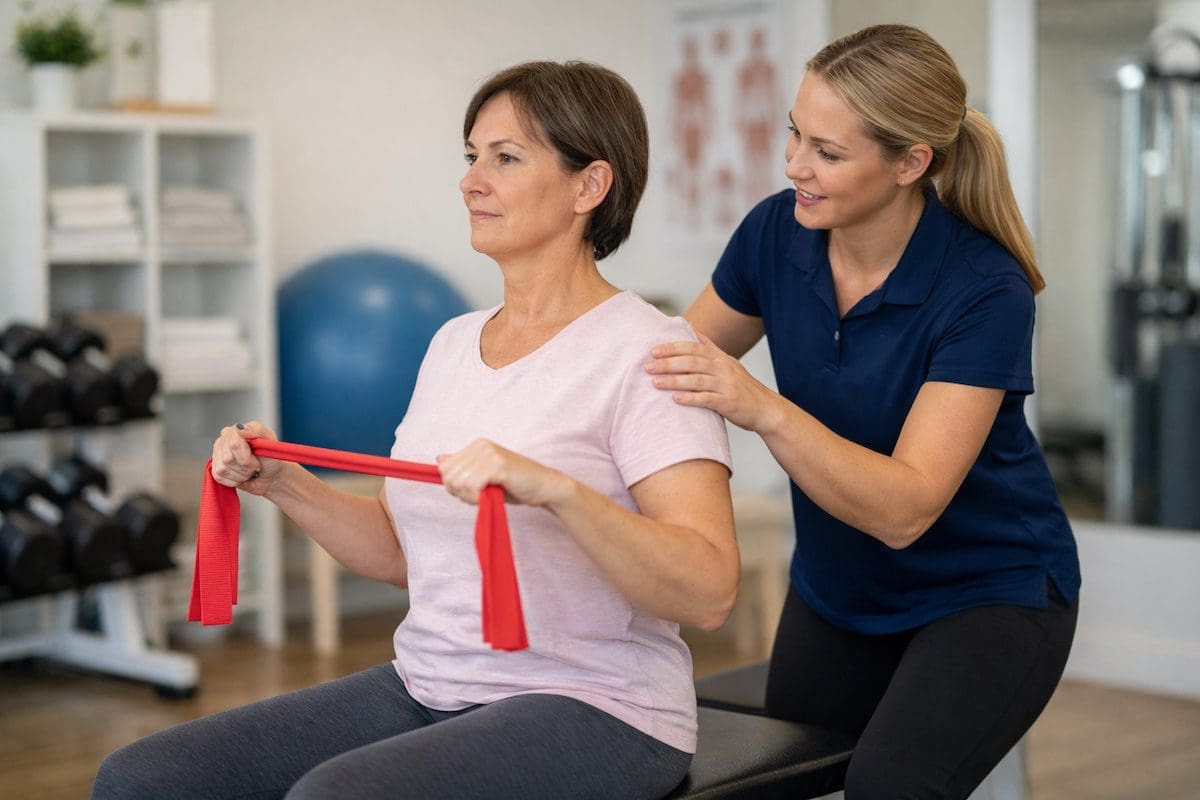
Exercise physiologist guiding safe rehabilitation.
Supervised exercise helps tailor intensity, technique, and progression to your current condition and treatment stage.
Who Can Benefit From Exercise Oncology Brisbane Services?
Exercise oncology may suit people at many points along the cancer care journey. It can be useful before treatment, during treatment, after hospital discharge, and later in survivorship when rebuilding strength or routine becomes the main goal.
- people preparing for surgery or treatment
- people undergoing chemotherapy, radiotherapy, surgery, or hormone therapy
- people recovering after hospital admission or a period of inactivity
- people managing long-term fatigue, weakness, mobility loss, or reduced exercise tolerance
- survivors wanting to improve confidence, strength, and long-term physical health
Is Exercise Oncology Safe During Cancer Treatment?
Yes. Exercise oncology is generally safe when it is prescribed and monitored appropriately. Your plan should be adjusted to your treatment phase, symptoms, bone health, immune status, medical advice, and how you are coping week to week.
Where appropriate, your exercise physiologist can also coordinate with your treating medical team so your exercise plan complements your broader cancer care.
What Happens at Your First Exercise Oncology Appointment?
Your first appointment focuses on safety, baseline assessment, and goal setting. It gives your exercise physiologist the information needed to build a realistic starting point rather than a one-size-fits-all plan.
- Health review: diagnosis, treatment timeline, medications, and symptoms
- Baseline checks: strength, balance, mobility, endurance, and walking tolerance
- Plan development: safe starting program with clear exercise priorities and progression ideas
- Ongoing review: regular reassessment as treatment demands, symptoms, and energy levels change
Exercise Oncology FAQs
What is exercise oncology?
Exercise oncology is the use of structured exercise as part of cancer care. It may include aerobic training, strength work, mobility exercises, and balance retraining tailored to treatment stage and current capacity.
Should I exercise during chemotherapy?
Many people can exercise during chemotherapy, but the program usually needs adjustment. Lower intensity, more recovery, shorter sessions, and symptom-guided pacing are often appropriate.
Can exercise help cancer-related fatigue?
Research suggests that appropriately prescribed exercise may help reduce cancer-related fatigue and improve day-to-day function. The key is matching the exercise dose to how you are coping, rather than overdoing it.
Do I need a referral for exercise physiology?
You do not need a referral for a private exercise physiology appointment. However, some Medicare, DVA, WorkCover, CTP, or other funded pathways may require referral or approval.
Can exercise oncology be done by telehealth?
Sometimes, yes. Telehealth may suit follow-up reviews, home exercise guidance, and some progressions, although in-person assessment is often the better starting point when symptoms or risks are more complex.
What to Do Next
If you are living with cancer and want safe, practical exercise guidance, book an exercise physiology assessment. Bring recent oncology, hospital, or specialist summaries if available.
You can start through our Exercise Physiology Brisbane service page, review TeleHealth options where suitable, or explore nearby appointment locations via PhysioWorks clinics.
Together, you can build an exercise oncology plan that fits your current capacity, treatment stage, and goals on both stronger and more difficult weeks.
Choose your clinic and appointment pathway
Select a PhysioWorks clinic to continue to live booking, an appointment request or reception assistance.
Follow PhysioWorks
For exercise tips, rehabilitation education, and clinic updates, follow PhysioWorks on social media.


References
- Campbell KL, Winters-Stone KM, Wiskemann J, et al. Exercise guidelines for cancer survivors: consensus statement from International Multidisciplinary Roundtable. Med Sci Sports Exerc. 2019;51(11):2375-2390.
- Watson GA, Coyne ZL, Houlihan E, Leonard GD. Exercise oncology in the cancer care continuum. Postgrad Med. 2022;134(1):26-36.
- Wu T, Yan F, Wei Y, et al. Effect of exercise therapy on cancer-related fatigue. Am J Phys Med Rehabil. 2023;102(12):1055-1062.
- Sikandari MH, Siddiqui A, Ahmad M, et al. Effect of exercise on fatigue and depression in women undergoing chemotherapy for breast cancer. Support Care Cancer. 2024;32(8):515.
- Wang T, Deng J, Li W, Zhang Q, Yan H, Liu Y. The effects of aerobic exercise in patients with cancer-related fatigue: a systematic review and meta-analysis. PLoS One. 2025;20(6):e0325100.
