
Better Bones Exercise Class
Better Bones Exercise Class Brisbane
Small-group Exercise Physiology classes for osteoporosis, osteopenia and low bone health at PhysioWorks Ashgrove, Sandgate and Clayfield.
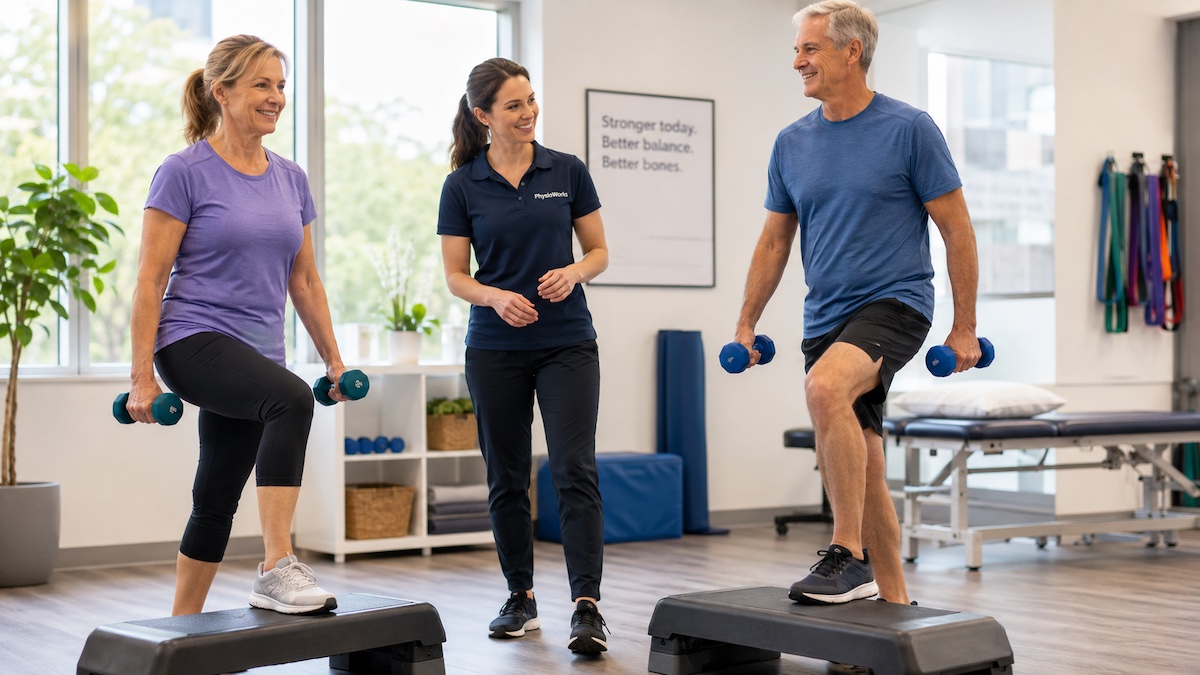
The Better Bones Exercise Class is a small-group Exercise Physiology class for adults with osteoporosis, osteopenia or low bone health. Each class runs for 45 minutes and uses guided strength, balance and safe weight-bearing exercise.
Classes run at PhysioWorks Ashgrove, PhysioWorks Sandgate and PhysioWorks Clayfield. Madison Stanley, Exercise Physiologist, leads the program and adjusts exercises to your scan results, strength, balance, health history and goals.
Quick summary: The Better Bones Exercise Class helps adults build strength, balance and movement confidence in a small, professionally guided setting. An initial Exercise Physiology assessment is required before joining.
PhysioWorks Exercise Physiology
Book Exercise Physiology
Exercise Physiology appointments are available at Ashgrove, Clayfield and Sandgate.
Better Bones Exercise Class Details
The Better Bones Exercise Class is designed for people who need more structure than a general gym program. It suits adults who want professional coaching, safe loading and a steady pathway into regular exercise.
Choose Your Better Bones Exercise Class Location
You can follow the same supervised Better Bones pathway at Ashgrove, Sandgate or Clayfield. Choose the clinic that best suits your location and weekly schedule.
Ashgrove
Monday, 1:30 pm–2:15 pm
An inner-west option for supervised bone health, strength and balance exercise.
Sandgate
Wednesday, 12:00 pm–12:45 pm
A northside option for guided strength, balance, posture and movement confidence.
Clayfield
Thursday, 11:00 am–11:45 am
An inner-north option for supervised bone health exercise and safe loading progression.
Who Is the Better Bones Exercise Class For?
The Better Bones Exercise Class is for adults with low bone health, reduced strength, lower balance confidence or concerns about falls. It may also suit you if you have been advised to exercise but feel unsure how to start safely.
Low bone density can affect both women and men. Your exercise plan should reflect your scan results, fracture history, strength, balance, health and goals.
The Better Bones Exercise Class May Suit You If You Have:
- osteoporosis or osteopenia shown on a bone density scan.
- reduced strength or walking confidence.
- concerns about falls or fracture risk.
- uncertainty about safe gym or home training.
- a need for steady, guided exercise progress.
- a goal to move from one-on-one care into group exercise.
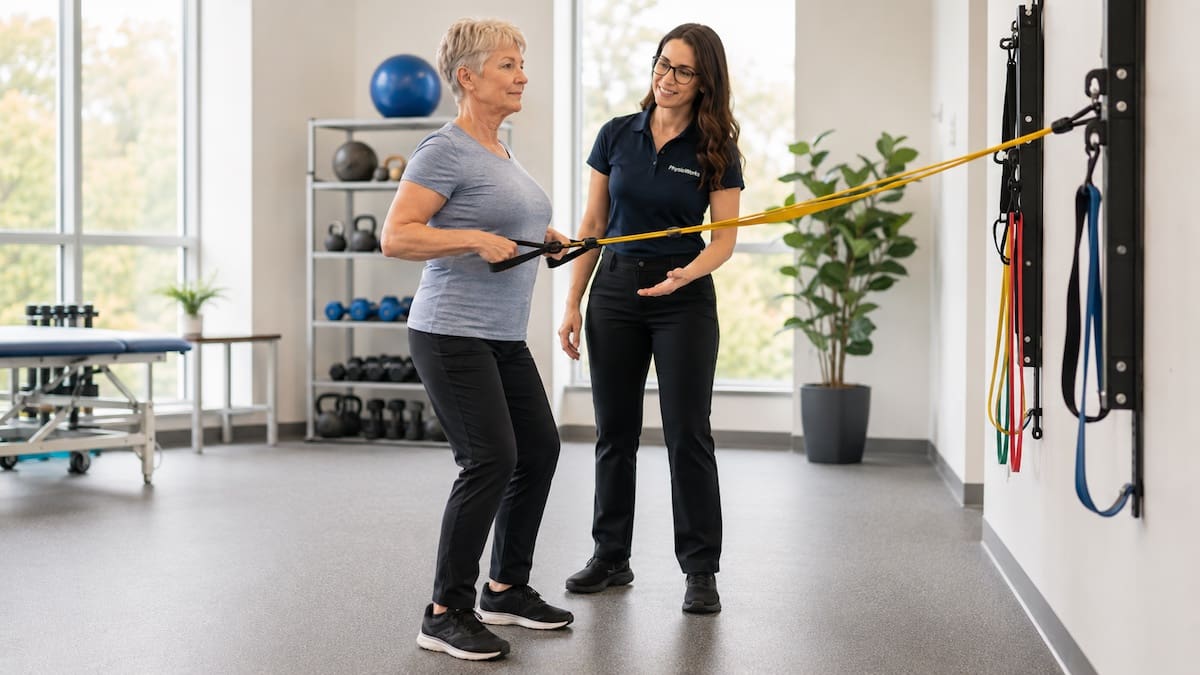
Guided posture and strength work supports safer, more confident training.
What Happens in the Better Bones Exercise Class?
Each Better Bones Exercise Class takes place in a clinic gym. Madison guides individualised strength, balance, posture and weight-bearing exercises within the small-group setting.
You may begin with bodyweight exercises or light resistance. As your confidence and capacity improve, Madison may add step-ups, rows, carries, squats, balance drills or carefully selected impact exercises where suitable.
Better Bones Class Focus Areas
- Strength: legs, hips, trunk, back and arms.
- Balance: stepping, turning and weight shifting.
- Posture: safer spine positions for exercise and daily tasks.
- Loading: safe and progressive exercise choices where suitable.
- Exercise skills: learning how to exercise between sessions.
- Falls risk: building steadier movement for daily life.
What Equipment Will You Use?
The Better Bones Exercise Class uses simple gym equipment. Madison selects each exercise according to your ability, scan history, symptoms and safety needs.
Common Better Bones Class Equipment
- steps and benches.
- hand weights.
- exercise mats.
- resistance bands.
- low boxes where suitable.
Why Does Exercise Matter for Bone Health?
Bones respond to appropriate loading. Strength exercise, weight-bearing activity and balance training can form part of a broader bone health plan. The right mix depends on your scan, fracture history, strength, balance, pain, medicines and general health.
Clinical guidance supports strength, balance and posture training for many people with osteoporosis. People with a higher fracture risk may need extra care with sudden, heavy or poorly controlled loading. You can also read more about osteoporosis and osteopenia.
How Your Better Bones Program May Progress
| Start | Learn safe technique, begin with suitable loads and build confidence. |
| Build | Add strength, balance, posture and stepping exercises. |
| Progress | Increase resistance or exercise difficulty when it is safe and appropriate. |
Why Is an Initial Assessment Required?
You need an initial Exercise Physiology assessment before joining the Better Bones Exercise Class. This appointment allows Madison to review your health history, risks, goals and starting level.
Madison may review your bone scan, fracture history, medicines, falls risk, balance, strength, mobility, exercise history and goals. This information helps her choose safer and more relevant starting exercises.
How Is Progress Reviewed?
Madison reviews your exercise level during each Better Bones Exercise Class and adjusts your program when it is safe and useful. A separate review can be arranged if your symptoms, balance, health, scan results or goals change.
Safety Tips for Better Bones Exercise
Exercise choices should match your fracture risk, symptoms and health history. Some movements may need to be changed, particularly after a spinal fracture or recent fracture.
Movements That May Need Changes
- heavy lifting with a rounded back.
- loaded bending combined with twisting.
- sudden or poorly controlled twisting.
- running, jogging or jumping without appropriate preparation or clearance.
- heavy lifting without guidance when fracture risk is high.
If you have severe osteoporosis, a spinal fracture, a recent fracture, new pain or a major change in balance, arrange an individual review before joining group training.
Is the Better Bones Exercise Class Right for You?
The Better Bones Exercise Class may suit you if you want more support than a generic gym program. It provides professional coaching, safe loading and steady progress in a small group.
A physiotherapy or medical review may be the better first step if you have new pain, a recent fracture, worsening back pain, unexplained symptoms or a major change in balance.
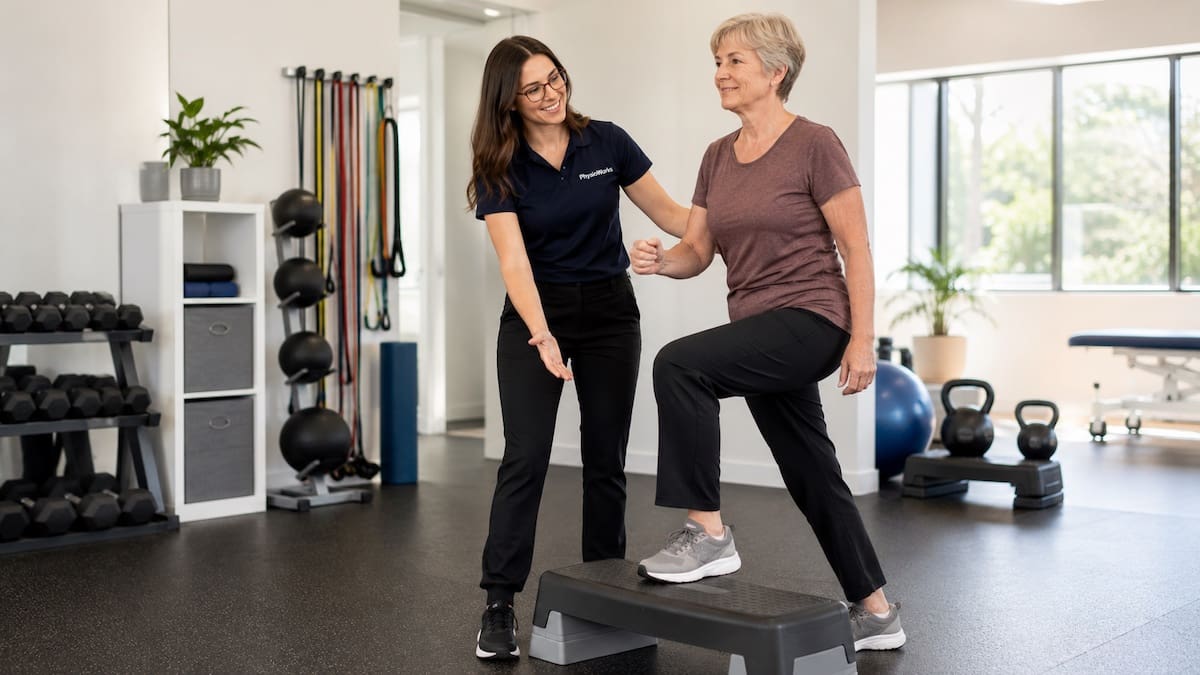
Step-up training can build leg strength and balance confidence.
Better Bones Exercise Class FAQs
Where and when do the Better Bones Exercise Classes run?
Better Bones Exercise Classes currently run at Ashgrove on Monday from 1:30 pm–2:15 pm, Sandgate on Wednesday from 12:00 pm–12:45 pm and Clayfield on Thursday from 11:00 am–11:45 am. Please confirm availability with reception before attending.
Can exercise improve bone density?
Exercise may support bone density when it is regular, appropriately loaded and matched to the person. Strength exercise, weight-bearing activity and balance training are common parts of osteoporosis care. Your program should reflect your scan, fracture history, current strength and confidence.
Is the Better Bones Exercise Class suitable for osteopenia?
The Better Bones Exercise Class may suit many people with osteopenia after an initial assessment. Starting early can help you build strength, improve balance and learn safer loading habits. Madison adjusts each exercise to your starting level and health history.
Is the Better Bones Exercise Class suitable for osteoporosis?
The Better Bones Exercise Class may suit some people with osteoporosis, but an individual assessment is required first. Exercise choices need extra care after a spinal fracture, recent fracture, fall, pain flare or major change in balance.
Do I need a referral?
You can book privately without a referral. Referral, claim approval and funding requirements vary for Medicare Chronic Disease Management, DVA, WorkCover, CTP and NDIS pathways. Reception can confirm what is required before your first appointment.
How many people are in each Better Bones Exercise Class?
Each Better Bones Exercise Class is capped at approximately 6–8 people. This keeps the group small enough for Madison to guide technique, adjust exercises and monitor safety. Each participant can still work at an appropriate individual level.
What should I bring to my first appointment?
Please bring your bone scan report, medicine list, referral letters and details of any recent fractures or falls. These details help Madison choose suitable starting exercises. Comfortable clothing and closed-in shoes are also recommended.
What happens if I have pain during class?
Tell Madison if you experience pain, dizziness, new symptoms or a loss of confidence during class. She can modify or pause the exercise. New or worsening symptoms may require an individual appointment before you continue.
How do I check current Better Bones class fees?
Please confirm current class fees and class pack options with reception when booking. Reception can also explain the assessment type, referral requirements and available funding pathways.
What Should You Do Next?
If you have osteoporosis, osteopenia or a low bone density result, start with an Exercise Physiology assessment. Madison can review your needs, confirm whether the Better Bones Exercise Class is suitable and help you begin at the right level.
PhysioWorks Exercise Physiology
Book Exercise Physiology
Choose Ashgrove, Clayfield or Sandgate to book an Exercise Physiology appointment online.
Classes and Specialised Exercise Services
Call reception for Bone Density classes, Hydrotherapy, Functional Capacity Evaluations, group exercise or help choosing the right Exercise Physiology appointment.
References
- Brooke-Wavell K, Skelton DA, Barker KL, et al. Strong, steady and straight: UK consensus statement on physical activity and exercise for osteoporosis. Br J Sports Med. 2022;56(15):837–846.
- Bae S, Lee S, Park H, et al. Position statement: exercise guidelines for osteoporosis management and fall prevention in osteoporosis patients. J Bone Metab. 2023;30(2):149–165.
- Gregson CL, Armstrong DJ, Bowden J, et al. The 2024 UK clinical guideline for the prevention and treatment of osteoporosis. Arch Osteoporos. 2025;20:67.
- Zhao F, Li Y, Zhang Y, et al. Optimal resistance training parameters for improving bone mineral density in postmenopausal women: a systematic review and meta-analysis. BMC Musculoskelet Disord. 2025;26:488.
- Healthy Bones Australia. Position statement on the management of osteoporosis. Published 2026.
