
TMJ Dizziness
TMJ Dizziness: Can Jaw Problems Affect Balance?
Jaw pain, clenching and neck stiffness may occur alongside dizziness or unsteadiness. However, dizziness has many possible causes, so a proper assessment should check more than your temporomandibular joint.



What is TMJ dizziness?
TMJ dizziness is a general term used when dizziness or unsteadiness occurs alongside dysfunction of the temporomandibular joint, jaw muscles or nearby structures.
The temporomandibular joints sit immediately in front of your ears and connect your lower jaw to your skull. Symptoms involving this area may include jaw pain, restricted opening, clicking, headaches, facial tension and discomfort around the ear.
Some people also report dizziness, ear fullness or tinnitus. However, these symptoms do not prove that the jaw is the primary cause.
Learn more about temporomandibular disorders and the broader causes of jaw pain.
Why might jaw problems occur with dizziness?
The jaw, upper neck and ear region sit close together. They also share muscles, sensory pathways and movement relationships. Consequently, symptoms from these areas may overlap.
Jaw loading
Clenching, grinding, prolonged chewing and repeated wide opening may overload the jaw joints and muscles.
Neck involvement
Upper-neck stiffness or pain may affect head-position information and contribute to a sense of unsteadiness in some people.
Overlapping symptoms
Headaches, tinnitus, ear pressure, facial tension and dizziness may occur together without having one single cause.
These relationships can make the source of symptoms difficult to identify without an assessment. Read more about neck pain, balance problems and TMJ-related headaches.
What symptoms might occur?
People use the word dizziness to describe several different sensations. These may include:
- a spinning or moving sensation;
- feeling light-headed or faint;
- unsteadiness while standing or walking;
- a floating, rocking or disorientated feeling;
- nausea or motion sensitivity; and
- head pressure or difficulty concentrating.
Jaw involvement may be more plausible when these sensations occur with:
- jaw pain or tenderness;
- jaw clicking, catching or locking;
- morning jaw tightness;
- teeth clenching or grinding;
- headaches or facial pain;
- ear fullness or tinnitus;
- neck pain or stiffness; or
- symptoms that change with chewing or prolonged jaw use.
Even when these features are present, another condition may still be responsible for the dizziness.
When might dizziness have another cause?
Dizziness commonly arises from problems unrelated to the jaw. Possible causes include inner-ear disorders, medication effects, migraine, dehydration, blood-pressure changes, heart conditions, anxiety and neurological conditions.
Prompt medical review is also appropriate when dizziness is new, severe, persistent, progressively worsening or follows a head or neck injury.
How is TMJ-related dizziness assessed?
An assessment should begin with a detailed history of the dizziness rather than assuming the jaw is responsible. Your clinician may ask about the sensation, duration, triggers, hearing symptoms, headaches, medication, medical history and recent injuries.
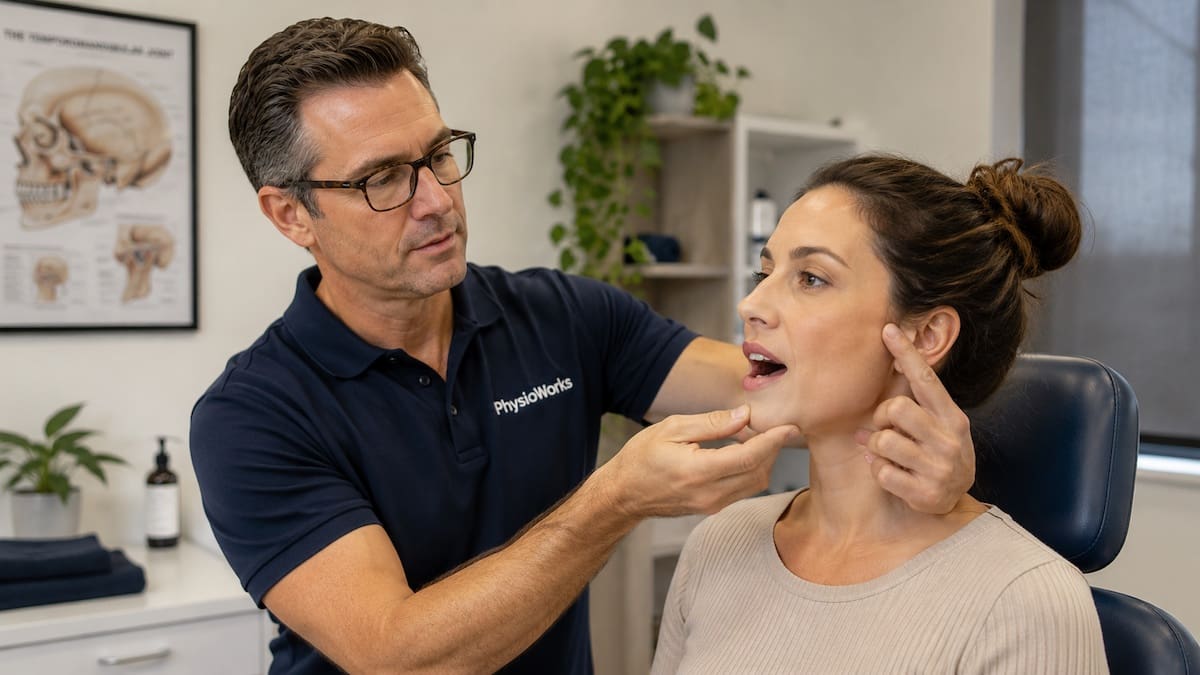
A physiotherapy assessment may include:
- jaw opening, closing and side-to-side movement;
- jaw clicking, locking or movement deviation;
- tenderness and loading of the jaw muscles;
- clenching, grinding and chewing habits;
- upper-neck movement and control;
- headache and posture-related triggers; and
- basic screening of balance and neurological function.
Your physiotherapist may recommend assessment by a GP, dentist, vestibular physiotherapist, audiologist or another clinician when the presentation falls outside a jaw or neck disorder.
Posture is rarely the only explanation for symptoms, although sustained positions can aggravate jaw and neck tension. See our guidance about posture and movement habits.
What treatment may help?
Treatment depends on the findings from your assessment. When jaw or neck dysfunction appears relevant, conservative care may include:
- education about the likely symptom contributors;
- temporary modification of painful chewing or wide jaw opening;
- strategies to reduce awake clenching;
- controlled jaw movement exercises;
- neck mobility and control exercises;
- manual therapy for relevant jaw or neck restrictions;
- gradual return to normal chewing and activity;
- sleep, stress and recovery strategies; and
- dental review when tooth grinding, dental health or splint suitability needs assessment.
A night guard or dental splint is not suitable for every person. A dentist should assess whether one is appropriate rather than using it as a routine treatment for all jaw symptoms.
Likewise, physiotherapy should not delay investigation of persistent dizziness or replace medical or vestibular care when another cause is suspected.
What should you do next?
-
Describe the dizziness clearly
Note whether you feel spinning, faintness, imbalance or a rocking sensation, and record how long each episode lasts.
-
Look for associated features
Consider jaw pain, clicking, clenching, headaches, ear symptoms, neck stiffness and any neurological or hearing changes.
-
Arrange the right assessment
Seek medical review first when symptoms are new, severe, unexplained or associated with warning signs.
-
Address confirmed contributors
When assessment identifies relevant jaw or neck dysfunction, follow a targeted and progressive management plan.
Choose your clinic and appointment pathway
Select a PhysioWorks clinic to continue to live booking, an appointment request or reception assistance.
References
- González-Sánchez B, et al. Temporomandibular joint dysfunctions: a systematic review of physiotherapy treatments. 2023.
- Naderi Y, et al. Temporomandibular treatments are significantly efficient in improving otologic symptoms. BMC Oral Health. 2023;23:913.
- Palmer J, Durham J. Temporomandibular disorders. BJA Educ. 2021;21(2):44–50.
- Karacay BC, et al. Investigation of factors associated with dizziness, tinnitus and ear fullness in temporomandibular disorders. 2023.
TMJ dizziness FAQs
What is TMJ dizziness?
TMJ dizziness describes dizziness or unsteadiness that occurs alongside temporomandibular joint or jaw-muscle dysfunction. The term does not confirm that the jaw is the only or primary cause.
Can TMJ dysfunction cause dizziness?
Jaw dysfunction may contribute to dizziness-like symptoms in some people, particularly when jaw pain, clenching, headaches, ear symptoms and neck stiffness occur together. Other inner-ear and medical causes should still be considered.
How can I tell whether dizziness is related to my jaw?
Jaw involvement may be more likely when dizziness changes with chewing or clenching and occurs with jaw pain, clicking, morning tightness, headaches or neck stiffness. An assessment is needed because these features are not specific to TMJ dysfunction.
Can neck problems also contribute to dizziness?
Some neck disorders may contribute to unsteadiness or altered head-position awareness. However, clinicians should first consider vestibular, neurological and medical causes of dizziness.
What treatment may help TMJ-related dizziness?
When assessment identifies relevant jaw or neck dysfunction, management may include education, jaw and neck exercises, habit modification, manual therapy and gradual return to normal activity. Treatment should address the individual findings rather than assuming every symptom comes from the jaw.
When should I seek urgent medical care for dizziness?
Seek urgent medical care if dizziness occurs with new weakness or numbness, facial drooping, difficulty speaking, sudden vision changes, fainting, chest pain, severe headache, difficulty walking or sudden hearing loss.