Triflo II Incentive Spirometer

$34.99
- Description
- Additional information
Description
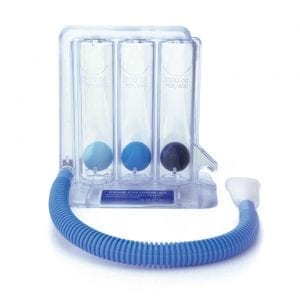
The Triflo II Incentive Spirometer is a three-ball breathing exerciser that provides immediate visual feedback during inhalation. It may suit people who have been advised to practise slow, controlled breathing after surgery, illness, reduced activity or a chest-wall injury.
This product may suit you if: a surgeon, physiotherapist, respiratory clinician or hospital team has recommended an incentive breathing device as part of your recovery program.
Seek advice first if: you have unexplained chest pain, marked shortness of breath, dizziness, fever, a recent serious chest injury or uncertainty about how the device should be used.
What Is the Triflo II Incentive Spirometer?
The Triflo II is a flow-oriented incentive spirometer. It contains three chambers with lightweight coloured balls. Each ball rises when you generate enough inspiratory airflow through the mouthpiece.
The chambers provide visual targets at approximately 600, 900 and 1,200 mL per second. This feedback helps you control the speed and depth of each breath. Your goal does not always need to be lifting all three balls. The appropriate target depends on your current breathing capacity and the instructions provided by your treating health professional.
Clinically Useful For
The Triflo II may form part of a broader breathing and recovery program for:
- prescribed breathing exercises after surgery
- reduced chest expansion following illness or inactivity
- shallow breathing linked with pain or guarded movement
- recovery from selected rib or chest-wall conditions
- visual feedback during inspiratory breathing practice
- home exercises prescribed through respiratory physiotherapy
An incentive spirometer does not replace medical assessment, effective pain relief, movement, coughing or airway-clearance treatment when these are required.
Key Benefits
- Provides immediate visual feedback during inhalation
- Encourages controlled, sustained breathing practice
- Offers three progressive inspiratory-flow targets
- Compact and lightweight for home or clinical use
- Allows breathing performance to be monitored during each repetition
Product Features
- Three transparent chambers with coloured indicator balls
- Inspiratory flow range from approximately 600 to 1,200 mL per second
- Flow markings visible from both sides
- Flexible connecting tube and mouthpiece included
- Compact, break-resistant plastic construction
- Designed as a single-patient breathing exerciser
Why Use an Incentive Spirometer?
Pain, surgery, illness and long periods of reduced activity can cause some people to breathe more shallowly than usual. Guarded breathing may also occur when movement of the ribs or chest wall feels uncomfortable.
The Triflo II provides a visible target that can help you focus on a smooth inhalation. However, it should form part of a complete recovery plan rather than act as a stand-alone treatment. Depending on your needs, that plan may also include comfortable positioning, effective pain management, supported coughing, gentle mobility and gradually increasing your activity.
People recovering from a rib or upper-back problem may also benefit from guidance about movement, posture and breathing through the broader thoracic pain and rib conditions guide.
How Does the Triflo II Work?
When you inhale through the mouthpiece, air moves through the three chambers. The balls rise according to the airflow you produce:
- First chamber: approximately 600 mL per second
- First and second chambers: approximately 900 mL per second
- All three chambers: approximately 1,200 mL per second
The device measures inspiratory flow rather than blood oxygen levels or total lung volume. Lifting more balls means you have generated a higher airflow. It does not necessarily mean the breath was more appropriate for your condition.
How to Use the Triflo II Incentive Spirometer
- Sit upright or use the position recommended by your treating clinician.
- Hold the device upright so the balls rest at the bottom of the chambers.
- Breathe out normally, away from the mouthpiece.
- Place your lips firmly around the mouthpiece.
- Inhale steadily through your mouth and watch the balls rise.
- Follow the flow target and breathing speed recommended for you.
- Remove the mouthpiece and breathe out normally.
- Rest briefly before repeating the exercise.
Avoid rushing through multiple forceful breaths. Slow the session or stop if you become dizzy, unusually breathless, distressed or increasingly sore.
Safe-Use Guidance
Follow your prescribed program. The correct number of breaths, frequency and flow target vary between people. Use the dosage recommended by your surgeon, physiotherapist, respiratory clinician or hospital team.
Keep the device upright. Tilting it can affect how the balls move and make the feedback less reliable.
Do not share the mouthpiece or device. The Triflo II is intended for single-patient use.
Seek urgent medical care for severe or worsening breathing difficulty, crushing or unexplained chest pain, blue lips, fainting, coughing blood or a sudden significant decline in your condition.
Cleaning and Storage
Follow the supplied product instructions and any directions provided by your treating team. Keep the mouthpiece clean, dry and protected from contamination between uses. Do not immerse or clean the device using a method that could leave fluid trapped inside the chambers unless the manufacturer’s instructions specifically permit it.
Store the Triflo II in a clean, dry place. Replace it if the mouthpiece, tubing or chamber becomes damaged, heavily contaminated or difficult to clean safely.
Who Should Ask for Advice Before Using It?
Speak with a health professional before starting if you have not been shown how to use the device or if you have significant breathing symptoms, a recent chest injury, uncontrolled pain, fainting episodes or a medical condition that affects your ability to follow breathing instructions.
Chest-wall pain can have several causes. For example, pain near the breastbone may need assessment to distinguish costochondritis from heart, lung, digestive or other chest conditions.
Frequently Asked Questions
What is a Triflo II incentive spirometer?
The Triflo II is a three-ball, flow-oriented breathing exerciser. The balls rise as you inhale through the mouthpiece and provide visual feedback about your inspiratory airflow.
Does the Triflo II measure lung capacity?
No. The Triflo II primarily provides feedback about inspiratory flow. It does not provide a complete lung-function test, measure blood oxygen levels or replace formal respiratory assessment.
Do I need to lift all three balls?
Not necessarily. Each ball represents a higher airflow target. Your most appropriate target depends on your condition, recovery stage and prescribed technique. Controlled breathing is usually more important than forcing every ball to the top.
How often should I use the Triflo II?
Use it at the frequency recommended by your treating health professional. Postoperative and respiratory programs vary, so a general online dosage should not override the instructions given by your surgeon, hospital team or physiotherapist.
Can an incentive spirometer clear mucus?
The device encourages inspiratory breathing and chest expansion, but it is not primarily an airway-clearance device. Mucus management may also require coughing, huffing, movement, positioning or specific respiratory physiotherapy techniques.
Can I use the Triflo II after surgery?
It is commonly included in selected postoperative programs. However, it should be used according to the instructions from your surgical or hospital team and alongside any prescribed mobility, coughing, pain-management and breathing strategies.
What should I do if I feel dizzy?
Stop, remove the mouthpiece and return to normal relaxed breathing. Dizziness can occur if breaths are too rapid or repeated without enough rest. Seek professional advice if dizziness continues or occurs with chest pain, fainting or severe breathlessness.
Is the Triflo II reusable?
It is designed for repeated use by one patient. Do not share it with another person. Follow the supplied cleaning, storage and replacement instructions.
Related PhysioWorks Guides
- Respiratory Physiotherapy – Learn how breathing exercises, positioning, movement and airway-clearance strategies may support recovery.
- Thoracic Pain and Rib Conditions – Explore common causes of upper-back, rib and breathing-related pain.
- Costochondritis – Review symptoms, warning signs and treatment options for chest-wall pain near the breastbone.
Product Information Source
See the manufacturer’s Triflo II product information for published device features and specifications.
What to Do Next
Choose the Triflo II Incentive Spirometer when a suitable health professional has recommended a three-ball inspiratory breathing exerciser. Follow the instructions supplied with the product and use the target, technique and frequency prescribed for your recovery.
Arrange a medical or physiotherapy assessment when breathing symptoms, chest pain or reduced activity tolerance are unexplained, worsening or not progressing as expected.
Additional information
| Weight | 0.5 kg |
|---|---|
| Dimensions | 20 × 10 × 10 cm |