Achilles tendinopathy treatment explained
Achilles tendinopathy is usually treated with a staged rehabilitation plan that reduces pain, improves calf strength, and gradually reloads the tendon. Most people do best with modified activity plus a progressive exercise program, rather than relying on rest, massage, or passive treatment alone.
Most successful rehab plans follow a clear loading progression:
Achilles Tendinopathy Treatment Pathway
Step 1 Reduce the activities that flare your tendon, such as hills, sprinting, jumping, or sudden training spikes.
Step 2 Begin controlled loading with calf exercises that match your pain level and tendon irritability.
Step 3 Build calf strength, endurance, and tendon capacity with gradual progression.
Step 4 Return to walking, running, and sport step by step once the tendon tolerates higher loads.
Treatment needs to match whether the problem is mid-portion Achilles tendinopathy or pain closer to the heel insertion. If your symptoms sit right at the heel attachment, you may also need to consider whether Achilles enthesopathy is part of the picture.
What is the first step in Achilles tendinopathy treatment?
The first step is to calm the tendon down without stopping all activity. That usually means reducing the loads that flare it, such as fast running, hill work, jumping, or repeated calf raises, while keeping enough movement to maintain strength and function.
This stage is often called load management. It does not mean doing nothing. Instead, it means choosing the right amount of activity for your current tendon capacity. Many people make better progress when they keep moving within tolerable limits rather than resting completely. For more on this approach, read why rest is not always best for tendon pain.
What exercises help Achilles tendinopathy?
The most helpful exercises are usually progressive calf-loading exercises. These may start with isometric holds or controlled heel raises, then progress to heavier slow resistance work, single-leg calf strength, and eventually hopping, running, or sport-specific drills when the tendon is ready.
Example Rehab Progression
- Early stage: pain-calming load reduction, gentle isometric calf work, and controlled walking volume.
- Building stage: double-leg then single-leg calf raises with steady progression.
- Strength stage: heavier slow resistance work to improve tendon capacity.
- Return stage: hopping, jogging, faster running, and sport-specific drills when tolerated.
Your physiotherapist will adjust the speed of this progression based on your pain response, strength, and activity goals.
The exact program depends on your pain irritability, strength, and goals. Insertional Achilles pain often needs modified exercise depth at first to avoid excessive compression at the heel. Mid-portion pain can often tolerate a broader loading range. If you are unsure whether your calf is also involved, see calf strain and tear for related symptoms.
Mid-portion vs insertional Achilles pain
These two presentations overlap, but they are not identical. Knowing which pattern you have helps guide the right exercise approach.
| Feature | Mid-portion Achilles Tendinopathy | Insertional Achilles Tendinopathy |
| Usual pain location | A few centimetres above the heel bone | Right at the tendon attachment on the heel |
| Common aggravators | Running, stairs, hopping, sudden load increases | Heel compression, uphill work, deep calf stretching, rigid shoe pressure |
| Exercise note | Often tolerates a fuller calf-raise range earlier | Often needs modified range at first to reduce compression |
| Helpful supports | Load management and strength progression | Load management, footwear changes, and sometimes heel lifts |
Do you need imaging for Achilles tendinopathy?
Most cases of Achilles tendinopathy can be diagnosed by a physiotherapist from your history, pain pattern, tendon tenderness, calf strength, and movement testing. Ultrasound or MRI is usually reserved for stubborn symptoms, unusual presentations, or when another diagnosis needs to be ruled out.
Clinical assessment is usually more important than imaging findings when guiding treatment decisions.
This matters because tendon scans do not always match pain levels. A tendon can look abnormal on imaging without being the main reason for symptoms. That is why your pain pattern, function, and response to loading often guide treatment more than the scan alone.
How can physiotherapy help Achilles tendinopathy?
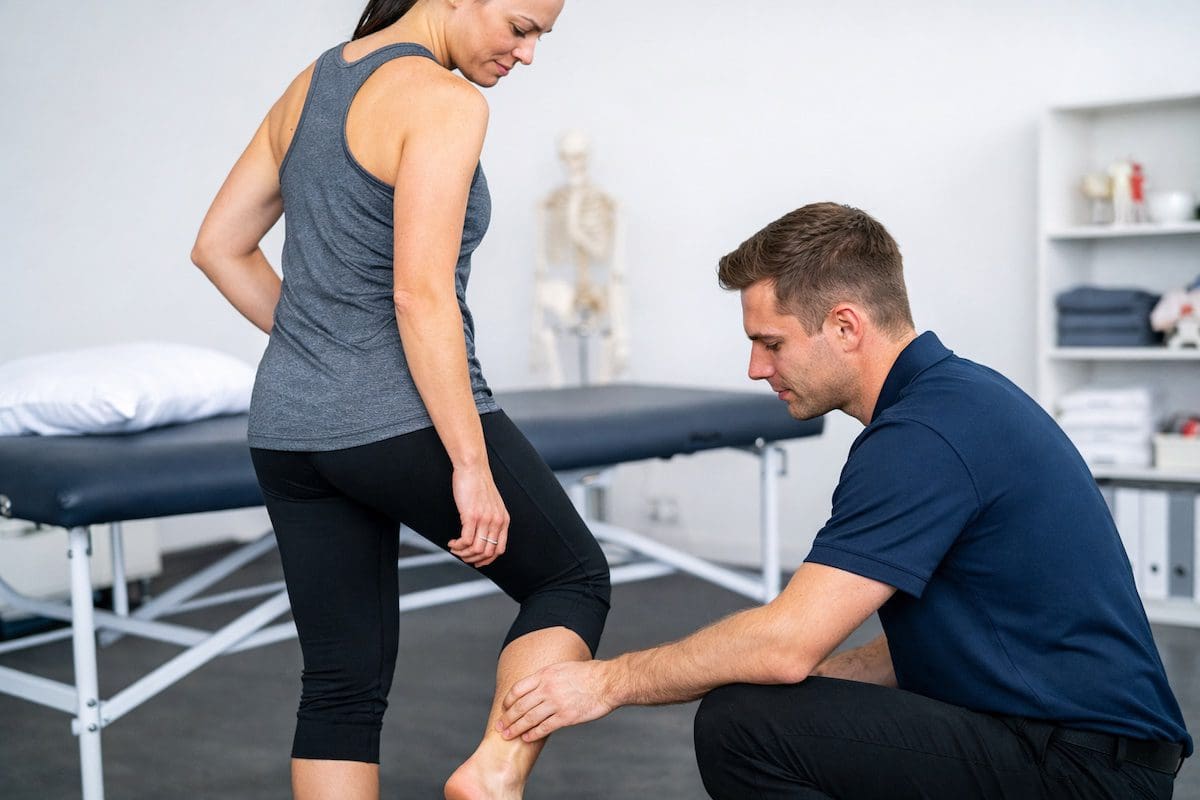
Physiotherapy helps by identifying what is overloading your tendon, then building a treatment plan that matches your stage of recovery. This may include exercise progression, walking or running advice, calf strength testing, ankle mobility work, footwear guidance, and return-to-sport planning.
Hands-on treatment may help some people settle surrounding calf tightness or stiffness, but it should support rehabilitation rather than replace it. If you have general tendinopathy questions, this broader guide explains how tendon overload problems usually behave.
When should you worry about Achilles tendon pain?
You should get Achilles tendon pain checked if it is not improving, keeps flaring with normal walking or exercise, or is affecting your ability to work, train, or sleep.
A sudden pop, major weakness, bruising, or trouble pushing off your foot raises concern about an Achilles rupture, which needs urgent assessment.
An early review is also sensible if the pain is right at the heel, if swelling is marked, or if your symptoms are not following a clear recovery pattern. Persistent heel pain can also overlap with other conditions in the heel pain cluster.
Common treatment options for Achilles tendinopathy
- Load modification: reduce aggravating activity without stopping all movement.
- Progressive strengthening: build calf and tendon capacity over time.
- Footwear or heel lifts: sometimes helpful in irritable stages or insertional pain.
- Running or training changes: adjust hills, speed, volume, and frequency.
- Mobility and movement work: improve ankle, calf, and lower-limb control where needed.
- Return-to-sport progressions: add spring, plyometrics, and sport loads gradually.
Related articles
Achilles tendinopathy FAQs
Can Achilles tendinopathy heal without treatment?
Some mild cases may settle if you reduce aggravating load, but many people do not recover well with rest alone. A structured program usually gives you a better chance of improving pain, calf strength, and tendon capacity while reducing the risk of repeated flare-ups.
Is walking good for Achilles tendinopathy?
Walking is often helpful if it stays within tolerable pain limits. However, long walks, hills, or fast walking may still aggravate an irritable tendon. The goal is to keep useful activity in your week while adjusting volume and intensity to suit your current stage.
Are heel lifts helpful for Achilles tendinopathy?
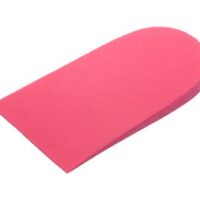
Heel lifts may help some people, especially in more irritable phases or when insertional pain is aggravated by tendon compression. They are usually a short-term support rather than a full treatment on their own. Exercise and load progression still do the heavier lifting over time.
How long does Achilles tendinopathy take to improve?
Recovery time varies. Some people feel better over several weeks, while more stubborn cases take a few months of steady rehabilitation. Progress is usually not linear. Small flare-ups can happen, especially if activity increases faster than the tendon is ready for.
Should you stretch the Achilles tendon?
Stretching may help some people, but it is not the main treatment for most Achilles tendinopathy cases. It also needs care in insertional pain, where aggressive stretching into end range can increase compression near the heel. Strength and load progression are usually more important.
What should you avoid with Achilles tendinopathy?
Try to avoid pushing through sharp flare-ups, sudden training spikes, repeated hill running, or jumping loads that clearly worsen symptoms. Also avoid relying only on passive care while skipping your strengthening plan. The tendon usually needs well-dosed loading to recover properly.
What to do next
If your Achilles pain keeps returning, is limiting your walking or running, or is stopping you from getting back to sport, a physiotherapy assessment can help clarify the diagnosis and guide the right rehab stage. Treatment works best when it matches your symptoms, strength, and load tolerance.
At PhysioWorks, we can assess whether your pain fits mid-portion or insertional Achilles tendinopathy, identify contributing factors, and build a practical plan to help you return to activity with more confidence.