

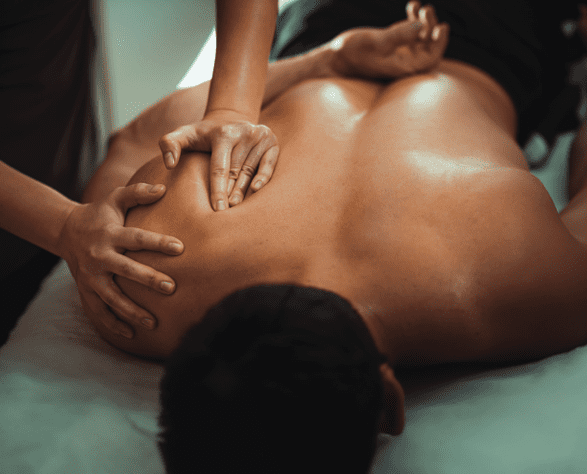
What problems may massage therapy help with?
Massage is most relevant when muscle tension, soreness or stiffness contributes to how you feel. Your massage therapist can adjust the treatment area, pressure and techniques according to your comfort and goals.
Muscle tightness
Tight or guarded muscles around the neck, shoulders, back, hips or legs are common reasons people book massage.
Work and desk tension
Long periods of sitting, driving, computer work or repetitive tasks can leave muscles feeling stiff, tired or uncomfortable.
Exercise soreness
Massage may provide short-term comfort when muscles feel sore or fatigued after sport, gym training or unfamiliar activity.
Neck and shoulder tension
Some people find massage useful when muscular tension contributes to neck discomfort or tight shoulders.
Back muscle discomfort
Massage may help ease muscular tightness around the back, although lower back pain can have many contributing factors.
Stress-related tension
Some people choose massage because stress or busy periods leave their muscles feeling tense and uncomfortable.
How might massage help?
Massage involves controlled hands-on pressure and movement of soft tissues. Depending on the technique and your preferences, it may help reduce the feeling of muscular tightness, tenderness or guarding and improve short-term movement comfort.
The effects vary between people. Massage does not need to be painful or extremely firm to be useful. Your therapist should adjust pressure, positioning and the treatment area according to your comfort and response.
For recurring symptoms, massage often makes more sense as one part of a broader approach. Regular movement, exercise, recovery, sleep and appropriate management of training or work loads may also matter.
Does massage treat specific medical conditions?
Massage therapists commonly see people who also have neck pain, back pain, headaches, arthritis or other musculoskeletal problems. However, massage does not diagnose or treat every cause of these conditions.
Instead, massage may be useful when associated muscle tightness, guarding or soreness contributes to your symptoms. For example, people with neck pain or lower back pain may sometimes find hands-on treatment comfortable when muscular tension forms part of their presentation.
If pain is persistent, worsening, injury-related or associated with neurological symptoms, an assessment may be more appropriate than booking massage solely for symptom relief.
Which type of massage may suit you?
Massage styles overlap, so you do not need to diagnose yourself before booking. Your therapist can discuss your goals, pressure preferences and treatment areas before starting.
Remedial Massage
A more targeted option when you want treatment focused on specific areas of muscle tightness, soreness or movement discomfort.
Deep Tissue Massage
May suit people who prefer firmer, sustained pressure for tight or heavily worked muscles.
Relaxation Massage
A gentler option when your priority is general comfort, relaxation and easing physical tension.
Trigger Point Therapy
Uses controlled, localised pressure when sensitive muscle points or recurring muscular tightness are part of the problem.
Alternatively, compare the full range of Brisbane massage services.
When should you consider another assessment?
Massage is not always the best first step. A physiotherapy or medical assessment may be more appropriate when symptoms are new, severe, unexplained, worsening or suggest that more than muscular tension is involved.
Tell your massage therapist about relevant medical conditions, pregnancy, recent surgery, anticoagulant medication, fractures, skin problems or current cancer treatment before treatment begins. Pressure, positioning and treatment areas can then be adjusted where appropriate.
You can also ask questions, request a change in pressure, decline treatment of an area or stop the session at any time.
When might physiotherapy be a better starting point?
Physiotherapy may be more appropriate when you need assessment of a new injury, persistent pain, significant movement restriction, weakness or neurological symptoms, or when you need a structured rehabilitation plan.
Massage and physiotherapy do not need to compete. Some people use massage for short-term muscular comfort while addressing strength, movement, workload or rehabilitation needs through other care.
Frequently asked questions
Can massage help neck and shoulder tension?
It may. Massage can be useful when muscle tightness or soreness contributes to neck and shoulder discomfort. Persistent pain, arm symptoms, weakness or other concerning symptoms may need a broader assessment.
Can massage help back pain?
Massage may provide short-term relief when muscular tightness or guarding contributes to back discomfort. Back pain has many possible contributors, so recurring, worsening or leg-related symptoms may need assessment rather than massage alone.
Can massage help after exercise?
Some people use massage to ease muscle soreness, tightness or fatigue after training. It should complement rather than replace sensible recovery, gradual loading and appropriate exercise progression.
Can massage help with stress-related muscle tension?
Massage may help some people relax and feel less physically tense. It can support comfort and relaxation, but it is not a substitute for appropriate medical or mental health care when those services are needed.
How often should I have a massage?
There is no single schedule that suits everyone. Frequency depends on why you are booking, how long any benefit lasts, your preferences and whether another form of care would better address recurring symptoms.
References
- Mak S, Minichiello A, Gagnon K, et al. Use of Massage Therapy for Pain, 2018–2023: A Systematic Review. Journal of Integrative and Complementary Medicine. 2024.
- Nemati D, de Zoete A, Thorpe D, et al. Massage Therapy as a Self-Management Strategy for Musculoskeletal Pain and Chronic Conditions. Journal of Integrative and Complementary Medicine. 2024.
- Lebert R, Noy M, Purves E, Tibbett J. Massage Therapy: A Person-Centred Approach to Chronic Pain. International Journal of Therapeutic Massage & Bodywork. 2022;15(3):27–34.
- Healthdirect Australia: Massage therapy.
What to do next
If your main concern is muscle tightness, soreness or stress-related physical tension, a massage appointment may be a reasonable next step. Your therapist can discuss the areas you want treated, your health history, pressure preferences and goals before treatment starts.
If you are unsure whether massage or physiotherapy is more appropriate, compare our Brisbane massage services or start with physiotherapy when you need assessment of an injury, persistent pain, weakness or neurological symptoms.
