Why Does Sciatica Flare Up?
Sciatica is a symptom pattern rather than one diagnosis. It develops when a nerve root in the lower spine, or the sciatic nerve along its pathway, becomes compressed, inflamed or irritated.
Mechanical pressure may come from a bulging disc, narrowing around a nerve or nearby tissues. Chemical irritation can also sensitise a nerve even when the amount of physical pressure is small.
Once sensitised, the nerve may react strongly to sitting, bending, lifting or coughing. This helps explain why a movement that was previously comfortable can trigger leg pain during a flare-up.
Trigger Versus Underlying Cause
A trigger is an activity or position that increases your symptoms, such as sitting for a long time or lifting.
The underlying cause is the condition making the nerve sensitive, such as disc irritation, spinal stenosis or another source of nerve compression or inflammation.
What Commonly Triggers a Sciatica Flare-Up?
Prolonged Sitting
Long periods at a desk, in a car or on a couch commonly aggravate sciatica. Sitting may place sustained load on sensitive lower-back structures, especially when you remain in one position for too long.
Change position before symptoms build. A short standing or walking break may be more useful than trying to hold one “perfect” posture all day. Read more about comfortable sitting posture and practical posture correction.
Bending, Lifting and Twisting
Repeated bending or lifting can increase symptoms when your back and nerve are already sensitive. Combining a heavy load with a fast twisting movement may be particularly aggravating.
Keep loads close to your body, avoid rushed lifting and divide larger jobs into shorter sessions. Gradual strengthening may improve your capacity for work, exercise and household tasks.
A Sudden Increase in Activity
A weekend of gardening, a return to the gym or an unusually demanding workday can exceed your current tolerance. The problem is often the size of the increase rather than the activity itself.
Build activity gradually. Allow time to recover after heavier days and reduce the load temporarily if symptoms begin travelling further down your leg.
Reduced Movement
Some people move much less after a painful episode because they fear making the problem worse. While brief rest may feel helpful, prolonged inactivity can reduce movement tolerance and make everyday tasks feel harder.
Gentle, regular movement is often better than either complete rest or pushing through severe symptoms. Short walks may help, provided they do not cause a marked increase in leg pain, numbness or weakness.
Coughing, Sneezing or Straining
Coughing, sneezing and straining briefly increase pressure through the abdomen and spinal canal. These actions may reproduce pain when a lumbar nerve root is already sensitive, particularly with disc-related irritation.
Poor Sleep and Accumulated Load
Poor sleep, physical fatigue and stress can reduce pain tolerance. Symptoms may therefore flare after several demanding days even when there was no single injury or obvious movement that caused the change.
Which Conditions Can Cause Recurring Sciatica?
Disc Bulge or Disc Irritation
A lumbar disc can irritate a nearby nerve root through pressure and inflammation. Symptoms may worsen with sitting, bending, lifting or coughing. Pain can travel from the lower back or buttock into the thigh, calf or foot.
Spinal Stenosis
Spinal stenosis involves reduced space around spinal nerves. Symptoms may increase during standing or walking and ease when sitting or bending forward. This pattern differs from many disc-related presentations.
Spondylolisthesis
Spondylolisthesis occurs when one vertebra shifts relative to another. In some people, this can reduce space around a nerve and contribute to back pain or nerve-related leg symptoms.
Deep Gluteal or Piriformis-Related Irritation
Not all sciatica-like pain begins in the spine. Piriformis syndrome or other deep gluteal problems may irritate the sciatic nerve around the buttock.
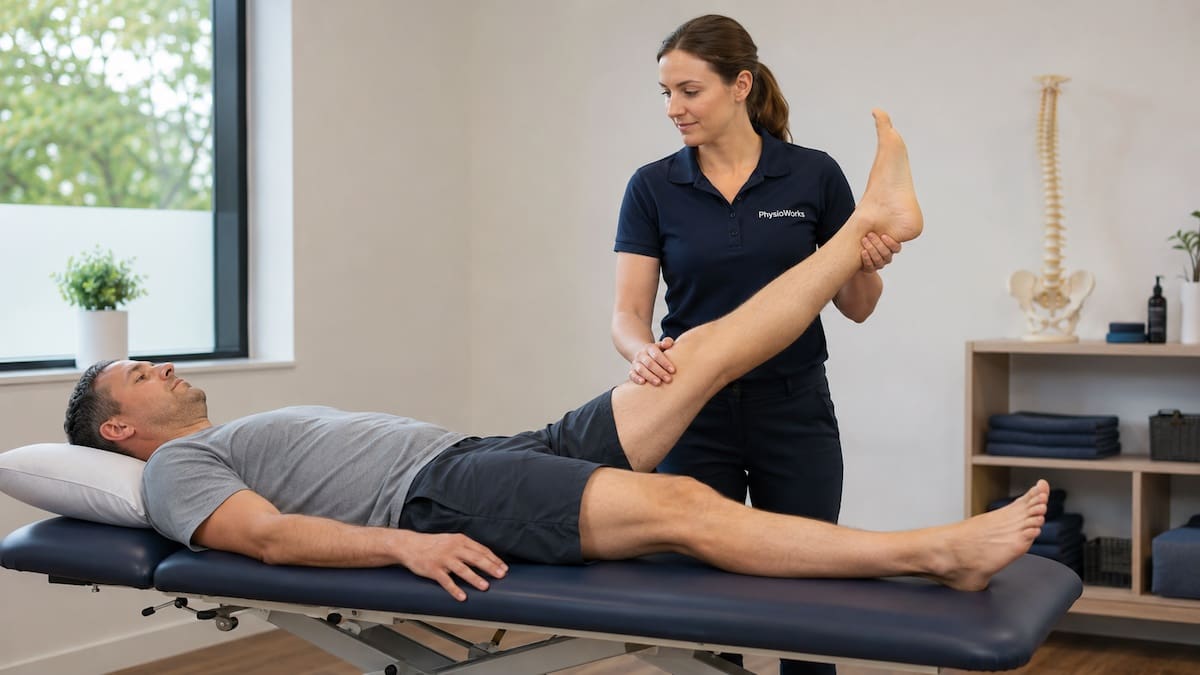
A physiotherapy assessment can help distinguish lumbar nerve-root irritation from hip, buttock and other causes of leg pain.
What Should You Do During a Sciatica Flare-Up?
Change Aggravating Positions
Do not remain in a position that steadily increases your leg symptoms. Change position earlier, break sitting into shorter periods and use brief walks where comfortable.
Keep Gently Active
Complete bed rest is rarely helpful for uncomplicated sciatica. Try gentle movement within a manageable range. Stop and seek advice if activity causes rapidly increasing pain, spreading numbness or weakness.
Temporarily Reduce Heavy Loads
Reduce repeated lifting, prolonged bending and heavy exercise while symptoms are highly irritable. This is a short-term adjustment rather than a need to avoid movement permanently.
Use a Comfortable Resting Position
You may feel more comfortable lying on your side with a pillow between your knees or on your back with support under your knees. Choose the position that allows your muscles to relax and your symptoms to settle.
Avoid Aggressive Stretching
Strong hamstring or nerve stretching can aggravate some sciatica presentations. Exercises should suit the cause, symptom behaviour and stage of recovery rather than relying on one routine for everyone.
How Can You Reduce Repeat Flare-Ups?
Reducing flare-ups usually involves improving your tolerance for the activities that matter to you. The aim is not to avoid bending, sitting or lifting forever.
- Change position regularly during long periods of sitting.
- Increase exercise, work and gardening loads gradually.
- Use sound lifting habits and keep heavier loads close.
- Build lower-back, hip and trunk strength progressively.
- Include recovery time after demanding work or training.
- Address repeated sleep disruption and physical fatigue.
- Seek assessment when symptoms keep returning or changing.
Some people find temporary lumbar support useful during prolonged sitting. However, supports do not correct the underlying cause by themselves. The All Care Lumbar Support D-Roll and Basset Lumbar Support are examples of products designed to support a seated position.
Progressive core stability exercises may also help build capacity when they match your presentation and are progressed appropriately.
Why Can a Sensitive Nerve Hurt So Much?
Nerves carry information about sensation, muscle activity and reflexes between your spine and limbs. When a nerve becomes compressed, inflamed or chemically irritated, it may produce sharp, burning, electric or aching pain.
A sensitive nerve can also cause pins and needles, numbness or weakness along its pathway. Therefore, the severity of pain does not always match the size of the movement that triggered it. Learn more about nerve pain.
When Should You Seek Help?
Arrange an assessment if your sciatica keeps returning, travels further down the leg or starts affecting sleep, walking, work or exercise. You should also seek review if you develop persistent numbness, increasing weakness or symptoms that differ from your usual pattern.
Seek Urgent Medical Assessment
Seek urgent medical care if you develop:
- new loss of bladder or bowel control
- numbness around the genitals, groin or saddle region
- rapidly increasing leg or foot weakness
- significant symptoms affecting both legs
- severe symptoms following major trauma
- fever, unexplained weight loss or significant illness with new back and leg pain
Related Sciatica and Back Pain Guides
- Sciatica – Learn about sciatica symptoms, assessment and treatment options.
- Lower Back Pain – Review common causes of lower-back pain and ways to manage it.
- Bulging Disc – Understand how disc irritation may contribute to back and leg symptoms.
- Spinal Stenosis – Learn why narrowing around spinal nerves may affect standing and walking.
- Nerve Pain – Read about burning, electric, shooting and tingling symptoms.
Frequently Asked Questions
How long does a sciatica flare-up usually last?
A mild sciatica flare-up may settle over several days, while more irritable symptoms can last for weeks. Recovery time depends on the cause, the level of nerve irritation and how well your daily load matches your current tolerance. Seek assessment if symptoms keep worsening or are not gradually improving.
Can sitting cause sciatica to flare up?
Yes. Prolonged sitting can aggravate sciatica in some people, especially when a spinal nerve is already sensitive. Change position regularly and take brief movement breaks. The most comfortable sitting position varies, so avoid forcing one rigid posture if it increases your symptoms.
Should you rest when sciatica flares up?
Briefly reducing aggravating activity may help, but prolonged bed rest is rarely useful for uncomplicated sciatica. Gentle movement and short walks are often appropriate when they do not cause a marked increase in pain, numbness or weakness. Adjust activity according to your symptoms.
Can coughing or sneezing worsen sciatica?
Coughing, sneezing or straining can temporarily increase pressure around the spine. This may reproduce leg pain when a lumbar nerve root is already sensitive, particularly with disc-related irritation. Repeated or severe symptoms warrant assessment.
When is a sciatica flare-up an emergency?
Seek urgent medical care if sciatica occurs with new bladder or bowel changes, numbness around the groin or saddle region, rapidly increasing weakness, major trauma or significant symptoms in both legs. These symptoms require prompt medical assessment.
What to Do Next
If your symptoms keep returning, identify the likely cause rather than only trying to settle each flare-up. A physiotherapist can assess your back, nerve function, movement and daily loads.
Once the likely driver is clearer, treatment can focus on reducing irritation, restoring comfortable movement and gradually rebuilding your tolerance for sitting, lifting, exercise and work.