Why Do Joints Click?
Joint noises can have several causes. The sound alone does not confirm that a joint is damaged.
Soft Tissue Movement
Tendons and muscles guide joint motion. A tendon may briefly move across a bony structure and produce a click. This commonly occurs around the knee, shoulder, hip and ankle.
Joint-Fluid Pressure Changes
Pressure changes within synovial fluid can produce popping or cracking sounds. This process does not automatically mean that joint damage has occurred.
Joint Loading
Joint compression can increase during squatting, running, stair climbing and lifting. Some people notice more joint noise during these loaded movements.
Movement Control Changes
Fatigue, weakness or coordination changes can affect how a joint moves. This may make clicking more noticeable during sport, exercise or repetitive tasks.
Do Clicking Joints Mean Damage or Arthritis?
No. Clicking, popping and crepitus are common in people who do not have pain or significant joint problems. Many healthy joints make noise throughout life without restricting movement or activity.
Joint noise also does not confirm arthritis. The clicking becomes more clinically relevant when it occurs with pain, swelling, stiffness, repeated locking, giving way or declining function.
When Should Clicking Joints Be Assessed?
Consider a physiotherapy assessment when clicking:
- causes pain or discomfort
- begins after a fall, twist or other injury
- occurs with swelling or increasing stiffness
- is associated with locking, catching or giving way
- limits walking, exercise, work or sport
- progressively worsens or reduces confidence with movement
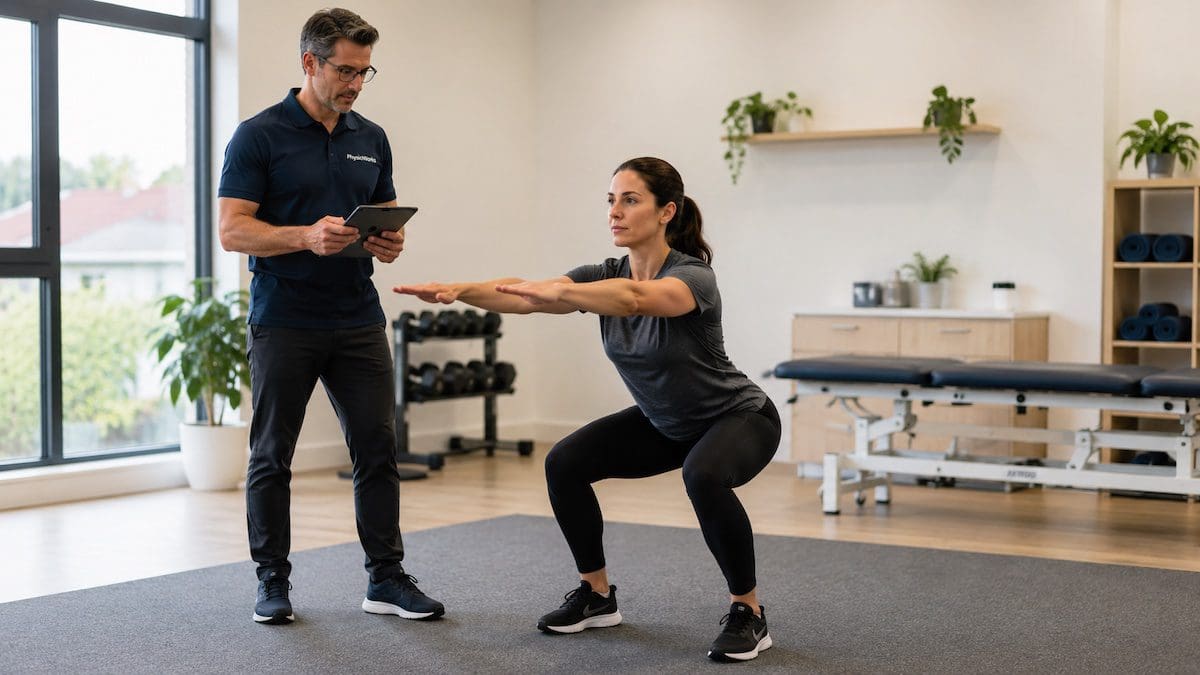
A physiotherapist can assess joint range, strength, movement control and load tolerance. The assessment may help determine whether the sound is a normal variation or relates to a modifiable movement or loading issue.
Can Activity Levels Affect Joint Sounds?
Yes. Joint noises may become more noticeable after a period of reduced activity, during a sudden increase in exercise or when returning to sport following an injury.
Fatigue can also alter movement quality later in a training session. Gradual load progression, suitable recovery and improved strength may help reduce unwanted joint sounds over time.
What Can You Do About Clicking Joints?
If clicking is painless and your movement remains normal, you may only need to monitor it. Sensible strategies include:
- continuing comfortable movement and exercise
- increasing training loads gradually
- noting whether pain, swelling or instability also occurs
- avoiding repeatedly forcing a joint to click
- building strength and movement control progressively
- seeking assessment when symptoms worsen or follow an injury
Management for symptomatic clicking may include exercise rehabilitation, movement retraining, activity modification and gradual exposure to the movements that provoke symptoms.
Related Joint and Movement Information
What Should You Do Next?
If your joint clicks without pain and functions normally, you can usually continue your normal activities. However, assessment may help when clicking is painful, persistent, follows an injury or affects your confidence with movement.
A physiotherapist can assess the joint and help you choose an appropriate exercise, loading or rehabilitation plan.