What Are Common Muscle Injuries?
Common muscle injuries occur when muscle fibres or nearby soft tissues are overloaded, overstretched, bruised, or repeatedly irritated. Some injuries happen suddenly during sprinting, lifting, kicking, jumping, or slipping. Others build over time when load exceeds recovery.
People often use terms such as muscle strain, pulled muscle, muscle tear, and myalgia to describe similar symptoms. However, the cause can vary. A clear assessment can help separate a muscle strain from tendon pain, joint irritation, nerve referral, delayed soreness, or a broader medical condition.
What Is the Difference Between a Muscle Strain, Tear, and Soreness?
A muscle strain means the muscle fibres have been overstretched or partly torn. A muscle tear usually describes a more significant strain with greater fibre disruption. Delayed onset muscle soreness, or DOMS, is different. It usually develops after unfamiliar or harder-than-usual exercise and often feels like a broad ache across the worked muscles.
| Pattern | Common signs | Typical trigger |
| Muscle strain | local pain, tenderness, pain with stretch or contraction | sprinting, lifting, kicking, or sudden overload |
| Muscle tear | sharp pain, weakness, swelling, bruising, or a pop | higher-force sport, acceleration, impact, or heavy load |
| DOMS | general ache, stiffness, tenderness, reduced performance | new exercise, more volume, more hills, or heavier gym work |
| Cramp | sudden involuntary tightening or spasm | fatigue, heat, load change, or endurance exercise |
What Are the Most Common Neck and Back Muscle Injuries?
The neck and back are common sites for muscle overload because they support posture, lifting, desk work, sport, and daily movement. These symptoms may also overlap with joint irritation, referred pain, or nerve-related symptoms.
- Back muscle pain: Back muscle pain may follow lifting, prolonged sitting, awkward movement, or sudden overload. Treatment often includes activity modification, manual therapy where appropriate, and exercises to restore strength and movement control.
- Neck sprain: Neck sprain can follow awkward sleeping posture, desk strain, sport, lifting, or a sudden jolt. Early movement and simple exercises may help reduce stiffness.
- Text neck: Text neck is linked with prolonged phone or screen posture. It may cause neck pain, upper back tightness, and headaches.
- Whiplash: Whiplash often follows a motor vehicle accident or sudden force. Recovery usually benefits from early guidance, controlled movement, and progressive rehabilitation.
What Are the Most Common Lower Limb Muscle Injuries?
Lower limb muscle injuries are common in running, field sports, gym training, jumping, and change-of-direction activity. These injuries can affect walking, stairs, pushing off, sprinting, kicking, and return to sport.
- Hamstring strain: Hamstring injuries are common in sprinting and sport. Rehab should restore strength, running tolerance, and confidence before full-speed return.
- Thigh strain: Thigh strains may affect the quadriceps, hamstrings, or adductors. They often occur with sprinting, kicking, jumping, or sudden acceleration.
- Groin strain: Groin strain commonly affects the adductor muscles on the inner thigh. It often hurts with kicking, cutting, sprinting, or squeezing the legs together.
- Calf strain or tear: Calf injuries often occur during pushing off, sprinting, jumping, or sudden acceleration. A staged walking, strength, and running plan is usually important.
- Corked thigh: A corked thigh is a direct-impact muscle bruise. It can cause pain, swelling, stiffness, and reduced knee movement.
What Are the Most Common Upper Limb and Overuse Muscle Injuries?
Upper limb symptoms often develop from repeated gripping, lifting, racquet sports, throwing, desk work, and impact injuries. In many cases, muscle pain overlaps with tendinopathy or repetitive strain.
- Golfer’s elbow and tennis elbow: These overuse problems affect the tendon attachments around the elbow and can cause pain with gripping, lifting, and repeated hand use.
- Repetitive strain injury: RSI may affect the forearm, wrist, shoulder, or neck. It is often linked with repeated tasks, poor ergonomics, and limited recovery time.
- Delayed onset muscle soreness: DOMS often appears after new or harder-than-usual exercise. It can cause temporary pain, stiffness, and reduced performance.
- Muscle cramps in athletes: Exercise-related cramps may develop during or after sport, especially when training load, intensity, heat exposure, or conditioning has changed.
Can Muscle Pain Come From Broader Medical Conditions?
Not all muscle pain comes from a local strain or tear. Widespread, persistent, or unexplained symptoms may relate to broader health conditions. Recurring or unusual symptoms deserve proper assessment, especially when pain comes with fatigue, joint swelling, fever, unexplained weakness, or symptoms in several body areas.
- Fibromyalgia: Fibromyalgia may cause widespread muscle pain, fatigue, and increased sensitivity. Management often includes education, pacing, exercise, and coordinated medical care.
- Rheumatoid arthritis: Rheumatoid arthritis can contribute to pain, stiffness, weakness, and reduced activity tolerance. Medical care remains important, with physiotherapy support where appropriate.
How Are Common Muscle Injuries Assessed?
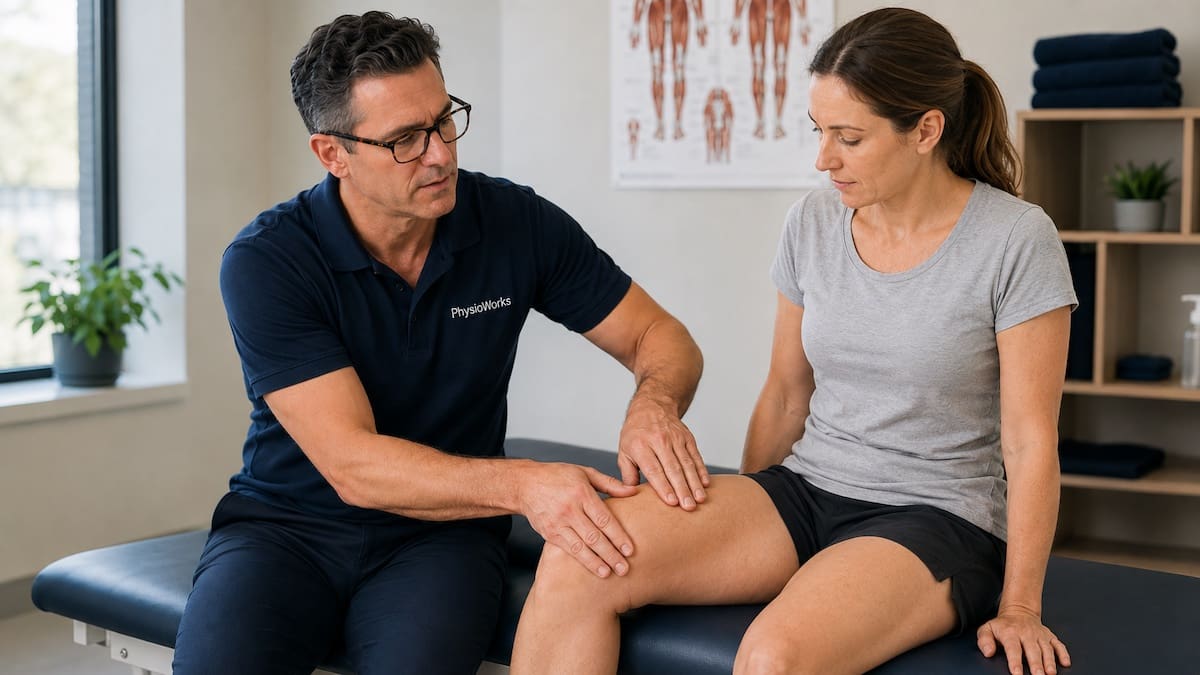
A physiotherapist may assess your pain pattern, strength, flexibility, walking, lifting, running, or sport-specific movement. The aim is to identify the main pain source, estimate severity, and decide which loads are safe.
Assessment may include palpation, resisted muscle testing, stretch testing, functional tests, and a review of recent workload. Imaging is not always needed. However, ultrasound or MRI may be considered when a larger tear, avulsion, or another diagnosis is suspected.
What Helps Common Muscle Injuries Recover?
Recovery usually works best when the injured tissue receives the right load at the right time. Too much load can flare pain. Too little load can leave the muscle weak, stiff, and poorly prepared for normal activity.
- Reduce painful loading early, especially sprinting, jumping, heavy lifting, or fast stretching.
- Use compression and elevation if swelling or bruising is present.
- Keep gentle movement within comfort where appropriate.
- Rebuild strength in stages before returning to speed or sport.
- Progress from daily activity to gym work, running, and sport-specific tasks.
- Check recovery with function, not just time since injury.
For a more detailed staged care pathway, see early soft tissue injury care and muscle treatment.
How Can You Help Prevent Common Muscle Injuries?
Not every injury is preventable. However, several habits may reduce the risk of common muscle injuries and improve tissue tolerance over time.
- Regular exercise: Regular physical activity can improve muscle strength, tissue tolerance, and movement control.
- Warm-up routines: A sensible warm-up helps prepare muscles before sprinting, jumping, kicking, or heavier exercise.
- Posture improvement: Better work, study, and lifting habits may reduce ongoing overload in the neck and back.
- Ergonomic adjustments: Workstation and task changes may help reduce repetitive strain and cumulative overload.
- Load management: Gradually increasing workload is usually safer than making sudden large jumps in speed, volume, or intensity.
When Should You Seek Help for a Muscle Injury?
You should consider professional advice if pain is severe, movement is limited, swelling or bruising is significant, or symptoms are not settling as expected. It is also worth getting assessed if the same injury keeps returning or stops you from work, training, or sport.
Seek urgent medical care if you have severe swelling, marked weakness, numbness, a suspected fracture, pain after major trauma, chest pain, shortness of breath, unexplained calf swelling, fever, or symptoms that do not match a clear muscle injury.
These signs may need medical review before physiotherapy or exercise progression.
Frequently Asked Questions
What are the most common muscle injuries?
The most common muscle injuries include strains in the hamstring, calf, groin, thigh, back, and neck. Overuse-related pain such as RSI, DOMS, muscle cramps, and elbow tendon overload is also common. The exact pattern often depends on your work, sport, posture, and recent activity levels.
How long do common muscle injuries take to heal?
Recovery time varies with the severity, location, and type of injury. Mild muscle injuries may settle within days to a few weeks. Moderate or recurring injuries can take much longer. Function, strength, pain response, and sport demands usually matter more than time alone.
What does a muscle tear feel like?
A muscle tear may feel like sudden sharp pain, a pulling sensation, or a popping feeling during activity. It can also cause bruising, swelling, weakness, or difficulty using the injured area. More significant tears should be assessed before return to exercise or sport.
Should I exercise with muscle pain?
That depends on the cause and severity of the pain. Gentle movement and modified exercise can help in many cases. However, exercising too hard or too soon may aggravate a more significant strain or tear. A physiotherapist may help you choose a safe activity level.
How do I know if muscle pain is serious?
Muscle pain may be more serious if you cannot walk normally, cannot use the area, have marked swelling or bruising, or felt a pop at the time of injury. Pain with fever, numbness, chest symptoms, unexplained calf swelling, or major trauma needs urgent medical review.
When should I see a physiotherapist for common muscle injuries?
Consider an assessment if pain is severe, symptoms keep returning, bruising or weakness is present, or the injury is not improving. Physiotherapy may help clarify the diagnosis and guide safe progression back to work, exercise, or sport.
Related PhysioWorks Guides
What To Do Next
If you have ongoing muscle pain, a recent strain, or repeated muscle injuries, an assessment can help clarify the diagnosis and guide your next steps. Early advice may help you avoid guessing and return to normal activity with more confidence.
Your physiotherapist may discuss activity modification, recovery timelines, exercise progressions, and when to return to work, training, or sport. The plan should match the injured area, the severity of the problem, and your goals.