
Kayaking, Canoeing and Paddling Injuries


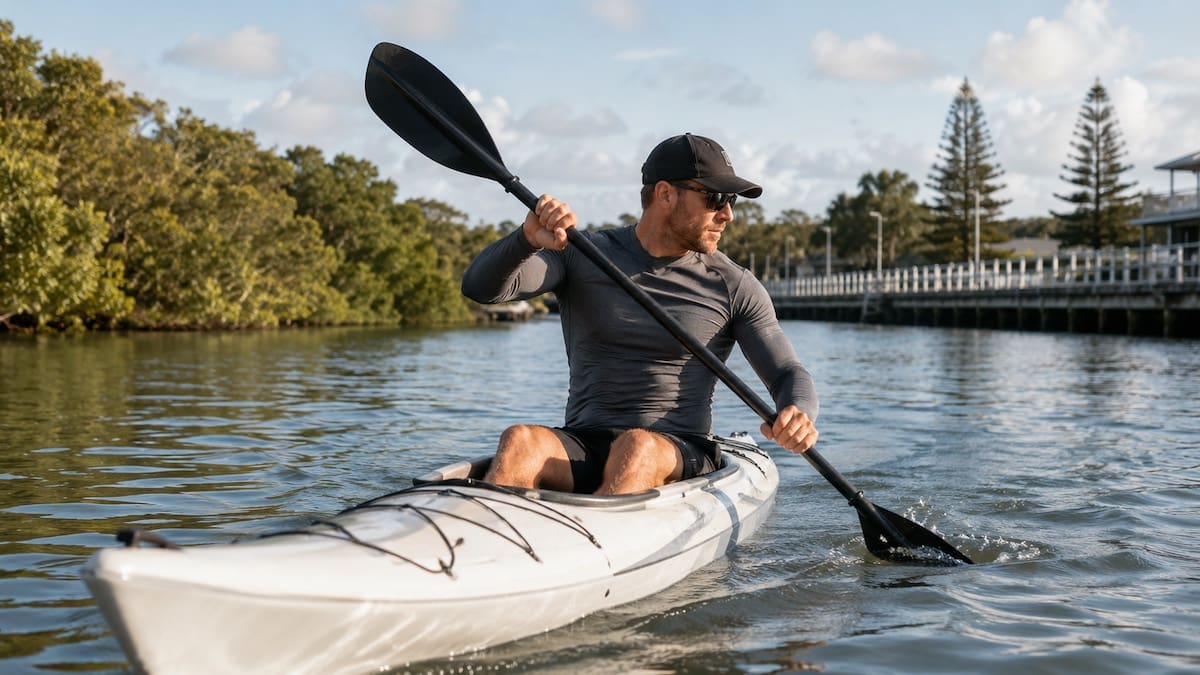
Paddling repeatedly loads the shoulders, trunk and wrists.
Kayaking, canoeing and paddling injuries can develop through repeated strokes, long sessions, sudden increases in distance, poor technique or an unexpected capsize. The shoulder and lower back are common problem areas. The wrist, elbow, ribs, hips and knees may also become painful.
This guide covers recreational kayaking, sea kayaking, white-water kayaking, sprint kayaking, canoeing and other paddle sports. For a broader overview, visit our Water Sports Injuries guide.
Common paddling injury patterns
- shoulder pain or weakness during the pull phase
- lower-back pain during or after longer sessions
- wrist, hand or elbow pain with gripping
- rib or upper-back pain with rotation and force
- impact injuries after a capsize or collision
What Are the Most Common Kayaking and Canoeing Injuries?
The most common kayaking and canoeing injuries involve the shoulder, lower back and upper limb. Competitive paddlers may develop gradual overload problems. Recreational, surf and white-water paddlers can also experience sudden sprains, dislocations, cuts or impact injuries.
Shoulder Injuries
The shoulder repeatedly controls the paddle through the catch, pull and exit phases. High training volume, fatigue, reduced shoulder-blade control or trying to generate power mainly through the arms can overload the rotator cuff and surrounding tissues.
Common presentations include shoulder pain, rotator cuff tendinopathy, muscle strain, joint irritation and shoulder instability. A sudden paddle brace, capsize or collision may cause a more significant shoulder injury.
Lower-Back Pain
Paddling requires repeated trunk rotation while the hips and legs transfer force into the boat. Long periods of sitting, restricted hip movement, reduced trunk endurance or excessive lumbar rotation may contribute to lower-back pain.
Symptoms may appear during a long session, while lifting or carrying the craft, or later that day. Pain may feel like a local ache, stiffness, muscle spasm or sharper discomfort with rotation.
Wrist, Hand and Forearm Pain
Repeated gripping and feathering of the paddle can overload the wrist and forearm. A grip that is tighter than necessary may increase muscle fatigue and place extra load through the tendons.
Paddlers may notice wrist or hand pain, reduced grip endurance, forearm tightness, tingling or pain when turning the paddle shaft.
Elbow Pain
Grip force, wrist position and repeated paddle control can irritate the tendons around the elbow. Pain on the outside of the elbow may resemble tennis elbow. Pain on the inside may reflect overload of the wrist-flexor tendons.
Rib and Upper-Back Injuries
The rib cage and thoracic spine transfer force between the arms, trunk and hips. High paddle loads, rapid training increases or reduced thoracic movement may cause muscle strain or joint pain. Less commonly, repeated loading may contribute to a rib stress fracture.
Knee and Hip Pain
Kayakers use their feet and legs to stabilise the boat and transfer force through each stroke. Canoeists often work from a kneeling and asymmetrical position. Poor boat fit, sustained hip flexion, repeated kneeling or high leg-drive loads may irritate the hip or knee.
Impact and Capsize Injuries
White-water, surf and sea paddling add the risk of collisions, falls and contact with the craft, paddle, rocks or submerged objects. These events may cause bruising, cuts, sprains, fractures, shoulder dislocation, head injury or neck pain.
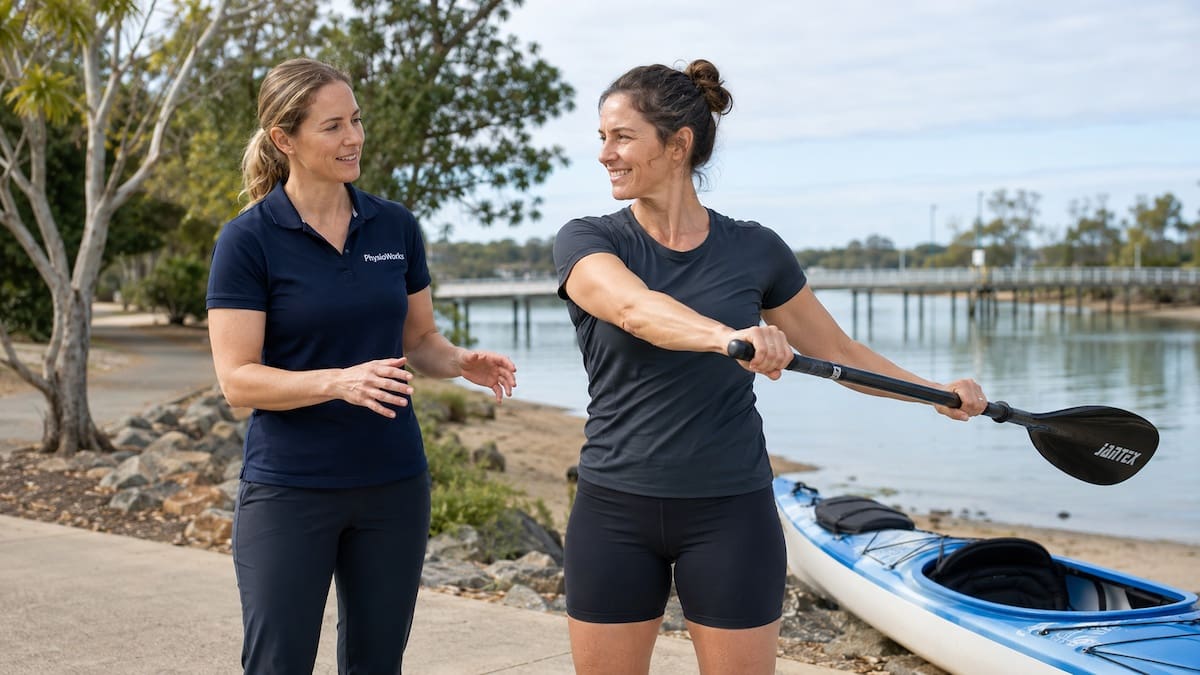
Assessment may identify shoulder, trunk and technique-related load factors.
Why Do Paddling Injuries Occur?
Paddling injuries rarely result from one factor alone. They usually reflect a mismatch between the load placed on the body and the paddler’s current strength, movement, technique or recovery capacity.
- Rapid load increases: adding distance, speed, white-water exposure or weekly sessions too quickly.
- Arm-dominant technique: generating most of the stroke through the shoulders rather than sharing force through the trunk, hips and legs.
- Fatigue: stroke quality and shoulder control may decline late in a session.
- Boat or paddle setup: unsuitable paddle length, blade size, seat position or foot support may alter joint loading.
- Restricted movement: limited thoracic, shoulder or hip movement can shift extra stress elsewhere.
- Reduced strength or endurance: poor shoulder, trunk or grip capacity may reduce tolerance for repeated strokes.
- Tight gripping: excessive grip pressure increases forearm, wrist and elbow load.
- Previous injury: incomplete rehabilitation may leave weakness, stiffness or reduced confidence.
- Environmental demands: wind, surf, rapids, cold conditions and unstable water increase effort and injury risk.
How Do Kayak and Canoe Demands Differ?
Kayaking normally uses a double-bladed paddle with alternating strokes on each side. Canoeing commonly uses a single-bladed paddle and places more sustained load through one side of the body.
Kayakers often manage repeated bilateral rotation while seated. Canoeists may experience greater asymmetrical loading through the shoulder, trunk, hip and kneeling knee. Rehabilitation should reflect the paddler’s craft, stroke, position and water conditions.
How Are Paddling Injuries Assessed?
A physiotherapy assessment starts with the location and behaviour of your symptoms. Your physiotherapist may ask about your craft, paddle setup, stroke style, usual distance, recent load changes and whether the injury developed gradually or during a specific event.
The physical assessment may include:
- shoulder movement, strength and rotator cuff loading
- shoulder-blade control during pulling movements
- thoracic and lumbar rotation
- trunk strength and endurance
- hip movement and seated posture
- wrist, elbow and grip strength
- balance, leg drive and knee tolerance
- paddle-stroke or training-video review where available
Imaging is not required for every paddling injury. However, your physiotherapist may recommend medical review or imaging when symptoms suggest a fracture, significant tendon tear, joint dislocation, nerve injury or bone stress injury.
How Can Physiotherapy Help Paddling Injuries?
Physiotherapy aims to settle pain, restore movement and rebuild the physical capacity required for paddling. Treatment should match the injured area, the type of paddling and your planned return distance or competition demands.
Training and Load Modification
You may not need complete rest. Shorter sessions, calmer water, reduced resistance, easier strokes or temporary changes to gym training may allow you to remain active while symptoms settle.
Movement and Pain Management
Manual therapy, taping, movement advice or other pain-relief strategies may help during the early stage. These options work best when combined with a progressive rehabilitation plan rather than used alone.
Strength and Endurance Rehabilitation
Exercise may target the rotator cuff, shoulder blade, upper back, trunk, hips, forearms and grip. The program should progress from controlled exercises to pulling, rotation, endurance and paddle-specific power.
Technique and Equipment Review
A review of grip pressure, stroke timing, trunk rotation, paddle length, blade size, seating and foot support may identify avoidable loading. Your physiotherapist may also work with your paddling coach when technique changes are needed.
Graded Return to Paddling
Return usually progresses from short, controlled sessions to longer distances, stronger efforts and more challenging water. White-water, surf, racing and endurance paddling may require separate final-stage testing.
When Can You Return to Kayaking or Canoeing?
Return time depends on the diagnosis and severity of the injury. Before resuming normal paddling, you should usually be able to complete the required movements with good control and without a significant increase in symptoms during the session or the following day.
Useful return markers may include:
- comfortable shoulder and trunk movement
- strength approaching the uninjured side
- pain-free or well-tolerated gripping
- controlled pulling and rotational exercises
- tolerance of sitting or kneeling for the expected duration
- confidence entering, exiting and carrying the craft
- successful completion of shorter paddling sessions
How Can You Reduce Your Risk of Paddling Injuries?
- Increase distance, duration and intensity gradually.
- Warm up the shoulders, trunk, hips and wrists before harder sessions.
- Use trunk rotation and leg drive rather than pulling only with the arms.
- Keep your grip firm enough for control but avoid constant over-gripping.
- Build shoulder, trunk, hip and grip strength away from the water.
- Check that your paddle, seat and foot supports suit your body and craft.
- Allow recovery between long, hard or technically demanding sessions.
- Practise capsize, rescue and bracing skills in a controlled environment.
- Use suitable personal flotation, sun protection and thermal protection.
- Address recurring pain before it starts altering your technique.
Better Health Channel also provides public guidance about canoeing and kayaking injury prevention, including shoulder, wrist, impact and environmental risks.
When Should You Seek Help?
Book an assessment if pain keeps returning, reduces your paddling distance, affects your grip or stroke power, causes weakness, or remains aggravated the following day.
Seek urgent medical care after a major collision, suspected fracture, shoulder dislocation, severe head or neck impact, breathing difficulty, increasing numbness, marked weakness or loss of hand function.
Related Paddling and Injury Guides
- Water Sports Injuries – the parent guide for swimming, rowing, paddling and other water sports.
- Shoulder Pain – common shoulder conditions, symptoms and treatment pathways.
- Rotator Cuff Tendinopathy – shoulder tendon overload and rehabilitation.
- Lower-Back Pain – causes, assessment and treatment options.
- Hand and Wrist Pain – common gripping and wrist-loading problems.
- Rib Stress Fracture – gradual rib pain linked to repeated loading.
- Arm Pain – shoulder, elbow, wrist and nerve-related symptoms.
- Physiotherapy – assessment, rehabilitation and return-to-activity care.
Kayaking, Canoeing and Paddling Injury FAQs
What is the most common kayaking injury?
Lower-back and shoulder injuries are among the most common problems reported in kayakers. Wrist pain can also occur because of repeated gripping and paddle control. The exact injury pattern varies with paddling style, training volume, technique and water conditions.
Why does my shoulder hurt when kayaking?
Kayaking repeatedly loads the rotator cuff and shoulder-blade muscles. Pain may develop when training volume rises too quickly, the shoulder becomes fatigued, technique relies too heavily on the arms, or a previous injury has not fully recovered.
Why does kayaking hurt my lower back?
Kayaking combines prolonged sitting with repeated trunk rotation and force transfer through the hips and legs. Limited hip or upper-back movement, poor trunk endurance, unsuitable seating or excessive lumbar rotation may contribute to back pain.
Can I keep paddling with shoulder or back pain?
You may be able to continue with shorter and easier sessions if symptoms remain mild and settle quickly. Reduce or stop paddling if pain worsens during the session, alters your technique, causes weakness or remains more painful the next day.
How can I strengthen my body for paddling?
A balanced program normally includes rotator cuff and shoulder-blade exercises, rowing movements, trunk rotation and anti-rotation work, hip strength and grip endurance. Exercise selection should match your craft, injury history and current training level.
Can physiotherapy help kayaking and canoeing injuries?
Physiotherapy may help identify the injured area, modify aggravating loads, restore movement and strength, and guide a staged return to paddling. Assessment can also examine paddle technique, trunk control, seating and sport-specific demands.
What to Do Next
If a kayaking, canoeing or paddling injury is limiting your distance, power or confidence on the water, a physiotherapy assessment can help identify the main contributing factors.
Your physiotherapist can develop a plan for pain management, exercise rehabilitation, technique-related loading and a gradual return to your preferred paddle sport.
Choose your clinic and appointment pathway
Select a PhysioWorks clinic to continue to live booking, an appointment request or reception assistance.
References
- Gao K, Deng Y, Zhou X, et al. Epidemiological characteristics of injuries among elite adolescent flat-water kayak and canoe athletes. Front Public Health. 2025;13:1608987. doi:10.3389/fpubh.2025.1608987
- Isorna-Folgar M, Leirós-Rodríguez R, Paz-Dobarro R, García-Soidán JL. Injuries associated with the practice of calm water kayaking in the canoeing modality. J Clin Med. 2021;10(5):902. doi:10.3390/jcm10050902