
Surfing Injuries


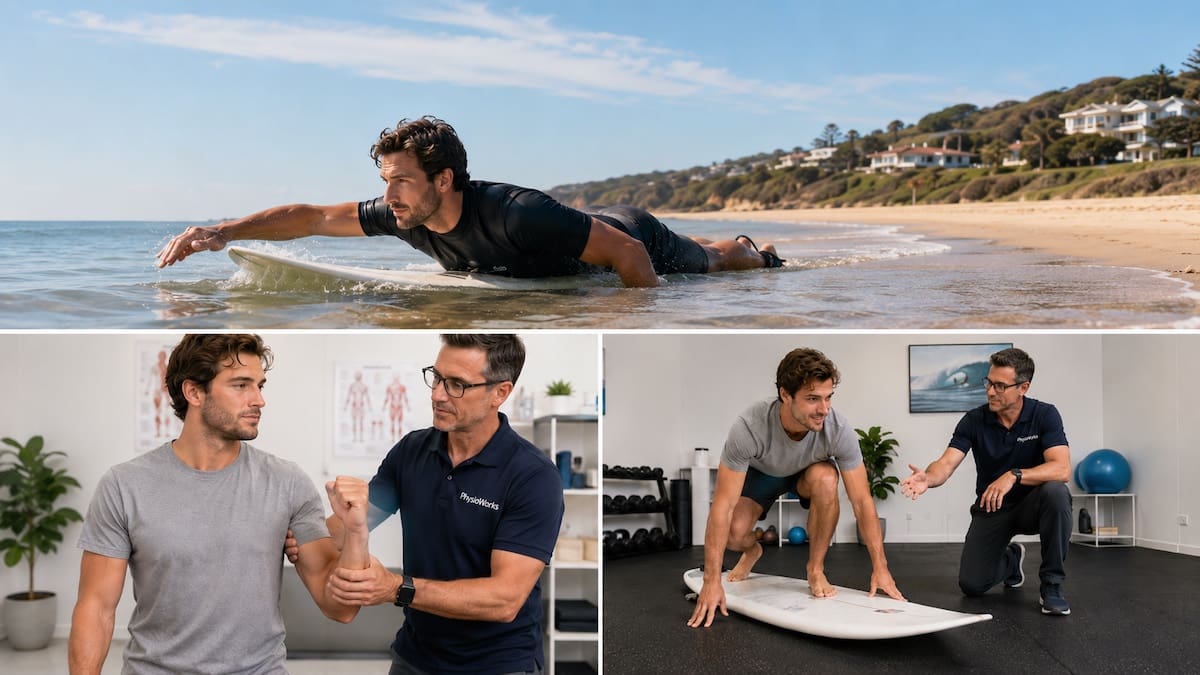
Surfing injuries can occur during paddling, duck diving, popping up, turning, landing or falling from the board. Some injuries happen suddenly after a wipeout or collision. Others build gradually as repeated paddling, spinal extension or high training loads exceed the body’s current capacity.
The shoulders, ankles, knees, lower back, head and face are among the areas commonly affected. Surfing injuries may include muscle and tendon overload, ligament sprains, joint injuries, cuts, concussion and fractures. This page explains common injury patterns, early management, rehabilitation and safer return to surfing.
For injuries linked with other aquatic activities, visit our water sports injuries guide.
Quick guide to surfing injuries
- Paddling commonly overloads the shoulder and upper back.
- Fast turns and awkward landings can injure the knee or ankle.
- Prolonged prone extension may aggravate the lower back or neck.
- Boards, fins, reefs and the sea floor can cause impact injuries and cuts.
- Rehabilitation should restore strength, mobility, balance and surfing capacity.
What Are the Most Common Surfing Injuries?
Surfing combines repetitive upper-limb work with rapid, unpredictable whole-body movement. Injury patterns vary with surfing experience, wave size, board type, breaks, crowding, fatigue and the amount of time spent in the water.
Research has identified frequent injuries involving the shoulder, ankle, head, face and lower limbs. Muscle, tendon, joint and ligament injuries also feature prominently. Cuts and impact injuries remain important because surfers may collide with their board, another surfer, rocks, reefs or the sea floor.
Shoulder Injuries From Paddling
Paddling takes up a large portion of a surfing session. Each stroke loads the rotator cuff, shoulder blade muscles, biceps tendon and upper back. Repeated paddling without enough recovery may gradually reduce shoulder load tolerance.
Common surfing-related shoulder problems include:
- rotator cuff tendinopathy
- biceps tendinopathy
- shoulder impingement symptoms
- shoulder instability
- muscle strains around the shoulder blade and upper back
- traumatic shoulder sprains or dislocation after a fall
Symptoms may include pain during paddling, weakness, a painful overhead stroke, reduced endurance or pain when lying on the affected shoulder. Persistent symptoms deserve assessment rather than repeated attempts to surf through them.
Lower Back Pain While Surfing
Surfers spend long periods lying face down with the lower back and neck extended. Paddling, sitting astride the board, rotating through turns and absorbing uneven forces can all load the lumbar spine.
Lower back pain may relate to muscle fatigue, joint irritation, reduced hip mobility, poor trunk endurance or a rapid increase in surfing volume. Pain may feel stiff or aching after paddling. It may also become sharper during extension, rotation or the pop-up.
Surfers should not ignore severe back pain combined with leg weakness, numbness, bladder or bowel changes, or difficulty walking. These symptoms need urgent medical assessment.
Knee Injuries During Turns and Landings
The knees absorb rotational and compressive forces when a surfer changes direction, lands a manoeuvre or loses balance. The rear knee may experience substantial twisting during deep turns, while either knee can be injured during a wipeout.
Possible surfing knee injuries include:
- meniscus injury
- medial collateral ligament sprain
- ACL injury
- kneecap irritation or patellofemoral pain
- joint compression and bone bruising
- muscle or tendon strain
Rapid swelling, locking, giving way or difficulty bearing weight may suggest a more significant injury. Stop surfing and arrange an assessment if these symptoms occur.
Ankle and Foot Injuries
Ankle injuries may occur when the foot slips, becomes caught against the board or lands awkwardly after an aerial manoeuvre. Walking over uneven rocks, reefs and sand can also aggravate an injured ankle.
A sprained ankle may cause swelling, bruising, pain and reduced balance. Incomplete rehabilitation can contribute to chronic ankle instability, which may make the surfer feel less secure while standing, turning or moving across uneven ground.
Foot cuts, fin injuries, fractures and tendon injuries can also occur. Seek medical care for deep wounds, contamination, marked swelling, deformity or an inability to walk.
Head, Face and Neck Injuries
The surfboard is a common source of head and facial impact. Surfers can also strike another board, the sea floor, reef or rocks. Potential injuries include cuts, facial fractures, dental trauma, neck sprain and concussion.
Leave the water immediately after a significant head impact. Urgent medical assessment is important if the surfer develops confusion, repeated vomiting, increasing headache, unusual behaviour, poor balance, vision changes, marked drowsiness, weakness or loss of consciousness.
Cuts, Bruises and Rib Injuries
Surfboard fins, reefs, rocks and shells may cause cuts or puncture wounds. Salt water does not sterilise a wound. Clean wounds promptly and seek medical care when they are deep, contaminated, gaping or continuing to bleed.
Direct contact with the board may also cause rib bruising or chest wall pain. Repeated prone paddling can irritate the chest wall, while persistent localised rib pain may require assessment to exclude a fracture or rib stress injury.
Why Do Surfing Injuries Occur?
Surfing injury risk rarely comes from one factor alone. It usually reflects the interaction between the surfer’s physical capacity, skill level, equipment, training load and conditions in the water.
Sudden Wipeouts and Collisions
Wave force can throw the surfer into the board, another person or the sea floor. Larger or steeper waves usually increase speed and impact. Shallow breaks, reefs, rocks and crowded line-ups may add further risk.
Repeated Paddling Load
Long sessions and frequent surfing can expose the shoulder to hundreds of repeated strokes. Risk may rise when paddling volume increases quickly, shoulder endurance is limited or technique changes as fatigue builds.
Rapid Increases in Surfing Volume
A return after illness, injury, travel or time away can produce a large load spike. Several long sessions close together may exceed current shoulder, spine or lower-limb capacity, even when the surfer previously tolerated that volume.
Reduced Strength or Mobility
Limited thoracic mobility, shoulder weakness, poor trunk endurance, reduced hip movement or inadequate single-leg control can affect how the body shares surfing load. These findings do not guarantee injury, but they may become relevant when combined with fatigue and higher surfing demands.
Technique, Equipment and Conditions
Board volume, board length, fin setup, leash condition and wetsuit restriction may alter movement demands. Wave size, water depth, temperature, crowding, visibility and the type of break also influence injury exposure.
How Are Surfing Injuries Assessed?
A physiotherapy assessment starts with how the injury occurred, where symptoms are located and which surfing tasks provoke them. Your physiotherapist may also ask about recent surfing volume, usual break type, stance, board setup and previous injuries.
Depending on the injury, assessment may include:
- shoulder movement, rotator cuff strength and paddling endurance
- neck, thoracic spine and lower-back mobility
- hip, knee and ankle range of movement
- single-leg balance, squat and landing control
- pop-up movement and floor-based surfing simulations
- strength, power and repeated-load testing
- neurological or concussion screening when indicated
Imaging is not required for every surfing injury. An X-ray, ultrasound, CT scan or MRI may help when assessment suggests a fracture, significant ligament injury, tendon tear, joint damage or another condition needing further investigation.
How Can Physiotherapy Help Surfing Injuries?
Physiotherapy aims to identify the injured structure, settle irritable symptoms and rebuild the physical qualities required for surfing. The plan should match the injury, the surfer’s experience and the demands of their usual waves and equipment.
Early Injury Management
Early care may include activity modification, swelling management, wound or medical referral, comfortable movement and advice about what the surfer can safely continue. Complete rest is not always required, but surfing through sharp pain, instability or neurological symptoms is not recommended.
Restore Movement
Rehabilitation may address shoulder movement, thoracic rotation, spinal mobility, hip range or ankle mobility. The goal is not maximum flexibility. Instead, treatment aims to restore enough comfortable movement for paddling, sitting, popping up and riding.
Rebuild Strength and Endurance
Exercise may target:
- rotator cuff and shoulder blade strength
- paddling endurance
- trunk endurance and rotational control
- hip and knee strength
- calf and ankle capacity
- single-leg balance and board control
- landing, turning and power development
Sport-Specific Rehabilitation
Later rehabilitation should prepare the surfer for repeated paddling, duck diving, rapid pop-ups, deep squat positions, turns and unpredictable balance demands. A structured sports physiotherapy plan can connect gym progress with the surfer’s actual return-to-water requirements.
When Can You Return to Surfing?
Return to surfing should depend on function rather than time alone. A minor injury may settle quickly, while a ligament injury, fracture, dislocation or concussion may require a longer progression.
Before returning, the surfer should generally be able to:
- complete daily activities without a significant symptom increase
- move the injured area through the range needed for surfing
- tolerate repeated paddling or equivalent conditioning
- perform a quick pop-up with control
- squat, rotate and balance without instability
- manage jumping or landing demands when relevant
- respond safely to unexpected movement
A practical return may begin in smaller, less crowded waves with a shorter session. The surfer can then increase session length, paddling volume and wave difficulty as symptoms and recovery allow.
A Simple Return-to-Surf Progression
- Comfortable swimming, walking and daily movement.
- Gym-based shoulder, trunk and lower-limb rehabilitation.
- Repeated pop-ups and controlled surfing movement drills.
- Short paddle or easy surf in calm, familiar conditions.
- Gradual increases in session length and wave demand.
- Return to harder turns, aerials or competition after full control returns.
How Can You Reduce Surfing Injury Risk?
No strategy can prevent every surfing injury. However, sensible preparation may reduce avoidable load spikes and improve the surfer’s ability to manage repeated paddling and unpredictable movement.
- Build surfing duration and frequency gradually after time away.
- Maintain shoulder, trunk, hip, knee and ankle strength.
- Warm up before entering the water, especially in cooler conditions.
- Check the board, fins and leash before each session.
- Choose waves that match your current skill and physical capacity.
- Avoid surfing alone in unfamiliar or hazardous conditions.
- Allow enough space between surfers.
- Protect your head during a fall and avoid diving head-first.
- Rehabilitate ankle, knee and shoulder injuries before returning fully.
- Reduce session length when fatigue changes paddling or board control.
When Should You Stop Surfing and Seek Help?
Stop surfing and arrange an assessment when pain changes your paddling, pop-up, stance or ability to control the board. Early review is also sensible when symptoms keep returning after rest.
Seek prompt medical assessment for:
- loss of consciousness or suspected concussion
- neck pain after a heavy impact
- numbness, weakness or loss of coordination
- rapid joint swelling or obvious deformity
- a joint that locks, gives way or cannot bear weight
- deep, contaminated or heavily bleeding wounds
- chest pain or difficulty breathing after impact
- severe spinal pain or new bladder or bowel symptoms
Related Surfing and Water Sports Guides
- Swimming Injuries
- Kayaking, Canoeing and Paddling Injuries
- Rowing Injuries
- Water Skiing and Wakeboarding Injuries
- Shoulder Pain and Injuries
- Sports Knee Injuries
- Ankle Pain and Injuries
Surfing Injuries FAQs
What body part is most commonly injured while surfing?
Surfing injuries commonly affect the shoulders, ankles, knees, head, face and spine. The exact pattern varies between sudden injuries and gradual overload. Paddling places repeated demand on the shoulders, while wipeouts and manoeuvres expose the lower limbs and head to greater traumatic forces.
Why does my shoulder hurt after surfing?
Shoulder pain after surfing often relates to repeated paddling load. The rotator cuff, biceps tendon and shoulder blade muscles must work for long periods. Pain may develop when session volume rises quickly, shoulder endurance is limited or the tissues have not recovered between sessions.
Is lower back pain common in surfers?
Lower back discomfort can occur because surfers paddle in a prolonged face-down position with the spine extended. Repeated rotation, reduced hip mobility, poor trunk endurance and sudden increases in water time may also contribute. Persistent or radiating pain should be assessed.
Can I surf with a sprained ankle?
A mild ankle sprain may allow an earlier return than a severe ligament injury. However, surfing requires balance, rapid foot placement and control on an unstable surface. Return when walking, hopping, balancing and board-related movements are comfortable and the ankle no longer gives way.
How long does a surfing injury take to heal?
Recovery depends on the injured tissue and its severity. A mild muscle strain may improve within weeks, while fractures, significant ligament injuries, shoulder dislocations and concussion may take longer. Strength, control and surfing tolerance should guide return rather than a fixed date alone.
Can physiotherapy improve surfing performance?
Physiotherapy may improve the physical qualities that support surfing, including shoulder endurance, spinal mobility, trunk control, leg strength, balance and recovery from previous injury. It can also identify limitations that affect paddling, pop-up speed or confidence during manoeuvres.
What to Do Next
If a surfing injury is limiting your paddling, pop-up, turning or confidence in the water, arrange a physiotherapy assessment. Early guidance can help identify the likely injury and clarify what you can safely continue.
Your physiotherapist can assess movement, strength, balance, surfing load and previous injuries. They can then build a staged rehabilitation plan for returning to the water and progressing towards your usual waves, session length and surfing goals.
Choose your clinic and appointment pathway
Select a PhysioWorks clinic to continue to live booking, an appointment request or reception assistance.


References
- McArthur K, Jorgensen D, Climstein M, Furness J. Epidemiology of acute injuries in surfing: type, location, mechanism, severity, and incidence—a systematic review. Sports (Basel). 2020;8(2):25. doi:10.3390/sports8020025
- Furness J, Hing W, Abbott A, Walsh J, Sheppard JM, Climstein M. Acute injuries in recreational and competitive surfers: incidence, severity, location, type, and mechanism. J Sci Med Sport. 2015;18(3):265-269.
- Hanchard S, Duncan A, Furness J, et al. Chronic and gradual-onset injuries and conditions in the sport of surfing: a systematic review. Sports (Basel). 2021;9(2):23. doi:10.3390/sports9020023
- de Pinho Monteiro CEM, Hespanhol L, de Oliveira FC. Injury patterns in competitive and recreational surfing: a systematic review. Br J Sports Med. 2022;56(9):505-512. doi:10.1136/bjsports-2021-104647
