1. Measure the resting length
Measure the working section between the anchor point and your hand before placing the band under tension.


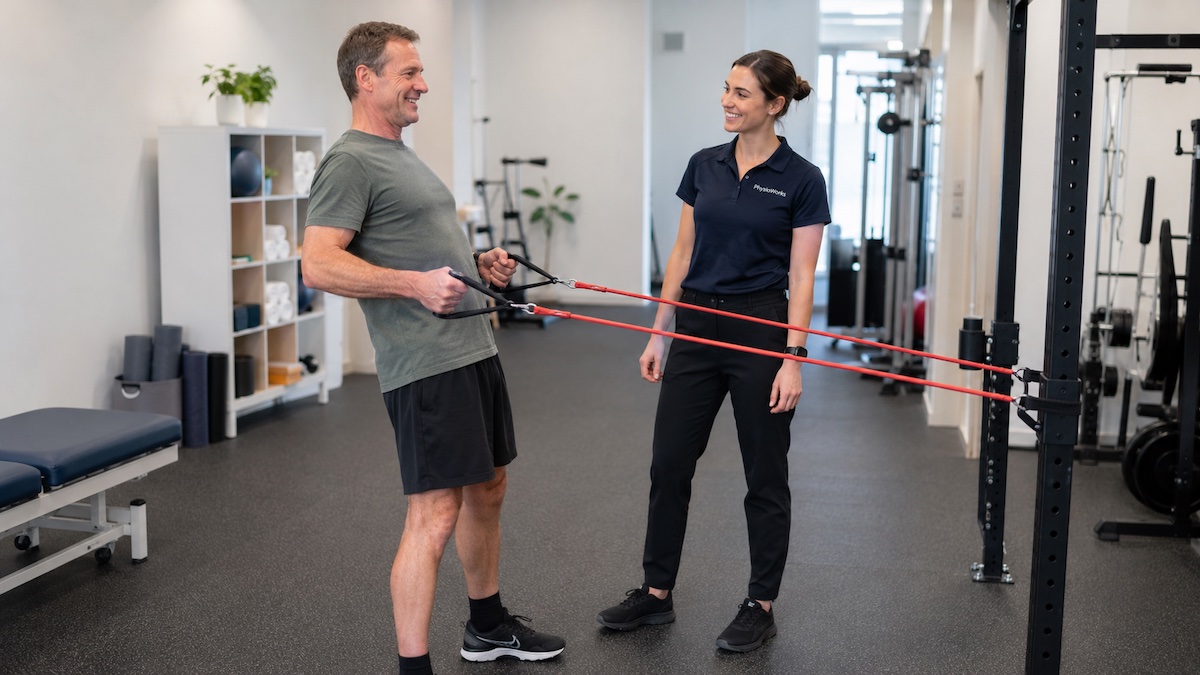
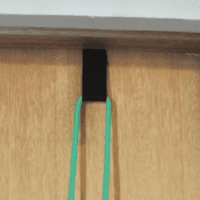
Standing rows provide progressively greater resistance as the band stretches through the movement.
A resistance band does not generate one fixed amount of force. Its resistance changes according to the band model, its resting length and how far it stretches during an exercise.
Generally, greater elongation produces greater force. However, colour alone does not provide an exact load because band specifications vary between manufacturers and product ranges. For practical exercise ideas, visit our Resistance Band Exercises guide.
Resistance band force increases as the band stretches. A band at 100% elongation has doubled its resting length, while a band at 200% elongation has reached three times its resting length.
For an accurate load, use the force chart supplied for the exact band model or measure it with a calibrated force gauge. Do not assume that bands of the same colour from different brands produce the same force.
Elastic resistance is commonly reported in newtons or kilogram-force. Kilogram-force describes force rather than the mass of an object.
One kilogram-force is approximately 9.81 newtons. Therefore, a band producing 5 kilogram-force generates approximately 49 newtons of pulling force.
The force produced by a resistance band depends on:
Elongation describes the increase in length compared with the band’s resting length. Use the following calculation:
Percentage elongation = (stretched length − resting length) ÷ resting length × 100
Measure the working section between the anchor point and your hand before placing the band under tension.
Measure the same section at the point in the exercise where you want to estimate the resistance.
Subtract the resting length from the stretched length. Divide the result by the resting length and multiply by 100.
A resistance band has a resting working length of 0.5 metres and stretches to 1.0 metre:
The band is therefore at 100% elongation. Its final length is twice its resting length.
A 0.5-metre working length stretches to 0.75 metres.
A 0.5-metre working length stretches to 1.0 metre.
A 0.5-metre working length stretches to 1.5 metres.
There is no universal force value for a resistance band colour. Colour usually indicates the order of resistance within one manufacturer’s product range, but it does not provide a standard load across all brands.
For example, a blue flat band, blue loop and blue resistance tube may each produce a different force at the same percentage elongation. Even similar products can differ because of their material, width, thickness and manufacturing specifications.
Use the manufacturer’s current force chart for the specific band type and product range. Do not apply values from a flat TheraBand® chart to a loop, tube or band made by another manufacturer.
Published force charts can show different results because manufacturers and researchers do not always test elastic bands in the same way.
Differences may arise from:
Research has found that some manufacturer reference values overestimate measured band tension. More recent research has therefore recommended product-specific equations when accurate external-load prescription is important.
Using two matching bands in parallel will approximately double the total force when both bands:
For example, if one band produces 4 kilogram-force at a particular length, two identical bands used under the same conditions would produce approximately 8 kilogram-force.
Unequal band lengths or attachment points may cause one band to carry more load than the other. Replace worn or damaged bands rather than pairing them with newer bands.
No. Resistance generally increases as the band stretches.
During a standing row, the exercise may feel lighter near the starting position and harder as the hands move towards the body. The exact resistance curve depends on the band, anchor position, direction of pull and change in working length.
Band force also differs from the load experienced by a particular joint or muscle. Joint angle, movement direction and the distance between the line of force and the joint all influence muscular demand.
Estimating band force can help clinicians prescribe and progress exercises more consistently. It may be useful when:
However, exact force measurement is not always necessary. Exercise technique, symptoms, repetitions and perceived effort can also guide resistance selection.
Choose a band that allows controlled movement with an appropriate level of effort. The ideal resistance depends on the exercise, your current capacity and the purpose of the program.
Select a resistance that allows smooth movement without breath-holding, excessive momentum or loss of alignment.
The final repetitions may feel challenging during strength exercise, but technique should remain controlled.
Increase one variable at a time, such as repetitions, stretch distance, sets or band resistance.
Reduce the resistance if you cannot complete the movement smoothly or if symptoms exceed the limits set for your rehabilitation program.
Consider a physiotherapy assessment when pain, weakness or restricted movement makes it difficult to select or progress an exercise. A physiotherapist can assess the problem and recommend an appropriate starting load.
Seek advice sooner if exercise causes increasing pain, new numbness, marked weakness, joint instability or symptoms that remain noticeably worse after the session.
The force depends on the exact band model and how far it stretches. A resistance band does not produce one fixed load throughout an exercise.
Subtract the resting length from the stretched length. Divide the result by the resting length and multiply by 100. A 0.5-metre band stretched to 1.0 metre has 100% elongation.
No. Colour indicates relative resistance within a manufacturer’s product range. The same colour may produce different forces across brands and band types.
Two identical bands used in parallel will approximately double the force when they have the same length, elongation, direction and load distribution.
Results vary because of differences in band material, dimensions, age, product type and testing method. Researchers may also use different elongation ranges.
A calibrated force gauge provides a direct measurement. Otherwise, use a current force chart or equation supplied for the exact band model.
Start with a resistance that allows smooth, controlled movement. Measure the working band length when you need a repeatable setup, and use the correct manufacturer chart when an estimated force is important.
Book a physiotherapy appointment if pain, weakness or uncertainty makes it difficult to choose or progress your exercises safely.
Select a PhysioWorks clinic to continue to live booking, an appointment request or reception assistance.
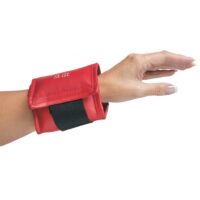
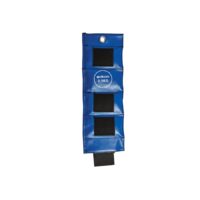
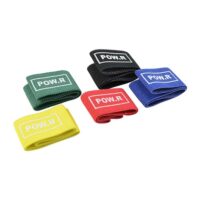
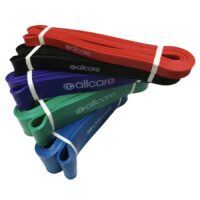
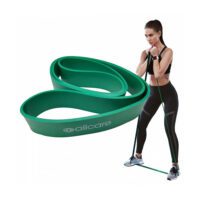
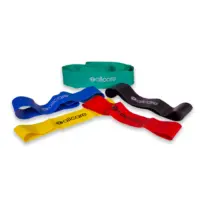
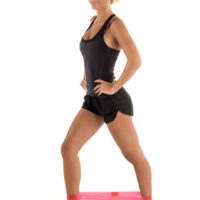
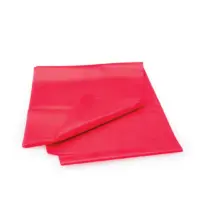
These strength products are commonly used by our physiotherapists to improve strength, controlled movement, plus assist home exercise programs.