
Neck Strengthening



Neck strengthening uses targeted exercises to improve cervical spine control, endurance, posture support, and load tolerance. It may help people with recurring neck pain, stiffness, desk-related symptoms, headache patterns, or reduced confidence with work, driving, gym training, and daily activity.
At PhysioWorks, neck strengthening is usually delivered as part of a broader physiotherapy plan, with appointments available through our Sandgate physiotherapy clinic and Clayfield physiotherapy clinic.
When the neck muscles are weak, poorly coordinated, or overloaded, the joints and nearby tissues can become irritated. As a result, you may notice stiffness, reduced movement, or pain that spreads into the shoulder blade or arm. If you are dealing with broader symptoms, it also helps to read more about neck pain, neck arm pain, and neck physiotherapy.
A physiotherapist can assess which muscles need the most attention and guide the right exercise progression for your stage of recovery. Some people need deep muscle retraining first. Others need endurance, postural control, shoulder blade strength, or a gradual return to loaded activity. If your symptoms relate to irritation or injury, you may also find these guides useful: cervicogenic neck headache, cervical radiculopathy, and stiff neck.
What Is Neck Strengthening?
Neck strengthening is a structured exercise approach that improves the capacity of the muscles that support and control your cervical spine. These muscles do more than create movement. They also help stabilise the neck joints, control head position, support posture, and reduce unnecessary strain through the upper neck, lower neck, and shoulder region.
Effective programs often combine:
- deep neck flexor retraining
- neck extensor endurance
- gentle isometric loading
- shoulder blade and upper back strengthening
- postural control exercises
- movement retraining for work, study, driving, or sport
How Does Neck Strengthening Help Neck Pain?
Neck strengthening helps by improving muscle control, endurance, and load tolerance around the cervical spine. When the deeper support muscles work better, the neck often feels less strained during desk work, driving, training, and sleep-related flare-ups. It can also reduce overuse of the larger surface muscles that often become tense and sore in persistent neck pain.
Why Neck Strength Matters
The neck supports the weight of your head throughout the day while also coordinating with your eyes, upper back, shoulders, and jaw. Therefore, poor muscle endurance or reduced control can increase joint loading and muscle tension. Over time, this may contribute to ongoing pain, recurrent stiffness, reduced tolerance to desk work, or headache symptoms.
Many people with persistent neck pain do not simply have a “tight neck”. Instead, they often show reduced endurance, altered timing of the deep stabilising muscles, and overactivity in the more superficial muscles. This is why a strengthening-based program is often more useful than stretching alone.
Which Muscles Are Important?
Several muscle groups contribute to healthy neck function. Of particular importance are the deep neck flexors at the front of the neck and the deep extensor and segmental support muscles at the back. These muscles help maintain good alignment and control small joint movements.
The neck also relies on support from the upper back and shoulder blade muscles. If the scapular muscles are weak or poorly coordinated, the neck often works harder than it should. Consequently, a good physiotherapy program usually trains both the neck and the surrounding postural system. This can be especially helpful for people with cervicogenic headaches or posture-related neck symptoms.
Who Benefits From These Exercises?
Neck strengthening exercises may help people with:
- general neck pain and stiffness
- postural neck pain from desk work or device use
- recurrent flare-ups after poor sleep or awkward positions
- cervicogenic headache
- recovery after a neck sprain or whiplash-type problem
- reduced neck endurance in sport or gym training
- pain linked with poor shoulder blade control
- neck-related arm pain once properly assessed
However, not every neck problem should be trained in the same way. Some painful neck conditions need assessment first, particularly if you have arm pain, tingling, numbness, dizziness, trauma, or worsening weakness. If nerve irritation is suspected, read more about cervical radiculopathy.
How Physiotherapy Builds Neck Strength
Physiotherapists assess more than simple muscle power. They also look at movement quality, posture, joint stiffness, muscle endurance, symptom behaviour, neural irritation, and how your neck responds to functional tasks. This helps identify whether you need motor control retraining, isometric loading, endurance work, or a broader program that includes the upper back and shoulders.
Your physiotherapist may also check whether you are overusing the larger surface muscles instead of the deeper support muscles. That pattern is common in persistent neck pain and can make the neck feel tight, tired, or overloaded even when the muscles are technically working hard. If you are unsure whether this applies to you, our guide on what to expect from neck physiotherapy may help.
If you want a plain-English overview of what physiotherapy can do more broadly, Healthdirect explains how physiotherapy may help reduce pain, improve movement, and support function.
Common Exercise Starting Points
The best program depends on your symptoms, irritability, and goals, but common starting points include:
- chin nods: gentle activation of the deep neck flexors
- isometric holds: light resistance into flexion, extension, and side bending
- postural correction drills: controlling head and neck alignment without over-bracing
- scapular setting: improving shoulder blade support to reduce neck overload
- band or bodyweight upper back work: building endurance through the postural chain
These exercises should feel controlled and tolerable. Pushing too hard too soon can increase symptoms. Therefore, progression matters just as much as exercise selection.
Deep Neck Flexor Training
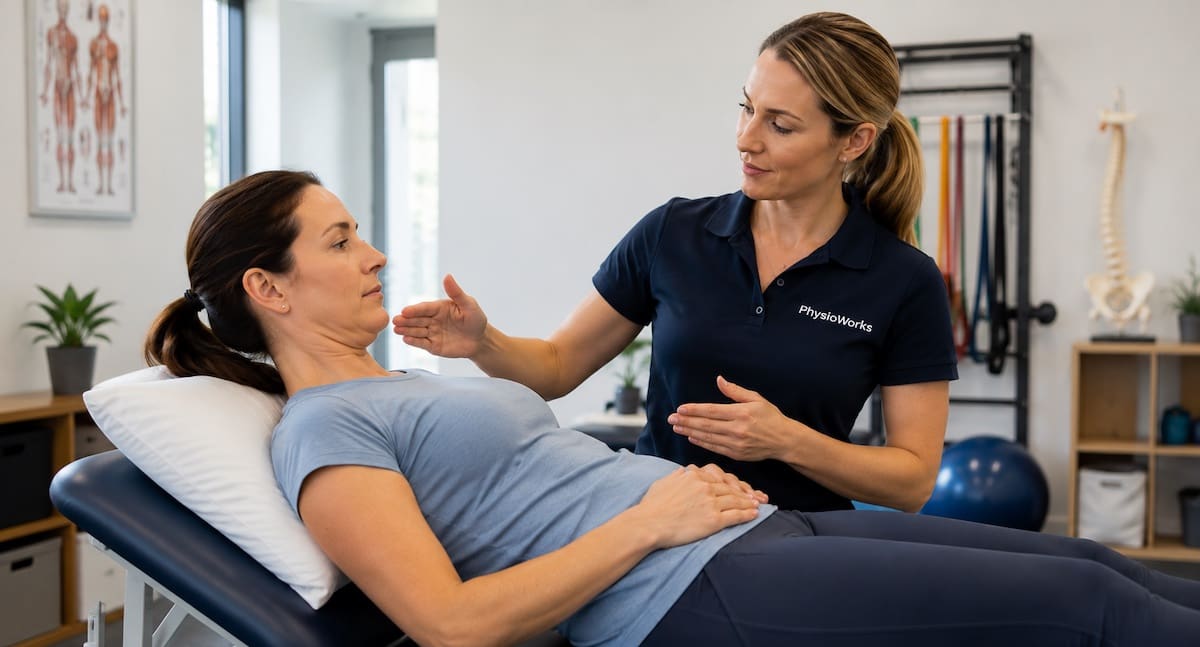
Deep neck flexor training targets the smaller stabilising muscles at the front of the neck. These muscles commonly lose coordination after pain or injury. When that happens, the larger neck muscles often dominate, which can increase tension and reduce control.
This type of exercise usually starts with very gentle low-load activation. From there, your physiotherapist can build the program towards longer holds, improved endurance, and better integration with posture, arm movement, work tasks, and sport-specific positions. This is often paired with treatment for linked issues such as neck pain, arm referral, or neck-related headache.
What Does the Research Say?
Recent research supports targeted exercise therapy for chronic neck pain, especially when programs include cervical stabilisation, motor control work, and progressive strengthening. Evidence also suggests that tailored exercise can improve pain, function, posture-related loading, and neuromuscular control, particularly when it is combined with broader scapular, thoracic, and functional retraining.
Where Can You Get Neck Strengthening at PhysioWorks?
If you want guided exercise progression, you can book physiotherapy at our Sandgate clinic or Clayfield clinic. Your physiotherapist can assess whether you need symptom settling first, deep muscle retraining, postural loading work, or a more advanced return-to-gym or return-to-sport plan.
Safety and When to Seek Help
Is Neck Strengthening Safe?
Neck strengthening is usually safe when it is matched to your symptoms and progressed properly. Mild effort and local muscle fatigue can be normal. However, exercises should not trigger marked headache aggravation, worsening arm pain, progressive weakness, dizziness, or visual disturbance. If they do, stop and get assessed.
When Should You See a Physiotherapist?
Book an assessment if your neck pain keeps returning, is not improving, or is limiting work, sleep, driving, gym training, or sport. You should also seek help if you are unsure which exercises are safe, if your headaches seem neck-related, or if you have arm symptoms that may indicate nerve irritation.
A physiotherapist can explain the cause of your symptoms, guide the right exercise progressions, and help you return to daily activities with more confidence. You can also start with our broader pages on neck pain and neck physiotherapy.
Frequently Asked Questions
What are the best neck strengthening exercises to start with?
Most people start with low-load control work such as chin nods, light isometric holds, posture correction drills, and shoulder blade exercises. The best choice depends on your symptoms and how irritable your neck is. A physiotherapist can help you avoid doing too much too early.
Can neck strengthening help headaches?
It can help when the headache is linked to the neck, especially with reduced deep neck muscle control, poor posture, or upper cervical stiffness. This is common in cervicogenic neck headache, although the right treatment plan may also need mobility work and load management.
Should I strengthen my neck if pain goes into my arm?
Not always right away. Arm pain, tingling, numbness, or weakness may suggest nerve irritation, so assessment comes first. Once the cause is clearer, a physiotherapist can decide whether neck loading is appropriate and how to progress it safely. See our guide to cervical radiculopathy for more detail.
How often should I do neck exercises?
That depends on the exercise type and your stage of recovery. Gentle control work may be done more often, while higher-load strengthening usually needs recovery between sessions. What matters most is consistency, good technique, and progressing only when your symptoms remain settled.
When should I stop neck strengthening exercises?
Stop neck exercises and seek assessment if they trigger worsening headache, dizziness, visual symptoms, increasing arm pain, numbness, tingling, or weakness. Mild effort can be normal, but symptoms should stay controlled and settle after exercise.
Related Articles
- Neck Pain
- Do I Need Physiotherapy for Neck Pain?
- Cervicogenic Neck Headache
- Cervical Radiculopathy
- Neck Arm Pain
- Stiff Neck
- Neck Exercises for Pain Relief
What to Do Next
If you want to improve neck support, reduce pain, and build better long-term resilience, a tailored neck strengthening plan is a smart place to start. The right physiotherapy program can help you restore control, improve function, and reduce the risk of future flare-ups.
Choose your clinic and appointment pathway
Select a PhysioWorks clinic to continue to live booking, an appointment request or reception assistance.
Neck Products
These neck products are commonly used by our physiotherapists to improve strength, posture, movement, plus assist home exercise programs.
-
-


-
-


-


- Liniments & Gels, Massage Liniments, Pain Management
Fisiocrem
$16.95 – $39.95Select optionsQuick View -


- Christmas Gift Ideas, Neck, Pillows/Cushions
FlexiPillow Alleve Pillow
$109.95Add to cartQuick View - EMS Machines, Pain Management, TENS Machine, TENS Machine & EMS
NeuroTrac Rehab (TENS Machine + EMS)
$285.00Add to cartQuick View -

 Back, Exercise Equipment, Neck, Resistance Band
66Fit Over Door Neck Traction Unit
$63.00Add to cartQuick View -
-
-

 Ice & Heat, Pain Management, Uncategorized
PhysiPak Universal Heat pack
$79.00Select optionsQuick View













References
- de Zoete RMJ, Coppieters I, Farrell SF, et al. Exercise Therapy for Chronic Neck Pain: Tailoring Person-Centred Approaches within Contemporary Management. J Clin Med. 2023;12(22):7108. doi:10.3390/jcm12227108.
- Rasmussen-Barr E, Grooten WJA, Hallqvist J, et al. Summarizing the Effects of Different Exercise Types in Chronic Neck Pain: A Systematic Review and Meta-Analysis of Systematic Reviews. Syst Rev. 2023;12:179. doi:10.1186/s13643-023-02330-5.
- Saini N, Alghadir A, Iqbal A, Sarkar B. Evaluating the Impact of Cervical Stabilisation Exercises on Chronic Neck Pain: A Systematic Review. Musculoskelet Care. 2025. doi:10.1002/msc.70091.
- Aydoğmuş H, Kaya Mutlu E. Investigation of the Effectiveness of Neck Stabilization Exercises in Patients with Chronic Neck Pain: A Randomized, Single-Blind Clinical, Controlled Study. Turk J Phys Med Rehabil. 2022;68(4):503-513. doi:10.5606/tftrd.2022.9464.
- Sakinepoor A, Rezasoltani A, Ebrahimi Takamjani I, et al. Neck Stabilization Exercise and Dynamic Neuromuscular Stabilization Reduce Pain Intensity, Forward Head Angle and Muscle Activity of Employees with Chronic Non-Specific Neck Pain. Health Sci Rep. 2025;8(2):e70608. doi:10.1002/hsr2.70608.
