Neck exercises for pain relief
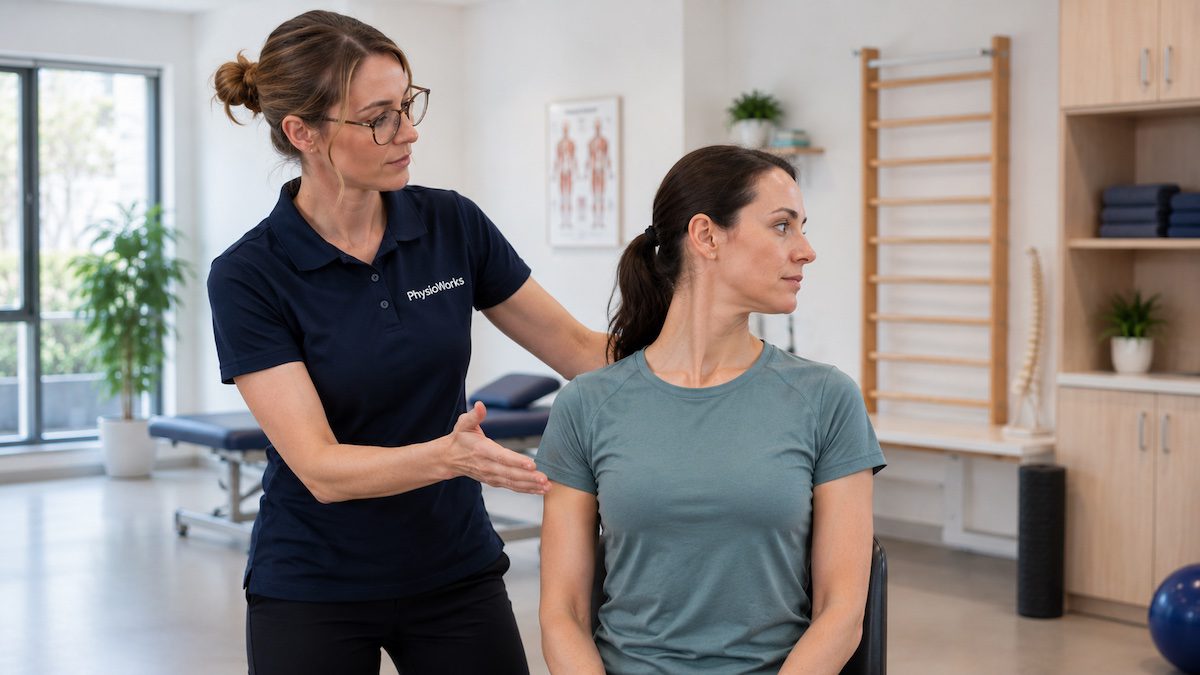
1. Neck rotations
Sit tall. Turn your head slowly to the left until you feel a mild stretch. Return to centre, then repeat to the right. Keep the movement smooth and avoid forcing the end range.
2. Chin tucks
Sit or stand upright. Gently draw your head straight back, as if making a “double chin”. Hold for 2–3 seconds, then relax. You should feel the deep neck muscles working, not a sharp pinch.
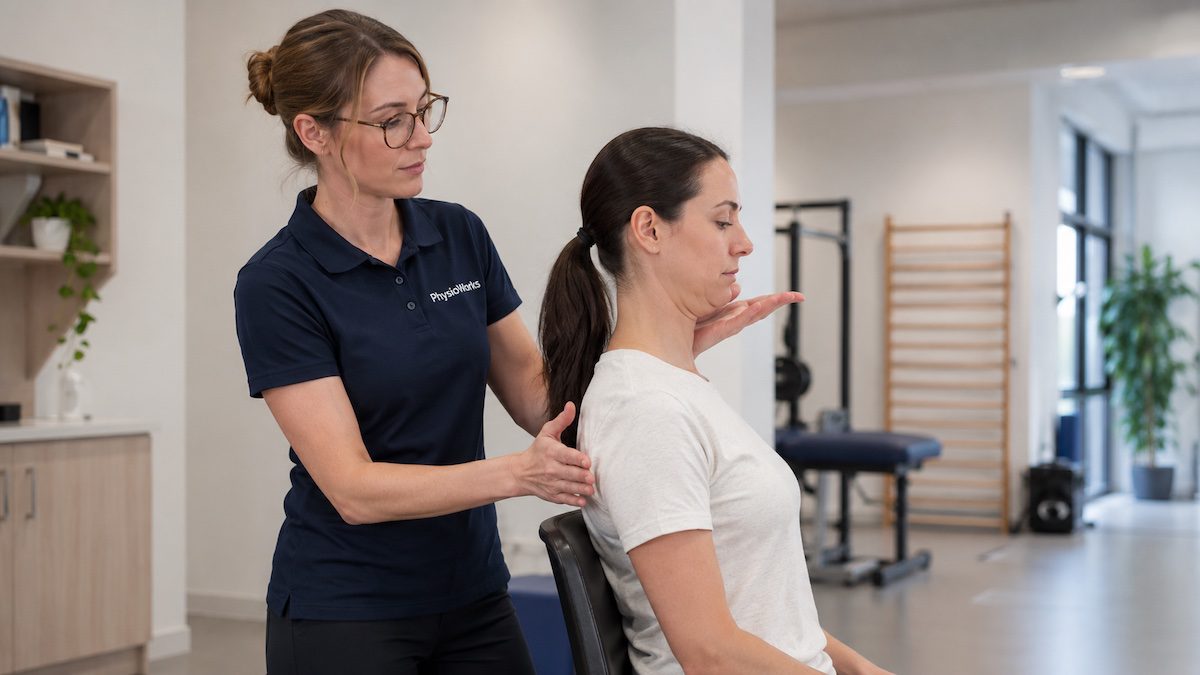
3. Side bends
Bring your ear towards your shoulder until you feel a gentle stretch on the opposite side. Hold briefly, then switch sides. Keep your shoulders down and relaxed.
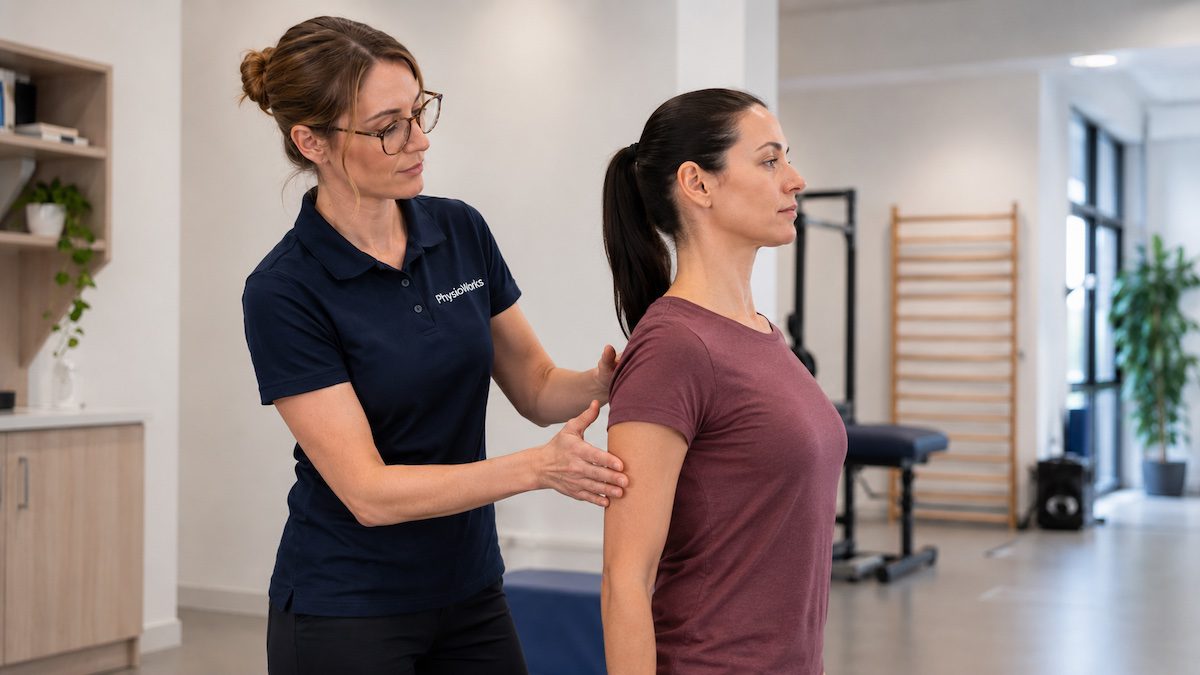
4. Shoulder blade setting
Gently draw your shoulder blades back and slightly down without shrugging. Hold briefly, then relax. This supports upper back posture and may reduce repeated load on the neck during desk tasks.
Best starting routine
- Mobility: rotations and side bends.
- Posture reset: chin tucks.
- Support: shoulder blade setting.
- Timing: brief sessions across the day.
- Progression: increase only if symptoms settle well.
How often should you do neck exercises?
Most people do best with short sessions across the day. As a guide, try 1–2 sets of 6–10 repetitions, two to four times daily. Then adjust based on how your neck responds over the next 24 hours.
| Goal | Starting point | Progress when |
| Calm symptoms | 1 set of 6 gentle reps | Movement feels smoother afterwards |
| Improve mobility | 1–2 sets of 6–10 reps | Symptoms settle within 24 hours |
| Build endurance | 2–4 short sessions daily | Desk, driving, or training tolerance improves |
| Prevent flare-ups | Brief movement breaks every 30–60 minutes | You can repeat the habit consistently |
If you flare up, reduce your range, slow the movement, or cut the volume. Then build again once your symptoms settle.
Can neck exercises help with tension headaches?
Neck exercises may help when headaches link to neck and shoulder tension. Consistent mobility, posture resets, and upper back endurance work can reduce strain in the muscles and joints that refer symptoms towards the head.
However, headaches can have several causes. If your headaches are severe, unusual, increasing, or linked with dizziness, fever, trauma, vision changes, or neurological symptoms, seek medical advice. You may also find our Tension Headache article helpful.
When should you stop neck exercises and get checked?
Stop and get assessed if neck exercises cause sharp pain, arm tingling, numbness, weakness, worsening headaches, dizziness, fever, unexplained weight loss, or symptoms after trauma.
Mild muscle effort or light soreness can be normal when you restart exercise. Sharp pain, spreading symptoms, or worsening function are different. These signs suggest you may need an assessment before progressing.
If symptoms travel into your arm, read more about Neck Arm Pain. If your symptoms relate to repeated phone or device posture, our Text Neck article may also help.
What habits help prevent neck pain?
- Ergonomic setup: Aim for a screen height and desk layout that reduce sustained forward head posture. See Ergonomic Workstation Assessment.
- Movement breaks: Change position every 30–60 minutes where possible.
- Sleep basics: Use a pillow height that keeps your neck neutral. See Sleeping Positions for Neck Pain Relief.
- Posture variety: There is no perfect posture. Change positions often and build strength so your neck tolerates daily load better.
- Gradual loading: Build gym, running, cycling, or work tasks steadily rather than jumping back to full load.
If your symptoms mainly relate to sitting, workstation habits, or upper back fatigue, our Posture Correction guide explains practical ways to improve tolerance.
What does this mean for you?
If your neck pain feels stubborn, keeps returning, or limits work and exercise, a physiotherapist can assess what is driving it and match exercises to your stage of recovery. Your plan may include exercise progressions, posture coaching, hands-on care, or targeted load management.
If muscle tightness blocks your progress, short-term soft tissue work may also assist. See Neck Massage for massage options that may support neck comfort.
Related Information
Neck Exercises FAQs
1. What are the best neck exercises for pain relief?
Useful starting neck exercises often include gentle rotations, side bends, chin tucks, and shoulder blade setting. These exercises target movement, posture control, and upper back support. Start with a small range and short sessions. If symptoms persist, worsen, or spread into your arm, a physiotherapist can tailor your plan.
2. How often should I do neck exercises?
A common starting point is 1–2 sets of 6–10 repetitions, two to four times per day. Short sessions usually work better than one long session. Progress slowly if your neck feels easier afterwards and symptoms settle within 24 hours. Reduce volume if pain increases.
3. Can neck exercises help with tension headaches?
Neck exercises may help when headaches relate to neck stiffness, shoulder tension, or poor endurance around the upper back. Chin tucks, gentle mobility, and shoulder blade exercises can reduce load on sensitive tissues. However, headaches vary, so seek advice if they are severe, unusual, or worsening.
4. Are neck exercises safe?
Neck exercises are usually safe when you move slowly, stay within a comfortable range, and avoid forcing pain. Stop if you notice sharp pain, pins and needles, numbness, weakness, dizziness, or worsening headaches. These symptoms need closer assessment before you keep progressing.
5. What habits help prevent neck pain?
Regular movement breaks, a comfortable workstation, gradual strength training, and a neutral sleep setup can help reduce neck flare-ups. Try changing position every 30–60 minutes and build your exercise load gradually. Consistency matters more than doing a large session occasionally.