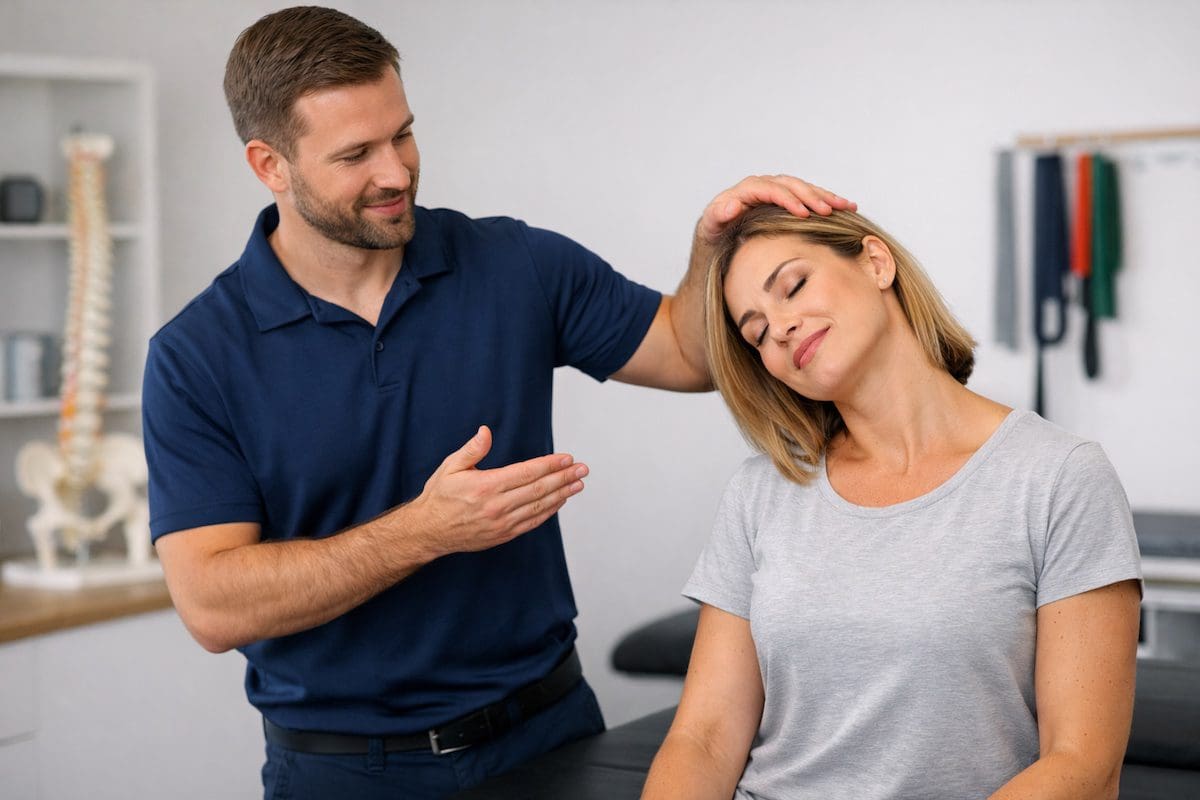
When should you avoid neck stretches?
Avoid or pause neck stretches if they sharply increase pain, reproduce arm tingling, cause dizziness, or feel worse each time you do them. These signs can suggest that the issue is not just muscle tightness.
For example, stretching may not be the right first step if you have cervical radiculopathy, more severe whiplash, a painful wry neck episode, or persistent neck and arm pain. In those cases, assessment helps you choose the right exercises and avoid aggravating the problem.
Get assessed sooner if you notice
- pain after a fall, collision, or car accident
- pins and needles, numbness, or weakness into the arm
- severe headache, dizziness, or unsteadiness
- fever, unexplained weight loss, or night pain
- neck pain that is worsening instead of settling
How often should you do neck stretches?
Most people do better with short, gentle sets through the day rather than one aggressive stretching session. A practical starting point is 3 to 5 repetitions, holding each one for about 5 to 15 seconds, once or twice a day. Then adjust based on how your neck responds over the next 24 hours.
If your neck feels better after movement but stiffens again later, more frequent micro-breaks may help more than longer stretches. This is especially true for desk-based pain, driving-related stiffness, and posture-linked flare-ups.
Do neck stretches fix neck pain on their own?
Neck stretches can help mild stiffness, but they do not fix every cause of neck pain on their own. Ongoing neck pain often improves more when you combine stretching with load management, strengthening, posture changes, and a clearer diagnosis.
That is why many people also need advice about physiotherapy for neck pain, activity pacing, and when to progress from simple mobility work into strength and control exercises. If headaches are part of the picture, it may also help to read about cervicogenic neck headache.
Some people also benefit from supportive products such as ergonomic pillows, posture supports, or self-management tools, but these work best when they support an active recovery plan rather than replace it.
For broader public guidance, Healthdirect also recommends keeping the neck gently moving, adjusting aggravating activities, and using exercises shown by a doctor or physiotherapist rather than relying on rest alone. Healthdirect’s neck pain advice is a useful general resource.
What should you do if neck stretches are not helping?
If neck stretches are not helping after a week or two, or they keep giving only short-term relief, the next step is to work out what is driving the problem. You may need a different approach, such as mobility work for stiff joints, a graded strengthening program, better workstation habits, or treatment for a related condition like neck sprain.
If your main issue is stiffness, you may also find it helpful to compare this advice with content on neck mobility, posture correction, and broader strategies for managing recurrent neck pain.