
Posture Exercises


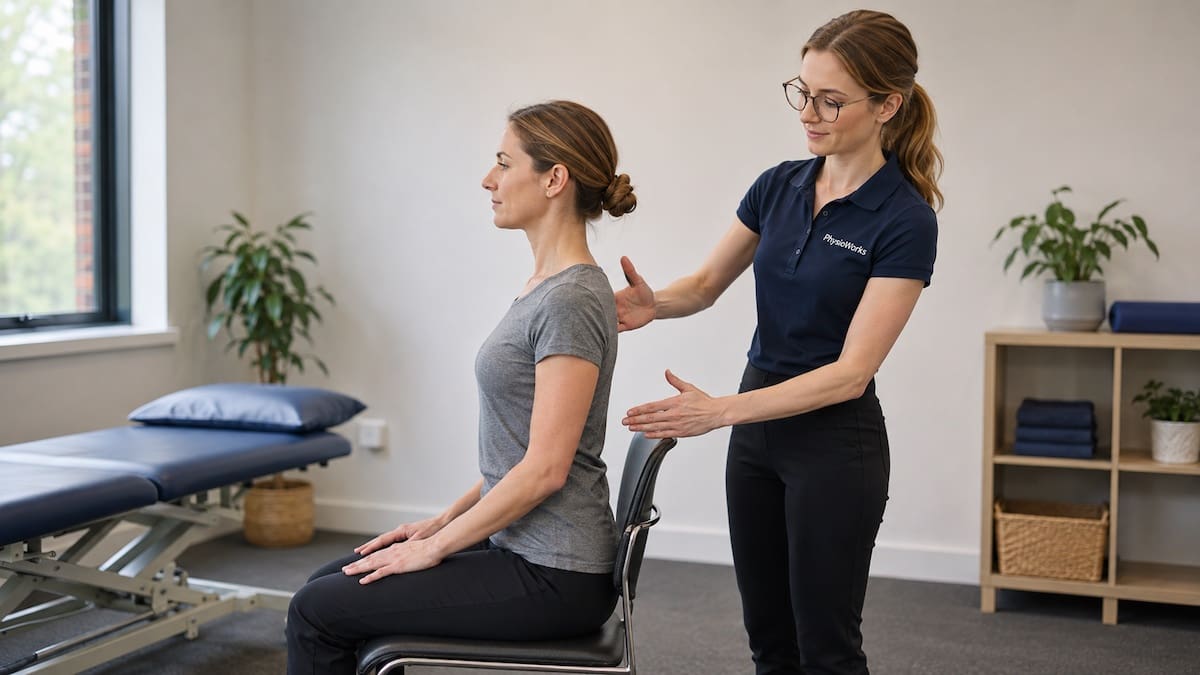
Coached posture exercise for thoracic spine and shoulder blade control.
Posture exercises can improve strength, control, mobility and endurance. They may help if you notice rounded shoulders, forward head posture, upper-back stiffness, neck tension, back discomfort or fatigue during sitting and standing.
Posture exercises work best as part of a broader physiotherapy plan. Movement breaks, general strength, workstation changes and varied daily activity are often just as important as the exercises themselves. For an overview of the topic, visit our Posture guide.
Quick Answer
Posture exercises are not about holding one “perfect” position all day. They help your neck, upper back, shoulders, trunk and hips support comfortable movement. Regular movement and changing position also matter.
If symptoms build during work, study or screen time, combine exercise with advice about sitting posture, standing posture and your desk or screen setup.
What Are Posture Exercises?
Posture exercises are movements that train the muscles and joints supporting your spine, shoulders, chest, pelvis and hips. They may improve your ability to change position and tolerate daily tasks without excessive fatigue.
A program may include:
- neck and head control
- shoulder blade strength and endurance
- chest and upper-back mobility
- trunk and hip strength
- whole-body movement and general exercise
Your physiotherapist may adjust the exercises if posture-related symptoms occur with neck pain, back pain, headaches, dizziness or nerve symptoms.
Who May Benefit From Posture Exercises?
Posture exercises may help if you notice:
- neck or upper-back stiffness after sitting
- rounded shoulders or a forward head position
- fatigue when sitting or standing for long periods
- aches during desk work, study, driving or screen use
- reduced upper-back movement
- recurrent discomfort linked with low movement variety
They are also common in rehabilitation plans for text neck, weak upper-back endurance and reduced activity levels.
Which Posture Problems Can Exercise Help?
Posture-related symptoms rarely come from one weak muscle or one poor position. More often, several factors contribute, including fatigue, joint stiffness, muscle capacity, workload, stress and long periods without movement.
Forward Head Posture
Neck-control exercises and changes to screen or phone habits may reduce the effort needed to support your head.
Rounded Shoulders
Chest mobility, shoulder blade control and upper-back strengthening may improve movement and endurance.
Upper-Back Stiffness
Thoracic mobility and regular position changes may help after prolonged sitting, driving or desk work.
Sitting or Standing Fatigue
Trunk, hip and general strength exercises may improve your tolerance for work and daily activities.
How Should You Start Posture Exercises?
Start with exercises that feel controlled and comfortable. Do not force your body into a stiff or exaggerated position. Build the amount gradually as your control and endurance improve.
Neck Control
Start with: gentle chin tucks.
Progress with: longer holds or light resistance when the movement remains comfortable.
Shoulder Blade Control
Start with: gentle shoulder blade movements.
Progress with: rows or other scapular strengthening exercises.
Chest and Upper-Back Mobility
Start with: a gentle chest stretch or upper-back movement.
Progress with: wall angels or controlled thoracic mobility exercises.
Trunk Endurance
Start with: low-load trunk-control exercises.
Progress with: guided strength training.
Exercise Safety
Reduce the range, repetitions or hold time if symptoms build. Stop and seek advice if pain spreads or you develop tingling, marked weakness, dizziness or worsening headaches.
Posture Exercises to Start With
These exercises are general examples. Your ideal exercises may differ if you have pain, joint stiffness, nerve symptoms, balance problems or a recent injury.
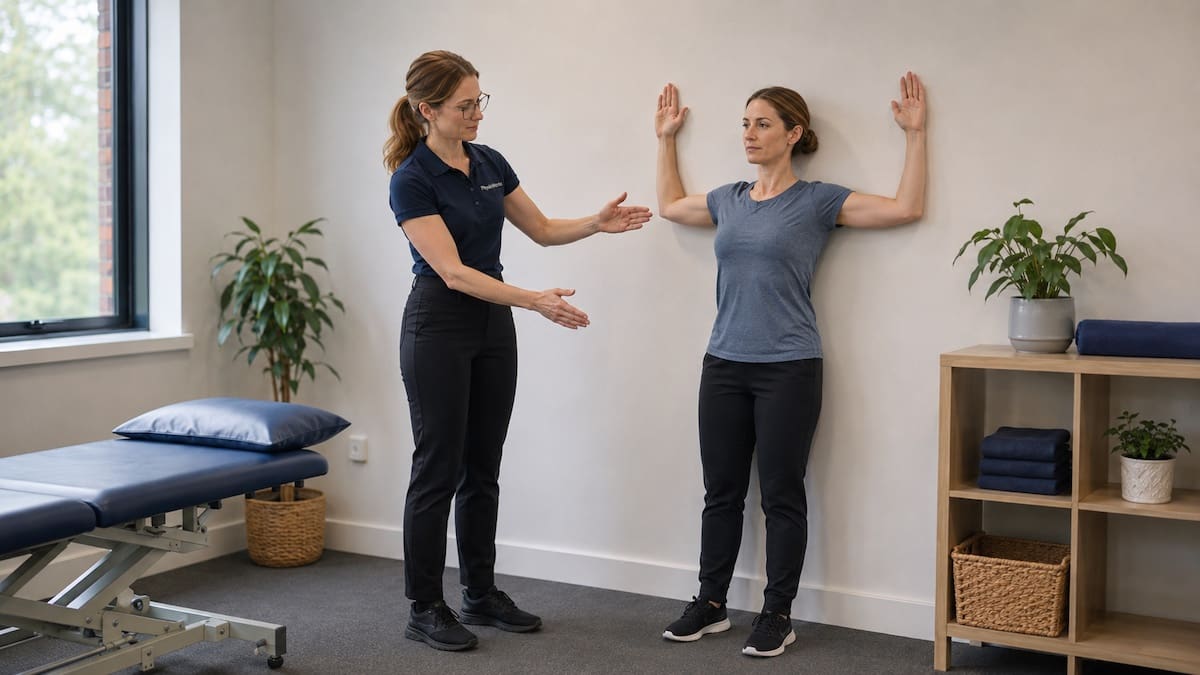
Wall angels train shoulder blade control and upper-back movement.
1. Chin Tuck
Purpose: trains gentle neck and head control.
- Sit or stand in a comfortable position.
- Keep your eyes level.
- Draw your chin straight back without looking down.
- Hold for 3 to 5 seconds.
- Repeat 8 to 10 times.
Common error: do not push your head backwards forcefully or tip your chin towards your chest.
2. Chest Stretch
Purpose: improves movement through the front of the chest and shoulders.
- Sit or stand upright without becoming rigid.
- Place your hands behind your back if comfortable.
- Gently open the front of your chest.
- Keep your shoulders relaxed.
- Hold for 20 to 30 seconds.
- Repeat 2 to 3 times.
Common error: avoid forcing your shoulders backwards or arching your lower back.
3. Shoulder Blade Control
Purpose: trains controlled movement and endurance around the shoulder blades.
- Sit or stand comfortably.
- Gently move your shoulder blades back and slightly down.
- Keep your neck and jaw relaxed.
- Hold for 3 to 5 seconds.
- Repeat 10 times.
Common error: do not squeeze as hard as possible or hold your shoulders in one fixed position all day.
4. Wall Angel
Purpose: combines shoulder blade control with upper-back and shoulder movement.
- Stand with your back near a wall.
- Keep your ribs relaxed.
- Place your arms against or near the wall.
- Support your arms away from the wall if needed.
- Slide your arms upwards and downwards with control.
- Perform 8 to 12 repetitions.
Common error: avoid arching your lower back to gain extra arm movement.
5. Band Row
Purpose: builds upper-back, shoulder blade and trunk endurance.
- Secure a resistance band at about chest height.
- Hold one end in each hand.
- Stand or sit tall with your ribs relaxed.
- Pull your elbows backwards without shrugging.
- Return slowly to the starting position.
- Perform 8 to 15 repetitions.
Common error: avoid leaning backwards or lifting your shoulders towards your ears.
6. Core and Trunk Control
Posture often becomes easier when your trunk and hips have enough strength for the task. Core exercises and guided strength work may improve sitting, standing and lifting tolerance.
Choose exercises that allow you to breathe normally and maintain comfortable control. Increase the resistance only when you can complete the movement without a significant symptom flare.
How Often Should You Do Posture Exercises?
Short, regular sessions often work better than occasional long sessions. Many people start with 5 to 10 minutes on most days.
You can also add brief movement breaks during work, study, driving or screen use. A movement break does not need to be complicated. Standing, walking, changing position or moving your shoulders and upper back may help.
How to Progress
- First: improve technique and control.
- Then: increase repetitions or hold time.
- Next: add light resistance.
- Finally: use the movement during work, lifting, exercise or sport.
Should You Keep Going or Get Advice?
Keep Going
Mild muscular effort or a gentle stretch is usually acceptable when it settles quickly.
Change the Exercise
Reduce the range, hold time, repetitions or resistance if discomfort builds during the session.
Seek Advice
Stop if symptoms spread, pain worsens, or you notice tingling, marked weakness, dizziness or severe headache.
Tips for Better Posture Habits
- Move regularly: even a comfortable posture may become sore when held for too long.
- Use different positions: alternate between sitting, standing, walking and other suitable tasks.
- Build endurance: stronger muscles usually cope better with longer periods of work or activity.
- Adjust your setup: review your chair, desk, screen and frequently used equipment.
- Keep active: walking, strengthening and general exercise support whole-body capacity.
- Avoid rigid correction: aim for comfortable control rather than forcing yourself upright.
Can Desk Setup Affect Your Posture?
Yes. Your chair, screen, keyboard and desk arrangement can affect how much effort you need to work comfortably. However, no workstation setup removes the need to move.
Consider an ergonomic workstation assessment if symptoms regularly build during computer work or if you are unsure how to arrange your equipment.
When Should You Seek Professional Help?
Arrange an assessment if posture-related symptoms keep returning, limit work or exercise, or fail to improve with sensible changes.
Seek advice sooner if:
- pain spreads into your arm or leg
- you notice persistent tingling or numbness
- you develop marked weakness
- headaches are new, severe or worsening
- dizziness occurs with neck movement
- pain follows a significant injury
A physiotherapist can assess whether posture, muscle capacity, joint movement, workload or another condition is contributing. If headaches, jaw symptoms or neck pain form part of the problem, see our headache, neck and jaw pain guide.
Related PhysioWorks Guides
Posture Exercises FAQs
Do posture exercises really work?
Posture exercises can help when symptoms relate to weakness, stiffness, fatigue or limited movement. Results are usually better when you also use movement breaks, workstation changes and general strength work.
Can posture exercises help rounded shoulders?
They may help. A program may include chest mobility, upper-back strength and shoulder blade control. Regular movement and changes to daily habits also matter.
Are posture exercises useful for desk workers?
Yes. Desk workers may benefit from posture exercises, movement breaks and workstation changes. A combined plan often works better than stretching alone.
Should posture exercises hurt?
No. Mild effort or a gentle stretch may be acceptable. Sharp pain, spreading symptoms, tingling, dizziness or worse pain afterwards means the exercise or dosage needs review.
How long does it take to improve posture?
Some people feel more comfortable within several weeks. Strength, endurance and movement habits often take longer to change. Progress depends on the cause, exercise dosage and daily workload.
Which posture exercise should I start with?
Start with the exercise that matches your main limitation. Chin tucks may suit neck control. Shoulder blade exercises may suit upper-back fatigue. Trunk exercises may help sitting or standing endurance.
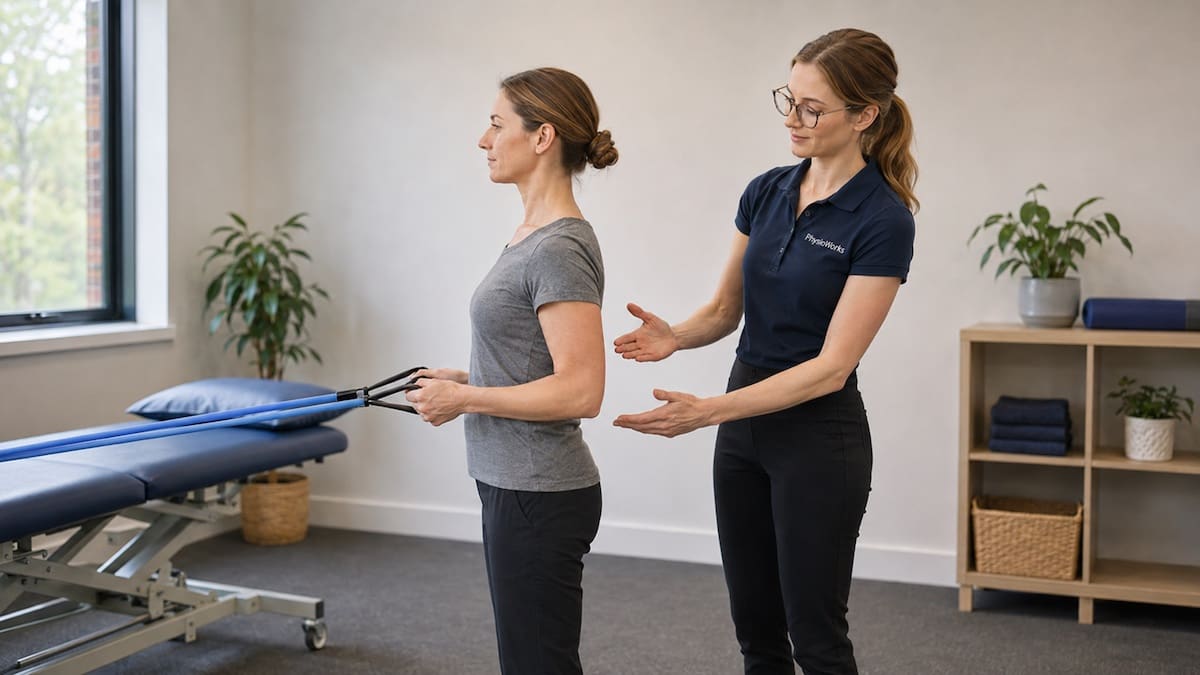
Band rows build shoulder blade and posture endurance.
What to Do Next
If posture is contributing to neck pain, upper-back stiffness, headaches or back discomfort, a physiotherapist can assess the factors involved and prescribe exercises suited to your body, work and goals.
Your plan may include posture exercises, progressive strength work, movement breaks, workstation advice and strategies to manage daily load.
Choose your clinic and appointment pathway
Select a PhysioWorks clinic to continue to live booking, an appointment request or reception assistance.
Back Support Products
These back support products are commonly used by our physiotherapists to help reduce back pain, improve comfort, and support your recovery at home.
-
 Back, Braces & Supports, Maternity, SIJ
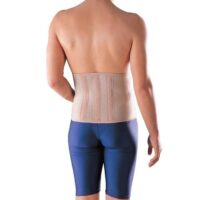
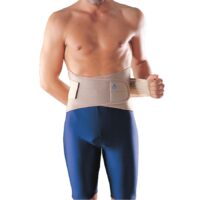
Core Stability Support – OPPO 3462
$54.00Select optionsQuick View -
-
-
 Braces & Supports, Back, Maternity, SIJ
Maternity Support Belt – OPPO 4062
$37.00Select optionsQuick View -
-
 Back, Braces & Supports, Maternity, Posture
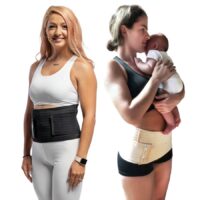
Pregnancy Belly Band & C-Section 3-in-1
$94.99Select optionsQuick View - Braces & Supports, Back, Maternity, SIJ
AOM38 AllCare Ortho Core Stability Belt
$49.95Select optionsQuick View -
 Back, Braces & Supports, Maternity, Posture
Maternity Back Support – OPPO 2062
$60.00 – $64.00Select optionsQuick View


References
- Warneke K, Lohmann LH, Wilke J. Effects of Stretching or Strengthening Exercise on Spinal and Lumbopelvic Posture: A Systematic Review with Meta-Analysis. Sports Med Open. 2024;10(1):65. doi:10.1186/s40798-024-00733-5
- Porto AB, Okazaki VHA, de Moraes GV, Carvalho AR. The Effect of Exercise on Postural Alignment: A Systematic Review and Meta-Analysis. J Bodyw Mov Ther. 2025;41:1295–1308. doi:10.1016/j.jbmt.2024.10.020
- Sepehri S, Khosravi F, Abdollahi I, et al. The Effect of Various Therapeutic Exercises on Forward Head Posture, Rounded Shoulders, and Thoracic Kyphosis: A Systematic Review and Meta-Analysis. BMC Musculoskelet Disord. 2024;25(1):126. doi:10.1186/s12891-024-07260-8
- Alaca N, Acar AO, Ozturk S. Low Back Pain and Sitting Time, Posture and Behavior in Office Workers: A Scoping Review. J Back Musculoskelet Rehabil. 2025;38(5):919–943. doi:10.1177/10538127251320320
