
Neck Pain
Guidance for neck pain, stiffness, headaches and arm symptoms.


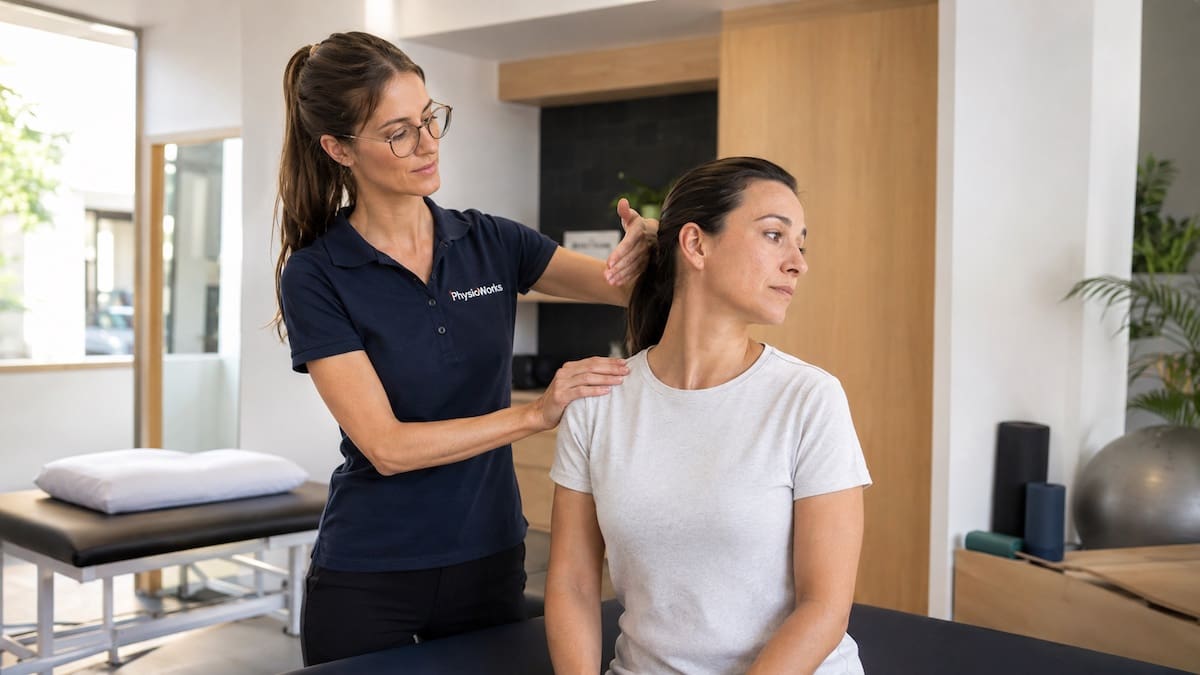
Neck movement and symptom testing help guide an individual treatment plan.
Neck pain may feel stiff, sharp, aching or locked. It can affect sleep, driving, desk work, exercise and concentration. Many recent flare-ups improve with time and sensible activity. However, recurring pain or symptoms that limit normal tasks may need a clearer assessment and plan.
Many common episodes change with movement, posture, activity, sleep, stress and workload. Pain may remain near the neck or spread towards the head, shoulder blade or arm. Symptoms that travel below the shoulder, or include tingling, numbness or weakness, may involve neck and arm pain or cervical radiculopathy. Pain after a fall, tackle, collision or sudden force also needs consideration of whiplash.
Neck Pain: Quick Answer
Neck pain may involve sensitive joints, muscles, discs, nerves or surrounding tissues. Common symptoms include stiffness, reduced movement, headache, shoulder blade pain and arm symptoms. Management often combines appropriate activity, load changes, exercise, symptom relief and physiotherapy guidance.
Which Neck Pain Pattern Sounds Most Like Yours?
Your symptom pattern can help you choose the most useful guide. It cannot confirm a diagnosis without an assessment.
Local Pain or Stiffness
Pain stays near the neck or shoulder blade and changes when you turn, look up, sit or work.
Read about cervical facet joint pain or stiff neck.
Neck Pain With Headache
Pain may start near the upper neck or base of the skull and spread towards the head.
See our guide to neck-related headache.
Pain Travelling Into the Arm
Pain, tingling, numbness, burning or weakness may extend below the shoulder into the arm or hand.
Review neck and arm pain and cervical radiculopathy.
Sudden or Injury-Related Pain
Your neck may feel locked after an awkward movement, or symptoms may begin after a collision or fall.
Read about acute wry neck and whiplash.
When Does Neck Pain Need Urgent Medical Care?
Seek urgent medical assessment if neck pain occurs with:
- a severe or unusual headache, especially if it started suddenly
- new or rapidly worsening arm or leg weakness
- difficulty walking, marked balance changes or loss of coordination
- new bladder or bowel control changes
- fever, severe illness or unexplained weight loss
- significant trauma, such as a vehicle crash, fall or forceful collision
Call Triple Zero in an emergency. Otherwise, contact your GP, urgent care service or emergency department according to the severity of your symptoms.
What Is Neck Pain?
Neck pain describes pain, stiffness or reduced movement arising from the cervical spine and surrounding tissues. It may involve joints, muscles, ligaments, discs, nerves or the upper back. Symptoms can remain local or spread towards the base of the skull, shoulder blade, upper back or arm.
The neck works closely with the upper back, shoulder blades, jaw, eyes and nervous system. Therefore, some people also notice headaches, jaw tension, arm symptoms or difficulty maintaining comfortable positions during work, driving or sleep.
What Causes Neck Pain?
Neck pain rarely has one universal cause. Symptoms may develop after a sudden movement or injury. Alternatively, they may build gradually when several factors occur together.
Common contributing factors include:
- long periods at a desk, phone or screen
- rapid changes in work, lifting or training load
- reduced neck, shoulder blade or upper-back capacity
- sleep disruption or an uncomfortable sleep position
- stress, muscle guarding and reduced movement variety
- a fall, collision, tackle or other sudden force
- nerve irritation or sensitivity
Specific problems within the neck pain cluster include neck sprain, cervical facet joint pain, acute wry neck, text neck and whiplash.
What Is the Difference Between Local Neck Pain and Nerve Pain?
Local neck pain often stays around the neck, upper shoulder or shoulder blade. It may change when you turn your head, look up, sit for a long time or alter your posture.
Nerve-related symptoms are more likely to travel below the shoulder. They may include burning pain, tingling, numbness or weakness in the arm or hand. However, symptom location alone does not confirm which structure is involved.
Features More Consistent With Local Neck Pain
- pain remains near the neck or shoulder blade
- stiffness when turning or looking up
- symptoms change with position or movement
- pain follows prolonged desk, phone or driving time
Features That May Suggest Nerve Irritation
- pain travels below the shoulder
- tingling, numbness or burning symptoms
- symptoms extend towards the forearm or hand
- grip, arm or hand weakness

Targeted exercise may help rebuild neck movement, strength and load tolerance.
How Is Neck Pain Assessed?
A physiotherapist asks how your symptoms began, what changes them and whether pain spreads into your head, shoulder or arm. They will also consider how neck pain affects sleep, driving, work, exercise and daily tasks.
Your assessment may include:
- neck and upper-back movement
- strength and movement control
- joint and muscle sensitivity
- arm reflexes, sensation or strength when nerve symptoms are present
- shoulder blade and shoulder function
- functional tasks linked with work, driving or sport
The findings help your physiotherapist decide whether symptoms fit a common mechanical presentation or require medical review, imaging or another assessment pathway.
How Can Physiotherapy Help Neck Pain?
Physiotherapy aims to match treatment to your symptoms, goals and activity demands. A plan may combine education, movement, exercise, hands-on care and changes to aggravating loads.
Education and Load Management
Understanding what aggravates and settles your pain can reduce uncertainty. Your physiotherapist may suggest temporary changes to desk time, lifting, training, driving or sleep setup while you rebuild capacity.
Exercise and Strength
Exercise may include neck mobility, deep neck muscle control, shoulder blade work and upper-back strength. The aim is not to hold one perfect posture. Instead, it is to build movement options and improve your ability to manage everyday loads.
Useful supporting guides include neck strengthening and neck exercises for pain relief and prevention.
Hands-On Treatment
Joint treatment, soft-tissue techniques and guided movement may help some people move more comfortably. Hands-on treatment usually works best as one part of a broader plan rather than as the only treatment.
Workstation and Daily Setup
Changing position regularly is often more useful than trying to maintain one rigid posture all day. Practical options include adjusting screen height, bringing frequently used items closer and breaking up prolonged sitting.
See our guides to neck posture, posture correction and ergonomic workstation assessment.
Needling and Massage
Where muscle guarding contributes to symptoms, your physiotherapist may discuss dry needling or acupuncture. Some people also use neck massage for muscle tension or recovery support.
A Neck Pain Plan May Include
- advice to reduce aggravating loads without unnecessary rest
- gentle movement and early symptom-relief strategies
- neck, shoulder blade and upper-back exercise
- hands-on treatment when clinically useful
- changes to work, sleep, driving or training routines
- a graded return to normal work, exercise or sport
What Can You Do at Home for Neck Pain?
Small changes may help a recent, uncomplicated neck pain flare-up. Keep activity comfortable and stop any strategy that clearly worsens symptoms.
Keep Moving Gently
Move your neck within a comfortable range during the day rather than holding it still for long periods.
Break Up Sustained Positions
Change posture regularly during desk work, phone use, reading and driving.
Use Heat for Comfort
A heat pack may help relax guarded muscles if heat feels comfortable and your skin sensation is normal.
Restart Exercise Gradually
Reduce demanding loads briefly if needed, then build back towards your normal exercise rather than stopping indefinitely.
Healthdirect also provides general information about neck pain symptoms and when to seek medical care.
How Can You Reduce Repeat Neck Pain Flare-Ups?
No strategy can prevent every episode. However, some recurring neck pain may become less frequent or easier to manage when you:
- build regular neck, shoulder blade and upper-back strength
- vary your posture and movement through the day
- increase gym, work or sporting loads progressively
- review screen, workstation and driving setup
- maintain regular sleep and recovery habits
- respond early when smaller symptoms start to build
Frequently Asked Questions About Neck Pain
Why does my neck hurt without an injury?
Neck pain can build gradually without one obvious injury. Prolonged desk or phone use, altered sleep, stress, reduced movement variety and changes in physical load may all contribute. An assessment may help identify which factors matter most in your case.
Can neck pain cause headaches?
Yes. Some headaches arise from structures in the upper neck and may change with neck movement or posture. This is often called a cervicogenic or neck-related headache. Other headache types can cause similar symptoms, so seek assessment for severe, unusual or persistent headaches.
Why does neck pain travel into my shoulder or arm?
Neck joints and muscles can refer pain towards the shoulder blade or upper arm. Irritation of a cervical nerve may also cause pain, tingling, numbness or weakness further down the arm. Persistent or worsening neurological symptoms need earlier assessment.
Should I rest or keep moving with neck pain?
Complete rest is rarely required for uncomplicated neck pain. Gentle movement, frequent position changes and a gradual return to usual activity often work better. Significant trauma, severe pain or neurological symptoms may require different advice.
What pillow is best for neck pain?
No single pillow suits everyone. Choose one that supports your usual sleeping position and lets your neck feel comfortable. Pillow height, mattress firmness, shoulder width and sleep position may all affect what works best.
When should I see a physiotherapist for neck pain?
Consider an assessment if pain persists, keeps returning or affects sleep, work, driving, exercise or normal activity. Earlier assessment is also appropriate when symptoms spread into the arm or include recurring headache, tingling, numbness or weakness.
Can neck pain be prevented?
Not every episode can be prevented. Regular strength work, movement variety, progressive loading and sensible workstation habits may reduce some recurring flare-ups or make them easier to manage.
What to Do Next
If your neck pain is mild and recent, begin with gentle movement, regular position changes and a gradual return to normal activity. Book an assessment if symptoms keep returning, affect sleep or work, travel into your arm or make you avoid usual tasks.
A neck physiotherapy assessment can help clarify your symptom pattern and develop a plan for your work, exercise and recovery goals.

A graded plan can support a confident return to work, exercise and normal activity.
Choose your clinic and appointment pathway
Select a PhysioWorks clinic to continue to live booking, an appointment request or reception assistance.
Neck Products
These neck products are commonly used by our physiotherapists to improve strength, posture, movement, plus assist home exercise programs.
-

 Back, Exercise Equipment, Neck, Resistance Band
66Fit Over Door Neck Traction Unit
$63.00Add to cartQuick View -
-

-
-


-
-


- Liniments & Gels, Massage Liniments, Pain Management
Fisiocrem
$16.95 – $39.95Select optionsQuick View -

 Ice & Heat, Pain Management, Uncategorized
PhysiPak Universal Heat pack
$79.00Select optionsQuick View -
- Christmas Gift Ideas, Neck, Pillows/Cushions
FlexiPillow Alleve Pillow
$109.95Add to cartQuick View - EMS Machines, Pain Management, TENS Machine, TENS Machine & EMS
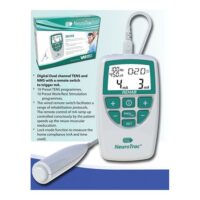
NeuroTrac Rehab (TENS Machine + EMS)
$285.00Add to cartQuick View -














References
- Reynolds B, McDevitt A, Kelly J, Mintken P, Clewley D. Manual physical therapy for neck disorders: an umbrella review. J Man Manip Ther. 2025;33(1):18-35. doi:10.1080/10669817.2024.2425788.
- Rasmussen-Barr E, Halvorsen M, Bohman T, et al. Summarizing the effects of different exercise types in chronic neck pain: a systematic review and meta-analysis of systematic reviews. BMC Musculoskelet Disord. 2023;24(1):806. doi:10.1186/s12891-023-06930-9.
- de Zoete RMJ. Exercise therapy for chronic neck pain: tailoring person-centred approaches within contemporary management. J Clin Med. 2023;12(22):7108. doi:10.3390/jcm12227108.
- Healthdirect. Neck pain. Accessed June 15, 2026.
