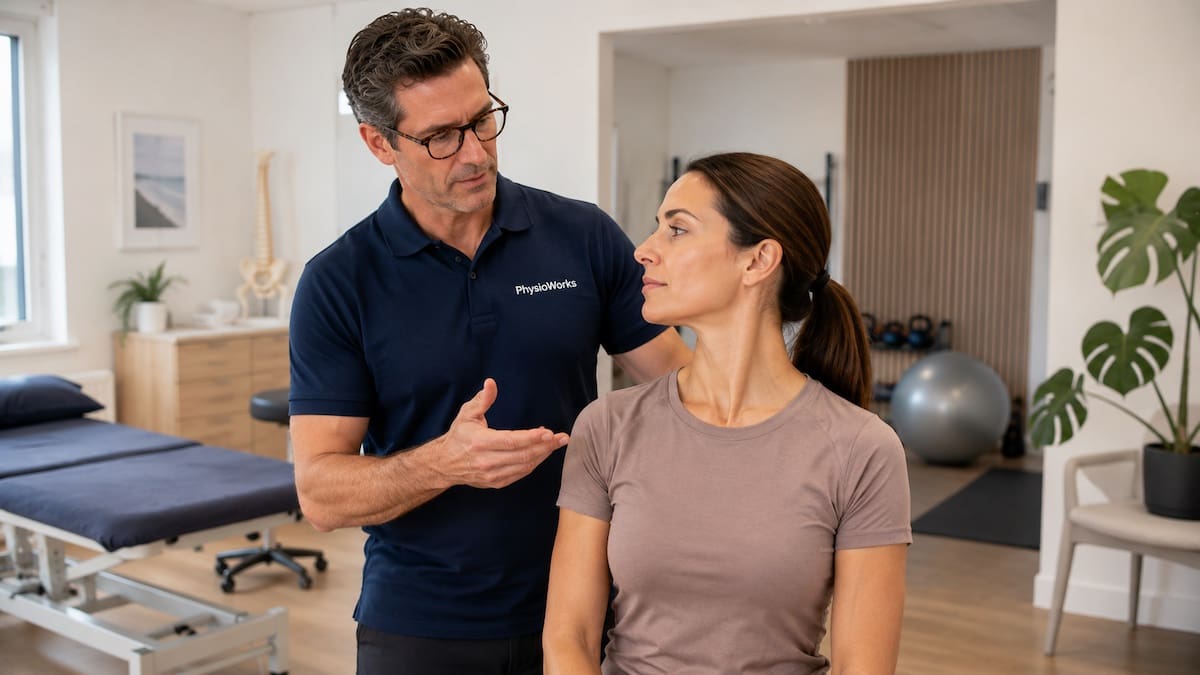
How your neck is built
Your neck, or cervical spine, contains seven vertebrae, discs, facet joints, muscles, ligaments, and nerves. These structures support your head and allow you to turn, look up, look down, and keep your balance. Because several tissues work together in a small area, pain can come from more than one source at the same time.
That is why neck pain may feel local, refer into the shoulder blade, trigger a cervicogenic headache, or travel into the arm with cervical radiculopathy.
Common neck pain causes
1. Muscle strain and overload
Muscle strain is one of the most common neck pain causes. It often follows long periods of desk work, device use, awkward sleeping positions, gym overload, or repeated lifting. Tight or overloaded muscles can also contribute to a neck sprain or ongoing protective stiffness.
2. Poor neck posture
Poor sitting posture, slumped shoulders, and long periods looking down can overload the cervical muscles and joints. Over time, this pattern may contribute to text neck, stiffness, and fatigue-related pain. A better workstation setup and movement breaks often help reduce repeated flare-ups.
3. Joint irritation and stiffness
The small joints in your neck can become irritated after awkward movement, overload, poor posture, or sudden turning. This may cause local pain, reduced movement, and pain when looking over your shoulder. In some cases, symptoms fit patterns such as cervical facet joint pain or wry neck.
4. Disc irritation and age-related changes
Age-related changes in the cervical spine can affect the discs, joints, and surrounding tissues. These changes may include degenerative disc disease, bulging discs, or cervical spondylosis. Not all age-related changes are painful, but they can contribute to stiffness, reduced tolerance, or flare-ups.
5. Pinched nerve or cervical radiculopathy
A nerve may become irritated or compressed as it leaves the neck. This can cause neck pain with pain, tingling, numbness, or weakness into the shoulder, arm, or hand. Common related diagnoses include cervical radiculopathy and neck arm pain.
6. Whiplash injuries
Whiplash commonly follows motor vehicle accidents, sporting collisions, or sudden jolts. Symptoms can include neck pain, stiffness, headaches, dizziness, jaw tension, and reduced concentration. Some people recover quickly, while others need guided rehabilitation to restore movement and confidence.
7. Headache or dizziness linked to the neck
Some neck pain causes also produce headache or dizziness. A neck headache often starts near the base of the skull and may spread toward the temple or eye. Others develop cervicogenic dizziness, especially when neck movement and balance problems occur together.
8. Work, sport, and lifestyle factors
Repetitive work, awkward positions, stress, poor recovery, contact sport, and low activity levels can all contribute to neck pain. For some people, an ergonomic workstation assessment helps reduce the repeated loading that keeps symptoms going.
Why neck pain can spread to the head, shoulder, or arm
Neck structures share pain pathways with nearby muscles, joints, and nerves. Because of this, pain is not always felt only in the neck. You may notice symptoms around the shoulder blade, into the upper arm, or into the hand. Others notice headaches, dizziness, or a feeling of tightness across the top of the shoulders.
If your symptoms spread below the shoulder, or include pins and needles, weakness, or clumsiness, your physiotherapist may also assess for nerve pain or cervical radiculopathy.
What this may mean
Local neck pain often behaves differently from pain that spreads into the arm, hand, head, or jaw. Spreading symptoms do not always mean something serious, but they usually deserve a more detailed assessment so the main driver is not missed.
When should you worry about neck pain?
You should seek prompt medical or physiotherapy advice if your neck pain follows significant trauma, keeps getting worse, causes numbness or weakness, disturbs sleep badly, or is linked with severe headache, dizziness, fever, or unexplained weight loss. For a general consumer overview, Healthdirect also explains neck pain symptoms and when to seek care.
Read more: When is Neck Pain Serious?
How are neck pain causes diagnosed?
Diagnosis starts with a detailed history and physical examination. Your physiotherapist will usually assess your posture, neck movement, muscle strength, joint stiffness, symptom behaviour, and whether pain is referring into the arm or head. Imaging such as X-ray, CT, or MRI is sometimes useful, but it is not needed for every case.
The goal is to identify the main pain driver, rule out concerning signs, and work out whether the problem is more muscular, joint-based, disc-related, nerve-related, or linked to another condition such as age-related neck pain.
Neck pain treatment options
Treatment depends on the likely cause and how irritable your symptoms are. Management may include physiotherapy, activity modification, manual therapy, exercise, ergonomic advice, and a progressive return to normal tasks. Some people also benefit from massage, especially when muscular tension is a major factor.
Physiotherapy rehabilitation often aims to improve movement, reduce protective muscle guarding, restore neck and shoulder strength, improve posture tolerance, and help you return to work, driving, sleep, gym, or sport with more confidence. In more complex cases, your physiotherapist may liaise with your GP or medical practitioner if further review is needed.
If an inflammatory or systemic condition is suspected, medical assessment may be needed for diagnoses such as ankylosing spondylitis, rheumatoid arthritis, or other less common causes of neck pain.
Can neck pain be prevented?
Many common neck pain causes can be reduced by changing load, posture, and recovery habits. Regular movement breaks, better desk setup, shoulder and neck strength work, and avoiding long periods in one position can help. Office workers often do better when they combine exercise with workstation changes rather than relying on posture alone.
Useful prevention strategies depend on the main driver. For posture-related symptoms, a better screen height, regular movement breaks, and progressive neck and shoulder strengthening may help. If symptoms keep returning, your physiotherapist may check your neck movement, shoulder control, workstation habits, sleep position, and exercise load.
Helpful next reads include neck strengthening, posture exercises, and neck pain relief tips.