
FAQs

Frequently Asked Questions


Upper Back Pain Physiotherapy: Causes, Treatment & Relief


Article by John Miller & Erin Runge

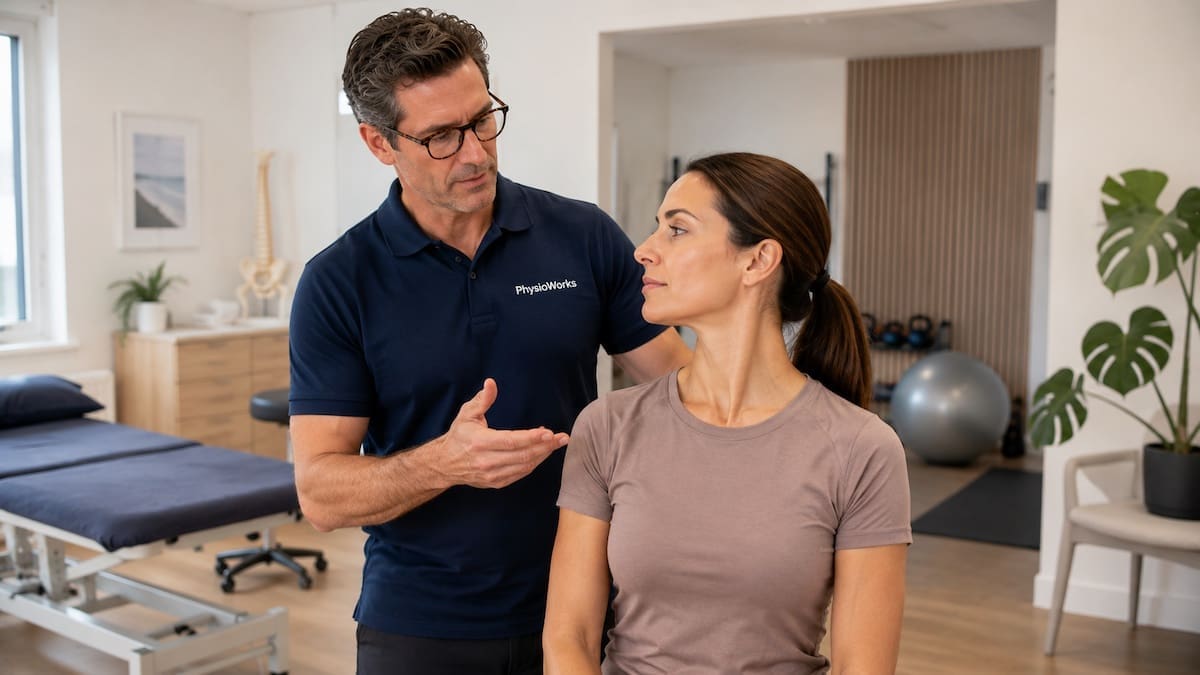
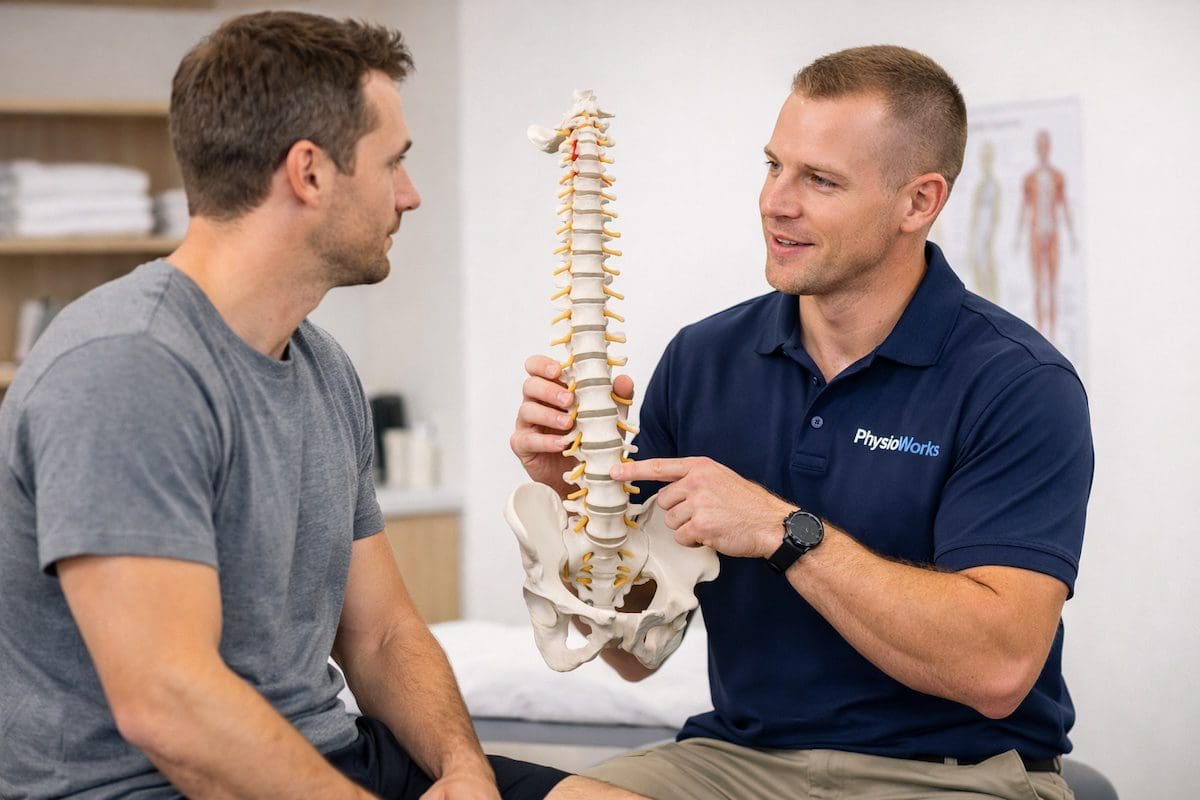
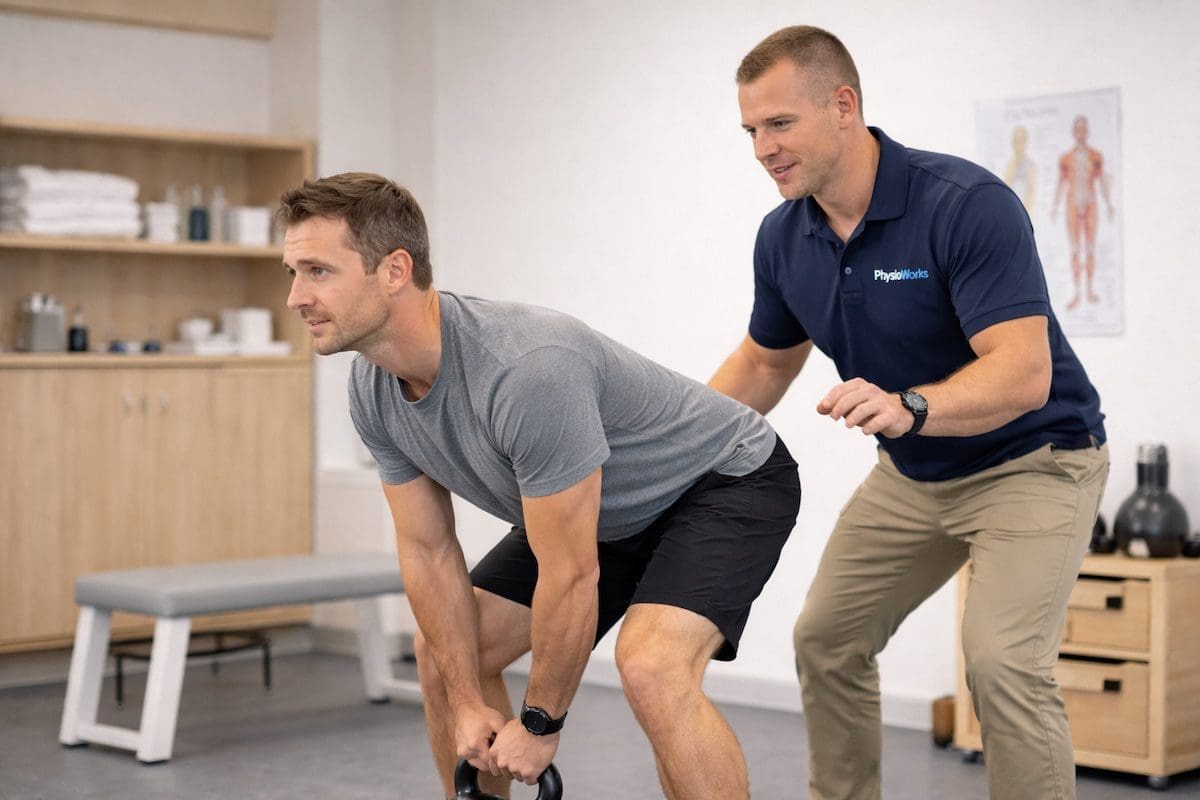
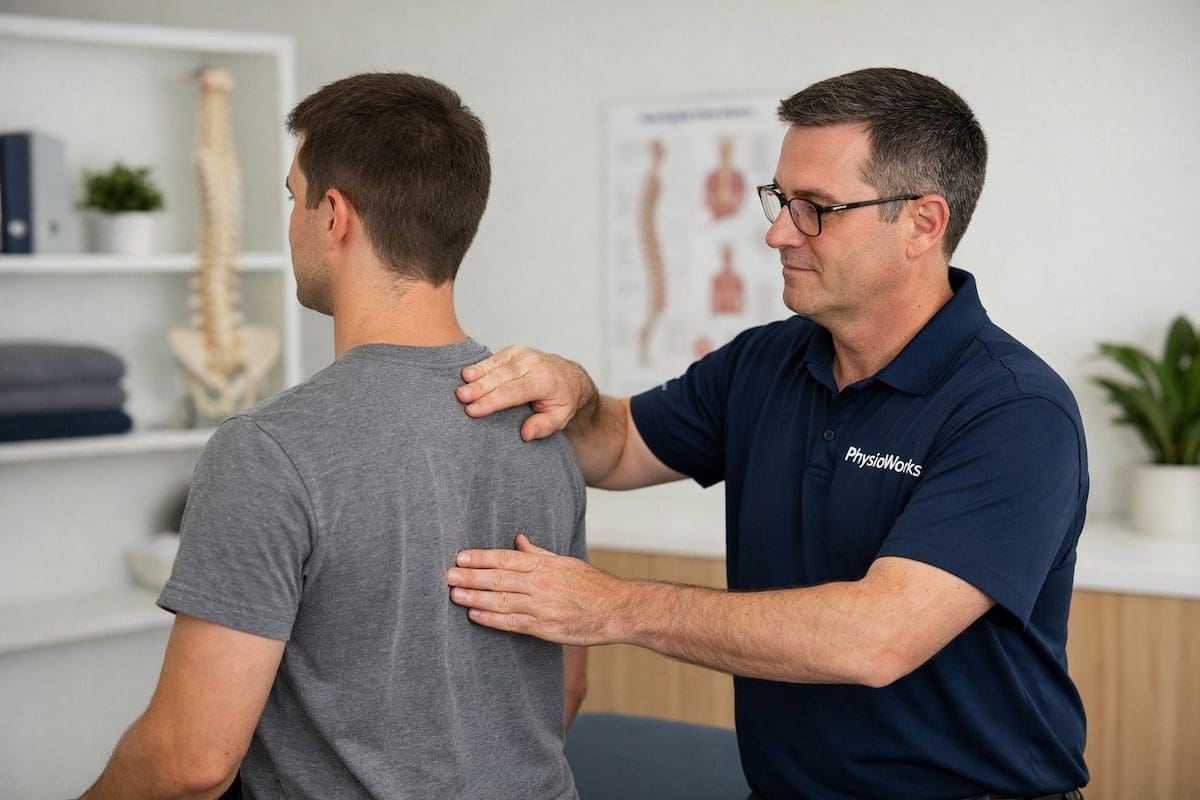
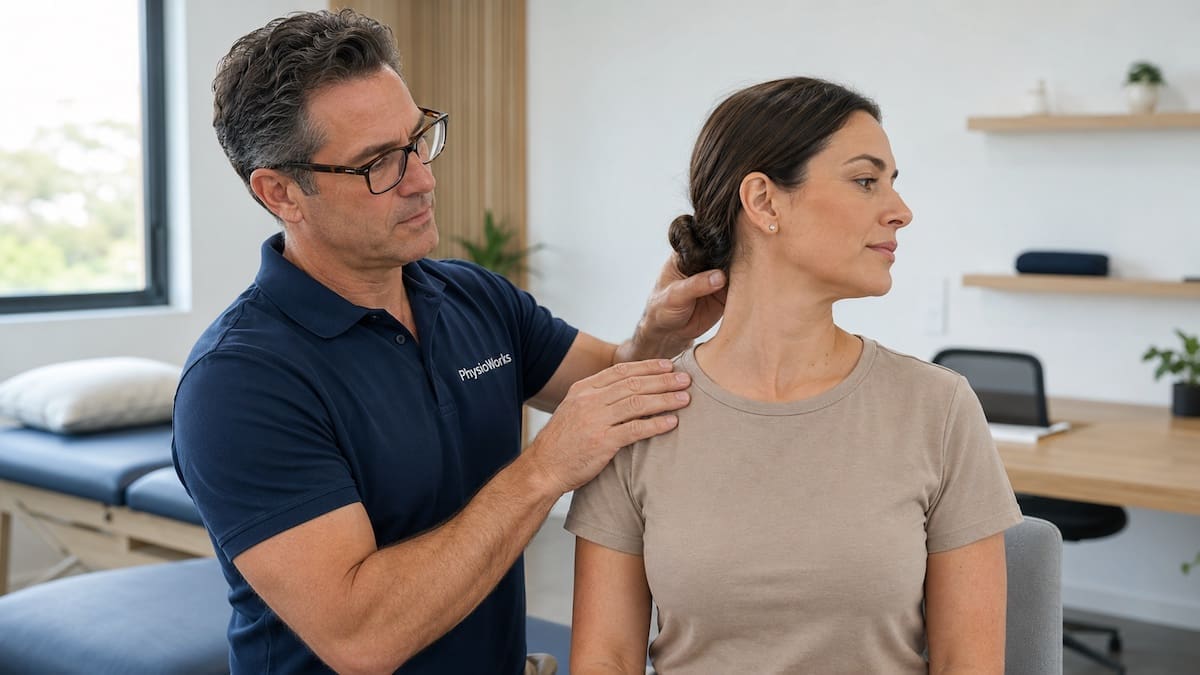
Thoracic spine posture assessment with physiotherapist guiding upper back movement

Thoracic spine posture assessment in clinic

Upper back pain physiotherapy helps identify the likely source of pain around the thoracic spine, improve movement, and guide the right next step before symptoms become more persistent. Upper back pain can come from joints, muscles, discs, nerves, ribs, posture overload, or, less commonly, an underlying medical condition.

If you are comparing possible causes, it also helps to review broader thoracic pain conditions and related problems such as thoracic facet joint pain. A physiotherapist can assess your symptoms, identify likely pain drivers, and guide treatment that matches your work, activity, and recovery goals.

  • Upper back pain may feel stiff, aching, sharp, tight, or hard to settle.
  • Symptoms often worsen with prolonged sitting, twisting, lifting, coughing, or poor posture.
  • Common sources include thoracic joints, muscles, discs, ribs, and nerves.
  • Many cases improve with guided treatment, better load management, and progressive exercise.

What causes upper back pain?

Upper back pain usually comes from overloaded thoracic joints, strained muscles, rib or spinal stiffness, disc irritation, posture stress, or referred pain from nearby structures. In some cases, symptoms relate to a more specific diagnosis, so the pattern of pain, stiffness, and aggravating activities matters.

Many people notice symptoms after long periods of desk work, sudden lifting, awkward twisting, sport, coughing, poor sleep positions, or repeated postural strain. Healthdirect also notes that most upper back pain is not caused by a serious medical problem, although some symptoms do need prompt review. Healthdirect’s upper back pain guide is a useful overview.

Common causes of upper back pain

How can upper back pain physiotherapy help?

Upper back pain physiotherapy helps by assessing the structures involved, identifying aggravating movements or loads, and matching treatment to your symptoms and goals. Treatment often combines education, targeted exercise, manual therapy when appropriate, posture advice, and a gradual return to normal activity.

Your physiotherapist may look at thoracic mobility, rib movement, shoulder blade control, breathing pattern, lifting mechanics, work setup, training load, and how long you have been in pain. If symptoms overlap with back pain, neck pain, or posture-related problems, they may also assess nearby regions to make sure the pain source is not being missed.

Common upper back pain physiotherapy treatments

  • hands-on therapy for stiff or irritated joints and soft tissues
  • mobility exercises for the thoracic spine, ribs, and shoulders
  • strengthening for postural muscles, trunk support, and shoulder blade control
  • load management advice for work, gym, parenting, and daily tasks
  • posture and workstation guidance where helpful
  • graduated return to sport, exercise, or heavier activity

Is posture the real cause of upper back pain?

Posture can contribute to upper back pain, but it is rarely the only reason. More often, symptoms build up when posture combines with long sitting, poor movement variety, stress, fatigue, reduced strength, or a sudden spike in physical load.

That is why treatment usually works best when it improves movement habits, strength, and load tolerance rather than simply trying to sit perfectly all day. If posture is a clear contributor, pages on posture correction, sitting posture, standing posture, and thoracic stiffness can help.

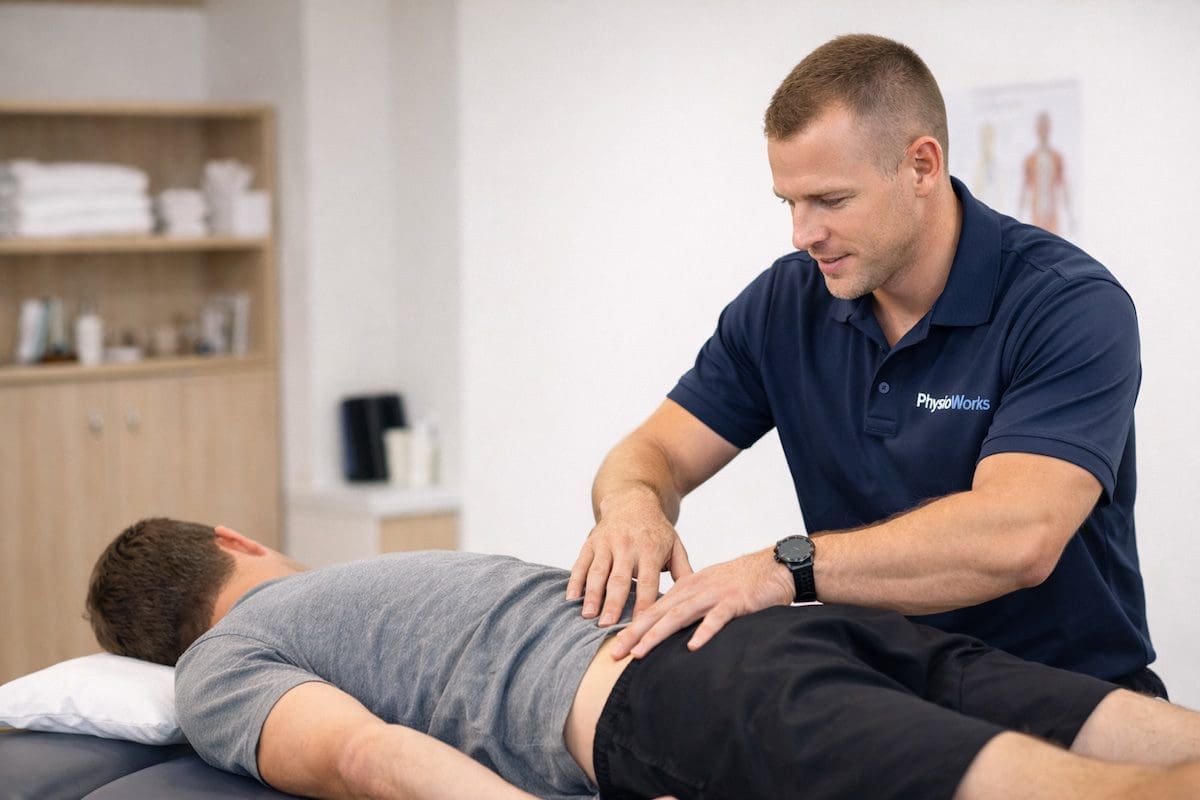
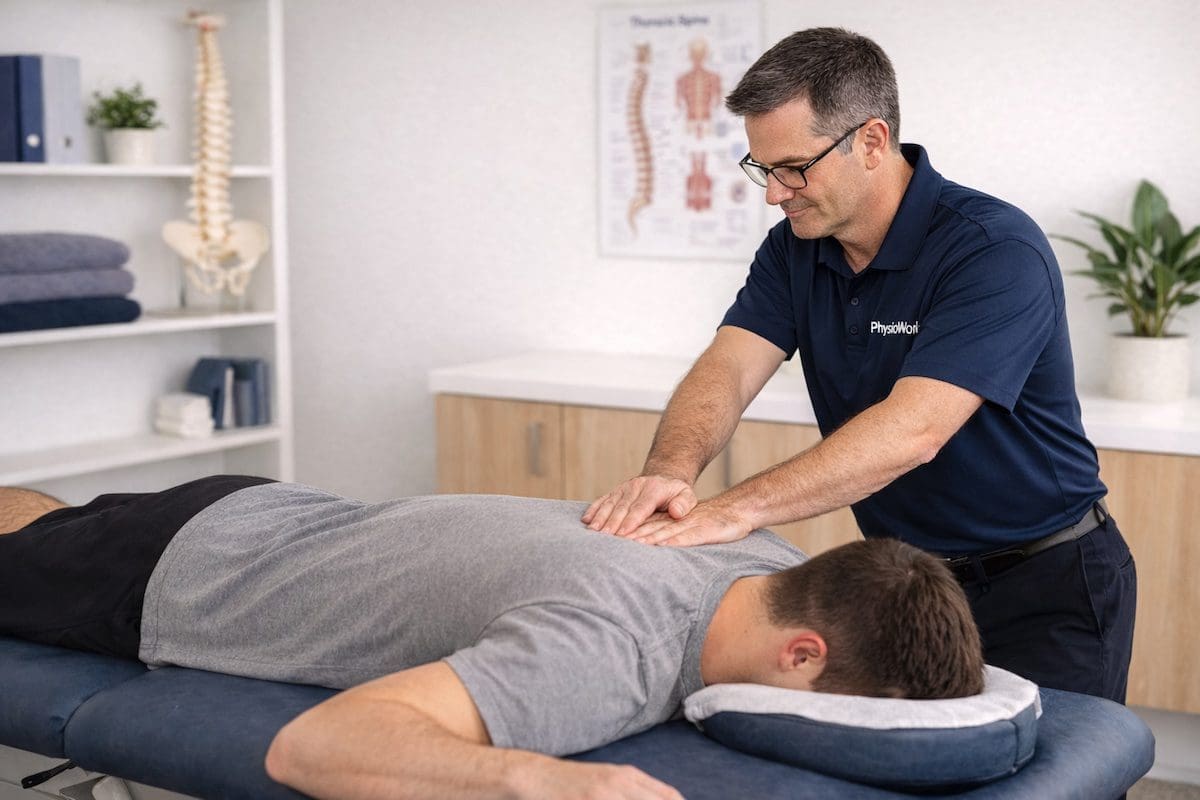
Thoracic spine mobilisation physiotherapy targeting upper back with prone patient treatment

Thoracic spine mobilisation for upper back stiffness

Is upper back pain physiotherapy right for you?

Upper back pain physiotherapy may suit you if stiffness, pain, posture strain, or repeated flare-ups are limiting work, exercise, sleep, or daily activity. It is especially useful when self-management has only partly helped, or when you are unsure whether the pain is coming from a joint, muscle, disc, rib, or nerve-related problem.

Many people also book when symptoms keep returning after desk work, lifting, sport, or long periods of sitting. Early assessment can help you reduce aggravation, improve confidence, and follow a clearer recovery plan.

When should you worry about upper back pain?

You should seek prompt medical or physiotherapy review if upper back pain follows significant trauma, is getting worse quickly, causes marked weakness or numbness, affects balance, disturbs breathing, or is linked with fever, unexplained weight loss, or night pain that does not settle.

Less urgent but still worthwhile reasons to book include pain lasting more than a few weeks, repeated flare-ups, stiffness that limits work or sport, pain with coughing or deep breathing, or symptoms that keep returning despite rest and stretching.

Upper Back Pain Physiotherapy FAQs

Can upper back pain come from muscles?

Yes. Muscles are a common source of upper back pain, especially after lifting, sport, prolonged desk work, coughing, or awkward sleep. Muscle-related pain often feels tight, sore, or stiff and may improve as movement gradually returns.

Can poor posture cause upper back pain?

Poor posture can contribute, especially when combined with long periods of sitting, low movement variety, or weak postural endurance. However, posture is usually just one part of the bigger picture rather than the whole cause.

Do I need a scan for upper back pain?

Usually not. Many upper back pain presentations can be assessed well from your history, symptom pattern, and physical examination. Scans are more useful when symptoms suggest fracture, serious pathology, nerve compromise, or another less common diagnosis.

Is exercise good for upper back pain?

In many cases, yes. The right exercise program can improve thoracic mobility, reduce stiffness, build strength, and improve load tolerance. The best exercises depend on whether your pain is driven by joints, muscles, posture load, or another condition.

How long does upper back pain take to settle?

Recovery varies. A mild muscular flare-up may settle in days to weeks, while persistent joint, disc, postural, or inflammatory presentations can take longer. Early assessment often helps you avoid repeated aggravation and unnecessary delays.

Can physiotherapy help recurring upper back pain?

Yes. Recurring pain often improves when treatment addresses the real drivers, such as thoracic stiffness, repeated load spikes, poor conditioning, lifting habits, or work setup. Physiotherapy also helps you build a plan to reduce future flare-ups.

Related upper back pain articles

What should you do next for upper back pain?

If your upper back pain is new, persistent, or keeps returning, a physiotherapy assessment can help clarify the likely cause and guide the most suitable treatment path. Early advice is especially helpful if you are unsure whether the pain is coming from a joint, muscle, disc, nerve, posture overload, or an underlying condition.

If your symptoms are affecting work, exercise, sleep, or daily comfort, booking now can help you move from guesswork to a clearer plan. PhysioWorks can assess your upper back pain, explain what is most likely driving it, and build a treatment plan that matches your goals.

thoracic spine posture improvement standing upright after physiotherapy treatment

Standing taller with improved thoracic posture

Book your appointment – 24/7

Choose your preferred PhysioWorks clinic and book online.

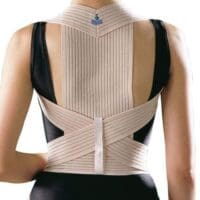
If you are looking at supports, posture aids, or home-management tools, these thoracic-friendly products may help support comfort and recovery between sessions.

Thoracic and Upper Back Products

These thoracic and upper back products are commonly used by our physiotherapists to improve strength, posture, movement, plus assist home exercise programs.

View all thoracic and upper back products

Follow PhysioWorks

Get free physiotherapy tips, exercise videos, recovery advice, and blog updates.

Facebook Instagram YouTube B X Email PhysioWorks

References

  1. Healthdirect. Upper back pain (thoracic pain). Healthdirect Australia. Accessed April 12, 2026.
  2. Risetti M, Gambugini R, Testa M, Battista S. Management of non-specific thoracic spine pain: a cross-sectional study among physiotherapists. BMC Musculoskelet Disord. 2023;24(1):398. doi:10.1186/s12891-023-06505-8
  3. Sampath KK, Smith T, Farrell G, et al. Diagnosing and treating upper back pain: insights from New Zealand's manipulative physiotherapists and osteopaths. J Man Manip Ther. 2025;33(2):149-157. doi:10.1080/10669817.2024.2438196

Posture FAQs

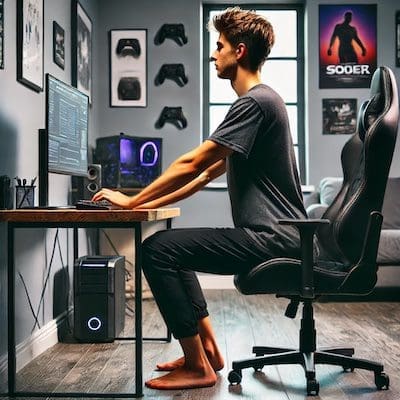
Gamer in their early 20s sitting at a desk with good posture, straight back, feet flat on the floor, and elbows bent at 90 degrees, in a modern room with gaming posters.

Posture FAQs: What Matters Most?

Posture FAQs usually come down to a few practical questions: what good posture looks like, why posture matters, and what to do when sitting or standing starts to hurt. In most cases, better posture is not about sitting stiffly all day. Instead, it is about changing positions regularly, improving strength, and using simple habits that support your posture in daily life.

If you want a stronger foundation, start with good posture basics and an improving posture guide. These posture FAQs also connect closely with neck pain, back pain, workstation setup, and movement habits.

Quick Answers

  • Good posture reduces unnecessary strain on joints, muscles, and ligaments.
  • Posture problems often build from long static positions rather than one “bad” position.
  • Movement breaks, strength, and flexibility often matter as much as sitting tall.
  • Desk setup, screen height, and chair support can make daily posture easier to maintain.
  • A physiotherapist may help if posture issues are linked with pain, stiffness, or recurring overload.

Why is good posture important?

Good posture helps you hold your body in positions that place less stress on your spine, joints, muscles, and supporting soft tissues. It can improve comfort during desk work, study, driving, exercise, and gaming. Just as importantly, it can help you spread load more evenly through your body so one area is not doing too much work for too long.

That said, posture is not the only factor behind pain. The RACGP review on posture explains that movement variety, confidence, strength, and work or lifestyle habits also matter. For many people, the goal is not “perfect posture”. The goal is a posture strategy that feels sustainable and lets you move often.

How can you improve your posture?

Most people improve posture by combining awareness, movement breaks, strength work, and a better daily setup. Helpful starting points include posture exercises, better ergonomics, and regular mobility work. When your neck, thoracic spine, hips, or shoulders are stiff, your body often defaults to positions that feel easier in the short term but become irritating over time.

Core and upper back strength can also help. Pages such as core stability training and flexibility exercises may support better control and tolerance for sitting, lifting, and standing. If you sit for long periods, your sitting posture and monitor position are worth checking first.

What are the common signs of poor posture?

Common signs include rounded shoulders, a forward head position, slumped sitting, reduced upper back movement, and feeling stiff after desk work or screen time. Some people also notice neck tension, shoulder ache, headaches, or lower back discomfort when they stay in one position too long.

Importantly, these signs do not always mean structural damage. Often, they reflect muscle fatigue, habit, reduced movement variety, or a load pattern your body is no longer coping with well. That is why posture correction usually works best when it includes both movement change and strengthening, rather than trying to “sit up straight” all day.

Can poor posture cause neck or back pain?

Poor posture does not guarantee pain, but it can contribute when one region is exposed to repeated load, long sitting periods, or poor workstation habits. Recent reviews have linked more sedentary behaviour with greater neck pain risk, especially with prolonged phone and computer use. Forward head posture can also increase strain through the neck and upper back during desk-based tasks.

If posture-related symptoms are already present, posture correction may involve mobility work, strength training, hands-on treatment, and practical changes to your home, study, or office environment. The best plan depends on whether your symptoms are mainly linked to stiffness, weakness, overload, or an underlying condition.

When should you get help for posture problems?

You should consider professional help when posture issues are linked with recurring pain, headaches, tingling, reduced movement, trouble working comfortably, or worsening exercise tolerance. It is also worth getting checked if self-management has not improved things after a few weeks, or if your posture concerns are affecting sleep, training, or concentration.

A physiotherapist can assess your movement, spine, joint mobility, strength, work setup, and symptom triggers. Then they can explain which factors are most relevant for you and guide a realistic plan. For many people, that plan is more effective than relying on internet tips alone.

Who can help you improve your posture?

A physiotherapist is well placed to assess posture-related problems and explain which factors are most likely contributing to your symptoms. Depending on your presentation, management may include postural retraining, exercise progression, workstation advice, flexibility work, and gradual return to the activities that matter most to you.

If your posture concerns relate to screen use, desk work, gaming, or study, the plan may also include ergonomic advice and pacing strategies. If they relate more to sport or training, the focus may shift towards movement control, strength, and load management.

What to do next

If posture issues are starting to cause neck pain, back pain, headaches, stiffness, or reduced comfort at work, it is worth getting a clear assessment. Many people improve faster when they know whether the main problem is load, strength, flexibility, workstation setup, or a separate musculoskeletal condition.

A physiotherapist may help you identify the key drivers, explain the best next steps, and guide a practical posture improvement plan that suits your daily routine.

Book your appointment – 24/7

Choose your preferred PhysioWorks clinic and book online.

Posture Products

These posture products are commonly used by our physiotherapists to improve posture, postural strength, endurance and flexibility, plus assist home exercise programs.

View all posture products

Follow PhysioWorks

Get free physiotherapy tips, exercise videos, recovery advice, and blog updates.

Facebook Instagram YouTube B X Email PhysioWorks

Related Articles

  1. Posture Learn how posture affects comfort, movement, and daily load tolerance.
  2. What Is Good Posture? Learn what good posture looks like and why it matters.
  3. Improving Posture Simple habits and strategies to make posture change easier.
  4. Posture Exercises Exercises that may help improve posture and reduce strain.
  5. Ergonomics Workstation and workplace advice to support better posture habits.
  6. Correct Sitting Posture Practical tips for desk work, study, and long periods of sitting.
  7. Neck Pain Common causes of neck pain and how posture may contribute.
  8. Back Pain Explore common back pain triggers, treatment, and prevention options.
  9. Core Stability Training Improve trunk control and support for daily posture demands.
  10. Flexibility Exercises Mobility work that may help reduce stiffness affecting posture.

References

  1. Meng Y, Xue Y, Yang S, et al. The associations between sedentary behavior and neck pain: a systematic review and meta-analysis. BMC Public Health. 2025;25(1):453. doi:10.1186/s12889-025-21685-9
  2. Mazaheri-Tehrani S, Arefian M, Abhari AP, et al. Sedentary behavior and neck pain in adults: A systematic review and meta-analysis. Prev Med. 2023;175:107711. doi:10.1016/j.ypmed.2023.107711
  3. Yang S, Boudier-Revéret M, Yi YG, et al. Treatment of Chronic Neck Pain in Patients with Forward Head Posture: A Systematic Narrative Review. Healthcare (Basel). 2023;11(19):2604. doi:10.3390/healthcare11192604
  4. Smythe A, Jivanjee M. The straight and narrow of posture: Current clinical concepts. Aust J Gen Pract. 2021;50(11). doi:10.31128/AJGP-07-21-6083

Teenager Back Pain

Article by John Miller & Erin Runge
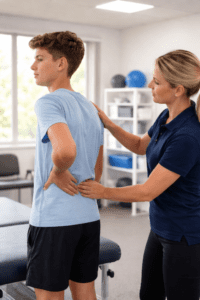
Teenager back pain physiotherapy assessment checking posture and lumbar spine movement in clinic
Physiotherapist assessing posture and lumbar movement in a teenager with back pain.

Teenager back pain can affect sport, school, sleep, and everyday comfort. It may relate to growth, posture, training load, muscle weakness, or a specific spinal condition. Many teenagers improve well with early assessment, sensible activity modification, and a tailored back pain physiotherapy program. Related issues can include spondylolysis and spondylolisthesis.

Quick Summary

  • Teenager back pain is common and often improves with early care.
  • Poor posture, rapid growth, sport load, and muscle weakness can contribute.
  • Gymnastics, cricket fast bowling, tennis, and repeated extension sports may increase risk.
  • A physiotherapist may help identify the cause and guide safe recovery.

Why does teenager back pain happen?

Teenager back pain often happens when growing bodies are asked to cope with long hours of sitting, poor posture habits, reduced strength, or heavy sport loads. Back pain may come from joints, muscles, discs, or bone stress. Some teenagers also develop pain from repeated bending, twisting, or arching during sport.

Teenagers are often flexible, but flexibility alone does not protect the spine. When trunk strength, movement control, or training balance is lacking, the lower back may become overloaded. Long periods of sitting, heavy school bags, growth spurts, and reduced recovery time may also contribute. You can also read more about posture, how to improve your posture, and back pain prevention.

Common causes of teenager back pain

A teenager may develop back pain from simple muscle overload or from a more specific spinal condition. Common causes include:

Teenager back pain in sport

Sports that involve repeated extension, twisting, impact, or fast loading may increase the risk of back pain. This includes gymnastics, dance, cricket fast bowling, tennis, and some field and court sports. Good load management, strength training, and technique review may help reduce flare-ups and improve resilience.

When should a teenager seek help?

Teenager back pain should be assessed if it persists, keeps returning, affects sport or school, or causes night pain, leg symptoms, or difficulty moving. A physiotherapist can assess the spine, hips, strength, movement control, and sport load to help identify the likely cause and guide treatment.

Medical review is also sensible when pain follows trauma, is severe, is associated with fever or unexplained weight loss, or does not settle as expected. Early assessment matters because some teenage back conditions respond better when managed before pain becomes persistent.

How can physiotherapy help teenager back pain?

Physiotherapy for teenager back pain may help reduce pain, improve movement, and restore confidence with activity. A physiotherapist may recommend a mix of education, activity modification, strength work, posture advice, and a gradual return to sport plan.

Treatment often includes:

  • assessment of pain triggers and aggravating activities
  • posture and movement advice
  • core, hip, and trunk strength exercises
  • mobility work where appropriate
  • sport-specific load management
  • guidance for safe return to school, training, and competition

What can teenagers do to prevent back pain?

Many teenagers can lower their risk of back pain by staying active, building strength, and managing posture and study habits well. Prevention does not mean avoiding activity. Instead, it means balancing training, recovery, and good movement habits.

  • Stay active: Regular exercise supports spinal health and general fitness.
  • Build strength: Trunk, hip, and leg strength can improve spinal support. Read more about strength training.
  • Improve desk setup: A good study setup may reduce unnecessary strain. Read How to Set Up Your Workspace.
  • Take movement breaks: Regular breaks from sitting can reduce stiffness and help posture.
  • Manage sport load: Increase training gradually and allow recovery time.
  • Address posture habits: Read more about good back posture and posture correction.

What does the research say about teenager back pain?

Recent research suggests adolescent back pain is common and should not be dismissed as “just growing pains”. Early assessment, exercise-based management, and attention to physical and lifestyle factors may improve outcomes. In sport, repeated spinal loading and training errors can also increase risk in some teenagers.

What to do next

If your teenager has ongoing back pain, book a physiotherapy assessment. Early advice may help identify the source of pain, reduce irritation, and guide a safe return to school, exercise, and sport.

Book your appointment – 24/7

Choose your preferred PhysioWorks clinic and book online.

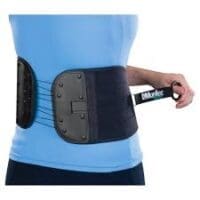
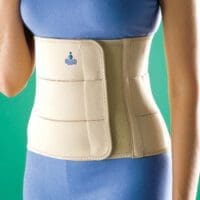
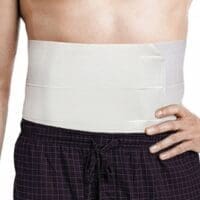
Back Support Products

These back support products are commonly used by our physiotherapists to help reduce back pain, improve comfort, and support your recovery at home.

View all back support products

Back Pain Tips: 7 Evidence-Based Ways to Move Better, Hurt Less & Recover Faster

A Physiotherapist’s Guide to a Stronger, Healthier Back

Discover practical, research-based strategies to ease back pain, move with confidence, and build long-term strength. Written by physiotherapist John Miller, this concise guide blends science and decades of clinical experience to help you recover faster and stay active for life.

  • Clear, actionable advice grounded in current research
  • Whole-person approach: movement, sleep, mindset and care team
  • Includes a quick flare-up plan, FAQs and daily habits

Follow Us On Social Media

Follow us on social media for free tips on posture, exercise, recovery, and managing teenager back pain. We regularly share practical advice to help young people stay active and move with more confidence.

Follow PhysioWorks

Get free physiotherapy tips, exercise videos, recovery advice, and blog updates.

Facebook Instagram YouTube B X Email PhysioWorks

Teenager Back Pain FAQs

What causes teenager back pain?

Teenager back pain may come from muscle overload, posture habits, growth spurts, reduced strength, sport load, or a specific spinal condition. In some teenagers, repeated bending, twisting, or arching during sport can irritate the lower back and lead to ongoing symptoms.

When should a teenager see a physiotherapist for back pain?

A teenager should see a physiotherapist if back pain lasts more than a few days, keeps returning, affects school or sport, or causes stiffness, reduced movement, or leg symptoms. Early assessment may help identify the cause and guide a safer recovery plan.

What sports can trigger teenager back pain?

Sports with repeated spinal extension, rotation, or impact may increase the risk. Gymnastics, dance, cricket fast bowling, and tennis are common examples. Good technique, sensible progression, recovery time, and strength work may reduce the likelihood of overload injuries.

What exercises help teenager back pain?

The best exercises depend on the teenager’s diagnosis, symptoms, and activity level. Many benefit from trunk and hip strengthening, mobility work, and gradual return-to-sport loading. A physiotherapist can tailor exercises so they match the teenager’s age, sport, and pain pattern.

Can poor posture cause teenager back pain?

Poor posture on its own is not always the only cause, but prolonged slouched sitting, low movement variety, and weak postural endurance may contribute. Posture advice usually works best when combined with regular movement, strength training, and better study or screen habits.

Is physiotherapy effective for teenager back pain?

Many teenagers respond well to physiotherapy. Treatment may include education, activity modification, exercise, posture advice, and return-to-sport planning. The aim is to reduce pain, improve movement, and help the teenager get back to normal activities with more confidence.

What Causes Hip and Groin Pain?

Article by John Miller & Erin Runge
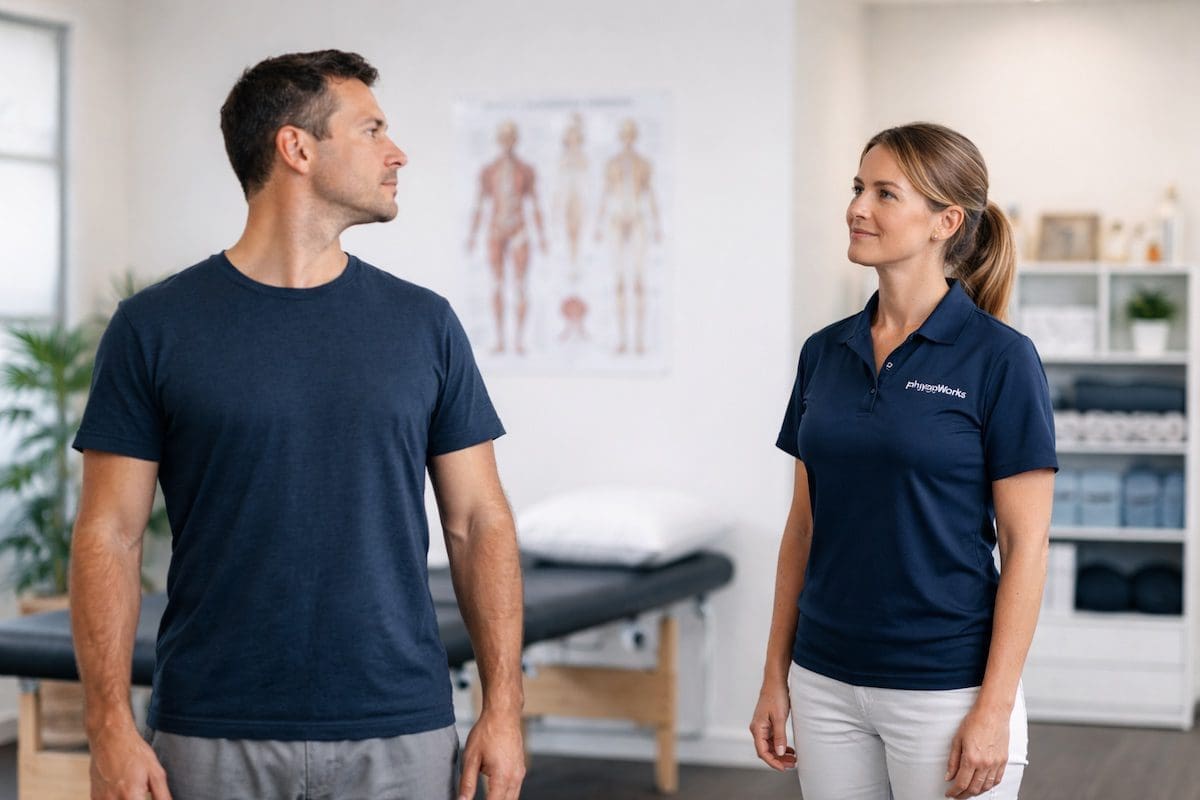
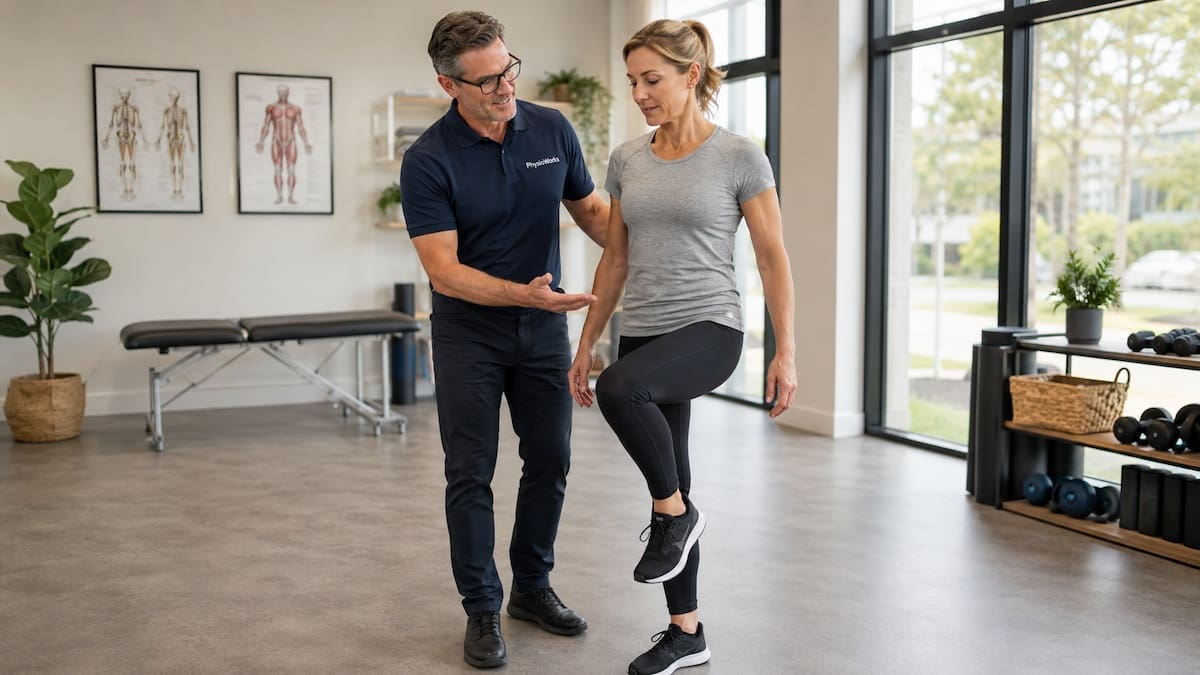
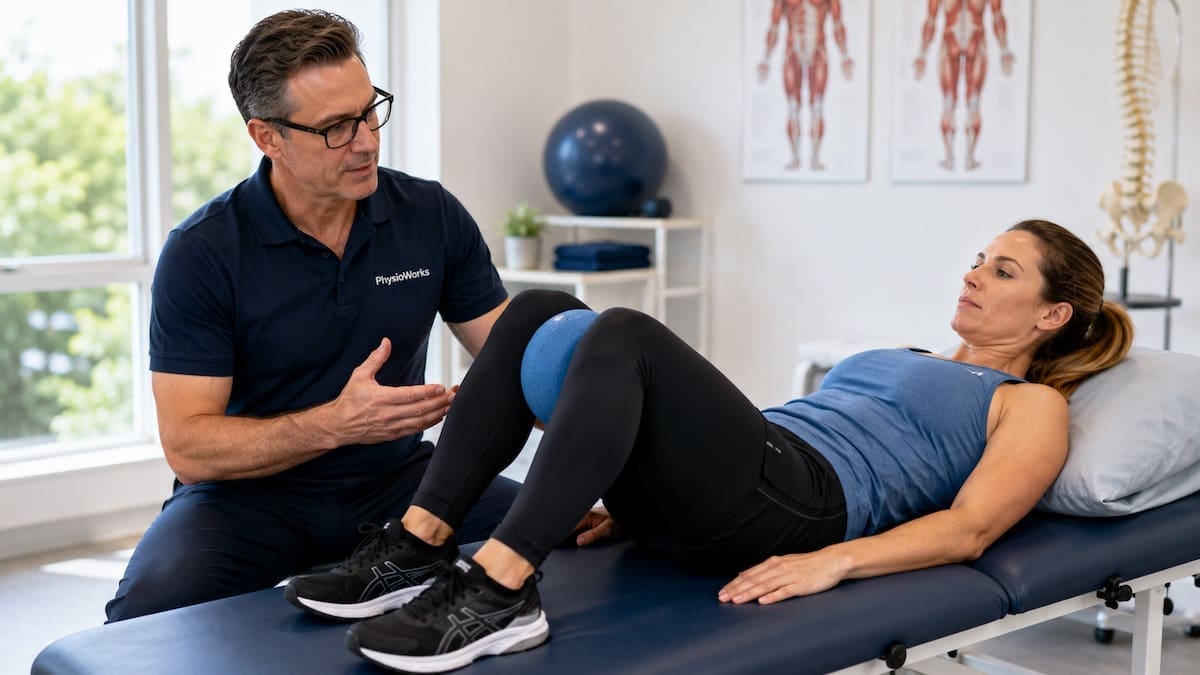
hip and groin pain causes assessed with standing hip flexion and rotation

Hip movement checks help guide the next step.

Hip and groin pain causes can include hip joint irritation, groin strain, tendon overload, or pain from the lower back or pelvis. Many people notice pain with walking, running, sitting, stairs, squats, kicking or changing direction.

A hip pain physiotherapy assessment can help sort out the likely source. This is helpful when hip pain overlaps with groin pain.

Quick Answer: What Causes Hip and Groin Pain?

The most common hip and groin pain causes include hip arthritis, femoroacetabular impingement, hip labral tear, groin strain, adductor tendon pain, hip flexor pain, gluteal tendon pain and lower back referral.

Pain site, stiffness, clicking, weakness, limping and activity triggers often give useful clues. A careful check is usually needed because hip, groin and back symptoms can overlap.

Common Hip and Groin Pain Causes

Most causes sit in six groups: hip joint problems, muscle and tendon overload, outer hip pain, referred pain, bone stress, and inflammatory health conditions.

Deep groin pain often points to the hip joint. Inner-thigh pain may involve the adductor muscles or tendons. Outer hip pain often relates to the gluteal tendons or nearby bursa. Back pain can also travel to the hip or groin.

  • Hip joint clues: deep groin pain, stiffness, clicking, catching, pain with sitting, squats or twisting.
  • Muscle or tendon clues: pain with sprinting, kicking, lunges, stairs, running or change of direction.
  • Back-related clues: burning pain, pins and needles, numbness, or symptoms that change with back movement.
  • Bone stress clues: deep pain that worsens with running, jumping or long walks.

Hip Joint-Related Causes

Hip joint pain often feels deep at the front of the hip or groin. It may worsen with sitting, stairs, hills, squats, twisting or getting in and out of a car.

These problems can feel similar early on. Assessment checks hip movement, strength, walking pattern and how symptoms respond to load.

Muscle and Tendon-Related Causes

Soft tissue overload is common in active people, runners, field-sport players and gym users. Symptoms may build slowly or start after a sprint, kick, lunge or sharp change of direction.

Muscle and tendon pain often improves with staged loading. The plan should match the tissue, pain level and activity goal.

hip and groin pain causes checked with adductor squeeze test

Adductor testing can help identify groin sources.

Pain Location Clues

  • Deep groin: the hip joint, labrum, FAI or hip arthritis may be involved.
  • Inner thigh: adductor muscle or tendon load is common.
  • Front of hip: hip flexor pain or joint referral may contribute.
  • Outer hip: gluteal tendons or the trochanteric bursa may be sensitive.
  • Back, buttock or leg symptoms: lower back referral or nerve irritation may be involved.

Lateral Hip Pain Causes

Pain on the outside of the hip often relates to tendon or bursal irritation. Many people feel pain over the side of the hip with side-lying, stairs, hills or standing on one leg.

The key issue is often load sensitivity around the outer hip. Care may focus on reducing compression, changing activity, improving hip strength and rebuilding walking or running tolerance.

Can Back Pain Cause Hip or Groin Pain?

Yes. Lower back pain, sciatica and a pinched nerve can refer symptoms to the front, side or back of the hip.

Back-related symptoms may include burning pain, pins and needles, numbness, or pain below the knee. Hip joint pain usually changes more with hip rotation, squats, stairs or sitting.

Bone, Health and Inflammatory Causes

Less common causes still matter. Osteoporosis can increase fracture risk. Rheumatoid arthritis can cause joint pain, swelling or morning stiffness. Stress fractures can cause deep pain that worsens with impact.

Seek medical advice quickly if pain is severe, traumatic, worsening, linked with fever, or stops you from weight-bearing.

How Does Physiotherapy Help Clarify the Cause?

A physiotherapist checks the pattern rather than guessing from pain location alone. Your assessment may include hip range, strength tests, balance, walking, squat or step checks, spine screening and sport-specific loading.

This helps decide whether symptoms are more likely to involve the hip joint, adductors, hip flexors, gluteal tendons, lower back or another source. It also helps shape a plan for pain relief, load changes, exercise progressions and return to sport.

Imaging may help in some cases. Your physiotherapist may suggest GP review or imaging if your history, symptoms or test findings raise concern.

Should You Keep Exercising?

You may keep moving if symptoms are mild, settle quickly and do not worsen after activity. Reduce sharp, limping or high-speed movements until the cause is clearer.

  • Keep comfortable walking if symptoms do not build.
  • Avoid painful sprinting, kicking, cutting or jumping.
  • Reduce deep squats if they trigger hip or groin pain.
  • Restart strength work gradually.
  • Book an assessment if pain keeps returning.

When Should You Seek Help?

Book an assessment if hip or groin pain lasts more than a few days, limits walking, causes limping, stops sport, affects sleep, or returns when you increase training.

Seek urgent medical care if you cannot bear weight, have severe night pain, fever, unexplained weight loss, major trauma, sudden testicular pain, abdominal pain, or severe pain with feeling unwell.

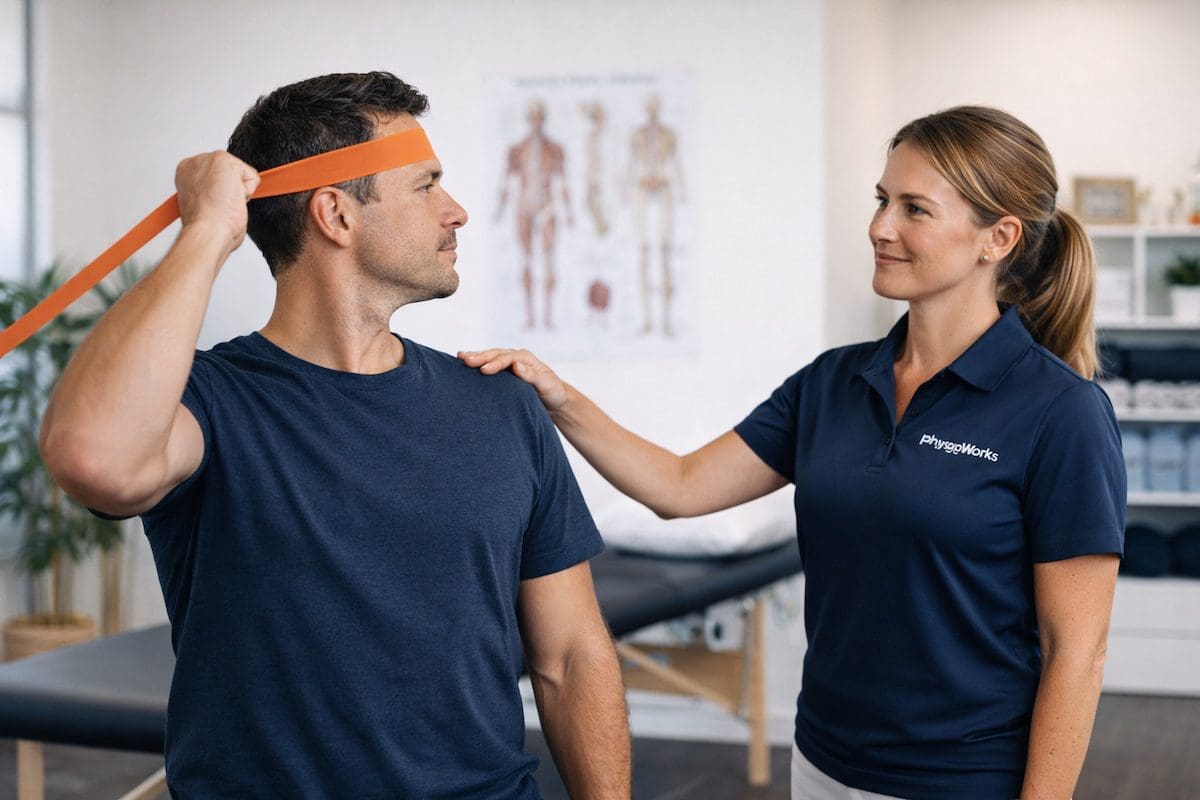
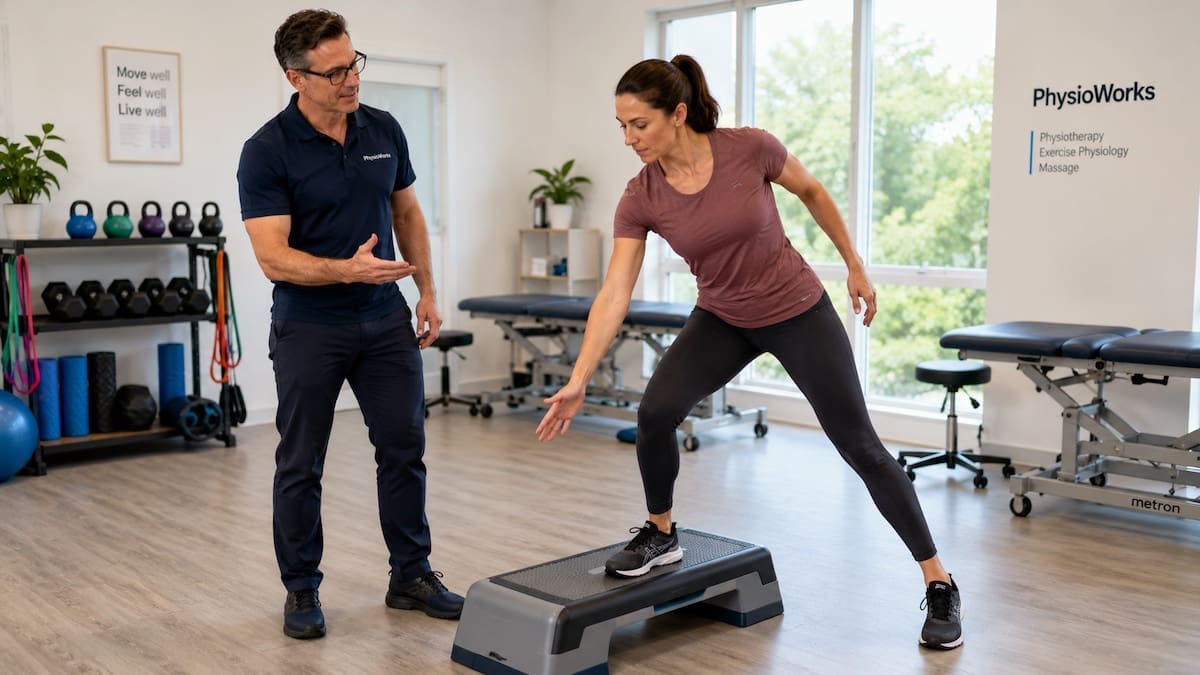
hip and groin pain causes managed with lateral step reach rehab

Guided control supports safe activity progression.

What To Do Next

If hip or groin pain limits walking, work, training or sport, book a physiotherapy assessment. Early guidance can help identify the likely source, reduce repeated flare-ups and support a safer return to activity.

For athletes and active adults, assessment can also guide load changes, strength progressions and a safer return to running, kicking, cutting or gym training.

Related Information

Hip and Groin Pain FAQs

What causes hip and groin pain?

Hip and groin pain can come from the hip joint, nearby muscles or tendons, bone stress, or referred pain from the lower back or pelvis. Common triggers include walking, running, sitting, stairs, squats and twisting.

Can hip pain cause groin pain?

Yes. Hip joint problems can refer pain into the groin. This can happen with hip arthritis, FAI and hip labral irritation. Pain may worsen with sitting, squats, twisting, stairs or getting in and out of a car.

What does adductor-related groin pain feel like?

Adductor-related groin pain often feels like inner-thigh or groin pain. It may worsen with sprinting, kicking, cutting or squeezing the legs together. It may start suddenly or build slowly with repeated sport load.

When should I see a physiotherapist for hip or groin pain?

Consider an assessment if pain lasts more than a few days, limits daily activity, affects walking, causes limping, stops sport, or keeps returning after rest. Assessment can help guide safe loading.

Can exercise help hip and groin pain?

Exercise may help when it matches the cause and stage of pain. A physiotherapist may guide hip, groin, trunk and leg strength, then progress walking, running, stairs or sport tasks.

Book your appointment – 24/7

Choose your preferred PhysioWorks clinic and book online.

Hip Products

These hip products are commonly used by our physiotherapists to improve strength, posture, movement, plus assist home exercise programs.

View all hip products

Follow PhysioWorks

Get free physiotherapy tips, exercise videos, recovery advice, and blog updates.

Facebook Instagram YouTube B X Email PhysioWorks

References

  1. Reiman MP, Thorborg K, Hölmich P, et al. Consensus recommendations on the classification, definition and diagnostic criteria of hip-related pain in young and middle-aged active adults from the International Hip-related Pain Research Network, Zurich 2018. Br J Sports Med. 2020;54(11):631-641.
  2. Rolph R, Morgan C, Chapman G, Marsh S. Groin pain in athletes. BMJ. 2020;368:m109.
  3. Short SM, Tenforde AS, Lau B, et al. Hip and groin injury prevention in sport. Int J Sports Phys Ther. 2021;16(1):172-183.
  4. Martins TB, Nunes GS, Freitas-Júnior IF, et al. Risk factors associated with groin pain in athletes: a systematic review with meta-analysis. Life (Basel). 2025.

Hip, Groin & Buttock Pain Guide (Diagnosis Pathway & FAQs)

Article by John Miller & Erin Runge

Hip, groin and buttock pain often overlap, and the source is not always where you feel it. The tricky part is that pain in this region may come from the hip joint, groin muscles, sacroiliac joint, nearby nerves, or the gluteal tendons on the outside of the hip.

This hip, groin and buttock pain guide helps you narrow down the likely cause based on location, symptoms and triggers. Then you can move to the most relevant PhysioWorks page or book an assessment for clearer diagnosis and treatment advice.

Start Here: Quick Diagnosis Pathway

Choose the option that best matches your pain:

Step 1: Where is your pain?

Front Hip or Groin

Front hip or groin pain often relates to the hip flexors, adductors, pubic region, or the hip joint itself.

Outer Hip

Outer hip pain is commonly linked to gluteal tendon overload and related lateral hip pain conditions.

Buttock or Referred Pain

Buttock pain can come from deep hip structures, the pelvis, or the lower back and sciatic nerve pathway.

Key Difference Snapshot

  • Side-lying pain → more suggestive of gluteal tendon or GTPS irritation
  • Pain with prolonged sitting → may fit sciatica, deep gluteal symptoms, or joint irritation
  • Clicking, catching or pinching → may point more towards a hip joint issue such as impingement or labral irritation
  • Pain with sprinting, kicking or quick change of direction → often points towards muscle or tendon overload around the groin

Step 2: What does your pain feel like?

  • Sharp or catching → more consistent with joint irritation such as labral tear or impingement
  • Deep ache → may relate to tendon overload or joint irritation
  • Burning, tingling or travelling pain → more suggestive of nerve-related pain
  • Stiffness → may reflect arthritis or hip joint restriction

Step 3: What makes it worse?

  • Running or sport → tendon or muscle overload is more likely
  • Sitting → sciatic irritation, deep gluteal pain, or hip joint irritation may be involved
  • Side lying → often aggravates gluteal tendinopathy or GTPS
  • Twisting or pivoting → may aggravate labral tear or hip impingement

When should you worry about hip, groin or buttock pain?

Seek help sooner if your pain is severe, worsening, follows trauma, causes weakness or numbness, wakes you at night, or makes walking difficult. Early assessment is also sensible if your pain keeps returning with sport, stairs, sitting, or side lying.

Healthdirect notes that hip pain can also be referred from another area, which is one reason these symptoms can be difficult to self-diagnose.

Can physiotherapy help hip, groin and buttock pain?

Physiotherapy aims to identify the primary pain source and guide treatment based on movement, strength, load management and function. Because hip, groin, buttock and lower back symptoms often overlap, accurate assessment matters.

Related Guides

What to do next

If your symptoms match one of the conditions above, open that page and compare the features carefully. If the source still is not clear, a physiotherapy assessment can help identify whether the main driver is the hip joint, groin muscles, gluteal tendons, sacroiliac joint, or a nerve-related problem.

Book your appointment – 24/7

Choose your preferred PhysioWorks clinic and book online.

Follow PhysioWorks

Get free physiotherapy tips, exercise videos, recovery advice, and blog updates.

Facebook Instagram YouTube B X Email PhysioWorks

References

  1. Grimaldi A, Fearon A. Gluteal tendinopathy: integrating pathomechanics and clinical features in its management. J Orthop Sports Phys Ther. 2015;45(11):910-922. doi:10.2519/jospt.2015.5829
  2. Donati D, Tedeschi R, Garnum PE, et al. A narrative review on greater trochanteric pain syndrome: diagnostic imaging and non-surgical treatments. Musculoskelet Surg. 2025. doi:10.1007/s12306-025-00924-7
  3. Reiman MP, Goode AP, Cook CE, et al. Diagnostic accuracy of clinical tests for the diagnosis of hip femoroacetabular impingement/labral tear: a systematic review with meta-analysis. Br J Sports Med. 2015;49(12):811. doi:10.1136/bjsports-2014-094302
  4. Martins TB, Mitrousias V, Pollastri L, et al. Risk Factors Associated with Groin Pain in Athletes: A Systematic Review. Life (Basel). 2025;15(11):1688. doi:10.3390/life15111688
  5. Hopayian K, Song F, Riera R, et al. The clinical features of the piriformis syndrome: a systematic review. Eur Spine J. 2010;19(12):2095-2109. doi:10.1007/s00586-010-1504-9
  6. Stafford MA, Peng P, Hill DA. Sciatica: a review of history, epidemiology, pathogenesis, and the role of epidural steroid injection in management. Br J Anaesth. 2007;99(4):461-473. doi:10.1093/bja/aem238
  7. Healthdirect Australia. Hip pain. Updated 2025.

What Is the Best Way to Relieve Hip Pain?

The best treatment for hip pain depends on what is causing it. Hip symptoms can come from the joint, groin, outer hip tendons, nearby muscles, or referred pain from your lower back. For that reason, a proper assessment matters. This FAQ supports our broader hip pain guide and links you to the most relevant next step.

Many people need more than short-term symptom relief. Painkillers, heat, ice, or a cortisone injection may help some presentations for a short period, but persistent hip pain usually improves best when treatment matches the diagnosis. Common related causes include FAIS, gluteal tendinopathy, hip arthritis, and piriformis syndrome.

Common signs your hip pain needs a targeted plan

  • groin or outer hip pain during walking, stairs, or exercise
  • pain lying on your side at night
  • hip stiffness after sitting or first thing in the morning
  • recurrent symptoms when you return to sport or the gym
  • hip pain linked with back, buttock, or thigh symptoms

What Is the Best Treatment for Hip Pain?

The best treatment for hip pain is the treatment that matches the source of your symptoms. Many people do best with a combination of accurate diagnosis, education, activity modification, progressive strengthening, and movement retraining. The goal is not just to settle pain, but to restore daily function, improve load tolerance, and reduce the risk of recurrence.

Why does hip pain keep coming back?

Hip pain often returns when the true driver has not been identified or when the hip is asked to do more than it can currently tolerate. That can happen with tendon overload, hip joint stiffness, poor movement control, reduced glute strength, trunk weakness, or referred pain from the lumbar spine. A good management plan looks at the hip, groin, pelvis, lower limb, and lower back rather than the painful area alone.

Common causes of hip pain

Hip pain is a symptom, not a single diagnosis. The location of your pain often gives useful clues. Groin pain can point towards joint or impingement-related problems. Outer hip pain may relate to tendon or bursal irritation. Buttock and posterior hip pain can also come from the lower back, deep hip muscles, or neural irritation.

What does physiotherapy for hip pain involve?

Physiotherapy for hip pain usually begins with a detailed assessment of your pain pattern, joint movement, muscle length, strength, endurance, control, and functional tasks such as walking, stairs, squatting, running, or changing direction. Your treatment may include manual therapy, taping, mobility work, strengthening, and a home exercise plan matched to your diagnosis and goals.

Rehabilitation is often staged. Early management may focus on reducing aggravating loads and settling symptoms. Later stages usually build hip, pelvis, and trunk capacity so you can handle work, daily activity, and sport with greater confidence. Depending on your presentation, useful support pages may include deep hip rotator strengthening and core stability training.

Should you rest or exercise with hip pain?

Complete rest is rarely the best long-term strategy. In many cases, relative rest and a graded exercise plan work better than stopping everything. The key is to reduce aggravating loads while keeping the right movements and exercises going at the right level. A physiotherapist may recommend pacing, targeted strengthening, and modified activity instead of full rest.

For general public guidance, Healthdirect also provides a useful overview of hip pain symptoms and when to seek medical care.

When should you worry about hip pain?

You should seek prompt review if your hip pain started after a fall, you cannot weight-bear, you have severe night pain, fever, marked swelling, significant weakness, or symptoms that are rapidly worsening. Persistent groin pain, locking, or pain that keeps returning despite sensible load reduction also deserves proper assessment.

Related articles

  1. Hip Pain
    • Explore the main causes, symptoms, and treatment options for hip pain and related conditions.
  2. Hip Arthritis
    • Learn how hip arthritis can cause pain, stiffness, and reduced walking tolerance.
  3. FAIS
    • Read about femoroacetabular impingement syndrome, groin pain, and hip movement restriction.
  4. Hip Labral Tear
    • Find out how labral injury can contribute to groin pain, clicking, and catching sensations.
  5. Gluteal Tendinopathy
    • See why outer hip pain often worsens with lying on your side, walking, or climbing stairs.
  6. Piriformis Syndrome
    • Understand one cause of buttock pain and symptoms that may mimic sciatica.

Frequently asked questions

Can hip pain come from my back?

Yes. Lower back problems can refer pain into the buttock, outer hip, groin, or thigh. That is why a thorough assessment should include the lumbar spine and pelvis, not just the hip joint.

Are injections the best treatment for hip pain?

Not usually on their own. Injections may help some people in selected situations, but they do not replace a proper diagnosis, activity modification, strengthening, and movement-based rehabilitation.

How long does hip pain take to improve?

That depends on the diagnosis, severity, symptom duration, and how well the treatment matches the cause. Mild overload problems may improve over weeks, while joint, tendon, or persistent pain presentations can take longer.

Is walking good for hip pain?

Walking can help some people, especially when it is comfortable and kept within tolerance. However, some conditions flare with longer walks, hills, or fast pace, so the amount often needs to be adjusted.

What to do next

If your hip pain is stopping you from walking, exercising, sleeping comfortably, or returning to sport, arrange an assessment. A physiotherapist can work out whether the main problem is coming from the joint, groin, tendons, muscles, bursa, or lower back.

Once the cause is clearer, your plan can focus on the right mix of load management, mobility, strengthening, and return-to-activity advice.

Book your appointment – 24/7

Choose your preferred PhysioWorks clinic and book online.

Follow PhysioWorks

Get free physiotherapy tips, exercise videos, recovery advice, and blog updates.

Facebook Instagram YouTube B X Email PhysioWorks

References

  1. Cibulka MT, Bloom NJ, Enseki KR, et al. Hip Pain and Mobility Deficits—Hip Osteoarthritis Revision 2017. J Orthop Sports Phys Ther. 2017;47(6):A1-A37. doi:10.2519/jospt.2017.0301
  2. Moseng T, Dagfinrud H, Haugen IK, et al. EULAR recommendations for the non-pharmacological core management of hip and knee osteoarthritis: 2023 update. Ann Rheum Dis. 2024;83(6):730-740. doi:10.1136/ard-2023-225041
  3. Healthdirect Australia. Hip pain. Accessed March 16, 2026.

Common Thigh Injuries

What are the Most Common Thigh Injuries?

Common thigh injuries can include muscle strains, bruising, overload problems, and pain referred from the lower back or knee. Some thigh pain settles quickly with simple care, while other cases need a proper assessment to identify whether the source is the thigh itself, the knee, the hip, or irritated nerves such as sciatica.

If you are active, play sport, or have recently increased your training, it helps to review the main thigh pain patterns early. That can help you decide whether you are dealing with a muscle strain, an overuse issue, or a problem linked to your back, hip, or knee. Many common thigh injuries can look similar early, which is why a clear diagnosis matters.

What are common thigh injuries?

Common thigh injuries usually involve the muscles at the front, back, or outer side of the thigh. However, not all thigh pain comes from the thigh itself. Pain may also refer from the lower back, hip, or knee, which is why assessment matters when symptoms persist.

Hamstring Strain

A hamstring strain affects one or more muscles at the back of the thigh. It often happens during sprinting, kicking, jumping, or sudden acceleration. Typical signs include a sharp pull, local tenderness, weakness, and pain when walking fast, bending, or returning to sport.

Thigh Muscle Strain or Contusion

A thigh strain or corked thigh may follow a direct knock, a forceful stretch, or a sudden change in speed. The front thigh muscles can become strained during kicking, running, or decelerating. Many people notice pain, bruising, swelling, stiffness, or difficulty lifting the leg comfortably.

ITB Syndrome

ITB syndrome is a common overuse problem in runners and cyclists. Although the pain is often felt near the outside of the knee, tightness or irritation can track up the outer thigh as well. Load errors, hip weakness, and training changes often contribute.

Runner’s Knee

Runner’s knee, also called patellofemoral pain, usually causes discomfort around or behind the kneecap. Some people describe pain spreading upward into the lower thigh, especially with stairs, squatting, hills, or prolonged sitting.

Sciatica

Sciatica can create thigh pain, burning, tingling, numbness, or weakness when the sciatic nerve or its nerve roots become irritated. Unlike a simple muscle strain, nerve-related pain may travel down the leg and can change with sitting, bending, coughing, or spinal movement.

What causes common thigh injuries?

Common thigh injuries often develop because of sprinting, kicking, sudden acceleration, awkward landing, direct contact, or repeated overload. In other cases, the pain is linked to poor load progression, reduced strength, low flexibility, altered running mechanics, or referred symptoms from the lower back or knee. Pages discussing overuse patterns should also connect to overuse injuries and sensible load progression.

Why does thigh pain happen during sport or exercise?

Thigh pain during sport or exercise often happens when tissue load exceeds what your muscles, tendons, or nerves can currently tolerate. That may follow a sudden training spike, repeated sprinting, kicking, hills, or a return to activity before full recovery. A warm-up, graded loading, and stronger hip and thigh control can lower that risk.

How can you help prevent common thigh injuries?

Prevention starts with good training habits rather than one magic exercise. A proper warm-up, gradual workload progression, and a structured exercise program can all help reduce your risk. Research on lower-limb rehabilitation also supports targeted strengthening and education as key parts of recovery and prevention. For broader public guidance on nerve-related leg pain, Healthdirect also provides a useful overview of sciatica symptoms and causes.

  • Warm up well: Prepare for speed, kicking, or change-of-direction work before hard efforts.
  • Progress gradually: Avoid sudden spikes in distance, intensity, hills, or sprint volume.
  • Build strength: Improve hamstring, quadriceps, gluteal, and calf strength.
  • Improve control: Work on landing, running, and single-leg stability.
  • Respect recovery: Rest, sleep, and recovery days still matter.

When should you worry about thigh pain?

You should seek help if pain is severe, you cannot walk properly, swelling or bruising is significant, symptoms keep returning, or you notice numbness, tingling, or weakness. Ongoing pain that limits work, training, stairs, sitting, or sleep also deserves assessment.

FAQs About Common Thigh Injuries

How do I know if thigh pain is a strain or sciatica?

A muscle strain usually causes local pain, tenderness, and weakness in one part of the thigh after a clear movement or effort. Sciatica more often causes pain that travels, along with tingling, numbness, burning, or symptoms that change with back movement or sitting.

How long do common thigh injuries take to heal?

Recovery time depends on the source and severity. A minor muscle issue may settle within days to a few weeks, while a larger strain, overload problem, or nerve-related presentation can take longer. Early diagnosis and the right loading plan usually improve the timeline.

Can I keep exercising with thigh pain?

Sometimes yes, but it depends on what is driving the pain. Mild symptoms may allow modified activity, while sharp pain, limping, bruising, or worsening nerve symptoms usually mean you should stop and get advice. Good management is about modifying load, not always complete rest.

What treatment helps common thigh injuries?

Treatment may include load modification, targeted strengthening, mobility work, manual therapy, running or movement advice, and a graded return-to-sport plan. The best option depends on whether the problem is muscular, tendon-related, joint-related, or referred from the back.

Related Articles

  1. Thigh Pain
  2. Thigh Strain
  3. Corked Thigh
  4. Hamstring Strain
  5. ITB Syndrome
  6. Runner’s Knee
  7. Sciatica
  8. Exercise Programs
  9. Warming Up
  10. Overuse Injuries
  11. How Can I Speed Up Muscle Recovery?
  12. Sports Injury Management Physiotherapy

What to Do Next

If your thigh pain is not settling, keeps coming back, or is affecting walking, work, training, or sport, a physiotherapist can assess the source of the problem and guide the right treatment plan. Early care may help you recover more efficiently and avoid repeated flare-ups.

Book your appointment – 24/7

Choose your preferred PhysioWorks clinic and book online.

Thigh Products

These thigh products are commonly used by our physiotherapists to improve strength, provide comfort, improve flexibility, plus assist home exercise programs.

View all thigh products

Follow PhysioWorks

Get free physiotherapy tips, exercise videos, recovery advice, and blog updates.

Facebook Instagram YouTube B X Email PhysioWorks

References

  1. Jankaew A, Chen JC, Chamnongkich S, Lin CF. Therapeutic Exercises and Modalities in Athletes With Acute Hamstring Injuries: A Systematic Review and Meta-analysis. Sports Health. 2023;15(4):497-511. doi:10.1177/19417381221118085
  2. Pietsch S, Lorenz S, Ueblacker P, Mickschl DJ, Hasler M, Kümmel J, et al. Epidemiology of quadriceps muscle strain injuries in elite track and field athletes. Br J Sports Med. 2024;58(2):95-101.
  3. Pietsch S, Lorenz S, Hasler M, Ueblacker P, Mickschl DJ, Schlegel TF, et al. Risk Factors for Quadriceps Muscle Strain Injuries in Sport: A Systematic Review. Int J Sports Phys Ther. 2022;17(4):536-550.
  4. Sanchez-Alvarado A, Bokil C, Cassel M, Engel T. Effects of conservative treatment strategies for iliotibial band syndrome on pain and function in runners: a systematic review. Front Sports Act Living. 2024;6:1386456. doi:10.3389/fspor.2024.1386456
  5. Neal BS, Lack SD, Bartholomew C, Morrissey D, et al. Best practice guide for patellofemoral pain based on synthesis of a systematic review, the patient voice and expert clinical reasoning. Br J Sports Med. 2024;58(24):1486-1495. doi:10.1136/bjsports-2024-108110
  6. Zaina F, Doniselli FM, Andreucci A, et al. Identification of Best Evidence for Rehabilitation in persons with low back pain with radiculopathy. Arch Phys Med Rehabil. 2023;104(6):1209-1218. doi:10.1016/j.apmr.2023.02.013

Knee Pain Causes

A practical guide to common knee pain causes, warning signs, and next steps.

Knee pain causes physiotherapy assessment of kneecap and knee joint line
Knee assessment helps identify likely causes.

Knee pain causes include ligament injuries, meniscus tears, kneecap pain, tendon overload, bursitis, arthritis, and less common referred or inflammatory pain. The likely cause becomes clearer when you review pain location, swelling, locking, giving way, and movement triggers.

If your symptoms started after sport, twisting, jumping, kneeling, or a training increase, match your symptoms with the most likely cause. This page supports our broader knee pain guide and links to common diagnoses seen in active and everyday patients.

Quick symptom guide

  • Front knee pain often points to kneecap pain or tendon overload.
  • Joint line pain may suggest a meniscus injury.
  • Immediate swelling after a twist can suggest ligament or internal joint injury.
  • Pain below the kneecap often fits patellar tendinopathy.
  • Morning stiffness may fit knee arthritis.

What are the most common knee pain causes?

The most common knee pain causes are kneecap pain, meniscus injuries, ligament sprains, tendon overload, bursitis, and knee arthritis. Your symptoms, movement pattern, swelling response, and activity load help guide the likely cause.

In practice, knee pain often falls into four groups: sudden injury, repeated overload, age-related joint change, or nearby soft tissue irritation. A physiotherapist helps narrow this down through your history, movement tests, strength tests, and load response.

Common causes of knee pain

Ligament injuries

ACL injuries, MCL injuries, LCL injuries, and PCL injuries often follow twisting, pivoting, sudden stopping, or impact. These injuries may cause fast swelling, giving way, pain with turning, or poor confidence when changing direction.

Meniscus injuries

Meniscus tears often cause joint line pain, clicking, catching, locking, or pain with deep bending. Symptoms commonly start after a twist, pivot, squat, or awkward landing.

Patellofemoral pain

Patellofemoral pain syndrome usually causes pain around or behind the kneecap. It often worsens with stairs, squats, lunges, hills, running, or long sitting with bent knees.

Tendon overload

Patellar tendinopathy is common in jumping and sprinting sports. Pain usually sits just below the kneecap and often flares with repeated loading or sudden training increases.

Arthritis

Knee osteoarthritis often causes stiffness, swelling, deep aching, and reduced walking tolerance. Symptoms often build slowly and may feel worse after rest, in the morning, or after longer weight-bearing tasks.

Bursitis

Knee bursitis can cause local swelling and tenderness. It often follows kneeling, direct pressure, or repeated irritation around the front or inner side of the knee.

Other important causes

Other knee pain causes include ITB syndrome, plica syndrome, Osgood-Schlatter disease, and Sinding Larsen Johansson syndrome. In children and teenagers, growth-related overload problems are common. They usually respond best to smart load change rather than complete rest.

Knee pain causes step-down assessment checking kneecap and joint line control
Step-down testing shows knee control.

Where your knee pain sits can guide diagnosis

Pain location gives useful clues about the likely diagnosis. Front knee pain behaves differently from inner-knee pain, outer-knee pain, or a deep joint ache, so location helps guide the next step.

Location Likely cause Common trigger
Front Kneecap pain or patellar tendon overload Stairs, squats, lunges, running
Inner MCL injury or medial meniscus irritation Twisting, side force, deep bending
Outer ITB syndrome or lateral meniscus irritation Running, downhill, cutting
Deep ache Arthritis or wider joint irritation Long walks, standing, repeated loading

Diagnosis pathway

Pain location and symptom behaviour guide the first diagnosis. Swelling, locking, giving way, strength loss, and movement tests then help confirm whether the main problem is ligament, meniscus, tendon, arthritis, or another overload condition.

How is knee pain diagnosed?

Knee pain is usually diagnosed through your symptom history, movement testing, swelling pattern, and load response. Imaging helps in selected cases, but many common knee pain causes can be assessed first through a detailed clinical assessment.

Your physiotherapist may assess walking, squatting, step-down control, ligament stability, meniscus signs, strength, balance, hopping, and training load. For broader public information, Healthdirect provides a clear overview of knee pain and when medical review may be needed.

See a physiotherapist or doctor promptly if:

  • your knee swells quickly after a twist or collision
  • the knee locks or will not fully straighten
  • the knee gives way when walking or turning
  • you cannot weight bear properly
  • the joint is red, hot, or linked with fever

How can physiotherapy help knee pain causes?

Physiotherapy helps identify the main pain source, settle irritation, improve movement, and rebuild strength. The best plan depends on the diagnosis, because arthritis, meniscus irritation, jumper’s knee, and ligament injuries each need different management.

Treatment may include swelling control, activity changes, strength work, balance retraining, landing mechanics, running or sport progressions, taping, bracing when appropriate, and clear return-to-activity planning.

Can I keep exercising with knee pain?

You can often keep moving if pain stays mild, settles after activity, and does not cause swelling or giving way. Reduce speed, hills, jumping, deep bending, or volume if these trigger symptoms.

Stop and seek advice if pain increases, your knee swells, locks, gives way, or remains worse the next day. A guided knee exercise plan can help rebuild strength and load tolerance safely.

Load management for knee pain causes

Load management means reducing painful loads, rebuilding strength, then progressing activity again. This approach helps many knee pain causes because the knee often reacts to sudden spikes in walking, running, stairs, gym work, kneeling, or sport.

  • Reduce the main painful activity during a flare-up.
  • Keep gentle movement that does not increase symptoms.
  • Rebuild strength with a gradual knee exercise plan.
  • Avoid sudden jumps in running, hills, stairs, or sport.
  • Check how the knee feels over the next 24 to 48 hours.

What should you do if knee pain keeps returning?

Recurring knee pain often means the knee is still being overloaded, underprepared, or both. This can happen when strength has not recovered, training rose too quickly, or the first diagnosis did not match the true pain source.

If symptoms keep returning, it often helps to review return to sport timing, rebuild strength slowly, and improve exercise load instead of resting until pain settles again.

When should you worry about knee pain causes?

You should be more concerned if knee pain follows a major twist or collision, causes fast swelling, locks the joint, prevents weight bearing, or makes the knee give way. These signs may point to a more significant injury.

You should also seek help if pain lasts beyond a few days, keeps returning with activity, wakes you at night, or stops you from walking, working, training, or managing stairs with confidence.

Knee pain causes FAQs

What causes knee pain most often?

The most common knee pain causes are kneecap pain, meniscus injuries, ligament sprains, tendon overload, bursitis, and arthritis. The likely cause depends on where the pain sits, how it started, whether swelling is present, and which movements trigger symptoms.

How do I know if my knee pain is from a meniscus tear?

Meniscus pain often sits along the joint line. It may come with clicking, catching, locking, or pain during twisting and deep bending. However, other knee injuries can feel similar, so a proper assessment is still important.

Can knee pain settle without surgery?

Yes. Many knee pain causes improve with physiotherapy, load management, strengthening, movement retraining, and time. Surgery is usually reserved for selected cases such as major ligament injuries, certain locked meniscus tears, fractures, or advanced joint disease.

Do I need a scan for knee pain?

Not always. Many common knee pain causes can be assessed from your history and physical tests. Scans are more useful when there is major swelling, suspected fracture, locking, strong instability, infection concern, or poor recovery despite care.

Can children and teenagers get knee pain too?

Yes. Young active people often develop knee pain from growth-related overload conditions such as Osgood-Schlatter disease or Sinding Larsen Johansson syndrome. These problems usually improve with smart activity change, strength work, and gradual reloading.

When should I see a physiotherapist for knee pain?

You should see a physiotherapist if your knee pain lasts more than a few days, keeps returning, follows a sporting injury, or affects walking, stairs, gym work, running, or sport. Early assessment often makes recovery more efficient.

Related knee pain articles

What to do next

If you are unsure which knee pain cause fits your symptoms, book a physiotherapy assessment. A clear diagnosis, early load advice, and the right exercise plan can help you settle pain and return to daily activity or sport with more confidence.

If your knee has swollen quickly, locked, buckled, or become hard to weight bear, arrange prompt assessment. The earlier the real cause is identified, the easier it is to choose the right treatment path.

Book your appointment – 24/7

Choose your preferred PhysioWorks clinic and book online.

Knee Support Products

These knee support products are commonly used by our physiotherapists to help reduce strain, improve stability, and support your recovery at home.

View all knee support products

Follow PhysioWorks

Get free physiotherapy tips, exercise videos, recovery advice, and blog updates.

Facebook Instagram YouTube B X Email PhysioWorks

References

  1. Healthdirect. Knee pain. Accessed June 14, 2026.
  2. Neal BS, Lack S, Barton C, et al. Best practice guide for patellofemoral pain based on synthesis of a systematic review, the patient voice and expert clinical reasoning. Br J Sports Med. 2024;58(24):1486-1498.
  3. Culvenor AG, Crossley KM, Agarwal S, et al. Rehabilitation after anterior cruciate ligament and meniscal injuries: a best-evidence synthesis of systematic reviews for the OPTIKNEE consensus. Br J Sports Med. 2022;56(24):1445-1453.
  4. American Academy of Orthopaedic Surgeons. Management of Acute Isolated Meniscal Pathology: Clinical Practice Guideline. Published June 10, 2024.
  5. Brophy RH, Fillingham YA. AAOS Clinical Practice Guideline Summary: Management of Osteoarthritis of the Knee (Nonarthroplasty), Third Edition. J Am Acad Orthop Surg. 2022;30(9):e721-e729.

Knee Pain FAQs: What Your Symptoms May Mean

Knee pain FAQs kneecap and joint line assessment by physiotherapist

Knee assessment helps guide next steps.

Clear Answers to Common Knee Pain Questions

Knee pain FAQs help you understand common knee symptoms, likely injury patterns, imaging choices, and when to seek care. For a full overview of causes and treatment pathways, start with our Knee Pain guide.

Knee pain can start after a twist, fall, awkward landing, or sudden change in activity. It can also build with stairs, hills, running, kneeling, squatting, or joint change. Common causes include patellofemoral pain syndrome, knee ligament injury, meniscus tear, and knee arthritis. Healthdirect also provides a useful Australian overview of knee pain.

Quick Takeaway

Knee pain is often linked to overload, injury, swelling, or joint change. Your symptom pattern can give useful clues. However, one symptom alone rarely confirms the exact cause.

  • Fast swelling after a twist may suggest ligament or internal joint injury.
  • Clicking without pain is often less concerning than clicking with locking or swelling.
  • Kneecap pain on stairs often links to load and movement control.
  • Morning stiffness can occur with arthritis or swelling.
  • Giving way needs assessment if it keeps happening.

What Do Your Knee Symptoms Suggest?

Your symptoms can help you choose the most useful guide. They do not replace assessment, but they can point you in the right direction.

Knee pain FAQs kneecap control during step down screening

Step-down screening checks knee control.

Top Knee Pain FAQs

These common questions cover diagnosis, clicking, MRI scans, walking, meniscus injury, ligament injury, arthritis, and treatment choices.

Knee Pain by Location

Pain location can guide your next read. Still, swelling, injury history, walking ability, strength, and movement control also matter.

Front of Knee Pain

Front knee pain often involves the kneecap joint or patellar tendon. It may hurt with stairs, squats, running, jumping, or long sitting. Start with Patellofemoral Pain Syndrome.

Inner Knee Pain

Inner knee pain may involve the medial ligament, medial meniscus, joint irritation, or overload. It often follows twisting, pivoting, or repeated bending.

Outer Knee Pain

Outer knee pain can occur with running load, hill work, side-to-side sport, ligament injury, or lateral joint irritation. If it persists, an assessment may help clarify the cause.

Back of Knee Pain

Back of knee pain may come from swelling, a Baker’s cyst, hamstring or calf tendon irritation, or joint restriction. People often describe tightness, pressure, or discomfort with full bending or straightening.

When Is Knee Pain More Concerning?

Seek prompt assessment if your knee pain follows a significant twist, pop, collision, or fall. Also seek help if the knee is very swollen, giving way, locking, unable to straighten, or painful enough to stop normal walking.

Simple rule: if your knee changes how you walk, swells quickly, locks, or feels unreliable, reduce load and arrange assessment.

Do All Knee Injuries Need an MRI?

No. Many knee problems can be assessed from your story, swelling, movement, strength, and stability tests. MRI may help when symptoms are severe, the diagnosis is unclear, or the result may change your plan.

Can Knee Clicking Be Normal?

Yes. Knee clicking without pain, swelling, locking, catching, or giving way is often not serious. However, clicking that starts after injury or comes with swelling or movement loss should be checked.

Is Walking Good for Knee Pain?

Walking can help when symptoms stay mild and settle quickly. It may be too much if it causes limping, swelling, sharper pain, or soreness that lasts into the next day.

Walking Load Check

  • Green light: mild pain that settles soon after walking.
  • Amber light: pain that changes your stride or builds as you walk.
  • Red light: swelling, limping, sharp pain, locking, or next-day flare.

Can a Meniscus Tear Improve Without Surgery?

Some meniscus tears improve with physiotherapy, load changes, and progressive strengthening. Recovery depends on the tear type, tear location, age, locking, swelling, and activity goals.

What Is the First Thing to Do After a Knee Injury?

Stop the aggravating activity. Avoid repeated painful testing. Then monitor swelling, walking, and range of motion. If the knee feels unstable, locks, swells quickly, or stops normal walking, arrange assessment early.

Helpful Knee Pain Guides

Use these pages to move from broad symptoms to a clearer pathway.

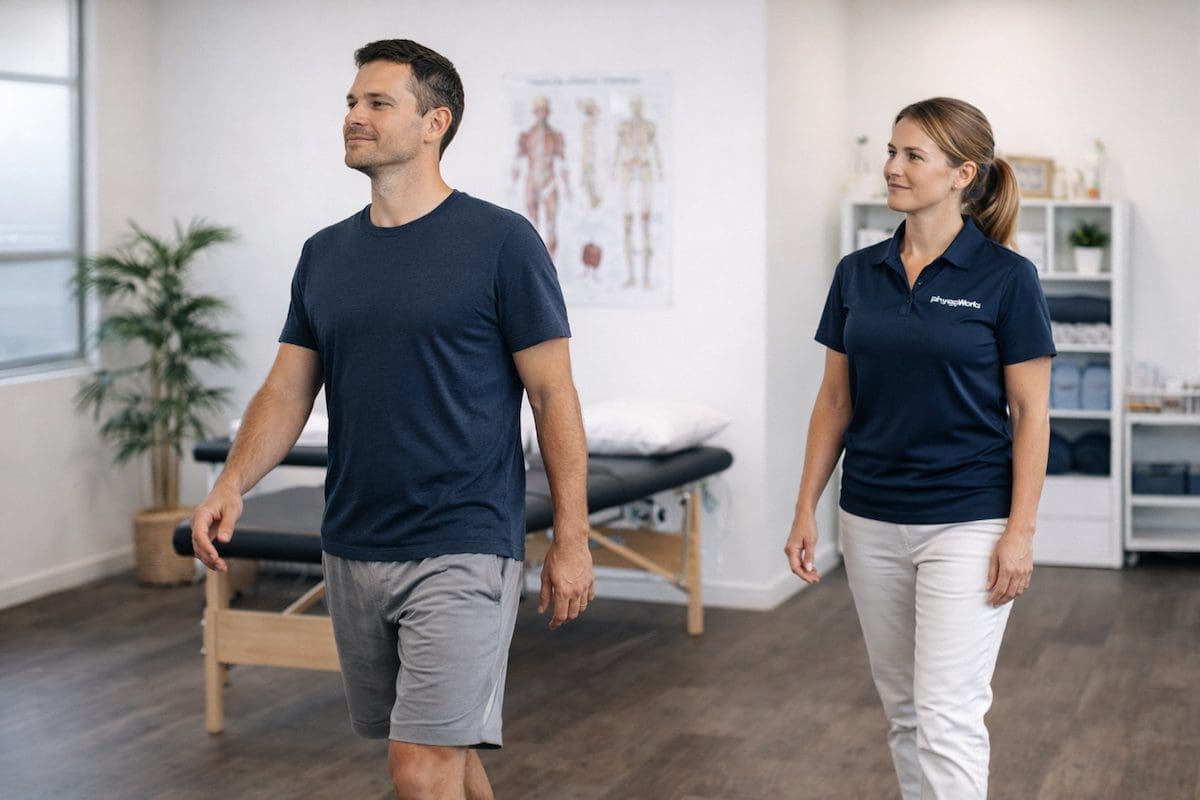
Knee pain FAQs knee joint control during supported step up

Guided loading builds knee confidence.

What To Do Next

If you are unsure what your knee pain means, choose the section that best matches your symptoms. If your knee is swollen, locking, giving way, or stopping normal walking, book an assessment rather than guessing.

A physiotherapist may help identify the likely cause, explain your options, and guide a safe return to walking, stairs, work, training, or sport.

Book your appointment – 24/7

Choose your preferred PhysioWorks clinic and book online.

Knee Support Products

These knee support products are commonly used by our physiotherapists to help reduce strain, improve stability, and support your recovery at home.

View all knee support products

Follow PhysioWorks

Get free physiotherapy tips, exercise videos, recovery advice, and blog updates.

Facebook Instagram YouTube B X Email PhysioWorks

References

  1. Noorduyn JCA, van de Graaf VA, Willigenburg NW, et al. Effect of physical therapy vs arthroscopic partial meniscectomy in people with degenerative meniscal tears: five-year follow-up of the ESCAPE randomised clinical trial. JAMA Netw Open. 2022;5(7):e2220394. doi:10.1001/jamanetworkopen.2022.20394
  2. Kotsifaki R, Korakakis V, King E, et al. Aspetar clinical practice guideline on rehabilitation after anterior cruciate ligament reconstruction. Br J Sports Med. 2023;57(9):500-514. doi:10.1136/bjsports-2022-106158
  3. Lawford BJ, Hall M, Hinman RS, et al. Exercise for osteoarthritis of the knee. Cochrane Database Syst Rev. 2024;12(12):CD004376. doi:10.1002/14651858.CD004376.pub4
Article by John Miller & Erin Runge
Physiotherapist assessing calf muscle tenderness in patient presenting with calf pain symptoms
Physiotherapist assessing the gastrocnemius muscle during a calf pain examination.

Common Causes of Calf Pain

Common causes of calf pain include muscle strain, Achilles tendon overload, cramping, referred nerve pain, and more serious problems such as deep vein thrombosis. If your symptoms are limiting walking, sport, or daily activity, it helps to compare your pain with other calf pain conditions so you can decide what to do next.

Calf pain can feel tight, sharp, cramping, heavy, or tender to touch. Sometimes it starts suddenly during sport. In other cases, it builds gradually with walking, running, hills, or repeated loading. The location of your pain, how it started, and what aggravates it can all help point towards the most likely cause.

What Is the Calf?

The calf is made up mainly of the gastrocnemius and soleus muscles. These muscles help you walk, run, jump, climb stairs, and push off the ground. The calf also works closely with the Achilles tendon, knee, ankle, and lower-leg circulation, so pain in this region is not always just a muscle problem.

Quick Clues That Help Identify Calf Pain

  • Sharp pain during sprinting or pushing off often suggests a calf strain.
  • Morning stiffness or pain with calf raises may point to Achilles tendinopathy.
  • Tight, cramping, exercise-related pain may reflect overload, fatigue, or muscle cramps.
  • Tightness that predictably worsens during exercise can occur with compartment syndrome.
  • Calf pain with swelling, heat, or redness needs urgent medical assessment to exclude a blood clot.

1. Calf Strain

A calf strain is one of the most common causes of sudden calf pain. It often happens during sprinting, jumping, lunging, or a quick change of direction. Many people feel a sharp pull or stabbing pain, followed by tenderness, limping, and sometimes bruising. Read more about calf strain and tear treatment.

2. Achilles Tendinopathy

Achilles tendinopathy can cause pain at the lower calf or just above the heel. It often develops gradually with running, hill work, jumping, or sudden training increases. Morning stiffness, tenderness, and pain during calf raises are common.

3. Achilles Rupture

An Achilles rupture usually causes sudden pain at the back of the lower leg, often with a popping sensation or a feeling that someone kicked the leg. Walking becomes difficult, and pushing off is often weak or impossible. This needs prompt assessment.

4. Compartment Syndrome

Compartment syndrome causes pressure to build inside the lower-leg muscle compartments. Symptoms often include tightness, cramping, pain with exercise, and sometimes tingling or weakness. Acute compartment syndrome is a medical emergency.

5. Muscle Cramps

Muscle cramps are common after fatigue, dehydration, or training overload. They usually cause a sudden gripping or knotting feeling in the calf. Although cramps often settle quickly, repeated episodes can point to load, recovery, or conditioning issues.

6. Referred Nerve Pain

Not all calf pain starts in the calf. Sometimes symptoms refer from the lower back, especially with sciatica or other nerve irritation. In these cases, the calf may feel tight, sore, tingling, or weak even though the primary source is higher up the chain.

7. Deep Vein Thrombosis (DVT)

A blood clot in the leg can also cause calf pain. This is more urgent than a typical muscle injury. Red flags include swelling, warmth, redness, unexplained tenderness, or pain that does not fit a clear exercise injury pattern. If these symptoms are present, seek immediate medical care rather than self-managing it.

Why Calf Pain Sometimes Hurts When Walking

Walking pain often reflects a loss of load tolerance in the calf muscles, Achilles tendon, or nearby tissues. It can also occur with nerve-related pain or circulation problems. If your calf pain worsens with walking but eases with rest, the pattern helps narrow the likely source and guide the next step.

Risk Factors for Calf Pain

Common risk factors include sudden training spikes, poor calf strength, limited ankle mobility, previous calf injury, inadequate warm-up, poor recovery, dehydration, and footwear changes. People returning to exercise, runners, and court-sport athletes often place high repeated loads through the calf complex.

How Calf Pain Is Diagnosed

A physiotherapist will usually assess where your pain sits, how it started, what movements reproduce symptoms, and whether you have swelling, weakness, bruising, or altered walking. In more complex cases, imaging such as ultrasound or MRI may help clarify the diagnosis, especially if a tear, tendon injury, or clot is suspected.

How Physiotherapy Helps Calf Pain

Physiotherapy for calf pain often includes load management, mobility work, progressive calf strength, tendon or muscle rehabilitation, and a staged return to walking, running, or sport. Your program depends on whether the problem is muscular, tendon-related, nerve-related, or part of a broader leg pain presentation.

Prevention Strategies

You can often reduce the risk of calf pain by building calf strength gradually, warming up before sport, progressing training loads sensibly, staying hydrated, and managing recovery between sessions. Supportive shoes and exercise progressions may also help when symptoms relate to walking or running volume. For walking-related overload patterns, see walking injuries.

When to Seek Help Urgently

Seek urgent medical care if your calf pain is associated with marked swelling, redness, warmth, chest pain, shortness of breath, an inability to weight-bear, or a sudden snap with major weakness. These features may indicate a clot, rupture, or another condition that needs prompt medical review.

Calf Pain FAQs

Why does my calf hurt after walking?

Calf pain after walking commonly comes from muscle overload, reduced calf strength, Achilles tendon irritation, or a return to activity that has progressed too quickly. If symptoms keep recurring, a physiotherapy assessment can help identify whether the source is muscular, tendon-related, nerve-related, or linked to walking mechanics.

What should I do for a pulled calf muscle?

A pulled calf muscle usually responds best to early load reduction, gentle movement, and a staged strengthening plan rather than complete rest for too long. The right program depends on the size and location of the injury, so more persistent or severe pain is worth checking properly.

How can I prevent calf cramps?

Calf cramp prevention often includes improving conditioning, hydration, recovery, and training balance. In some people, repeated cramps also relate to fatigue, sudden loading, or poor pacing, so the best solution is not always stretching alone.

When is calf pain serious?

Calf pain is more serious when it comes with swelling, redness, warmth, shortness of breath, major weakness, or a sudden popping sensation. These patterns can suggest a blood clot, Achilles rupture, or another condition that needs urgent medical assessment.

Related Conditions

  1. Calf Pain
  2. Calf Strain
  3. Achilles Tendinopathy
  4. Achilles Rupture
  5. Compartment Syndrome
  6. Leg Pain

What to Do Next

If your calf pain is new, recurring, or stopping you from walking, running, or training normally, it is worth getting the diagnosis clarified early. The best treatment plan depends on whether the issue is a muscle strain, tendon overload, nerve referral, or a more urgent medical cause.

A physiotherapist can assess the source of your symptoms and guide a practical rehab plan to help you settle pain, rebuild strength, and return to activity with more confidence.

Book your appointment – 24/7

Choose your preferred PhysioWorks clinic and book online.

Follow PhysioWorks

Get free physiotherapy tips, exercise videos, recovery advice, and blog updates.

Facebook Instagram YouTube B X Email PhysioWorks

References

  1. de Jonge S, et al. The tendon unit: biochemical, biomechanical, hormonal influences and pathophysiology in tendinopathy. Sports Med Open. 2021;7(1). doi:10.1186/s40798-021-00364-0
  2. McAtee B, et al. Dry needling: a clinical commentary. Int J Sports Phys Ther. 2022;17(5):971-985. doi:10.26603/001c.35693
  3. Deep vein thrombosis (DVT). Healthdirect Australia. Accessed March 9, 2026.
You've just added this product to the cart: