

FAQs

Frequently Asked Questions


How Can You Get Headache and Migraine Relief?

Headaches and migraines can interfere with work, sleep, and daily activities. If you are looking for headache and migraine relief, the first step is identifying the type of headache you are experiencing. Our main Headache Physiotherapy page explains causes, symptoms, and management options in more detail.

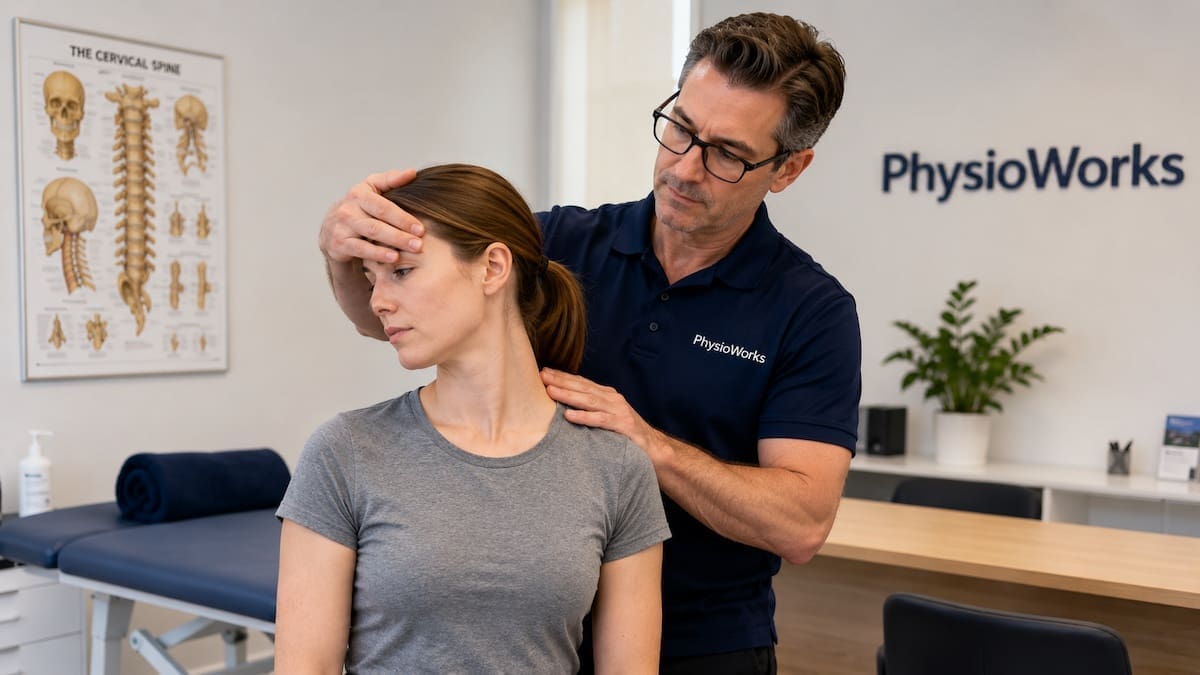
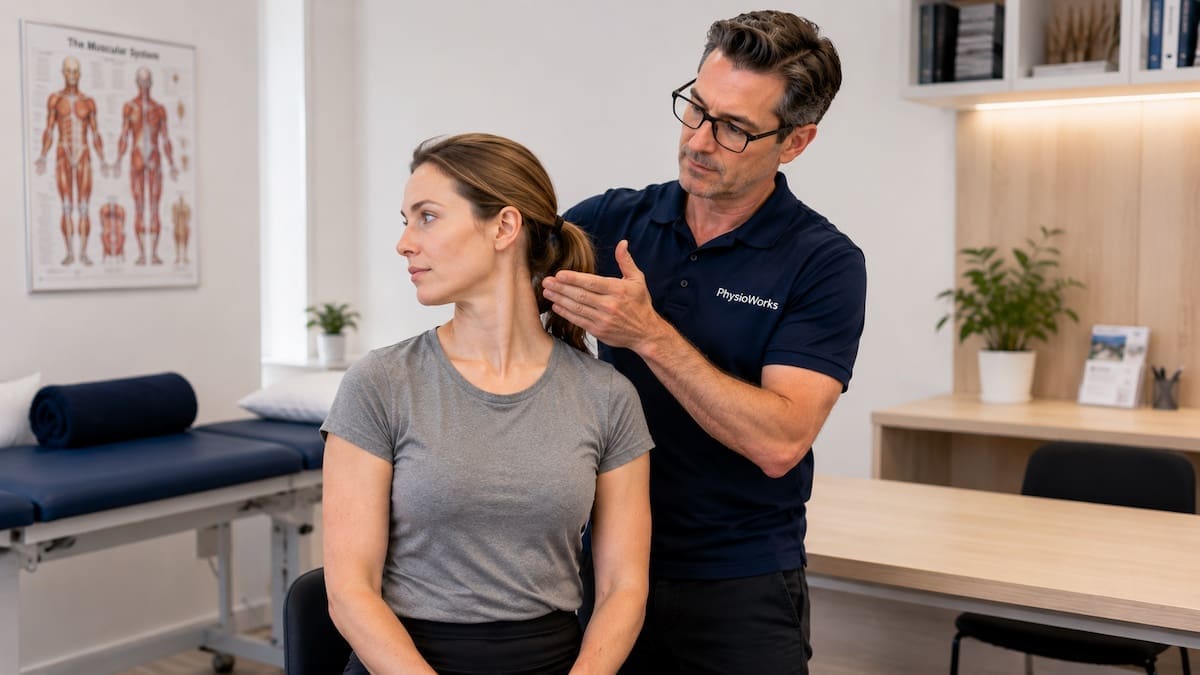
Headache and migraine relief physiotherapy neck assessment in Brisbane clinic
Physiotherapy assessment to identify neck and musculoskeletal contributors to headaches and migraines.

Short Answer

Headache and migraine relief depends on the underlying cause. Many headaches relate to neck joints, muscles, posture, jaw tension, or stress. After medical causes are excluded, physiotherapy may help reduce frequency and intensity through targeted exercises, manual therapy, posture advice, and load management.

Common Causes of Headaches and Migraines

Different headache types require different approaches. At PhysioWorks, we commonly assess:

Neck-related headaches often begin at the base of the skull and move forward. Tension headaches may feel like a tight band around the head. TMJ headaches can include jaw pain or clicking. Migraines may involve light sensitivity, nausea, or visual disturbance.

When Should You See a Doctor First?

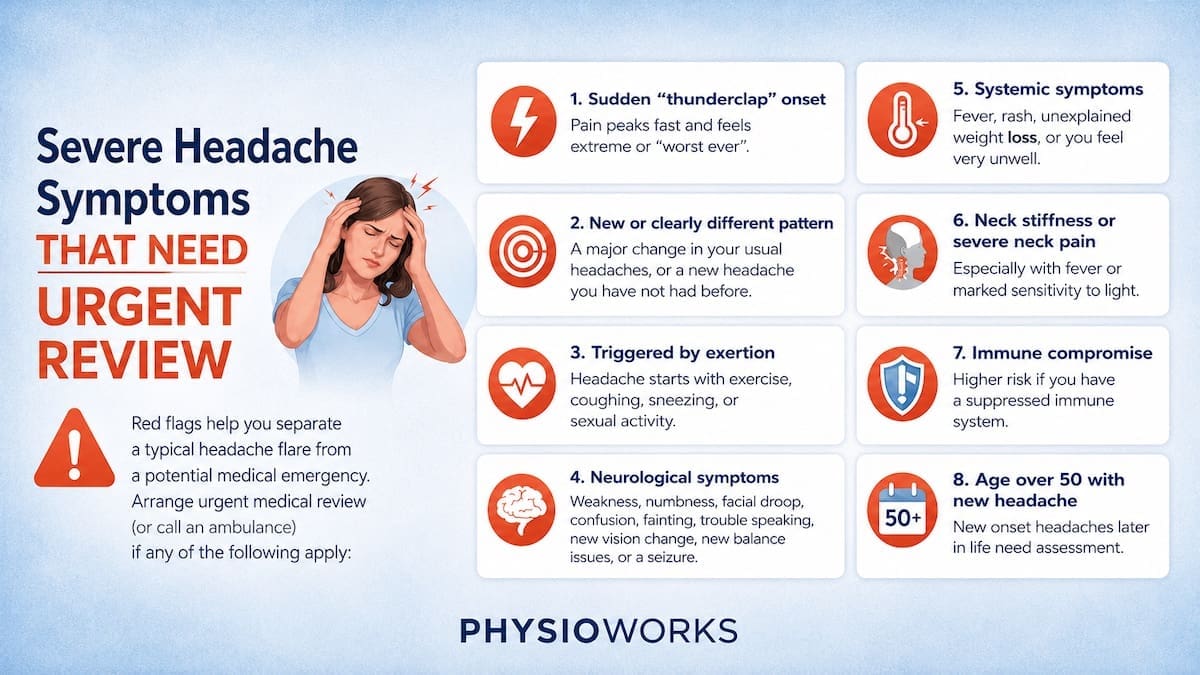
Sudden severe headache, neurological symptoms, fever, or a major change in pattern should be assessed by a doctor. Imaging such as CT or MRI may be used to exclude serious causes. If scans are clear, assessment can then focus on musculoskeletal or functional contributors to headache and migraine relief. For red flag guidance, see Headache Red Flags.

For public health guidance, see Healthdirect Australia – Headache Overview.

How Physiotherapy May Help Headache and Migraine Relief

Once serious causes are excluded, physiotherapy may assist headache and migraine relief by addressing contributing factors such as:

  • Reduced neck mobility (often linked with neck pain)
  • Muscle tension and trigger points
  • Postural overload and prolonged screen time
  • Jaw dysfunction (see jaw pain and TMJ disorders)
  • Stress-related muscle guarding and breathing patterns

Management may include dry needling, acupuncture, specific strengthening exercises, posture retraining, and ergonomic advice. Treatment plans are individualised based on assessment findings.

Why Do Some Headaches Keep Returning?

Recurring headaches often develop due to cumulative load rather than a single trigger. Long hours at a desk, screen use, jaw clenching, poor sleep, stress, or reduced neck strength can gradually increase sensitivity in the neck and upper shoulder region. Over time, this can contribute to recurring symptoms that require targeted headache and migraine relief strategies.

For some people, the nervous system becomes more sensitive following repeated episodes. This does not mean something serious is wrong, but it does mean management needs to address both mechanical and lifestyle contributors. Simply masking symptoms without identifying drivers may allow the cycle to continue.

A structured assessment can help determine whether joint stiffness, muscle tension, posture, workload, jaw function, or stress patterns are contributing. From there, a progressive plan can be developed to reduce recurrence risk and improve long-term headache and migraine relief outcomes.

What This Means for You

Most headaches are not caused by serious disease. However, persistent or recurring symptoms deserve proper assessment. Identifying the driver of your headache allows for a targeted management plan. A physiotherapy assessment can clarify whether neck, jaw, posture, or load factors are contributing and guide appropriate next steps for headache and migraine relief. If dizziness or balance symptoms occur with migraine features, you may also find this page useful: Vestibular Migraine.

Related Information

Book your appointment – 24/7
Choose your preferred PhysioWorks clinic and book online.

Neck Products

These neck products are commonly used by our physiotherapists to improve strength, posture, movement, plus assist home exercise programs.

View all neck products

Follow PhysioWorks

Get free physiotherapy tips, exercise videos, recovery advice, and blog updates.

Facebook Instagram YouTube B X Email PhysioWorks

References

Ashina M, Hansen JM, Do TP, Melo-Carrillo A, Burstein R, Moskowitz MA. Migraine and the trigeminovascular system—40 years and counting. Lancet Neurol. 2019;18(8):795-804. doi:10.1016/S1474-4422(19)30185-1. Available from: https://pubmed.ncbi.nlm.nih.gov/31160203/

Ashina M. Migraine. N Engl J Med. 2020;383(19):1866-1876. doi:10.1056/NEJMra1915327. Available from: https://pubmed.ncbi.nlm.nih.gov/33211930/

Goadsby PJ, Holland PR, Martins-Oliveira M, Hoffmann J, Schankin C, Akerman S. Pathophysiology of Migraine: A Disorder of Sensory Processing. Physiol Rev. 2017;97(2):553-622. doi:10.1152/physrev.00034.2015. Available from: https://pubmed.ncbi.nlm.nih.gov/28179394/

For research summaries and management pathways, visit our main condition page: Headache Physiotherapy

What Is the PhysioWorks Acute Sports Injury Clinic?

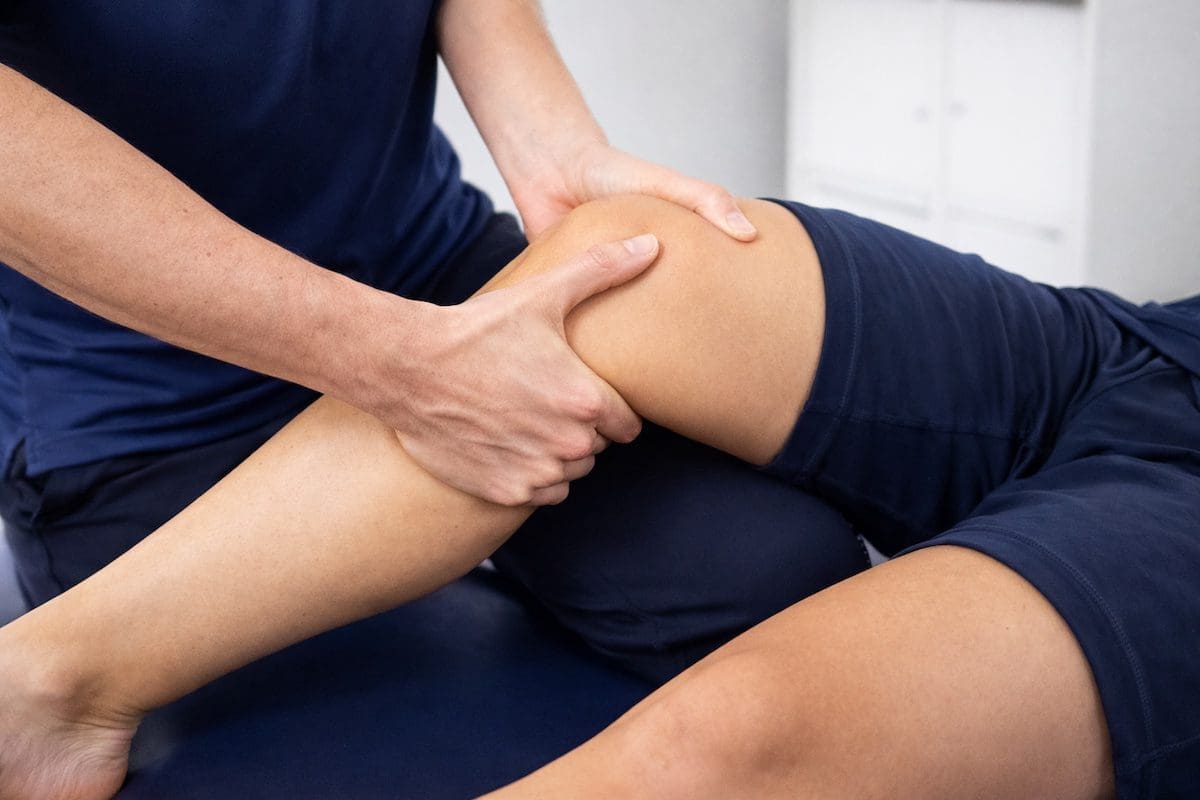
ACL Lachman test knee assessment by physiotherapist stabilising femur and tibia movement

ACL Lachman test assessing knee stability

The PhysioWorks acute sports injury clinic helps athletes and active people get an early physiotherapy assessment after a new injury. It is designed for recent sports injuries that need quick diagnosis, practical first-week advice, and a clear plan for imaging, support, or follow-up care where needed.

If you have injured yourself during training, at the gym, or over the weekend, early assessment can help you understand the problem and choose the right next step. This service fits within our broader sports injuries and sports injury physiotherapy pathway.

Quick guide

  • Best for a new sports injury that needs early assessment
  • Useful if you are unsure whether you need a scan, brace, boot, or crutches
  • Available through PhysioWorks clinics including Ashgrove, Clayfield, and Sandgate
  • Often a lower-cost entry point than a routine longer consultation

Why use an acute sports injury clinic?

An acute sports injury clinic gives you faster direction when the injury is fresh. Instead of waiting and guessing, you can get an early assessment, advice on what to do this week, and guidance on whether you need further care such as imaging, protected weight-bearing, or referral.

This can be especially helpful after a weekend injury involving swelling, bruising, reduced movement, limping, or difficulty returning to work, training, or sport. Many people also benefit from reading our guides on sports injury management, acute injury treatment, and the HARM protocol.

What happens at an acute sports injury clinic appointment?

Your physiotherapist will assess the injured area, ask how the injury happened, and check your pain, swelling, movement, strength, and function. The aim is to identify the likely injured structure, rule out more serious concerns, and give you a practical first-stage management plan.

Your appointment may include:

  • a prompt working diagnosis and injury explanation
  • advice about loading, movement, compression, support, and recovery priorities
  • guidance on whether you may need X-ray, ultrasound, or MRI referral
  • referral to a GP, Sports Physician, or surgeon if clinically appropriate
  • access to useful supports such as walking boots, braces, or rental crutches when needed
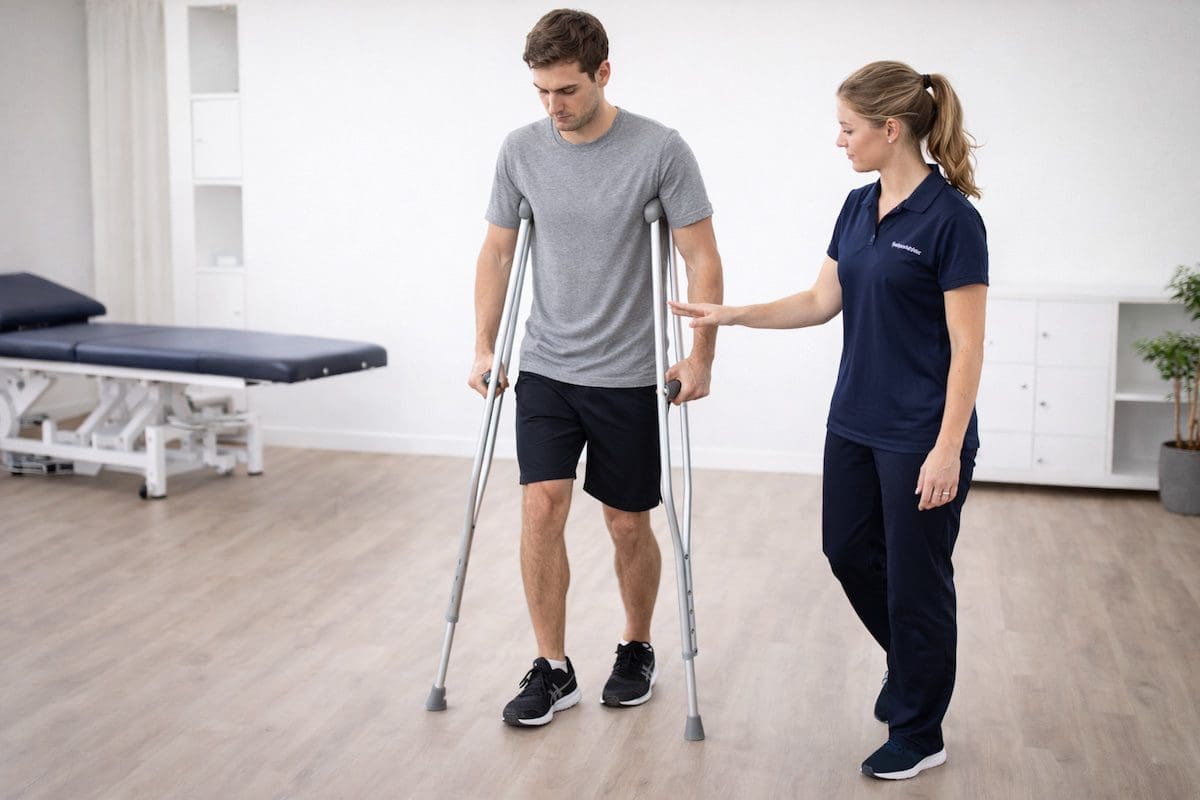
Acute injury crutch walking guidance by physiotherapist during safe partial weight bearing

Crutch walking guidance after acute lower limb injury

Using crutches correctly can help reduce pain and protect injured tissues while you recover. Early guidance can improve safety, confidence, and movement quality in the first few days after injury.

What should you do in the first 48 hours after a sports injury?

The first 48 hours after an acute sports injury are important. A simple early plan can help reduce pain, protect the injured area, and avoid doing too much too soon.

  • Protect the injured area and avoid aggravating movements
  • Modify your activity rather than pushing through pain
  • Use support such as a brace, tape, or crutches if needed
  • Monitor swelling, pain, and your ability to weight-bear

If you are unsure what is safe, an early physiotherapy assessment can give you clear guidance based on your injury.

Why does early assessment matter after a sports injury?

Early assessment matters because the first few days often shape your recovery. A good early plan can reduce confusion, help you avoid doing too much or too little, and give you a clearer path back to normal walking, training, work, or sport.

Healthdirect also notes that sprains, strains, and limb injuries may need structured management, physiotherapy, or medical review depending on severity. You can read their public guidance on sprains and strains and physiotherapy.

Who is this service best suited to?

This service is best suited to people with a recent sports or exercise injury who want early answers and a sensible plan.

It is commonly useful for ankle sprains, knee ligament injuries, muscle strains, calf injuries, shoulder injuries, and other sudden sports-related problems. You may also find these pages useful: sports health, youth sports injuries, and sports injury insurance.

Is this acute injury clinic right for you?

If you have a new injury and are unsure what to do, this service is designed to give you clarity quickly. It is particularly helpful if you are deciding whether you need imaging, a brace, crutches, or follow-up care.

If your goal is to understand your injury early and avoid setbacks, booking an acute injury assessment is often the best first step.

When should you seek urgent medical review instead?

You should seek urgent medical review if you cannot weight-bear, have major deformity, severe swelling, suspected fracture, repeated giving way, large joint locking, head injury symptoms, or other concerning symptoms. In these situations, emergency or same-day medical care may be more appropriate than a routine physiotherapy appointment.

Fee and cover information

The acute sports injury consultation fee is typically lower than a full assessment. Private health cover may reduce your out-of-pocket cost depending on your policy.

What to do next

If you have picked up a new sports injury and are unsure what to do first, book an early physiotherapy assessment. A PhysioWorks clinician can assess the injury, explain the likely diagnosis, and guide your next steps.

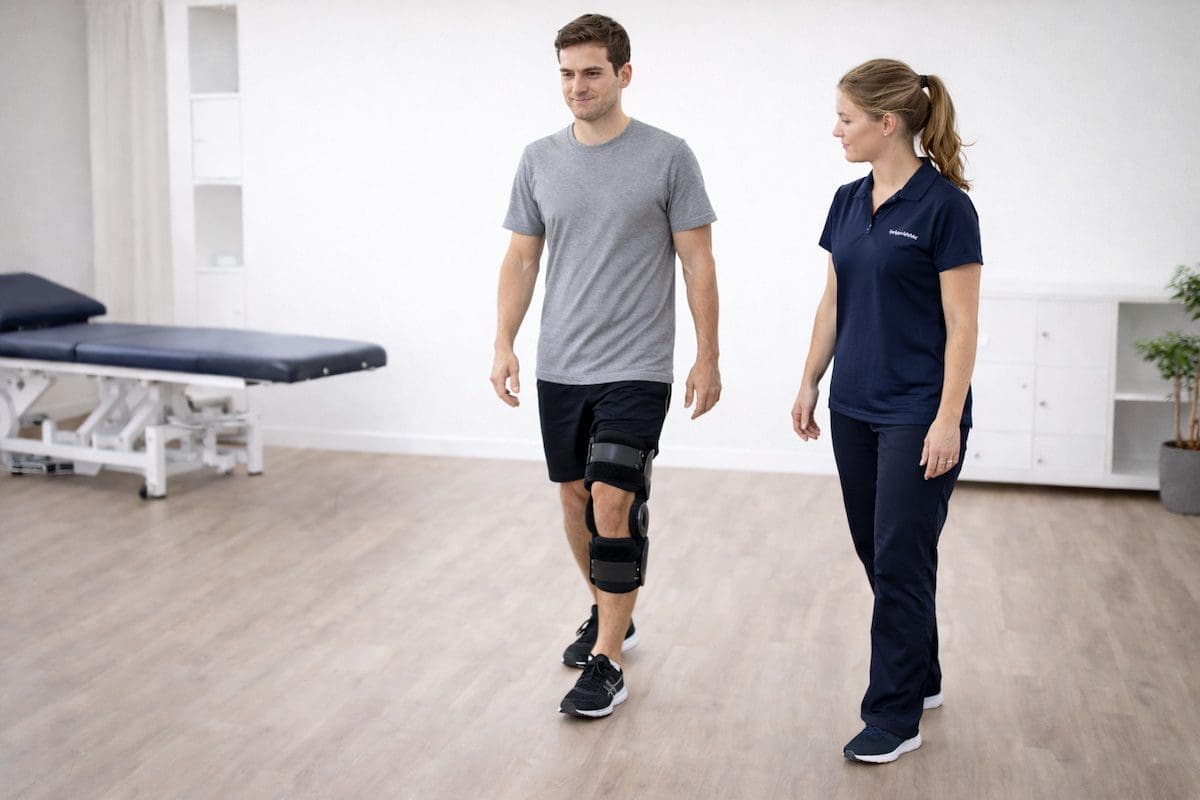
knee injury recovery walking in knee brace with physiotherapist observing gait

Walking confidently after knee injury recovery

Early recovery focuses on safe supported walking, building confidence, and progressing activity step by step.

Book your appointment – 24/7

Choose your preferred PhysioWorks clinic and book online.

Follow PhysioWorks

Get free physiotherapy tips, exercise videos, recovery advice, and blog updates.

Facebook Instagram YouTube B X Email PhysioWorks

References

  1. Racinais S, Dablainville V, Rousse Y, et al. Cryotherapy for treating soft tissue injuries in sport medicine: a critical review. Br J Sports Med. 2024;58(20):1215-1223. doi:10.1136/bjsports-2024-108304
  2. Kotsifaki R, Korakakis V, Whiteley R, et al. Aspetar clinical practice guideline on rehabilitation after anterior cruciate ligament reconstruction. Br J Sports Med. 2023;57(9):500-514.
  3. Healthdirect. Sprains and strains. Accessed April 12, 2026.
  4. Healthdirect. Physiotherapy. Accessed April 12, 2026.

What Is Physiotherapy?

What is physiotherapy physiotherapist assessment and patient education in clinic

What Is Physiotherapy?

Physiotherapy is a healthcare profession that assesses, diagnoses, treats, and helps prevent movement problems, pain, stiffness, and physical dysfunction. A physiotherapist uses hands-on care, movement assessment, education, and exercise-based rehabilitation to help people move better and return to work, sport, and everyday life.

If you are comparing providers, it can also help to learn more about PhysioWorks physiotherapists, our Brisbane clinics, and the conditions commonly managed through musculoskeletal physiotherapy.

Who Is a Physiotherapist?

A physiotherapist is a university-qualified health practitioner trained to assess how your body moves and identify what may be contributing to pain, reduced mobility, weakness, dizziness, jaw dysfunction, headaches, or sports-related problems. In Australia, physiotherapists work across private practice, hospitals, rehabilitation, aged care, community health, and sporting environments.

  • Movement and functional assessment
  • Hands-on treatment where appropriate
  • Exercise prescription and rehabilitation planning
  • Pain and injury education
  • Advice about activity, work, sport, and recovery

What Does a Physiotherapist Do?

A physiotherapist looks at how your symptoms affect movement, strength, flexibility, control, and function. Then they build a treatment plan that matches your diagnosis, goals, and stage of recovery. Depending on the problem, that may include manual therapy, guided exercise, load management, posture advice, balance retraining, or a progressive return-to-sport plan.

Physiotherapists commonly help people with spinal pain, sports injuries, headaches, jaw pain, vestibular and dizziness problems, plus women’s health and men’s health presentations.

How Can Physiotherapy Help?

Physiotherapy may help reduce pain, restore movement, improve strength, and increase confidence with everyday activity. Many people also use physiotherapy to improve performance, manage recurring flare-ups, recover after surgery, or reduce the risk of future injury.

A physiotherapist may recommend a combination of education, movement retraining, mobility work, strengthening, balance work, and gradual return to activity. The exact mix depends on your symptoms, assessment findings, medical history, and goals.

What Happens at a Physiotherapy Appointment?

Your first appointment usually includes a discussion about your symptoms, a movement assessment, and a clear explanation of what may be contributing to the problem. After that, your physiotherapist may begin treatment and explain the next steps of your rehabilitation plan.

You may also receive advice about pacing, exercise, posture, work setup, training loads, or home management strategies. For a broader public-health overview of the profession, Healthdirect also explains physiotherapy and how it may help a wide range of conditions.

Do You Need a Referral to See a Physiotherapist?

In many cases, no referral is needed to see a physiotherapist in private practice. However, some funding pathways, compensable claims, team-care arrangements, or specialist programs may have different requirements. If you are unsure, your nearest clinic can explain the most suitable booking pathway.

Are Physiotherapists Registered in Australia?

Yes. In Australia, physiotherapists must be registered to practise. Registration helps ensure practitioners meet professional standards and ongoing requirements. You can also check practitioner registration information through the Physiotherapy Board of Australia.

Frequently Asked Questions

Is physiotherapy only for sports injuries?

No. Physiotherapy helps much more than sports injuries. It is commonly used for back pain, neck pain, joint injuries, post-operative rehabilitation, dizziness, headaches, jaw problems, arthritis, balance issues, and activity-related pain.

Can physiotherapy help without surgery?

Many people find physiotherapy helpful as part of non-surgical management. A physiotherapist may guide exercise, movement retraining, load modification, and self-management strategies to help improve function and reduce symptoms.

What should I wear to physiotherapy?

Wear comfortable clothing that allows movement and easy access to the body region being assessed. For example, shorts may help for knee or hip problems, while a singlet or loose shirt may help for shoulder assessment.

How many physiotherapy sessions will I need?

That depends on your diagnosis, how long the problem has been present, your goals, and how your body responds to treatment. Some people need only short-term guidance, while others benefit from a staged rehabilitation plan over several weeks.

What to Do Next

If pain, stiffness, weakness, dizziness, or reduced function is affecting your work, sport, or daily routine, a physiotherapy assessment may help clarify what is happening and what treatment options are most appropriate.

PhysioWorks can help guide you towards the right clinician and clinic for your needs. Booking early can also help you start a clear rehabilitation plan sooner.

Book your appointment – 24/7

Choose your preferred PhysioWorks clinic and book online.

Follow PhysioWorks

Get free physiotherapy tips, exercise videos, recovery advice, and blog updates.

Facebook Instagram YouTube B X Email PhysioWorks

References

  1. Healthdirect. Physiotherapy. Healthdirect Australia. Accessed March 12, 2026.
  2. Physiotherapy Board of Australia. Registration. Accessed March 12, 2026.
  3. Fischer M, Bui E, Besombes L, et al. Systematic review of direct access physiotherapy for musculoskeletal conditions in primary care: consequences for general practitioner workload, resource use, and organisation of care. BMC Prim Care. 2026;27(1):75. doi:10.1186/s12875-026-03186-9
  4. Champoux M, Hudon C, Déry V, et al. Roles of physiotherapists in primary care teams: a scoping review. BMC Prim Care. 2025;26(1):56. doi:10.1186/s12875-025-02725-8

What Is Sports Physiotherapy?

Sports physiotherapy focuses on assessing, treating, rehabilitating, and helping prevent injuries linked to sport and exercise. It supports athletes and active people through injury recovery, load management, return-to-sport planning, and performance-focused rehabilitation. If you want broader context, start with our sports injuries hub or explore our sports physiotherapy Brisbane service page.

Sports physiotherapy is a type of physiotherapy that treats and helps prevent injuries related to sport and exercise, while guiding people back to training and competition safely.

At PhysioWorks, sports physiotherapy is not just for elite athletes. It may help juniors, weekend warriors, gym-based exercisers, runners, and team sport players who need a plan that matches the physical demands of their sport, training, and recovery.

Sports Physiotherapy at a Glance

  • Assesses sport-specific movement, strength, and training load
  • Helps manage acute injuries and overuse conditions
  • Supports safe and confident return to sport
  • Builds performance, resilience, and injury prevention strategies

What is sports physiotherapy?

Sports physiotherapy is a branch of physiotherapy that focuses on injuries, movement demands, and rehabilitation linked to training, exercise, and sport. It combines clinical assessment with sport-specific rehab so people can recover well, rebuild capacity, and return to activity with more confidence.

Sports injuries often differ from everyday aches because sport places repeated and sometimes high-level loads on muscles, tendons, ligaments, joints, and bones. That is why sports physiotherapy usually looks beyond pain alone and considers factors such as sprinting, jumping, cutting, kicking, throwing, contact, fatigue, and workload spikes.


How is sports physiotherapy different from general physiotherapy?

Sports physiotherapy usually places more emphasis on training load, performance demands, return-to-sport testing, and injury prevention. General physiotherapy may still treat sports injuries well, but sports physiotherapy is more likely to build rehab around the specific movements and goals of your activity.

For example, a runner may need a plan based on mileage progression and running mechanics, while a footballer may need change-of-direction drills, kicking tolerance, and match-readiness testing. If your injury needs fast early assessment, our Acute Sports Injury Clinic may also help.


Who may benefit from sports physiotherapy?

Sports physiotherapy may help anyone whose pain or injury relates to exercise, training, competition, or repeated physical loading. That includes school athletes, recreational exercisers, masters athletes, gym members, and people returning to sport after time away.

  • Field and court sport athletes
  • Runners and endurance athletes
  • Gym and CrossFit participants
  • Racquet sport players
  • Dancers and active teenagers
  • Adults returning to exercise

If you are managing youth-related issues, you may also find our kids sports injuries guide useful.


What does a sports physiotherapist assess?

A sports physiotherapist assesses the injured area, but also looks at why the problem developed and what demands your sport places on you. That wider view helps shape a plan that is safer, more practical, and more specific to your goals.

Your assessment may include strength, flexibility, joint movement, balance, control, running or landing mechanics, training history, previous injury, and return-to-play goals. For some athletes, sports physiotherapy also overlaps with broader sports health topics such as concussion, heat illness, recovery, and load planning.


What injuries can sports physiotherapy help treat?

Sports physiotherapy may help with many acute and overuse injuries. Common examples include muscle strains, tendon pain, ligament sprains, joint injuries, and recurring overload problems linked to poor load progression or incomplete rehabilitation.

Common examples include knee sports injuries, hamstring strains, calf tears, ankle sprains, shoulder pain in throwing sports, tendon pain, and return-to-sport rehabilitation after surgery. Many people also combine physiotherapy with sports massage or sports recovery massage when appropriate.


When should you see a sports physiotherapist?

You should consider sports physiotherapy when pain is affecting training, movement quality, confidence, or performance. Early assessment often helps clarify the problem, reduce guesswork, and stop a minor issue from becoming a longer interruption.

When to act: Book a sports physiotherapy assessment if your pain is not improving, keeps returning, or is affecting your training, movement, or confidence.

It is especially sensible to book if your symptoms are not settling, keep returning, or involve swelling, weakness, instability, locking, sharp pain, or reduced sporting confidence. If you are trying to judge readiness after an injury, our Return to Sport Testing guide is a useful next read.


Can sports physiotherapy help prevent injuries?

Yes. Sports physiotherapy may help reduce injury risk by identifying weaknesses, movement issues, training errors, and recovery patterns that increase stress on the body. Prevention usually works best when it is practical, sport-specific, and built into your normal training routine.

This may include strength work, landing control, sprint preparation, mobility, warm-up planning, or load progression advice. For a simple public overview of how physiotherapy supports movement and recovery, Healthdirect also provides general information about physiotherapy.


Common Questions About Sports Physiotherapy

Do I need to be an elite athlete to have sports physiotherapy?

No. Sports physiotherapy suits anyone whose pain or injury is linked to exercise or sport. Many patients are recreational runners, gym users, or team sport players who simply want to recover well and return to activity safely.

Does sports physiotherapy only focus on injuries?

No. It also looks at prevention, training load, movement quality, and return-to-sport readiness. In many cases, the aim is not just to settle pain but to reduce recurrence and improve confidence in training or competition.

Can sports physiotherapy help after surgery?

Yes. Sports physiotherapy is commonly used after ACL reconstruction, shoulder surgery, ankle stabilisation, and other procedures that need progressive rehabilitation. Rehab is usually guided by healing, strength, function, and sport demands rather than time alone.

How long does sports physiotherapy take to work?

That depends on the diagnosis, tissue healing, load demands, and how early treatment starts. Some minor injuries improve within weeks, while tendon, bone, ligament, or post-operative rehabilitation may take much longer and need staged progression.

Can sports physiotherapy help with sports insurance claims?

It can often help by documenting your injury, assessment findings, treatment plan, and functional progress. If your injury happened during registered sport, you may also need to review your policy and claim process through our sports injury insurance page.


Related sports physiotherapy articles

What to Do Next

If your injury is affecting your training or performance, a sports physiotherapist can assess the issue and guide your recovery. Early advice often helps reduce downtime and improve your return to sport.

Next step: Book an appointment and bring details about your sport, training load, and symptoms so your plan can match your goals.

Book your appointment – 24/7

Choose your preferred PhysioWorks clinic and book online.

Follow PhysioWorks

Get free physiotherapy tips, exercise videos, recovery advice, and blog updates.

Facebook Instagram YouTube B X Email PhysioWorks

References

  1. Cronström A, Tengman E, Häger CK. Risk factors for graft rupture following anterior cruciate ligament reconstruction and return to sport: a systematic review and meta-analysis. Br J Sports Med. 2022;56(8):418-429. doi:10.1136/bjsports-2021-104658
  2. Paster E, Sayeg A, Armistead S, Feldman MD. Rehabilitation Using a Systematic and Holistic Approach for the Injured Athlete Returning to Sport. Arthrosc Sports Med Rehabil. 2022;4(1):e141-e149. doi:10.1016/j.asmr.2021.10.021
  3. Yung PSH, Bittencourt NFN, Wang HK, et al. Characteristics of complex systems in sports injury rehabilitation: examples and implications for practice. Sports Med Open. 2022;8(1):21. doi:10.1186/s40798-022-00433-8

What is musculoskeletal physiotherapy and how does it help?

Musculoskeletal physiotherapy focuses on assessing and managing conditions that affect muscles, joints, tendons, ligaments, and nerves. People often seek care for pain, stiffness, injury recovery, or movement limits that affect daily activities, work, or sport.

what is musculoskeletal physiotherapy assessment of upper back and shoulder posture

Physiotherapist assessing upper back and shoulder movement during a musculoskeletal physiotherapy session.

What is musculoskeletal physiotherapy?

What is musculoskeletal physiotherapy in practical terms? It is a structured assessment and treatment approach that looks at how your joints, muscles, and nervous system work together. Your physiotherapist assesses how you move, what reproduces symptoms, and which everyday loads (work, training, lifting, sitting, walking) may be contributing.

Short answer

Musculoskeletal physiotherapy uses clinical assessment, movement analysis, and targeted treatment strategies to help manage pain, restore movement, and improve function. It is commonly recommended for back pain, neck pain, joint injuries, tendon conditions, and ongoing musculoskeletal symptoms.

For a full overview of assessment and treatment pathways, visit our musculoskeletal physiotherapy service page.

What does musculoskeletal physiotherapy treat?

Although each person presents differently, musculoskeletal physiotherapy often helps people manage problems linked to movement and load. Examples include:

  • Back and neck pain (acute flare-ups or persistent symptoms)
  • Shoulder, elbow, wrist, hip, knee, and ankle pain
  • Tendon pain (for example, Achilles, patellar, rotator cuff)
  • Sports and work-related strains and sprains
  • Joint stiffness and movement restriction
  • Recurring pain linked to poor load tolerance or reduced strength

What happens in an assessment?

A session usually starts with questions about your symptoms, training or work demands, and what makes symptoms better or worse. Next, your physiotherapist checks movement, strength, joint control, and relevant tests. After that, you’ll discuss likely contributing factors and agree on a plan that matches your goals.

How musculoskeletal physiotherapy may help

A musculoskeletal physiotherapist considers how your body moves as a system. Management plans often aim to settle symptom drivers while improving strength, flexibility, coordination, and tolerance to daily or sporting loads.

  • Managing muscle and joint pain
  • Supporting recovery after injury or surgery
  • Improving movement control, strength, and confidence
  • Guiding a safe return to work, activity, or sport
  • Reducing recurrence risk through education and exercise

How many sessions do people usually need?

This depends on the condition, symptom duration, training or work demands, and how your body responds. Many people start with an initial plan and a review timeframe. Your physiotherapist can then adjust frequency based on progress and your goals.

What this means for you

If pain, stiffness, or movement restriction persists, keeps returning, or limits your normal life, a tailored assessment can help clarify what to address first. Your physiotherapist may recommend exercises, hands-on techniques, load changes, or activity modifications. Importantly, recommendations vary based on your presentation and preferences.

Musculoskeletal physiotherapy is also commonly used to guide long-term self-management. This may include advice on pacing, posture, lifting strategies, and gradual activity progression. For many people, learning how to manage flare-ups and adjust load over time is just as important as early symptom relief.

To learn more about the scope of care and booking options, see our main page on musculoskeletal physiotherapy.

Related information

Book your appointment – 24/7

Choose your preferred PhysioWorks clinic and book online.

Muscle & Soft Tissue Products

These muscle and soft tissue products are commonly used by our physiotherapists to relax or loosen muscles, improve strength, comfort, flexibility, and home exercise programs.

View all muscle & soft tissue products

Follow PhysioWorks

Get free physiotherapy tips, exercise videos, recovery advice, and blog updates.

Facebook Instagram YouTube B X Email PhysioWorks

What Is Tendinopathy and How Is It Treated?

Article by John Miller & Erin Runge
What is tendinopathy Achilles tendon calf raise rehabilitation with physiotherapist

Guided loading helps rebuild tendon capacity.

What is tendinopathy? Tendinopathy is tendon pain linked with reduced load tolerance. It can develop when a tendon is exposed to more load than it can adapt to or recover from.

This may cause local tendon pain, stiffness, and reduced tolerance for exercise, work, or sport. A common example is Achilles tendinopathy. Similar tendon problems can affect the shoulder, elbow, hip, knee, ankle, and wrist.

Short answer: Tendinopathy means a tendon is sore and less able to handle load. Care usually includes education, activity changes, and graded strengthening.

Symptoms often build up over time. Pain may start during training, lifting, walking, or daily tasks. Stiffness or soreness may then appear later that day or the next morning.

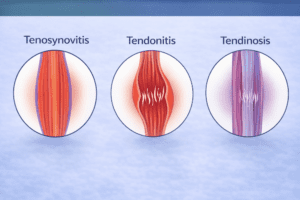
The term tendinitis is still common. However, many tendon pain problems are not mainly driven by inflammation. Modern care usually focuses on improving tendon load capacity. This may include eccentric strengthening exercises and other graded loading strategies.

For a deeper guide, visit Tendinopathy: Causes, Symptoms, Treatment & Rehabilitation.

How Does Tendinopathy Develop?

Tendons connect muscle to bone. They also store and release energy during movement. Tendon pain can develop when load increases faster than the tendon can adapt.

This can happen with running, jumping, lifting, manual work, or a sudden return to sport after time off. This pattern is often seen in conditions such as patellar tendinopathy.

Common Tendinopathy Triggers

  • Sudden increases in training load
  • More speed, hills, jumping, or lifting
  • New shoes, surfaces, equipment, or technique
  • Repeated work tasks with limited recovery
  • Returning to activity after time off
  • Strength or movement-control changes

General health can also affect tendon recovery. Sleep, age, past injury, training history, and some medical factors may change how a tendon responds.

What Are the Common Signs of Tendinopathy?

Tendinopathy often follows a clear pattern. Pain may start as mild and appear only during or after activity. Later, stiffness and strength loss may become more noticeable.

  • Local pain near a tendon
  • Morning stiffness or start-up pain
  • Pain that eases as you warm up, then returns later
  • Reduced strength, power, or activity tolerance
  • Tenderness when pressing the affected tendon

Swelling, heat, or redness can occur, but these signs are not always present. Sudden severe pain, bruising, or major weakness needs prompt review.

How Is Tendinopathy Assessed?

A physiotherapist assesses tendon pain by asking about your symptoms, activity loads, and goals. They may then test tendon strength, load tolerance, movement, and tender points.

Ultrasound or MRI may help in persistent or complex cases. Still, scan findings need to match your symptoms and function. Some tendon changes appear on scans without causing pain.

Tendinopathy tendonitis tendinosis and tenosynovitis comparison diagram

Tendon terms can describe different changes.

How Is Tendinopathy Treated?

Tendinopathy treatment aims to rebuild the tendon’s ability to handle load. Complete rest may ease pain for a short time, but it often does not rebuild tendon capacity.

A physiotherapy plan may include:

  • Changing painful activities without stopping all movement
  • Progressive strengthening for the affected tendon
  • Pain-monitoring advice to guide safe loading
  • Movement or technique changes where useful
  • Return-to-sport, running, or work-load planning

Some people also need guidance for related tendon problems, such as common tendon injuries, tennis elbow, or Achilles tendon pain.

Should You Rest or Keep Exercising?

Most tendon pain needs smart load changes, not complete rest. The aim is to reduce loads that flare symptoms while keeping enough safe exercise to rebuild capacity.

  • If pain is mild and settles quickly: modify and monitor activity.
  • If pain worsens during or after activity: reduce load and review your plan.
  • If strength drops suddenly: seek assessment promptly.

How Long Does Tendinopathy Take to Improve?

Recovery time varies. Early tendon pain may improve within weeks when load is adjusted early. Longer-standing tendinopathy may take several months.

The best timeline depends on the tendon involved, how long symptoms have been present, your strength, and your work or sport demands.

What To Do Next

If tendon pain keeps returning, limits activity, or feels hard to manage, get it assessed. Early guidance may reduce flare-ups and help you choose the right loading level.

For more detail, see Tendinopathy: Causes, Symptoms, Treatment & Rehabilitation.

Book your appointment – 24/7

Choose your preferred PhysioWorks clinic and book online.

Follow PhysioWorks

Get free physiotherapy tips, exercise videos, recovery advice, and blog updates.

Facebook Instagram YouTube B X Email PhysioWorks

Related Information

Frequently Asked Questions

Is tendinopathy the same as tendinitis?

Not exactly. Tendinitis means tendon inflammation. Tendinopathy is a broader term for tendon pain, stiffness, reduced strength, and lower load tolerance.

Can tendinopathy improve without surgery?

Yes. Many people improve with education, load changes, and progressive strengthening. Surgery is usually considered only after suitable conservative care has not helped enough.

How long does tendinopathy take to improve?

Recovery varies. Early tendon pain may improve within weeks. Longer-standing tendinopathy may take several months, especially when sport, lifting, running, or work demands need to rebuild.

Should you exercise with tendinopathy?

In most cases, yes, but exercise needs to be adjusted. A physiotherapist can help set a safe loading level so the tendon is challenged without repeated flare-ups.

When should tendon pain be assessed?

Book an assessment if tendon pain keeps returning, affects work or sport, causes morning stiffness, or reduces strength. Sudden severe pain or major weakness needs prompt review.

References

These references support the tendon overload, loading, and rehabilitation principles discussed in this FAQ.

  1. Cook JL, Rio E, Purdam CR, Docking SI. Revisiting the continuum model of tendon pathology: what is its merit in clinical practice and research? Br J Sports Med. 2016;50(19):1187-1191. doi:10.1136/bjsports-2015-095422
  2. Millar NL, Silbernagel KG, Thorborg K, et al. Tendinopathy. Nat Rev Dis Primers. 2021;7(1):1. doi:10.1038/s41572-020-00234-1
  3. Hijlkema A, Roozenboom C, Mensink M, Zwerver J. The impact of nutrition on tendon health and tendinopathy: a systematic review. J Int Soc Sports Nutr. 2022;19(1):474-504. doi:10.1080/15502783.2022.2104130
  4. Bordoni B, Varacallo M. Anatomy, Tendons. StatPearls. Updated 2024.

Women’s Health Physiotherapy Conditions

Women’s health physiotherapy may help assess and manage a wide range of concerns affecting pelvic floor function, continence, pregnancy, postnatal recovery, and women’s health-related pain. Common women’s health physiotherapy conditions include constipation, faecal incontinence, mastitis, pelvic floor dysfunction, pregnancy-related back pain, pelvic organ prolapse, abdominal separation, stress incontinence, and overactive bladder symptoms.

These concerns can affect comfort, confidence, exercise, daily activities, and recovery after pregnancy or birth. PhysioWorks pages across this women’s health cluster explain each condition in more detail and link to treatment-focused information where relevant.

Common Women’s Health Physiotherapy Concerns

Many women’s health physiotherapy conditions may affect:

  • bladder control
  • bowel control
  • pelvic floor strength and coordination
  • pregnancy comfort and mobility
  • postnatal recovery
  • abdominal support and core control

What are women’s health physiotherapy conditions?

Women’s health physiotherapy conditions are issues that affect pelvic floor muscle function, bladder or bowel control, pelvic support, pregnancy-related movement, or postnatal recovery. A physiotherapist may assess the way these systems are working and guide treatment, exercises, and practical changes based on your symptoms and goals.

Common women’s health physiotherapy conditions

What symptoms can these conditions cause?

Symptoms vary depending on the condition. Some women notice bladder leakage, urgency, frequency, constipation, bowel leakage, pelvic heaviness, breast pain, abdominal weakness, or lower back and pelvic pain during pregnancy or after birth. Symptoms may be mild at first, then become more noticeable during exercise, lifting, coughing, feeding, or longer days on your feet.

Why do women develop these conditions?

Women’s health physiotherapy conditions often develop through a mix of physical load, hormonal change, pregnancy, childbirth, surgery, repetitive strain, constipation, or altered muscle control. For example, pelvic floor dysfunction may contribute to stress incontinence or prolapse, while abdominal wall changes may contribute to abdominal separation.

How does physiotherapy help women’s health conditions?

Physiotherapy may help by assessing pelvic floor control, abdominal function, posture, breathing, movement, and daily activity demands. Treatment may include exercise, pelvic floor retraining, load management, continence advice, activity modification, pain management, and return-to-exercise guidance. For broader public guidance, NICE outlines non-surgical management options for pelvic floor dysfunction in women in its pelvic floor dysfunction recommendations.

Related women’s health pages

When should you seek help for women’s health physiotherapy conditions?

You should consider an assessment if symptoms are affecting your confidence, daily comfort, bladder or bowel control, exercise, pregnancy, or postnatal recovery. It is also sensible to seek help if symptoms are getting worse, recurring, or not settling with general advice.

What to do next

If one of these women’s health physiotherapy conditions sounds familiar, the next step is a tailored assessment. A physiotherapist may help clarify what is contributing to your symptoms and guide a practical management plan based on your stage of pregnancy, postnatal recovery, pelvic floor function, and goals.

You do not need to know the exact diagnosis before booking. A clear assessment can help direct you towards the most suitable advice, treatment, or exercise plan for your women’s health physiotherapy condition.

What To Do Now

  • book an assessment if symptoms affect daily comfort, continence, pregnancy, or postnatal recovery
  • make a note of when your symptoms started and what seems to aggravate them
  • bring any questions you have about exercise, pelvic floor retraining, or returning to activity

Book your appointment – 24/7

Choose your preferred PhysioWorks clinic and book online.

Follow PhysioWorks

Get free physiotherapy tips, exercise videos, recovery advice, and blog updates.

Facebook Instagram YouTube B X Email PhysioWorks

References

  1. Dumoulin C, Cacciari LP, Hay-Smith EJC. Pelvic floor muscle training versus no treatment, or inactive control treatments, for urinary incontinence in women. Cochrane Database Syst Rev. 2018;10(10):CD005654. doi:10.1002/14651858.CD005654.pub4
  2. National Institute for Health and Care Excellence. Pelvic floor dysfunction: prevention and non-surgical management. NICE Guideline NG210. 2021.
  3. Skoura A, Zacharakis D, Lamnisos D, et al. Diastasis recti abdominis rehabilitation in the postpartum period: a scoping review of current clinical practice. Arch Gynecol Obstet. 2024. doi:10.1007/s00404-024-07429-0
  4. Amir LH, Cullinane M, Garland SM, et al. Management of mastitis in breastfeeding women. Women Birth. 2024.

Women’s Health Physiotherapy Conditions FAQs

What does women’s health physiotherapy treat?

Women’s health physiotherapy may help pelvic floor dysfunction, bladder leakage, bowel symptoms, prolapse, pregnancy-related pain, postnatal recovery concerns, abdominal separation, and some breastfeeding-related issues such as mastitis or blocked ducts.

Can physiotherapy help stress incontinence?

It may help many women. Management often includes pelvic floor muscle training, breathing and pressure-control strategies, bladder advice, and exercise progression matched to your symptoms.

Can physiotherapy help pelvic organ prolapse?

Physiotherapy may help some women manage prolapse symptoms through pelvic floor retraining, pressure management, lifting advice, bowel habit support, and graded return to activity.

Is abdominal separation the same as weak core muscles?

Not exactly. Abdominal separation describes a change in the abdominal wall, while reduced core control is broader and may involve breathing, load transfer, pelvic floor function, and movement control.

When should I book a women’s health physiotherapy appointment?

Book if symptoms are limiting daily activities, exercise, pregnancy comfort, continence, or postnatal recovery, or if you want clear guidance on pelvic floor training and return to activity.

Do I need to be pregnant or postnatal to see a women’s health physiotherapist?

No. Many women seek care for bladder symptoms, bowel concerns, prolapse, pelvic floor dysfunction, or women’s health-related pain outside pregnancy and postnatal recovery.

Article by John Miller & Erin Runge

What Causes Sciatica To Flare Up?

A sciatica flare up happens when the tissues around a spinal nerve become irritated again. Common triggers include a bulging disc, a herniated disc, prolonged sitting, repeated bending, lifting, coughing, poor load tolerance, or a sudden increase in activity. Sciatica describes nerve-related leg pain that often begins with irritation in the lower back, so it helps to identify both the sciatic nerve irritation and the underlying problem driving it.

If your leg pain, pins and needles, numbness, or weakness keeps returning, a physiotherapist may help identify the main trigger and discuss the most suitable next steps.

Physiotherapist performing straight leg raise test assessing sciatic nerve irritation and sciatica flare up
Physiotherapist performing a straight leg raise test to assess sciatic nerve irritation and sciatica symptoms.

Quick Answer: Common Sciatica Flare-Up Triggers

  • Prolonged sitting or slumped posture
  • Bending, lifting, or twisting under load
  • A disc bulge or disc irritation
  • Reduced movement after a pain episode
  • Sudden increases in exercise, work, or gardening
  • Coughing, sneezing, or straining when the nerve is already sensitive
  • Other causes such as spinal stenosis, piriformis syndrome, or a pinched nerve

Why Sciatica Flares Up

Sciatica is not a diagnosis on its own. Instead, it describes symptoms that occur when the sciatic nerve, or one of the nerve roots that forms it, becomes irritated. That irritation may be mechanical, such as pressure from a disc bulge, a herniated disc, a joint, or surrounding tissue. It may also be chemical, where inflamed tissues sensitise the nerve and make it react more strongly to movement or posture.

That is why some people notice a flare-up after a long drive, a heavy lift, a weekend of gardening, or even a few days of reduced movement. Once the nerve becomes sensitive, smaller loads can feel much worse than expected. Related pages that may help explain this include lower back pain, nerve pain, and pinched nerve.

Common Causes of a Sciatica Flare Up

Understanding what triggers a sciatica flare up helps reduce recurrence. Many people experience flare-ups when spinal tissues become irritated again after prolonged sitting, heavy lifting, or sudden increases in activity.

1. Disc Bulge or Disc Herniation

A bulging disc or herniated disc is one of the most common reasons sciatica returns. Sitting, bending, lifting, and repeated flexion can increase irritation around the nerve root in some people. Symptoms often travel from the back or buttock into the thigh, calf, or foot.

2. Prolonged Sitting

Many people with sciatica feel worse when sitting too long, especially in a slumped position. Long periods at a desk, in the car, or on the couch may increase pressure on sensitive spinal structures. Changing position more often and improving your posture correction strategy may help reduce repeated aggravation.

3. Poor Load Tolerance

Sometimes the issue is not one single movement. Instead, your back and nerve become irritated because they are not coping well with the total load from work, sport, lifting, housework, poor sleep, or stress. This is one reason symptoms can flare when you suddenly do more than usual.

4. Bending, Lifting, and Twisting

Lifting with poor control, repeated bending, or combining bending with twisting may aggravate the lower back and nerve root. Safe lifting habits, pacing, and gradual strength work often help reduce recurrence risk.

5. Spinal Stenosis or Age-Related Changes

In some adults, spinal stenosis or age-related narrowing around the nerves can trigger sciatica-like leg pain. These symptoms may feel worse with walking or standing and easier when bending forward or sitting.

6. Piriformis Syndrome or Deep Gluteal Irritation

Not all sciatica-type pain starts in the spine. Piriformis syndrome may irritate the sciatic nerve around the buttock and create similar pain into the leg. A proper assessment helps separate this from lumbar nerve root irritation.

Sciatica Prevention Tips

Avoid Postures That Clearly Aggravate You

If sitting, standing, walking, or lying in one position increases your symptoms, reduce the time spent there and change position sooner. For example, if sitting becomes painful after five minutes, stand and walk before you reach that point. Many people do better with shorter bouts of sitting and more regular movement breaks.

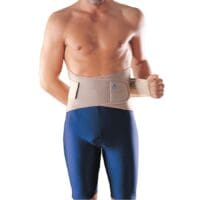
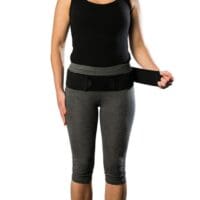
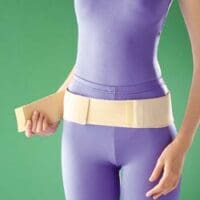
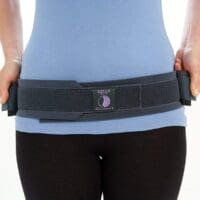
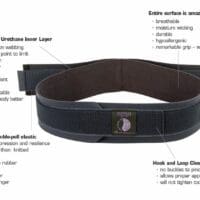
If you spend long hours sitting, external support may sometimes help. Examples include a back brace, an All Care Lumbar Support D-Roll, or a Basset Lumbar Support. These supports do not fix the cause on their own, but they may reduce aggravation while you build better movement tolerance.

Practise Good Posture

Try not to stay rigidly upright all day. Instead, aim for a comfortable posture that allows you to move often. Good posture usually means varying your position, avoiding long periods of slumping, and building enough strength and control to tolerate daily tasks. You may also find these pages helpful: posture correction and correct sitting posture.

Keep Moving

Walking is often helpful for people recovering from lower back pain and sciatica if it does not sharply increase pain. Short, regular walks may be better than one long walk during a flare-up. Some people also tolerate swimming or gentle pool exercise well. The key is to choose movement that settles rather than escalates your symptoms.

Lift Well

When lifting, keep the load close, use your hips and knees, and avoid rushed twisting. If your sciatica has been recurring, progressive strength work and core stability exercises may help improve your tolerance for daily loads.

Use a Comfortable Sleeping Position

Sleep on your side with a pillow between your knees, or on your back with a pillow under your knees if that feels easier. The best sleeping posture is usually the one that lets you relax and wake with less irritation.

Choose Supportive Footwear

High heels can shift your posture and change how your lower back and pelvis load during the day. If your back or nerve symptoms are easily aggravated, supportive footwear is often the better option.

Why Does Pinching a Nerve Hurt?

Nerves act like communication cables. They carry messages about sensation, movement, and reflexes between your spine and limbs. When a nerve becomes compressed, inflamed, or chemically irritated, it may send pain, numbness, pins and needles, or weakness along its pathway.

That is why sciatica can feel severe even when the visible movement causing it seems small. The nerve itself becomes sensitive. You can read more about this on our pinched nerve and nerve pain pages.

When Should You Seek Help?

Book an assessment if your sciatica keeps flaring up, travels further down the leg, includes pins and needles or numbness, or starts to affect your walking, sleep, work, or exercise. Prompt review is even more important if you notice increasing weakness, severe pain that is not settling, or symptoms that do not match your usual pattern.

What To Do Next

If your symptoms keep returning, the next step is to identify the real driver rather than only trying to settle the pain each time. A physiotherapist can assess whether your symptoms are more consistent with sciatica, a bulging disc, a herniated disc, spinal stenosis, piriformis syndrome, or another source of nerve-related leg pain. Once the cause is clearer, treatment can focus on settling symptoms, improving movement, and reducing flare-up risk.

Related Articles

  1. Sciatica Treatment – Learn more about causes, symptoms, and management options for sciatica.
  2. Lower Back Pain – Explore common lower back pain drivers that may also contribute to sciatic symptoms.
  3. Nerve Pain – Understand how nerve pain behaves and why it can feel sharp, burning, or electric.
  4. Spinal Stenosis – See how narrowing around the spinal nerves can cause leg pain and walking intolerance.
  5. Piriformis Syndrome – Read how buttock-based sciatic nerve irritation may mimic spinal sciatica.
  6. Spondylolisthesis – Learn how vertebral slippage may irritate nearby spinal nerves.
  7. Disc Bulge and Herniation – Review how disc irritation may trigger sciatic pain.
  8. Posture Correction – Find practical advice for reducing repeated postural strain.
  9. Ergonomics for Lower Back Pain – Improve your desk, lifting, and daily setup to reduce aggravation.
  10. Core Stability Exercises – Build better support and load tolerance for your spine.

References

  1. Healthdirect Australia. Sciatica.
  2. Mayo Clinic. Sciatica: Symptoms and causes.
  3. National Institute for Health and Care Excellence (NICE). Low back pain and sciatica in over 16s: assessment and management.
  4. Maher C, Underwood M, Buchbinder R. Low back pain. Lancet. 2021;397(10289):78-92.

Book your appointment – 24/7

Choose your preferred PhysioWorks clinic and book online.

Back Support Products

These back support products are commonly used by our physiotherapists to help reduce back pain, improve comfort, and support your recovery at home.

View all back support products

Follow PhysioWorks

Get free physiotherapy tips, exercise videos, recovery advice, and blog updates.

Facebook Instagram YouTube B X Email PhysioWorks

Massage FAQs

massage benefits

Massage FAQs answer the common questions people ask about massage therapy in Brisbane, including what massage may help, which style may suit you, and when massage is worth considering for pain, stress, tight muscles, or post-exercise soreness.

At PhysioWorks, massage is commonly used to help with muscle tension, recovery from training, and everyday aches linked to overuse, posture, or stress. It can also sit alongside broader care such as physiotherapy, muscle injury treatment, and guided rehabilitation when symptoms are more stubborn or keep returning.

Ashgrove · Clayfield · Sandgate

Massage appointments available this week. Early booking is recommended.

What do massage FAQs usually cover?

Massage FAQs usually cover what massage may help, which style may suit your goals, how sore you might feel afterwards, and when massage should be avoided or modified. They also help you decide whether you need relaxation-focused care, injury-focused treatment, or a combined plan with physiotherapy.

People commonly book massage for tight neck and shoulder muscles, post-exercise soreness, stress, headaches linked to tension, and general soft tissue discomfort. If your symptoms appear more like muscle pain, trigger points, or a recent muscle strain, massage may form part of your management plan.

What conditions can massage therapy help?

Massage therapy may help some people with muscle tightness, stress-related tension, and certain pain presentations. It is often used for soft tissue discomfort, recovery after exercise, and short-term symptom relief when muscles feel overloaded, guarded, or stiff.

What are the benefits of massage therapy?

Massage therapy may help reduce muscle tension, ease stress, improve short-term comfort, and support recovery after loading or training. Some people also find it useful for relaxation, body awareness, and feeling less guarded through tight or overworked areas.

Evidence on massage is mixed, but current reviews support possible benefits for some pain conditions and for delayed onset muscle soreness after exercise. Public health sources such as Healthdirect’s massage therapy guide also explain that massage can be used alongside conventional care rather than as a replacement for it.

Which massage style may suit you?

Relaxation massage Often suits stress, general tension, and people wanting a gentler session.
Remedial massage Often suits local tightness, overuse discomfort, and more targeted soft tissue work.
Sports / recovery massage Often suits training soreness, post-event recovery, and active people managing heavier loads.

You can also compare options in our guide to massage styles, or view all Brisbane massage services before booking.

What are the best massage techniques?

The best massage technique depends on your goal. Some people want relaxation and stress relief, while others want more targeted work for tight muscles, muscle knots, or post-training soreness.

Remedial massage

Remedial massage is commonly chosen when a specific body region feels tight, painful, or overloaded. It is often used for work-related tension, sports recovery, and soft tissue discomfort.

Deep tissue massage

Deep tissue massage uses slower, firmer techniques and may suit people who prefer more pressure through stubborn tightness. Firmer is not always better, though, and treatment should still feel purposeful rather than excessive.

Swedish massage

Swedish massage is generally the better fit when your priority is relaxation, circulation, and easing general muscular tension rather than targeting one main injury pattern.

Trigger point therapy

Trigger point therapy may help when symptoms seem linked to localised muscle knots or referred discomfort. It is usually blended with other massage techniques rather than used in isolation.

Can massage help sports recovery?

Massage may help sports recovery by easing muscle soreness, improving perceived recovery, and helping you relax after hard training. However, the evidence does not show that massage directly boosts strength, sprint speed, or endurance performance in the short term.

For active people in Brisbane, sports massage is often most helpful when used with sensible load management, recovery planning, sleep, hydration, and progressive exercise. If you are dealing with a recent strain, you may also need guidance on speeding up muscle recovery or early muscle injury treatment.

Is this massage right for you?

Massage may be a good option if your main problem is muscular tightness, stress-related tension, post-exercise soreness, or a soft tissue issue that feels better with movement and hands-on work. It may be less suitable as a stand-alone option if your symptoms are severe, worsening, highly irritable, or linked to nerve, joint, or medical causes.

When massage may not be appropriate

You may need another assessment path first if you have a suspected fracture, severe inflammation, unexplained swelling, infection, fever, chest symptoms, new neurological symptoms, or a recent traumatic injury. If you are unsure, our team can help guide you toward the right starting point, which may be massage, physiotherapy, or medical review first.

Common massage questions

What is the difference between remedial and relaxation massage?

Remedial massage usually focuses on a specific problem area, such as tight calves, neck tension, or post-training soreness. Relaxation massage is broader and gentler, with the main goal of easing stress and helping you unwind. Read more in our remedial vs relaxation massage guide.

How does massage help muscle injuries?

Massage may help some muscle injuries by easing surrounding tension, improving comfort, and supporting movement while the area settles. It is often combined with activity modification and rehab exercises rather than used as the only treatment. See muscle treatment for the broader approach.

When is the best time for a sports massage?

That depends on your goal. A lighter pre-event massage may help you feel prepared, while a recovery-focused massage is often used after hard training or competition. Timing, pressure, and the body region treated should all match your training load.

What should you expect during a massage session?

Your massage therapist should ask about your symptoms, health history, goals, and pressure preferences before treatment starts. The session should feel purposeful, respectful, and tailored to your body rather than following a one-size-fits-all routine.

Can I buy a massage gift voucher?

Yes. If you want to give someone a practical wellbeing gift, you can purchase a PhysioWorks massage gift voucher online.

What to do next

If you are deciding between relaxation massage, remedial massage, or sports recovery massage, start with your main goal: stress relief, muscular tightness, or help with a stubborn soft tissue issue. If you are not sure, our Brisbane team can help you choose the most suitable appointment type.

You can also book through your nearest clinic and discuss whether massage alone is likely to help or whether you would be better served by combining massage with physiotherapy or rehabilitation advice.

Book a Massage Appointment

Choose your preferred clinic to book online, call, or view clinic details.

References

  1. Mak S, Morien A, Delmore G, et al. Use of Massage Therapy for Pain, 2018-2023: A Systematic Review. JAMA Netw Open. 2024.
  2. Dakić M, Drid P, Madić D, et al. The Effects of Massage Therapy on Sport and Exercise Performance: A Systematic Review. Int J Environ Res Public Health. 2023.
  3. Davis HL, Alabed S, Chico TJA. Effect of sports massage on performance and recovery: a systematic review and meta-analysis. BMJ Open Sport Exerc Med. 2020;6(1).
  4. Gross AR, Lee H, Ezzo J, et al. Massage for neck pain. Cochrane Database Syst Rev. 2024.

Remedial Massage Therapists

Our remedial massage therapists help relieve muscle tension, improve flexibility, reduce soft tissue pain, and support recovery from training loads, desk posture, and everyday physical stress.

[/vc_column_text][/vc_column][/vc_row]

Massage Products

These muscle and soft tissue products are commonly used by our remedial massage therapists and physiotherapists to relax or loosen muscles.

View all massage products

Follow PhysioWorks

Get free physiotherapy tips, exercise videos, recovery advice, and blog updates.

Facebook Instagram YouTube B X Email PhysioWorks

Common Running Injuries

Runner with knee pain pointing to knee during physiotherapy assessment in clinic

Running-related knee pain assessed in clinic

Common running injuries usually develop when repeated running load exceeds tissue capacity.

Common running injuries most often affect the knee, shin, calf and Achilles, and foot. Common examples include shin splints, runner’s knee, Achilles tendinopathy, plantar fasciopathy, and stress fractures.

If your pain keeps returning, changes your stride, or stops you training normally, it is worth comparing this page with our broader running injuries guide and sports injuries hub. These pages help you work out whether the issue is more likely to be a training-load problem, a tendon or joint overload issue, or something that needs earlier assessment.

Common signs of running overload

  • Pain that builds during or after a run
  • Morning stiffness in the Achilles, calf or foot
  • Localised shin or bone pain after load spikes
  • Knee pain with hills, stairs or downhill running
  • Symptoms that keep returning when mileage increases

What are common running injuries?

Common running injuries are overuse or impact-related problems affecting muscles, tendons, joints, bones, or supporting tissues during training. They usually build gradually rather than appearing from one single incident, although some runners also develop acute injuries such as a rolled ankle, muscle tear, or sudden calf pain.

Most runners experience pain in one of a few predictable regions. That is why the best page structure for common running injuries is not just one long list. It should help readers match their symptoms to the right body region and then move to the most relevant condition page.

Why do running injuries happen?

Most running injuries happen because your training load rises faster than your tissues can adapt. This can occur when volume, pace, hills, shoes, surface, recovery, or strength work change too quickly. In other words, the issue is often not running itself, but how much load your body is being asked to tolerate.

Common contributors include sudden weekly kilometre increases, too much speed work, back-to-back harder sessions, poor recovery, reduced calf or hip strength, limited running preparation, and returning too quickly after time off. A running analysis or sports physiotherapy assessment can help identify which factors are most relevant to you.

Most common running injuries by body region

The most common running injuries usually cluster around the tissues that absorb and transfer repeated force. The main hotspots are the knee, shin, calf-Achilles complex, foot, hip-groin region, and lower back. Start with the painful area, then use the links below to drill down to the most likely condition pages.

Assessment helps identify which tissues are overloaded and guide the right treatment approach.

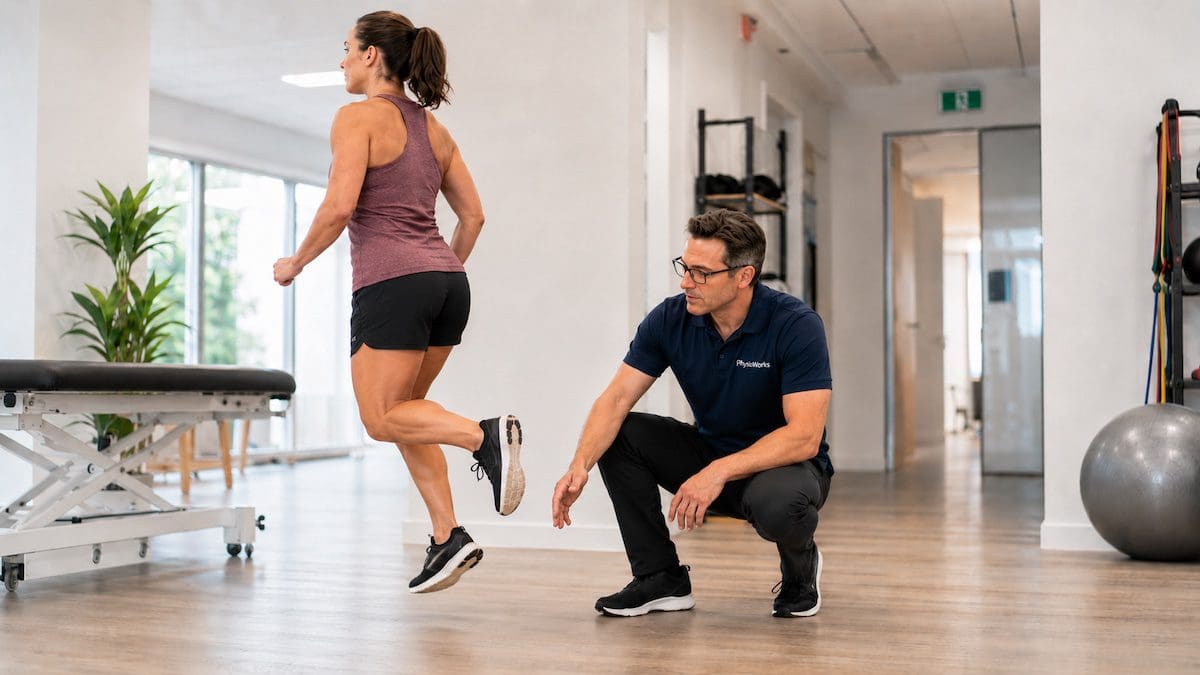
Lower limb physiotherapy assessment with single-leg stance evaluating knee, shin and foot alignment

Assessing lower limb alignment during single-leg stance

Lower limb alignment and control play a key role in common running injuries, particularly affecting the knee, shin, calf and foot during repeated load.

Knee injuries

Knee pain is one of the most common complaints in runners, especially during mileage increases, hills, or downhill running. Front-of-knee pain often links with runner’s knee or patellofemoral pain syndrome, while outer knee pain may relate to ITB syndrome.

Shin injuries

Shin pain is common when impact load, hills, speed work, or total volume rise too fast. The most common diagnosis is shin splints, but more focal pain may suggest a stress fracture or another bone stress problem.

Calf and Achilles injuries

Calf and Achilles pain often flare when runners add hills, speed, sprinting, or faster training blocks. Morning stiffness is common with Achilles tendinopathy, while sudden sharp pain may point to a calf tear. Runners with persistent calf tightness, Achilles soreness, or reduced push-off power often benefit from earlier loading advice and progressive strengthening.

Foot and heel injuries

Foot pain often relates to repeated loading through the arch, heel, forefoot, or smaller stabilising tendons. Heel pain may reflect plantar fasciopathy, while metatarsal or localised forefoot pain may need assessment for a foot stress fracture. Foot symptoms that worsen with longer runs, harder surfaces, or reduced recovery often respond best when footwear, load, and strength are reviewed together.

Hip, thigh and groin injuries

Runners can also develop overload in the hip and pelvis, especially when strength, control, or recovery are lagging behind training demand. Common examples include hamstring strain, gluteal tendinopathy, groin strain, and higher-risk bone stress problems such as femoral stress fracture.

Back and trunk-related pain

Some runners develop lower back symptoms because fatigue, stiffness, or trunk load tolerance cannot keep pace with training. This may present as lower back pain, back muscle pain, or symptoms linked with reduced trunk control.

Why do runners get shin pain?

Runners usually get shin pain when impact load, hills, speed work, or training volume rise faster than the lower leg can adapt. The most common causes are shin splints and bone stress problems, so localised pain that worsens with hopping or lingers after exercise deserves earlier review.

If your pain is broad and exercise-related, shin splints may be more likely. If it is small, sharp, and very local, compare your symptoms with a stress fracture or foot stress fracture.

Physiotherapist guiding step-up exercise for lower limb strength and rehabilitation in clinic

Step-up exercise to rebuild strength and control

Step-up exercises can help rebuild lower limb strength, balance and running control during rehabilitation.

How Can Physiotherapy Help Common Running Injuries?

Physiotherapy for common running injuries usually focuses on settling irritation, improving tissue capacity, and grading your return to running. Treatment may include load modification, strength work, calf and hip conditioning, mobility where needed, footwear or training advice, and progressive return-to-run planning.

For some runners, the key issue is simply doing too much too soon. For others, the problem is repeated exposure to hills, speed work, poor recovery, or reduced control through the calf, hip, or trunk. A good plan matches the tissue involved and the demands of your running. This is also where running analysis can add value.

What to watch during training

  • Sharp increases in weekly kilometres
  • Adding speed and hills at the same time
  • Ignoring pain that changes your stride
  • Morning stiffness that is worsening, not easing
  • Localised bone pain that lingers after running

When runners should book an assessment

  • Pain changes your running style or causes limping
  • Symptoms keep returning with mileage increases
  • Morning stiffness is worsening rather than easing
  • Bone pain feels sharp, focal, or lingers after exercise

When should you worry about common running injuries?

You should worry about common running injuries when pain becomes localised, changes your running pattern, causes swelling or limping, wakes you at night, or keeps returning despite rest and modified training. These features increase the chance that you need a clearer diagnosis and a more structured rehabilitation plan.

Seek earlier assessment if you suspect a stress fracture, have calf pain that feels sudden or severe, develop marked swelling, or cannot run without compensating. Even when the injury is not serious, earlier guidance often shortens the downtime and reduces the chance of a repeat flare-up.

How can you reduce the risk of common running injuries?

You can reduce the risk of common running injuries by progressing load gradually, spacing harder sessions sensibly, building calf and hip strength, and monitoring how your body responds to each training block. Prevention is less about one magic exercise and more about managing overall running stress well.

Many runners do well when they combine graded mileage progression with simple strength work, recovery planning, and early response to warning signs. If you are unsure whether your issue is training-related, our pages on running injuries, running analysis, and sports physiotherapy are good next steps.

Common running injuries FAQs

What is the most common running injury?

The most common running injury varies between studies, but knee pain presentations such as runner’s knee and patellofemoral pain are consistently common. Shin splints, Achilles tendon pain, plantar fasciopathy, and stress-related bone pain also appear regularly in both recreational and more experienced runners.

Are most running injuries overuse injuries?

Yes. Most running injuries are overuse-related rather than caused by one dramatic event. They usually develop when repeated impact and training stress outpace the body’s ability to recover and adapt, especially during volume increases, hill work, speed blocks, or a quick return after time off.

What are the first signs of a running injury?

Early signs often include stiffness at the start of a run, pain that builds during or after running, local soreness the next morning, or symptoms that flare every time training volume increases. A small change in stride or confidence can also be an early warning sign worth taking seriously.

Should I stop running if I have pain?

Not always, but you should modify your running if pain is worsening, changing your gait, or not settling by the next day. Some minor symptoms can be managed with load reduction, while sharper, localised, or escalating pain needs earlier assessment to rule out more significant overload problems.

When is shin pain more serious for runners?

Shin pain is more serious when it becomes very localised, hurts with hopping, lingers after exercise, or progresses from exercise pain to walking pain. That pattern can suggest a bone stress injury rather than shin splints and should usually be assessed sooner rather than later.

Can running analysis help prevent injuries?

Running analysis may help when it leads to practical changes in training, strength work, recovery, or technique. It is most useful when combined with a broader physiotherapy assessment, because common running injuries rarely come from one isolated movement issue alone.

What causes knee pain when running?

Knee pain when running is commonly caused by load-related irritation of the patellofemoral joint, ITB, or patellar tendon. It often develops when training increases too quickly or recovery is insufficient.

What to do next

If you think one of these common running injuries matches your symptoms, start by using the body-region links above to narrow the most likely diagnosis. Then compare it with our detailed running injuries guide or book a sports physiotherapy assessment if the problem is limiting your training.

Earlier assessment can help clarify whether you are dealing with tendon overload, joint irritation, muscle strain, or a bone stress issue. That usually leads to a safer return-to-run plan and fewer repeat flare-ups.

Book your appointment – 24/7

Choose your preferred PhysioWorks clinic and book online.

Follow PhysioWorks

Get free physiotherapy tips, exercise videos, recovery advice, and blog updates.

Facebook Instagram YouTube B X Email PhysioWorks

References

  1. Correia CK, Machado JM, Dominski F, de Castro MP. Risk factors for running-related injuries: An umbrella systematic review. J Sport Health Sci. 2024;13(6):743-757. doi:10.1016/j.jshs.2024.04.011
  2. Frandsen JSB, Hulme A, Nielsen RO, et al. How much running is too much? Identifying high-risk running sessions for lower extremity overuse injury in recreational runners. Br J Sports Med. 2025;59(17):1203-1211.
  3. Kakouris N, Yener N, Fong DTP. A systematic review of running-related musculoskeletal injuries in runners. J Sport Health Sci. 2021;10(5):513-522. doi:10.1016/j.jshs.2021.04.001
You've just added this product to the cart: