
Humerus Fracture
Humerus Fracture (Broken Shoulder)


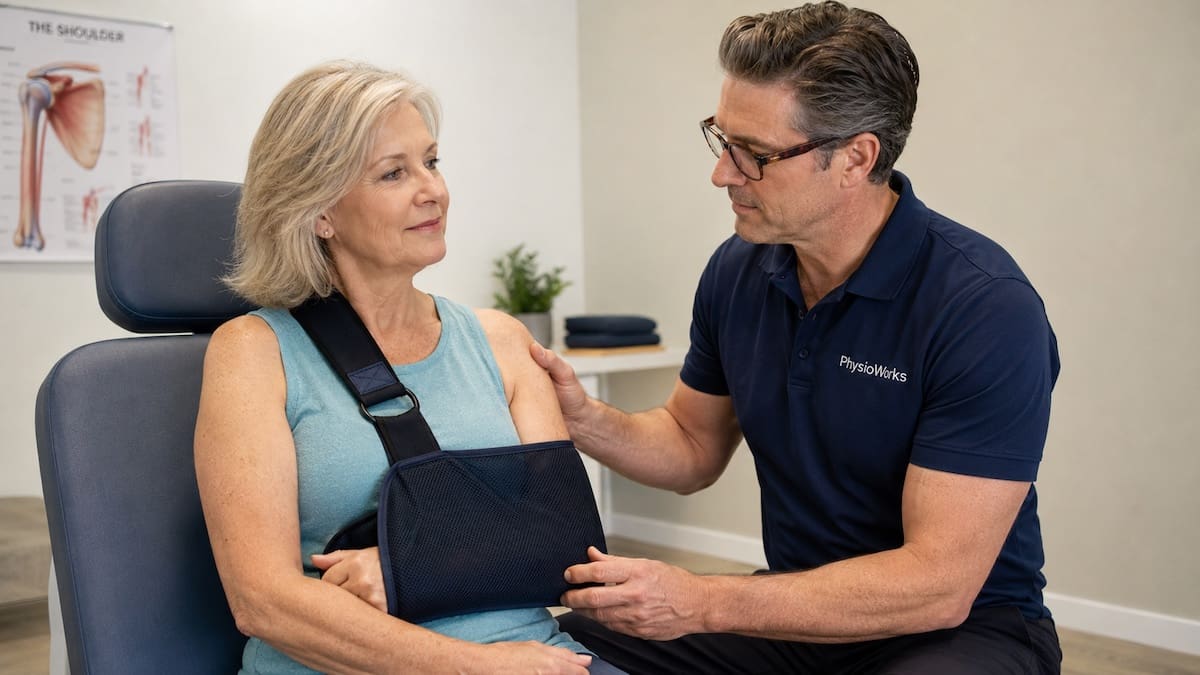
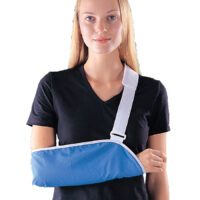
Sling support helps protect early fracture healing.
A humerus fracture near the shoulder is often called a broken shoulder. It usually involves the upper part of the arm bone where it forms the ball of the shoulder joint. This area is also known as the proximal humerus.
These injuries often follow a fall onto the arm or side of the body, especially in older adults or people with lower bone strength. A humerus fracture can also happen during sport, road accidents, or heavy impacts at work. For broader shoulder context, see our shoulder pain guide and post-fracture physiotherapy page.
Humerus Fracture: Quick Guide
- Common cause: a fall, collision, road accident, or low-impact fall with osteoporosis.
- Main symptoms: sudden shoulder pain, bruising, swelling, and difficulty lifting the arm.
- First step: medical assessment and X-ray to confirm the fracture pattern.
- Treatment pathway: sling or surgery, followed by staged rehabilitation when cleared.
- Recovery focus: safe movement, shoulder mobility, strength, work tasks, and confidence.
What Is a Humerus Fracture?
The humerus is the long bone that runs from your shoulder to your elbow. When the bone breaks near the shoulder joint, it is called a proximal humerus fracture. This is one type of fracture and one possible cause of sudden shoulder pain after trauma.
The break may be simple, with the bone still lined up, or more complex, with several pieces or a change in alignment. Your X-rays and scans help your doctor decide whether the fracture can be managed in a sling or whether surgery is more suitable.
What Causes a Humerus Fracture?
A humerus fracture usually follows a clear incident. Common causes include:
- falling onto an outstretched hand or directly onto the shoulder
- sporting collisions or tackles
- trips and falls on stairs or uneven ground
- road traffic accidents
- low-impact falls in people with osteoporosis or osteopenia
Some people already have shoulder pain from conditions such as rotator cuff tendinopathy or shoulder impingement. A fall can then cause both soft tissue injury and a fracture at the same time.
Humerus Fracture Symptoms
Typical symptoms of a humerus fracture include:
- sudden shoulder pain after a fall or impact
- inability or reluctance to lift the arm
- swelling, bruising, and tenderness around the shoulder and upper arm
- a change in the shape or contour of the shoulder
- a grinding feeling or abnormal movement when the arm moves
Seek urgent medical help if you notice numbness, tingling, weakness, a pale or blue hand, cold fingers, breathing difficulty, or chest pain after a high-speed injury.
These signs may suggest nerve, blood vessel, or chest injuries that need prompt hospital care.
How Is a Humerus Fracture Diagnosed?
Doctors diagnose a humerus fracture with your injury history, physical examination, and imaging. An X-ray is usually the first and most important test. It shows the location of the break, the angle of the bone segments, and whether the fracture extends into the joint surface.
Sometimes further imaging is requested. A CT scan may help assess complex fracture patterns. MRI or ultrasound may be used when there is concern about associated soft tissue injury, such as a rotator cuff tear.
Your doctor will also check nearby joints, your neck, and any other painful areas to make sure there are no additional injuries.
Treatment Options for a Humerus Fracture
Treatment aims to protect the fracture while it heals and then restore comfortable shoulder movement. The main pathways are non-surgical and surgical care.
Non-Surgical Treatment
Many humerus fractures can heal without surgery. Conservative care may include:
- Collar and cuff sling: supports the wrist and allows the elbow to hang. The weight of the arm may help maintain alignment. A triangular sling can sometimes push the humerus upwards, so your doctor will advise the correct support.
- Pain management: medication and other pain strategies may help during the early weeks.
- Activity modification: heavy lifting, overhead activity, and falls risk need to be reduced while the bone repairs.
Many people wear a sling for about six weeks, although the exact time varies with the fracture pattern and medical advice. Your symptoms and follow-up X-rays guide changes to your plan.
Surgical Treatment
Surgery may be recommended if the fracture is very displaced, involves the joint surface, or is unlikely to stay in a good position with a sling alone. Common operations include plates and screws, intramedullary nails, or, in some cases, partial shoulder replacement.
After surgery, you will usually use a sling for a period while the surgical repair and bone heal together. Post-operative shoulder physiotherapy then guides your progression from gentle movement to strengthening and function.
Sling, Surgery, or Physiotherapy?
A humerus fracture usually needs medical diagnosis first. Physiotherapy fits into the plan after the fracture has been stabilised and your doctor or surgeon confirms what movement is safe.
- Sling stage: protect the fracture and maintain hand, wrist, and elbow movement.
- Early rehab stage: restore safe shoulder mobility without overloading the healing bone.
- Strength stage: rebuild shoulder, rotator cuff, and shoulder blade control.
- Function stage: return to work, driving, lifting, sport, and daily tasks.
How Physiotherapy Helps After a Humerus Fracture
Physiotherapy plays a key role once the fracture has been stabilised and your doctor is happy for you to start moving. Your goals and exercises change across the stages of recovery.
| Recovery Stage | Main Physiotherapy Focus |
|---|---|
| Early stage | Maintain hand, wrist, and elbow movement. Support sling use, pain control, posture, and safe shoulder movement within your allowed range. |
| Middle stage | Restore shoulder range of motion, begin light strengthening when safe, and improve shoulder blade control. |
| Late stage | Build strength, endurance, confidence, and function for work, sport, lifting, and daily activities. |
Your physiotherapist can design an individual program and may draw on post-fracture physiotherapy, shoulder pain physiotherapy, and musculoskeletal physiotherapy approaches.
Progress should match bone healing. Shoulder exercises usually move from protection, to gentle movement, then strength and function.
Pain, X-ray review, surgical instructions, and confidence all help guide when to progress.
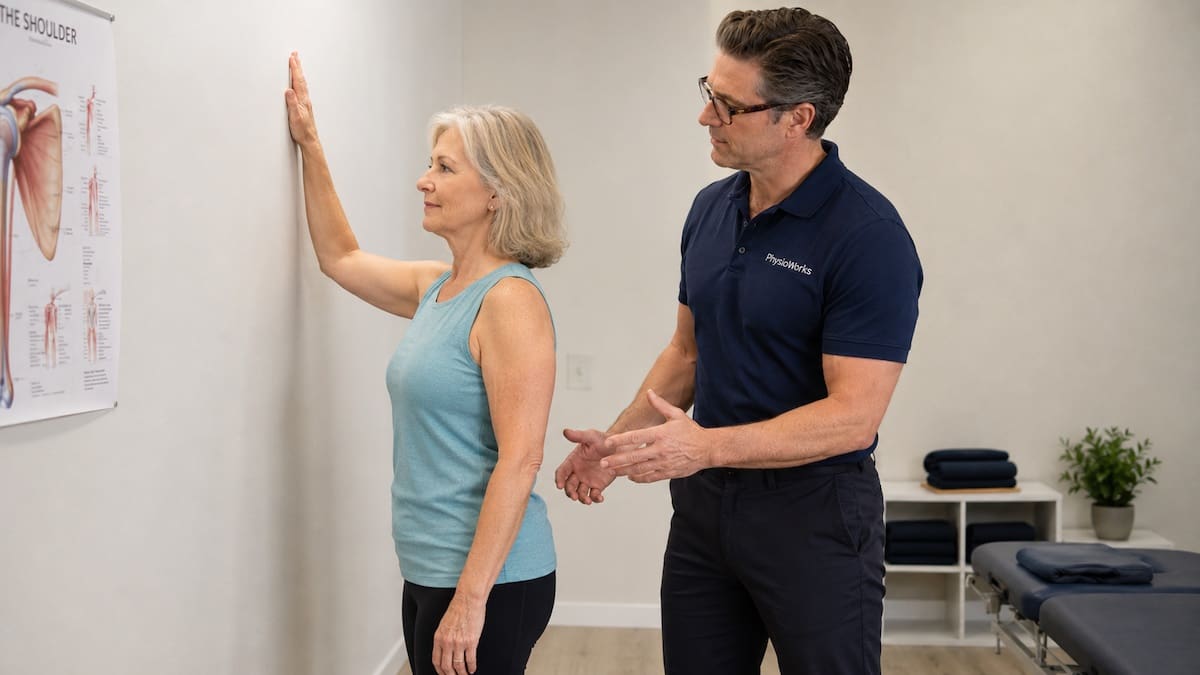
Gentle wall movement supports shoulder recovery.
Humerus Fracture Recovery Timeframes
Bone healing for a humerus fracture usually takes about six to twelve weeks. Shoulder strength and movement can then keep improving for several months.
Recovery is influenced by your age, general health, fracture complexity, whether surgery was required, bone quality, pain levels, and how consistently you follow your rehabilitation plan.
Driving
Most people can drive again when they are out of the sling, off strong pain medication, and able to control the steering wheel during an emergency stop. For many humerus fractures, this may occur around eight weeks. Confirm your timing with your doctor, insurer, and local road rules.
Work
Desk-based work may resume once pain is controlled and travel is safe. This may be possible within two to four weeks for some people. Manual or overhead work often needs longer, and a graded return is common.
Sport and Exercise
Light lower-limb exercise, such as walking or stationary cycling, may be possible early if balance and safety are managed. Upper-limb sport usually resumes later when strength, movement, and confidence improve. Your physiotherapist can guide each step so training does not overload the healing bone.
Day-to-Day Tips While Your Shoulder Heals
These suggestions may make everyday life safer and more comfortable while your humerus fracture heals:
- Sleeping: many people find it easier to sleep on their back with pillows behind the shoulder and under the forearm. Avoid lying directly on the injured side until your doctor or physiotherapist advises it is safe.
- Washing and dressing: you may temporarily remove your sling for hygiene and clothing changes when allowed. Let the arm hang and use gentle pendulum movement rather than actively lifting the shoulder early.
- Falls prevention: wear supportive footwear, clear trip hazards at home, and use handrails when available.
- Smoking: avoid smoking where possible, as it is linked with slower bone healing.
Possible Complications
Most humerus fractures heal well. However, some people develop problems such as:
- ongoing stiffness or frozen shoulder
- persistent weakness or discomfort around the shoulder
- malunion, where the bone heals in a less ideal position
- associated rotator cuff or joint surface injuries
Regular review with your doctor and physiotherapist helps detect these issues early. If your pain is increasing, movement is not improving, or function is declining, further assessment is important.
When Should You Seek Help?
Contact your doctor or attend urgent care if you notice:
- sudden increase in pain, swelling, or deformity after a new incident
- numbness, weakness, or colour change in your hand or fingers
- fever, wound redness, or discharge after surgery
- new chest pain, shortness of breath, or feeling faint after trauma
Your physiotherapist can also reassess your progress and adjust your exercise plan if recovery seems slower than expected.
Related Shoulder and Fracture Articles
These related PhysioWorks guides may help you understand your recovery pathway:
- Post-Fracture Physiotherapy — rehabilitation after a broken bone.
- Fractures and Broken Bones — symptoms, healing, and rehabilitation overview.
- Shoulder Pain — common causes of shoulder pain and stiffness.
- Rotator Cuff Injury — symptoms and management after shoulder trauma.
- Rotator Cuff Tear — signs of a torn shoulder tendon.
- Shoulder Exercises — mobility and strength exercise guidance.
- Shoulder Dislocation — another traumatic shoulder injury pattern.
- Shoulder Arthritis — joint stiffness and pain after wear or injury.

Functional practice helps rebuild everyday shoulder confidence.
What to Do Next
A humerus fracture can feel daunting, but many people return to usual activities with a structured plan. If you have recently injured your shoulder or feel unsure about your rehabilitation, a physiotherapy consultation can help clarify your stage of healing and outline the next safe steps.
Together with your doctor or surgeon, your physiotherapist can guide pain relief, movement, strength, and confidence so your shoulder works as well as possible for day-to-day life.
Choose your clinic and appointment pathway
Select a PhysioWorks clinic to continue to live booking, an appointment request or reception assistance.
Shoulder Supports and Comfort Products
Some people with a humerus fracture benefit from supportive pillows, braces, ice packs, or comfort products to position the shoulder well and make daily tasks easier. Your physiotherapist can recommend options that suit your stage of recovery and medical precautions.
Shoulder Products
These shoulder products are commonly used by our physiotherapists to improve strength, posture, movement, plus assist home exercise programs.
-
- Liniments & Gels, Massage Liniments, Pain Management
Fisiocrem
$16.95 – $39.95Select optionsQuick View -

-
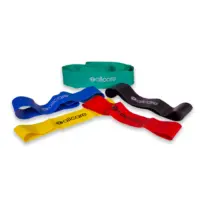
 Exercise Equipment, Knee, Resistance Band
POW.R Fabric Mini Loop Bands
$12.00 – $55.00Select optionsQuick View -
-

 Exercise Balls, Back, Exercise Equipment, Knee, Shoulder
66fit Exercise Balls | Core & Rehab Stability Ball
$32.00 – $57.00Select optionsQuick View -

-
 Ice & Heat, Pain Management, Uncategorized
PhysiPak Universal Heat pack
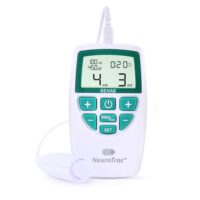
$79.00Select optionsQuick View - EMS Machines, Pain Management, TENS Machine, TENS Machine & EMS
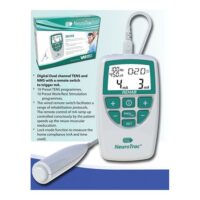
NeuroTrac Rehab (TENS Machine + EMS)
$285.00Add to cartQuick View -
 Exercise Equipment, Resistance Band
AllCare Powerloop Bands
$24.95 – $79.95Select optionsQuick View -
-
-

-
-






Research and References
Recent research supports structured rehabilitation and careful decision making between surgical and non-surgical care for proximal humerus and shoulder fractures.
- Budharaju A, Hones KM, Hao KA, et al. Rehabilitation protocols in proximal humerus fracture management: a systematic review. JSES Int. 2023;7(5):937-949.
- Challoumas D, Minhas H, Bagni S, Millar NL. Early versus delayed mobilisation for nonsurgically treated proximal humerus fractures: systematic review and meta-analysis. BMC Musculoskelet Disord. 2025;26:203.
- Østergaard HK, Rasmussen S, Cronholm PF, et al. Supervised vs unsupervised exercises after nonsurgical proximal humerus fracture: randomised trial. J Shoulder Elbow Surg. 2024;33(5):994-1003.
- Hohmann E, Keough N, Glatt V, Tetsworth K. Surgical treatment is not superior to nonoperative treatment for displaced proximal humerus fractures: meta-analysis. J Shoulder Elbow Surg. 2023;32(5):1105-1120.
- Le Thai V, et al. Driving after surgical treatment of proximal humerus fractures. J Shoulder Elbow Surg. 2024.
Humerus Fracture FAQs
How long does a humerus fracture take to heal?
Many humerus fractures take about six to twelve weeks for bone healing. Shoulder movement, strength, and confidence may keep improving for several months after the bone has healed enough for more active rehabilitation.
Do all humerus fractures need surgery?
No. Many proximal humerus fractures can be managed without surgery if the bone position is acceptable and the fracture remains stable. Surgery may be considered when the fracture is very displaced, involves the joint surface, or is unlikely to stay aligned.
When should physiotherapy start after a humerus fracture?
Physiotherapy timing depends on your fracture pattern, pain, sling instructions, and medical clearance. Early physiotherapy may focus on education, sling use, posture, and hand, wrist, and elbow movement before shoulder exercises progress.
Can I sleep lying down with a broken shoulder?
Many people find sleeping on their back or slightly reclined more comfortable in the early stage. Pillows behind the shoulder and under the forearm may reduce pulling on the injured arm. Avoid lying on the injured side until cleared.
When can I drive after a humerus fracture?
You should not drive while your arm is in a sling or while strong pain medication affects reaction time. Many people return around eight weeks, but timing varies. Confirm with your doctor, insurer, and local road rules first.
Why is my shoulder stiff after a humerus fracture?
Stiffness can occur after sling use, pain, swelling, reduced movement, or associated shoulder soft tissue injury. A staged physiotherapy program may help restore safe movement and gradually rebuild strength once the fracture is stable.
