What Tendinopathy Treatment Usually Involves
Tendinopathy treatment usually combines load changes with progressive strengthening. This means reducing painful loads enough to calm symptoms while still giving the tendon a useful exercise stimulus.
Treatment may include:
- short-term reduction of painful or high-load activities
- specific tendon strengthening exercises
- progressive reloading based on symptoms and goals
- muscle strength, control, and movement training
- biomechanical assessment where relevant
- education about training load, pacing, and recovery
There is no single exercise plan that suits every tendon or every person. For example, an Achilles tendinopathy program may look different from a patellar tendinopathy, gluteal tendinopathy, or proximal hamstring tendinopathy program. Your tendon, activity level, strength, irritability, and goals all influence the plan.
How Does Physiotherapy Help Tendon Pain?
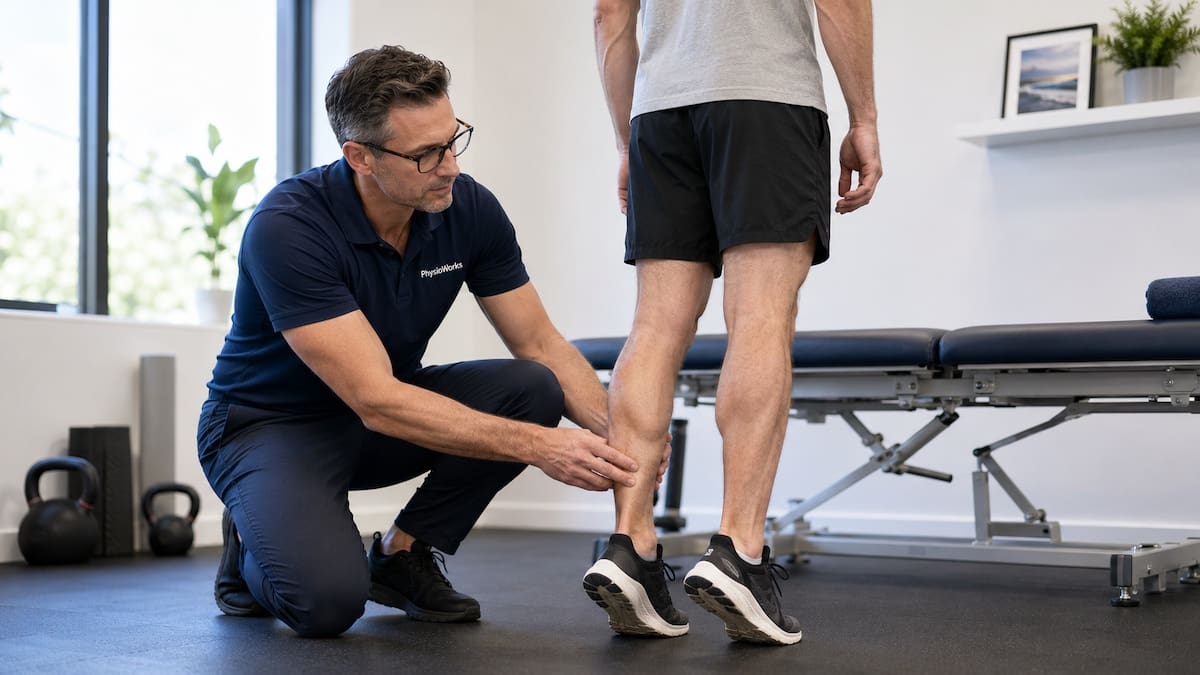
A physiotherapist can assess why the tendon became painful and what needs to change. Treatment should not only focus on short-term pain relief. It should also address why the tendon became overloaded or underprepared.
Physiotherapy management may include:
- Identifying likely causes, such as training error, weakness, reduced tendon capacity, or poor load progression.
- Checking for other pain sources, such as bone stress injury, bursitis, joint irritation, or referred pain.
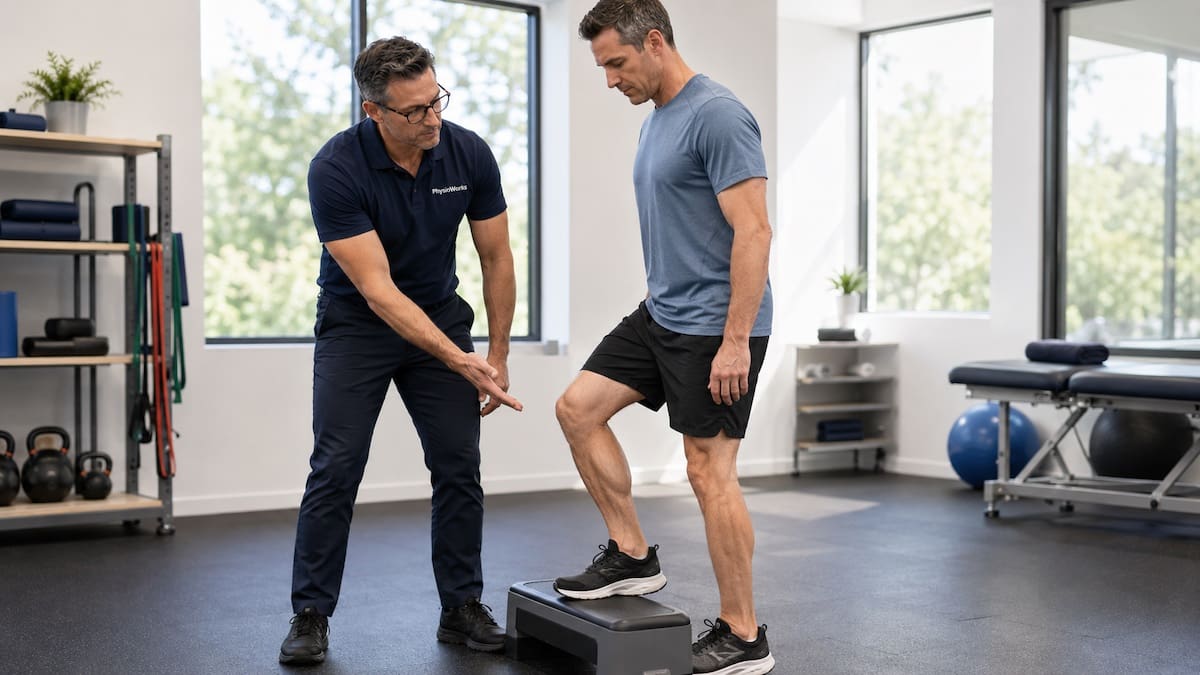
- Prescribing suitable exercises to improve tendon strength, tolerance, and function.
- Planning a return to activity through gradual and measurable load progression.
- Using symptom relief options, such as taping, massage, or dry needling, when suitable.
Depending on the tendon involved, related issues such as peroneal tendinopathy, hip adductor tendinopathy, rotator cuff tendinopathy, or tennis elbow may also need tendon-specific rehabilitation.
How Do You Build Tendon Capacity?
Tendon capacity improves gradually. Most tendons respond well when the right load is repeated over time. This often means a staged strengthening program that progresses based on symptoms, recovery, and function.
Early on, you may need to reduce painful tasks such as sprinting, jumping, hills, deep squats, heavy lifting, or high-volume gym work. As symptoms settle, your program may progress toward heavier strength work, faster movements, and sport-specific loading.
This approach is often more useful than full rest because it improves the tendon’s ability to tolerate future load. For broader background, read more about tendonitis, tendinitis, tendinosis, and tendinopathy.