Tendinopathy 1

Why Doesn’t Rest Fix Tendon Pain?

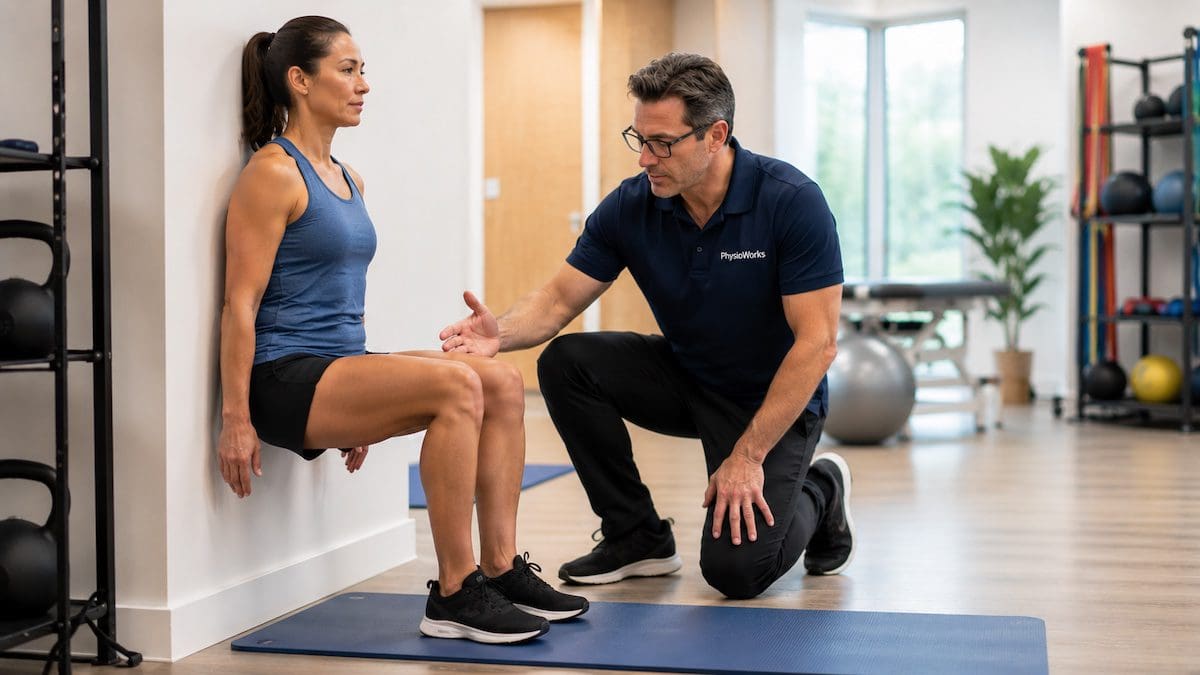
Achilles tendon assessment for tendon pain load management during calf raise

Tendon pain often needs guided loading, not complete rest.

Rest usually does not fix tendon pain because it eases symptoms without rebuilding tendon capacity. A painful tendon may feel better after time away from walking, running, jumping, gym training, or sport. However, pain often returns when the same activity loads the tendon again.

Tendons respond to the right amount of load over time. Too much load can irritate a tendon. Too little load can reduce strength, endurance, and tolerance. Effective tendinopathy treatment aims to find the middle ground. The goal is to build capacity without repeated flare-ups.

If tendon pain keeps returning after rest, the issue may relate to overuse injuries, a sudden training spike, weakness, poor load progression, or reduced tendon tolerance. A physiotherapist can assess what is driving your symptoms and guide a safer return to activity.

Why Doesn’t Rest Fix Tendon Pain?
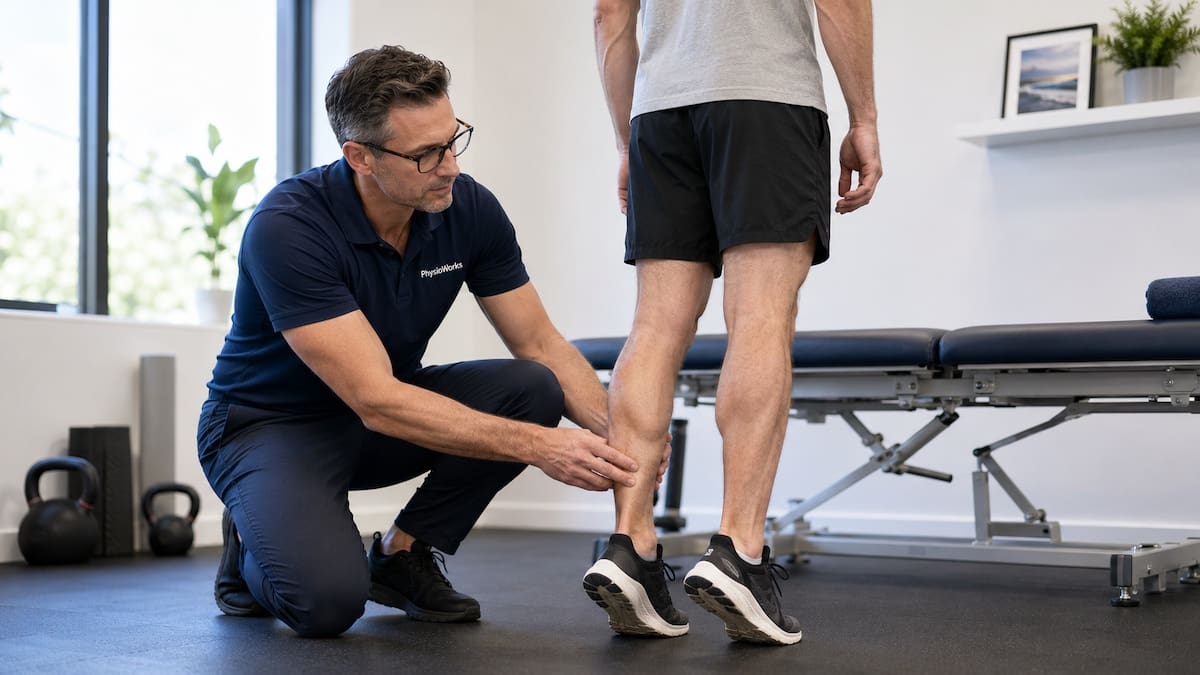
Rest can lower pain because it removes the immediate demand on the tendon. However, it does not improve tendon strength, load tolerance, or the tendon’s ability to cope with repeated activity.

This is why many people feel better during rest, then become sore again when they restart running, walking, jumping, sport, or gym work. The tendon has had a break, but it has not gained the capacity needed for the task.

This pattern is common when people:

  • start a new sport, gym program, or walking routine
  • increase running distance, hills, speed, or training frequency too quickly
  • return to sport after time off
  • change footwear, surfaces, or workload suddenly
  • ignore smaller warning signs until symptoms build

Tendons are slow to adapt. Sudden changes in activity can exceed their current capacity. A long period of complete rest can also make the tendon less prepared for normal activity.

Should You Rest or Keep Moving With Tendon Pain?

Most tendon pain needs modified activity rather than complete rest. The aim is to reduce the most irritating loads while keeping safe, useful movement in your day.

Tendon Load Decision Guide

  • Pain settles within 24 hours: the load may be acceptable, but keep monitoring symptoms.
  • Pain increases during or after activity: reduce speed, volume, hills, jumping, or resistance.
  • Pain keeps returning after rest: the tendon may need a staged strengthening plan.
  • Pain is worsening or spreading: book an assessment to check the diagnosis and loading plan.

What Tendinopathy Treatment Usually Involves

Tendinopathy treatment usually combines load changes with progressive strengthening. This means reducing painful loads enough to calm symptoms while still giving the tendon a useful exercise stimulus.

Treatment may include:

  • short-term reduction of painful or high-load activities
  • specific tendon strengthening exercises
  • progressive reloading based on symptoms and goals
  • muscle strength, control, and movement training
  • biomechanical assessment where relevant
  • education about training load, pacing, and recovery

There is no single exercise plan that suits every tendon or every person. For example, an Achilles tendinopathy program may look different from a patellar tendinopathy, gluteal tendinopathy, or proximal hamstring tendinopathy program. Your tendon, activity level, strength, irritability, and goals all influence the plan.

How Does Physiotherapy Help Tendon Pain?

A physiotherapist can assess why the tendon became painful and what needs to change. Treatment should not only focus on short-term pain relief. It should also address why the tendon became overloaded or underprepared.

Physiotherapy management may include:

  1. Identifying likely causes, such as training error, weakness, reduced tendon capacity, or poor load progression.
  2. Checking for other pain sources, such as bone stress injury, bursitis, joint irritation, or referred pain.
  3. Prescribing suitable exercises to improve tendon strength, tolerance, and function.
  4. Planning a return to activity through gradual and measurable load progression.
  5. Using symptom relief options, such as taping, massage, or dry needling, when suitable.

Depending on the tendon involved, related issues such as peroneal tendinopathy, hip adductor tendinopathy, rotator cuff tendinopathy, or tennis elbow may also need tendon-specific rehabilitation.

How Do You Build Tendon Capacity?

Tendon capacity improves gradually. Most tendons respond well when the right load is repeated over time. This often means a staged strengthening program that progresses based on symptoms, recovery, and function.

Early on, you may need to reduce painful tasks such as sprinting, jumping, hills, deep squats, heavy lifting, or high-volume gym work. As symptoms settle, your program may progress toward heavier strength work, faster movements, and sport-specific loading.

This approach is often more useful than full rest because it improves the tendon’s ability to tolerate future load. For broader background, read more about tendonitis, tendinitis, tendinosis, and tendinopathy.

Quick Check: Is Rest Enough?

Rest may be enough for a mild short-term overload if pain settles and does not return with normal activity.

If pain keeps coming back, the tendon usually needs a plan that changes load, improves strength, and rebuilds tolerance in stages.

When Should You Seek Help for Tendon Pain?

You should consider a physiotherapy assessment if tendon pain:

  • keeps returning when you restart activity
  • has lasted more than two weeks
  • limits work, exercise, sport, or sleep
  • is becoming more irritable or widespread
  • does not improve with sensible load reduction
  • is linked with swelling, marked weakness, or a sudden change in function

Early guidance may help you avoid repeated flare-ups and long breaks from activity. It can also help check whether the pain is truly tendon-related or coming from another structure.

Common Tendon Pain Conditions

Tendon pain can affect many areas of the body. The right plan depends on the tendon involved, your symptoms, and the activities you want to return to.

General Tendon Conditions

Foot and Ankle Tendon Pain

Knee Tendon Pain

Hip, Groin and Hamstring Tendon Pain

Shoulder, Elbow, Wrist and Hand Tendon Pain

Frequently Asked Questions

Why doesn’t rest fix tendon pain?

Rest may ease symptoms briefly, but it usually does not improve the tendon’s strength or ability to tolerate activity. When you return to running, sport, gym work, or repeated daily loading, the pain can return because the tendon still lacks capacity.

Is tendinopathy the same as tendonitis?

Tendinopathy is a broader term for tendon pain and reduced tendon function. Tendonitis suggests inflammation. However, many ongoing tendon problems involve changes in load tolerance rather than simple inflammation alone.

What treatment usually helps tendon pain?

Tendon pain often improves with activity changes, progressive strengthening, and a clear load plan. The goal is to rebuild tendon capacity gradually, rather than stopping all activity and hoping the tendon adapts by itself.

Should you exercise with tendon pain?

Often, yes, but the exercise needs to match your tendon’s current tolerance. Some discomfort may be acceptable. Repeated flare-ups suggest the load is too high. A physiotherapist can help set suitable exercises and progressions.

How long does tendon pain take to improve?

Recovery time varies. Some people improve over several weeks. Others need a longer program over a few months. Duration depends on the tendon involved, symptom history, training load, strength, health factors, and rehab consistency.

When should I see a physiotherapist for tendon pain?

Consider physiotherapy if the pain keeps returning, lasts more than two weeks, limits activity, worsens with training, or does not improve with sensible load changes. Assessment can help confirm the likely cause and guide a safer plan.
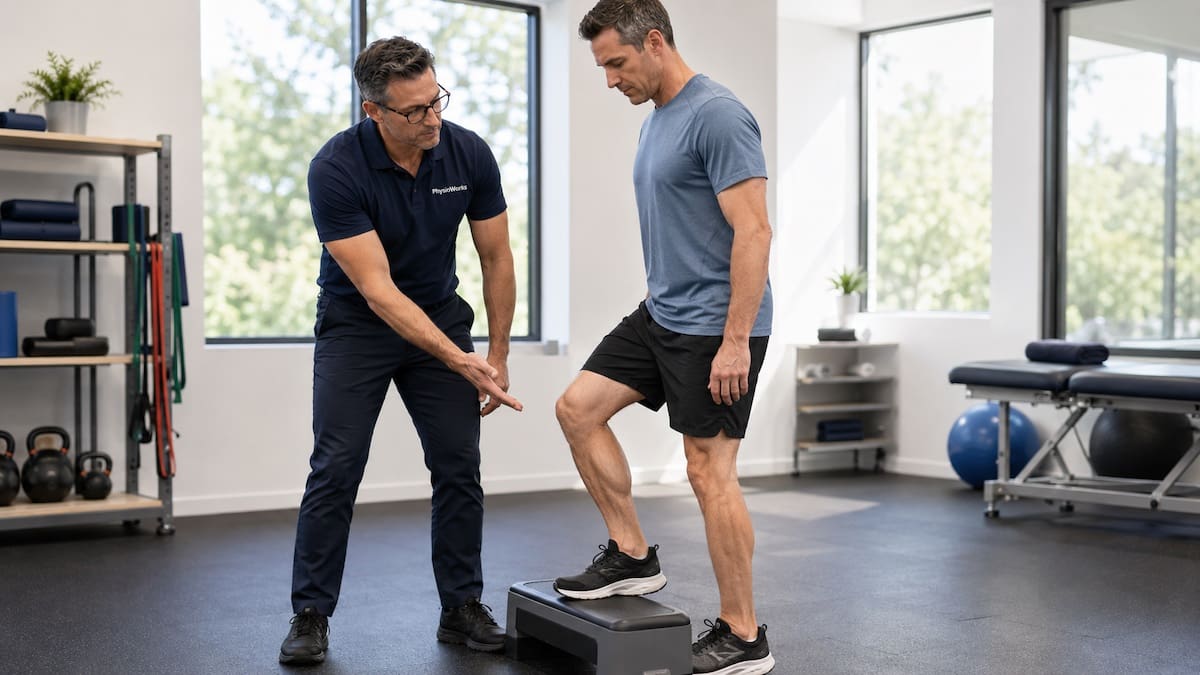
Achilles tendon loading during supervised step-down for tendon pain rehab

Progressive loading helps rebuild tendon capacity.

What To Do Next

If tendon pain improves with rest but returns when you move again, the next step is usually not more rest. A better option is to identify the tendon’s current tolerance, reduce the most irritating loads, and rebuild strength in stages.

Book a physiotherapy assessment if tendon pain is limiting your work, sport, walking, running, gym training, or daily activities. Your physiotherapist can help you plan the right level of loading and return to activity with more confidence.

Book your appointment – 24/7

Choose your preferred PhysioWorks clinic and book online.

Follow PhysioWorks

Get free physiotherapy tips, exercise videos, recovery advice, and blog updates.

Facebook Instagram YouTube B X Email PhysioWorks

References

  1. Cardoso TB, Pizzari T, Kinsella R, Hope D, Cook JL. Current trends in tendinopathy management. Best Pract Res Clin Rheumatol. 2019;33(1):122-140. doi:10.1016/j.berh.2019.02.001
  2. Malliaras P, Barton CJ, Reeves ND, Langberg H. Achilles and patellar tendinopathy loading programmes: a systematic review comparing clinical outcomes and identifying potential mechanisms for effectiveness. Sports Med. 2013;43(4):267-286. doi:10.1007/s40279-013-0019-z
  3. Cook JL, Purdam CR. Is tendon pathology a continuum? A pathology model to explain the clinical presentation of load-induced tendinopathy. Br J Sports Med. 2009;43(6):409-416. doi:10.1136/bjsm.2008.051193

Common Tendon Injuries

Common tendon injuries are painful tendon problems caused by overload, repeated strain, or a sudden increase in activity. They often affect the Achilles, patellar, gluteal, rotator cuff, elbow, and wrist tendons. Most improve with the right diagnosis, load management, and progressive rehabilitation rather than rest alone.

Tendon pain is one of the most frequent reasons people seek help for persistent exercise or work-related discomfort. If you are dealing with a tendon problem, it helps to first explain tendinopathy, how it differs from other soft tissue injuries, and which body region is involved.

Key signs of common tendon injuries

  • Pain that builds with activity or the next morning
  • Stiffness after rest, especially first thing in the morning
  • Tenderness when pressing on the tendon
  • Reduced strength, jumping, gripping, or lifting tolerance
  • Symptoms that return when training load rises too quickly

What are common tendon injuries?

Common tendon injuries are usually forms of tendinopathy, which means a painful tendon condition related to overload and reduced load tolerance. In practice, they often affect active people, manual workers, and anyone who suddenly increases training volume, intensity, or repetition.

Older terms such as “tendinitis” suggest pure inflammation, but many long-standing tendon problems involve changes in tendon structure, pain sensitivity, and function rather than simple acute inflammation alone. Modern tendon care usually focuses on the tendon continuum, symptom behaviour, and progressive loading.

What causes common tendon injuries?

Common tendon injuries are usually caused by overload that exceeds the tendon’s current capacity. This can happen with sport, gym training, running, repetitive work, poor recovery, weakness, stiffness, or sudden changes in footwear, technique, or training surface.

Other contributing factors can include age, deconditioning, metabolic health, previous injury, and biomechanics. In many cases, the tendon is not “damaged” by one event. Instead, symptoms build gradually when repeated loading outpaces recovery.

Where do common tendon injuries happen?

Common tendon injuries can affect many parts of the body, but some sites are much more common than others. PhysioWorks has detailed condition pages for the main tendon problems listed below.

Common tendon injury hotspots

These tendon problems are among the most common reasons people seek physiotherapy for repeated pain with walking, running, lifting, gripping, throwing, or sport.

Lower limb

  • Achilles tendon
  • Patellar tendon
  • Gluteal tendons
  • Hamstring tendon
  • Adductor tendon

Upper limb

  • Rotator cuff tendons
  • Biceps tendon
  • Tennis elbow
  • Golfer's elbow
  • Wrist and thumb tendons

Foot and ankle tendon injuries

Knee tendon injuries

Hip and groin tendon injuries

Shoulder tendon injuries

Elbow tendon injuries

Wrist and hand tendon injuries

How do you know if common tendon injuries are the problem?

Common tendon injuries often cause local pain, morning stiffness, tenderness, and reduced tolerance to load. The pain usually settles with warm-up, then returns later, the next morning, or when the tendon is loaded again.

Examples include pain with jumping in patellar tendinopathy, pain with gripping in tennis elbow, or pain when lying on the side in gluteal tendinopathy. Some tendon problems can also mimic bursitis, joint pain, or referred pain, so an accurate assessment matters.

3-step tendon recovery framework

1. Settle irritation

Reduce the aggravating load, modify training, and calm pain without stopping all activity.

2. Rebuild capacity

Progress strength and tendon loading gradually so the tendon can tolerate daily life, work, and exercise again.

3. Return with confidence

Build back into walking, lifting, running, jumping, gripping, or sport with the right progressions.

How are common tendon injuries treated?

Common tendon injuries are usually treated with education, load management, progressive strengthening, and a staged return to normal activity. Complete rest is rarely the best long-term answer because tendons generally improve when they are loaded well, not when they are avoided completely.

Treatment may also include technique changes, mobility work, footwear or equipment advice, taping, or short-term pain relief strategies. In some cases, imaging, injection advice, or medical review may be appropriate, depending on the tendon involved and how long symptoms have been present.

Load management matters

A successful tendon plan usually follows a simple path: reduce aggravating load, rebuild tendon capacity, then progress back to work, sport, or exercise. This load management approach is especially important for Achilles, patellar, rotator cuff, and elbow tendinopathies because symptoms often flare when activity rises too quickly.

If you would like an evidence-based overview of physiotherapy and rehabilitation, Healthdirect provides a helpful summary of physiotherapy.

When should you seek help for common tendon injuries?

You should seek help if tendon pain lasts more than a few weeks, keeps returning, affects work or sport, or causes weakness and loss of function. Early assessment can also help if you are unsure whether the problem is tendon-related or something more serious such as a tear, fracture, nerve problem, or inflammatory condition.

Urgent review is sensible if you felt a sudden snap, have major swelling or bruising, cannot load the limb, or suspect a rupture such as an Achilles tendon rupture.

Related tendon injury articles

  1. Tendinopathy: Causes, Symptoms, and Effective Treatments
  2. What Is a Tendinopathy?
  3. Biceps Tendinopathy
  4. Gluteal Tendinopathy
  5. Rotator Cuff Tendinopathy
  6. Proximal Hamstring Tendinopathy

Common tendon injuries FAQs

Is tendinitis the same as tendinopathy?

Not usually. Tendinitis suggests a more inflammatory process, while tendinopathy is the broader modern term used for most painful tendon conditions. Many persistent tendon problems involve tendon overload, pain, and reduced load tolerance rather than simple short-term inflammation alone.

Do common tendon injuries heal with rest?

Short-term activity reduction can calm symptoms, but tendons usually need progressive loading to recover well. Too much rest can reduce tendon capacity, which is why many people improve more with a guided rehabilitation program than with prolonged avoidance.

What exercise helps common tendon injuries?

The best exercise depends on the tendon involved, the irritability level, and your goals. Isometric, heavy slow resistance, eccentric, and sport-specific strengthening can all help when prescribed at the right stage and load.

Can scans confirm common tendon injuries?

Ultrasound or MRI can support diagnosis, but scans do not always match pain levels. A physiotherapist will usually combine your history, symptom pattern, strength, movement testing, and function before deciding whether imaging is useful.

How long do common tendon injuries take to improve?

Recovery time varies. Some reactive tendon problems settle in weeks, while longer-standing tendinopathy may take several months of steady load progression. A faster result is more likely when treatment starts early and training errors are corrected.

Can tendon injuries become chronic?

Yes. Tendon pain can become persistent when aggravating load continues, strength does not recover, or activity progresses too quickly. Chronic tendon problems often still improve well with a staged rehabilitation plan, but they usually take longer than recent flare-ups.

Should you stretch a sore tendon?

Sometimes, but not always. Stretching may help nearby stiffness in some cases, yet an irritable tendon can worsen if stretched too aggressively. Your exercise plan should match the tendon involved, symptom severity, and current rehabilitation stage.

What to do next

If you think you may have one of these common tendon injuries, book an assessment so the painful structure, load triggers, and most suitable rehab plan can be identified clearly. Good tendon rehab is specific to the tendon involved, your activity level, and the tasks that keep flaring your symptoms.

Your physiotherapist can help you reduce irritation, rebuild tendon capacity, and return to walking, training, work, or sport with more confidence.

Book your appointment – 24/7

Choose your preferred PhysioWorks clinic and book online.

Follow PhysioWorks

Get free physiotherapy tips, exercise videos, recovery advice, and blog updates.

Facebook Instagram YouTube B X Email PhysioWorks

References

  1. Cook JL, Purdam CR. Is tendon pathology a continuum? A pathology model to explain the clinical presentation of load-induced tendinopathy. Br J Sports Med. 2009;43(6):409-416. doi:10.1136/bjsm.2008.051193
  2. Irby A, Gutierrez J, Chamberlin C, Thomas SJ, Rosen AB. Clinical management of tendinopathy: A systematic review of systematic reviews evaluating the effectiveness of tendinopathy treatments. Scand J Med Sci Sports. 2020;30(10):1810-1826. doi:10.1111/sms.13721
  3. Pavlova AV, Scott A, Rio E, et al. Effect of resistance exercise dose components for tendinopathy management: A systematic review with meta-analysis. Br J Sports Med. 2023;57(20):1327-1334. doi:10.1136/bjsports-2022-105754
  4. Chong HH, Mohd Nor NS, Mohd Nordin MNA, et al. Advancements in de Quervain Tenosynovitis Management: A Comprehensive Review of Conservative Options and Corticosteroid Injection Rehabilitation. J Hand Surg Asian Pac Vol. 2024;29(2):187-197. doi:10.1142/S2424835524400025

What Is Tendinopathy and How Is It Treated?

Article by John Miller & Erin Runge
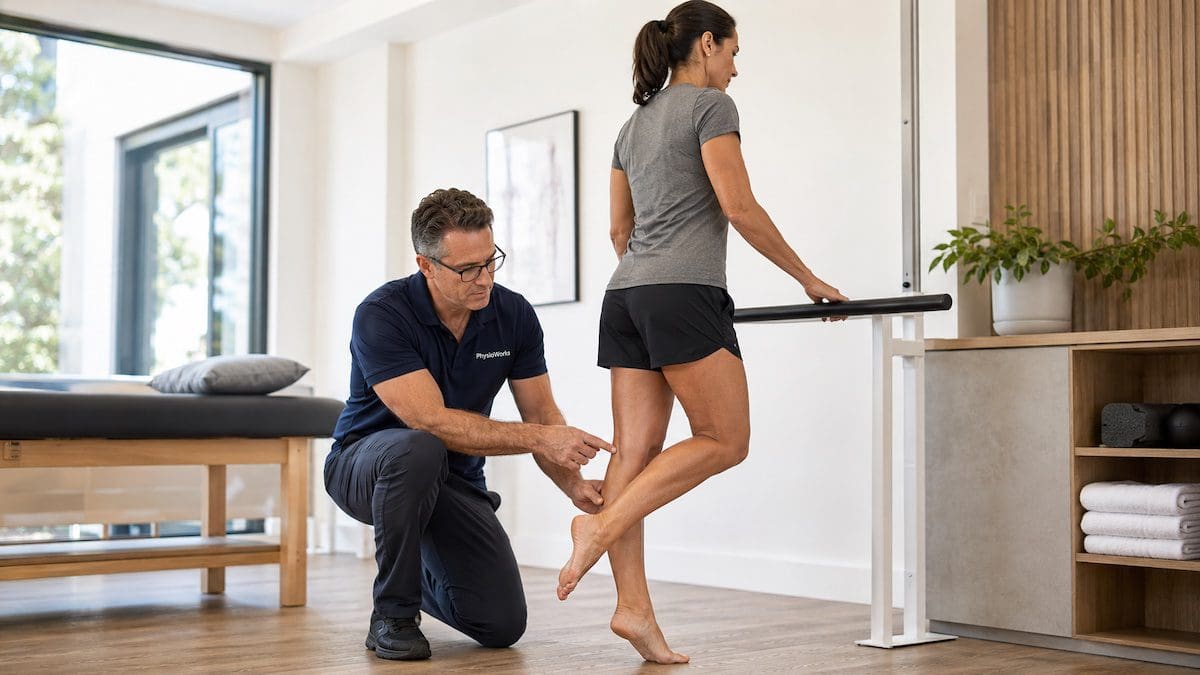
What is tendinopathy Achilles tendon calf raise rehabilitation with physiotherapist

Guided loading helps rebuild tendon capacity.

What is tendinopathy? Tendinopathy is tendon pain linked with reduced load tolerance. It can develop when a tendon is exposed to more load than it can adapt to or recover from.

This may cause local tendon pain, stiffness, and reduced tolerance for exercise, work, or sport. A common example is Achilles tendinopathy. Similar tendon problems can affect the shoulder, elbow, hip, knee, ankle, and wrist.

Short answer: Tendinopathy means a tendon is sore and less able to handle load. Care usually includes education, activity changes, and graded strengthening.

Symptoms often build up over time. Pain may start during training, lifting, walking, or daily tasks. Stiffness or soreness may then appear later that day or the next morning.

The term tendinitis is still common. However, many tendon pain problems are not mainly driven by inflammation. Modern care usually focuses on improving tendon load capacity. This may include eccentric strengthening exercises and other graded loading strategies.

For a deeper guide, visit Tendinopathy: Causes, Symptoms, Treatment & Rehabilitation.

How Does Tendinopathy Develop?

Tendons connect muscle to bone. They also store and release energy during movement. Tendon pain can develop when load increases faster than the tendon can adapt.

This can happen with running, jumping, lifting, manual work, or a sudden return to sport after time off. This pattern is often seen in conditions such as patellar tendinopathy.

Common Tendinopathy Triggers

  • Sudden increases in training load
  • More speed, hills, jumping, or lifting
  • New shoes, surfaces, equipment, or technique
  • Repeated work tasks with limited recovery
  • Returning to activity after time off
  • Strength or movement-control changes

General health can also affect tendon recovery. Sleep, age, past injury, training history, and some medical factors may change how a tendon responds.

What Are the Common Signs of Tendinopathy?

Tendinopathy often follows a clear pattern. Pain may start as mild and appear only during or after activity. Later, stiffness and strength loss may become more noticeable.

  • Local pain near a tendon
  • Morning stiffness or start-up pain
  • Pain that eases as you warm up, then returns later
  • Reduced strength, power, or activity tolerance
  • Tenderness when pressing the affected tendon

Swelling, heat, or redness can occur, but these signs are not always present. Sudden severe pain, bruising, or major weakness needs prompt review.

How Is Tendinopathy Assessed?

A physiotherapist assesses tendon pain by asking about your symptoms, activity loads, and goals. They may then test tendon strength, load tolerance, movement, and tender points.

Ultrasound or MRI may help in persistent or complex cases. Still, scan findings need to match your symptoms and function. Some tendon changes appear on scans without causing pain.

Tendinopathy tendonitis tendinosis and tenosynovitis comparison diagram

Tendon terms can describe different changes.

How Is Tendinopathy Treated?

Tendinopathy treatment aims to rebuild the tendon’s ability to handle load. Complete rest may ease pain for a short time, but it often does not rebuild tendon capacity.

A physiotherapy plan may include:

  • Changing painful activities without stopping all movement
  • Progressive strengthening for the affected tendon
  • Pain-monitoring advice to guide safe loading
  • Movement or technique changes where useful
  • Return-to-sport, running, or work-load planning

Some people also need guidance for related tendon problems, such as common tendon injuries, tennis elbow, or Achilles tendon pain.

Should You Rest or Keep Exercising?

Most tendon pain needs smart load changes, not complete rest. The aim is to reduce loads that flare symptoms while keeping enough safe exercise to rebuild capacity.

  • If pain is mild and settles quickly: modify and monitor activity.
  • If pain worsens during or after activity: reduce load and review your plan.
  • If strength drops suddenly: seek assessment promptly.

How Long Does Tendinopathy Take to Improve?

Recovery time varies. Early tendon pain may improve within weeks when load is adjusted early. Longer-standing tendinopathy may take several months.

The best timeline depends on the tendon involved, how long symptoms have been present, your strength, and your work or sport demands.

What To Do Next

If tendon pain keeps returning, limits activity, or feels hard to manage, get it assessed. Early guidance may reduce flare-ups and help you choose the right loading level.

For more detail, see Tendinopathy: Causes, Symptoms, Treatment & Rehabilitation.

Book your appointment – 24/7

Choose your preferred PhysioWorks clinic and book online.

Follow PhysioWorks

Get free physiotherapy tips, exercise videos, recovery advice, and blog updates.

Facebook Instagram YouTube B X Email PhysioWorks

Related Information

Frequently Asked Questions

Is tendinopathy the same as tendinitis?

Not exactly. Tendinitis means tendon inflammation. Tendinopathy is a broader term for tendon pain, stiffness, reduced strength, and lower load tolerance.

Can tendinopathy improve without surgery?

Yes. Many people improve with education, load changes, and progressive strengthening. Surgery is usually considered only after suitable conservative care has not helped enough.

How long does tendinopathy take to improve?

Recovery varies. Early tendon pain may improve within weeks. Longer-standing tendinopathy may take several months, especially when sport, lifting, running, or work demands need to rebuild.

Should you exercise with tendinopathy?

In most cases, yes, but exercise needs to be adjusted. A physiotherapist can help set a safe loading level so the tendon is challenged without repeated flare-ups.

When should tendon pain be assessed?

Book an assessment if tendon pain keeps returning, affects work or sport, causes morning stiffness, or reduces strength. Sudden severe pain or major weakness needs prompt review.

References

These references support the tendon overload, loading, and rehabilitation principles discussed in this FAQ.

  1. Cook JL, Rio E, Purdam CR, Docking SI. Revisiting the continuum model of tendon pathology: what is its merit in clinical practice and research? Br J Sports Med. 2016;50(19):1187-1191. doi:10.1136/bjsports-2015-095422
  2. Millar NL, Silbernagel KG, Thorborg K, et al. Tendinopathy. Nat Rev Dis Primers. 2021;7(1):1. doi:10.1038/s41572-020-00234-1
  3. Hijlkema A, Roozenboom C, Mensink M, Zwerver J. The impact of nutrition on tendon health and tendinopathy: a systematic review. J Int Soc Sports Nutr. 2022;19(1):474-504. doi:10.1080/15502783.2022.2104130
  4. Bordoni B, Varacallo M. Anatomy, Tendons. StatPearls. Updated 2024.

Common Running Injuries

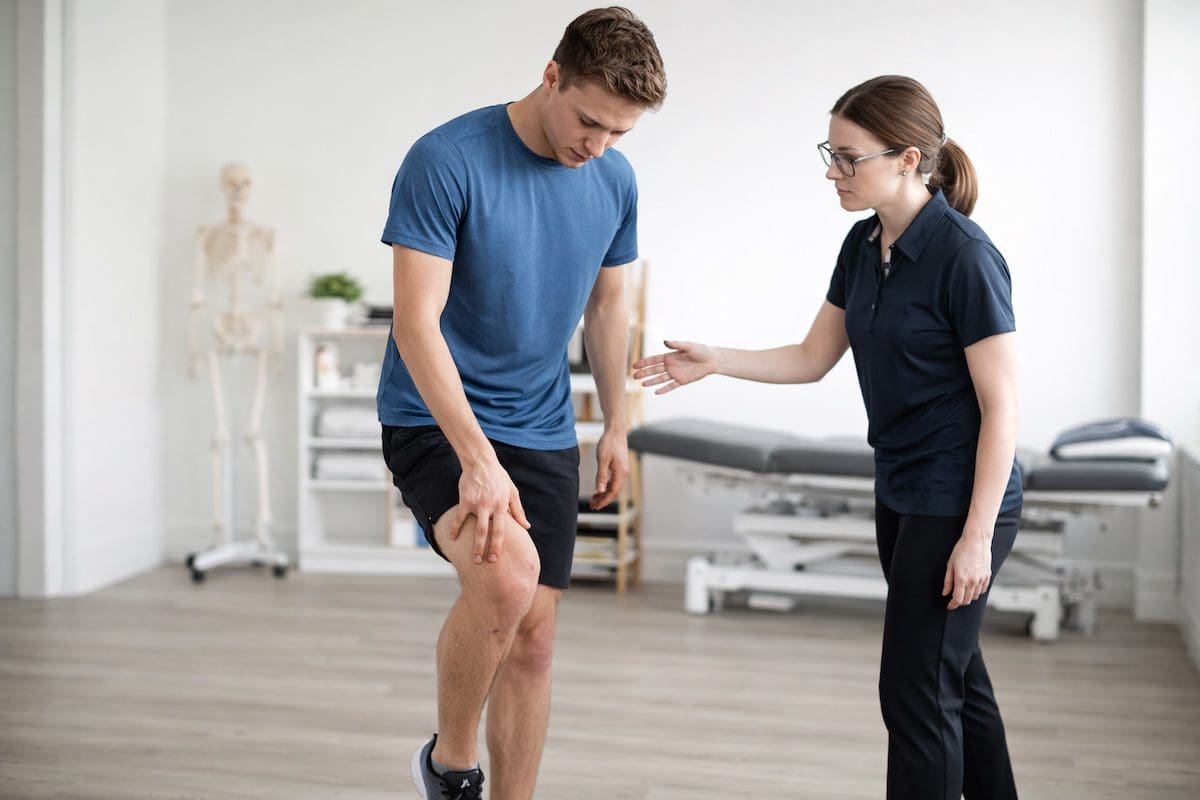
Runner with knee pain pointing to knee during physiotherapy assessment in clinic

Running-related knee pain assessed in clinic

Common running injuries usually develop when repeated running load exceeds tissue capacity.

Common running injuries most often affect the knee, shin, calf and Achilles, and foot. Common examples include shin splints, runner’s knee, Achilles tendinopathy, plantar fasciopathy, and stress fractures.

If your pain keeps returning, changes your stride, or stops you training normally, it is worth comparing this page with our broader running injuries guide and sports injuries hub. These pages help you work out whether the issue is more likely to be a training-load problem, a tendon or joint overload issue, or something that needs earlier assessment.

Common signs of running overload

  • Pain that builds during or after a run
  • Morning stiffness in the Achilles, calf or foot
  • Localised shin or bone pain after load spikes
  • Knee pain with hills, stairs or downhill running
  • Symptoms that keep returning when mileage increases

What are common running injuries?

Common running injuries are overuse or impact-related problems affecting muscles, tendons, joints, bones, or supporting tissues during training. They usually build gradually rather than appearing from one single incident, although some runners also develop acute injuries such as a rolled ankle, muscle tear, or sudden calf pain.

Most runners experience pain in one of a few predictable regions. That is why the best page structure for common running injuries is not just one long list. It should help readers match their symptoms to the right body region and then move to the most relevant condition page.

Why do running injuries happen?

Most running injuries happen because your training load rises faster than your tissues can adapt. This can occur when volume, pace, hills, shoes, surface, recovery, or strength work change too quickly. In other words, the issue is often not running itself, but how much load your body is being asked to tolerate.

Common contributors include sudden weekly kilometre increases, too much speed work, back-to-back harder sessions, poor recovery, reduced calf or hip strength, limited running preparation, and returning too quickly after time off. A running analysis or sports physiotherapy assessment can help identify which factors are most relevant to you.

Most common running injuries by body region

The most common running injuries usually cluster around the tissues that absorb and transfer repeated force. The main hotspots are the knee, shin, calf-Achilles complex, foot, hip-groin region, and lower back. Start with the painful area, then use the links below to drill down to the most likely condition pages.

Assessment helps identify which tissues are overloaded and guide the right treatment approach.

Lower limb physiotherapy assessment with single-leg stance evaluating knee, shin and foot alignment

Assessing lower limb alignment during single-leg stance

Lower limb alignment and control play a key role in common running injuries, particularly affecting the knee, shin, calf and foot during repeated load.

Knee injuries

Knee pain is one of the most common complaints in runners, especially during mileage increases, hills, or downhill running. Front-of-knee pain often links with runner’s knee or patellofemoral pain syndrome, while outer knee pain may relate to ITB syndrome.

Shin injuries

Shin pain is common when impact load, hills, speed work, or total volume rise too fast. The most common diagnosis is shin splints, but more focal pain may suggest a stress fracture or another bone stress problem.

Calf and Achilles injuries

Calf and Achilles pain often flare when runners add hills, speed, sprinting, or faster training blocks. Morning stiffness is common with Achilles tendinopathy, while sudden sharp pain may point to a calf tear. Runners with persistent calf tightness, Achilles soreness, or reduced push-off power often benefit from earlier loading advice and progressive strengthening.

Foot and heel injuries

Foot pain often relates to repeated loading through the arch, heel, forefoot, or smaller stabilising tendons. Heel pain may reflect plantar fasciopathy, while metatarsal or localised forefoot pain may need assessment for a foot stress fracture. Foot symptoms that worsen with longer runs, harder surfaces, or reduced recovery often respond best when footwear, load, and strength are reviewed together.

Hip, thigh and groin injuries

Runners can also develop overload in the hip and pelvis, especially when strength, control, or recovery are lagging behind training demand. Common examples include hamstring strain, gluteal tendinopathy, groin strain, and higher-risk bone stress problems such as femoral stress fracture.

Back and trunk-related pain

Some runners develop lower back symptoms because fatigue, stiffness, or trunk load tolerance cannot keep pace with training. This may present as lower back pain, back muscle pain, or symptoms linked with reduced trunk control.

Why do runners get shin pain?

Runners usually get shin pain when impact load, hills, speed work, or training volume rise faster than the lower leg can adapt. The most common causes are shin splints and bone stress problems, so localised pain that worsens with hopping or lingers after exercise deserves earlier review.

If your pain is broad and exercise-related, shin splints may be more likely. If it is small, sharp, and very local, compare your symptoms with a stress fracture or foot stress fracture.

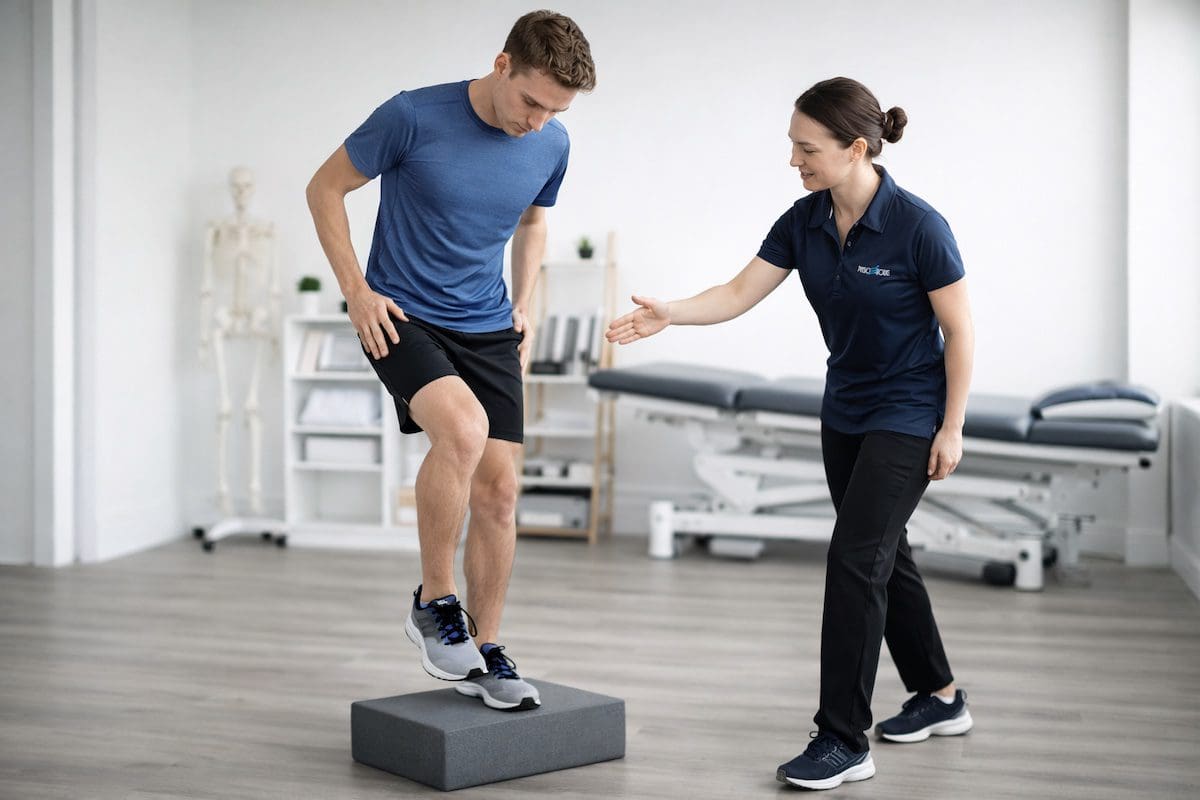
Physiotherapist guiding step-up exercise for lower limb strength and rehabilitation in clinic

Step-up exercise to rebuild strength and control

Step-up exercises can help rebuild lower limb strength, balance and running control during rehabilitation.

How Can Physiotherapy Help Common Running Injuries?

Physiotherapy for common running injuries usually focuses on settling irritation, improving tissue capacity, and grading your return to running. Treatment may include load modification, strength work, calf and hip conditioning, mobility where needed, footwear or training advice, and progressive return-to-run planning.

For some runners, the key issue is simply doing too much too soon. For others, the problem is repeated exposure to hills, speed work, poor recovery, or reduced control through the calf, hip, or trunk. A good plan matches the tissue involved and the demands of your running. This is also where running analysis can add value.

What to watch during training

  • Sharp increases in weekly kilometres
  • Adding speed and hills at the same time
  • Ignoring pain that changes your stride
  • Morning stiffness that is worsening, not easing
  • Localised bone pain that lingers after running

When runners should book an assessment

  • Pain changes your running style or causes limping
  • Symptoms keep returning with mileage increases
  • Morning stiffness is worsening rather than easing
  • Bone pain feels sharp, focal, or lingers after exercise

When should you worry about common running injuries?

You should worry about common running injuries when pain becomes localised, changes your running pattern, causes swelling or limping, wakes you at night, or keeps returning despite rest and modified training. These features increase the chance that you need a clearer diagnosis and a more structured rehabilitation plan.

Seek earlier assessment if you suspect a stress fracture, have calf pain that feels sudden or severe, develop marked swelling, or cannot run without compensating. Even when the injury is not serious, earlier guidance often shortens the downtime and reduces the chance of a repeat flare-up.

How can you reduce the risk of common running injuries?

You can reduce the risk of common running injuries by progressing load gradually, spacing harder sessions sensibly, building calf and hip strength, and monitoring how your body responds to each training block. Prevention is less about one magic exercise and more about managing overall running stress well.

Many runners do well when they combine graded mileage progression with simple strength work, recovery planning, and early response to warning signs. If you are unsure whether your issue is training-related, our pages on running injuries, running analysis, and sports physiotherapy are good next steps.

Common running injuries FAQs

What is the most common running injury?

The most common running injury varies between studies, but knee pain presentations such as runner’s knee and patellofemoral pain are consistently common. Shin splints, Achilles tendon pain, plantar fasciopathy, and stress-related bone pain also appear regularly in both recreational and more experienced runners.

Are most running injuries overuse injuries?

Yes. Most running injuries are overuse-related rather than caused by one dramatic event. They usually develop when repeated impact and training stress outpace the body’s ability to recover and adapt, especially during volume increases, hill work, speed blocks, or a quick return after time off.

What are the first signs of a running injury?

Early signs often include stiffness at the start of a run, pain that builds during or after running, local soreness the next morning, or symptoms that flare every time training volume increases. A small change in stride or confidence can also be an early warning sign worth taking seriously.

Should I stop running if I have pain?

Not always, but you should modify your running if pain is worsening, changing your gait, or not settling by the next day. Some minor symptoms can be managed with load reduction, while sharper, localised, or escalating pain needs earlier assessment to rule out more significant overload problems.

When is shin pain more serious for runners?

Shin pain is more serious when it becomes very localised, hurts with hopping, lingers after exercise, or progresses from exercise pain to walking pain. That pattern can suggest a bone stress injury rather than shin splints and should usually be assessed sooner rather than later.

Can running analysis help prevent injuries?

Running analysis may help when it leads to practical changes in training, strength work, recovery, or technique. It is most useful when combined with a broader physiotherapy assessment, because common running injuries rarely come from one isolated movement issue alone.

What causes knee pain when running?

Knee pain when running is commonly caused by load-related irritation of the patellofemoral joint, ITB, or patellar tendon. It often develops when training increases too quickly or recovery is insufficient.

What to do next

If you think one of these common running injuries matches your symptoms, start by using the body-region links above to narrow the most likely diagnosis. Then compare it with our detailed running injuries guide or book a sports physiotherapy assessment if the problem is limiting your training.

Earlier assessment can help clarify whether you are dealing with tendon overload, joint irritation, muscle strain, or a bone stress issue. That usually leads to a safer return-to-run plan and fewer repeat flare-ups.

Book your appointment – 24/7

Choose your preferred PhysioWorks clinic and book online.

Follow PhysioWorks

Get free physiotherapy tips, exercise videos, recovery advice, and blog updates.

Facebook Instagram YouTube B X Email PhysioWorks

References

  1. Correia CK, Machado JM, Dominski F, de Castro MP. Risk factors for running-related injuries: An umbrella systematic review. J Sport Health Sci. 2024;13(6):743-757. doi:10.1016/j.jshs.2024.04.011
  2. Frandsen JSB, Hulme A, Nielsen RO, et al. How much running is too much? Identifying high-risk running sessions for lower extremity overuse injury in recreational runners. Br J Sports Med. 2025;59(17):1203-1211.
  3. Kakouris N, Yener N, Fong DTP. A systematic review of running-related musculoskeletal injuries in runners. J Sport Health Sci. 2021;10(5):513-522. doi:10.1016/j.jshs.2021.04.001