
Achilles Tendinopathy
Achilles Tendinopathy
Achilles tendinopathy can cause pain, stiffness and reduced push-off strength during walking, running and sport. Recovery usually centres on managing aggravating loads and progressively rebuilding calf and tendon capacity.


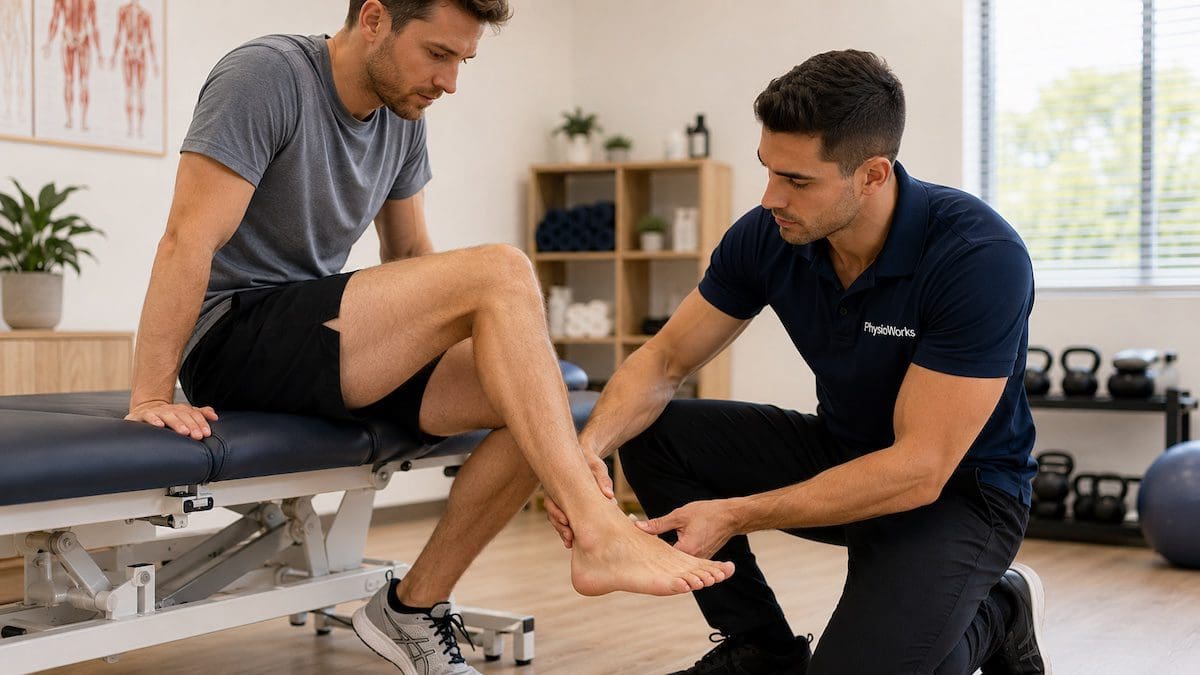
Physiotherapy assessment for Achilles tendon pain, stiffness and loading tolerance.
Achilles tendinopathy commonly develops when the tendon is exposed to more load than it can currently tolerate. Running, jumping, hill work, sprinting and sudden changes in training can contribute.
Useful related information includes heel pain, calf pain and running injuries.
What Is Achilles Tendinopathy?
Achilles tendinopathy is persistent pain and reduced function involving the Achilles tendon. This strong tendon connects the calf muscles to the heel bone and helps you walk, run, jump and push off.
Although many people still use the term “Achilles tendonitis”, symptoms are often associated with tendon overload and reduced load tolerance rather than simple inflammation alone.
Mid-portion Achilles tendinopathy
Pain and tenderness occur in the middle section of the Achilles tendon, above its attachment to the heel.
Insertional Achilles tendinopathy
Pain occurs where the Achilles tendon attaches to the heel bone. Rehabilitation may need modification when positions increase compression at the tendon insertion.
Learn more about how rehabilitation can differ between insertional and mid-portion Achilles tendinopathy.
Sometimes symptoms arise from tissue around the Achilles tendon rather than the tendon itself. A physiotherapist can assess the likely pain source and determine an appropriate rehabilitation approach.
Why Does Achilles Tendinopathy Happen?
Tendons adapt to load. Symptoms can develop when the amount or intensity of activity exceeds what the Achilles tendon can recover from, particularly when training changes happen quickly.
Morning stiffness
The Achilles may feel stiff or sore for the first few steps after getting out of bed.
Higher-load activity
Hills, speed work, sprinting, jumping or longer sessions may aggravate symptoms.
Delayed response
The tendon may warm up during activity but become more painful or stiff later that day or the next morning.
Common Contributing Factors
- previous Achilles tendon pain or calf injury
- reduced calf strength or endurance
- sudden increases in running, sprinting, jumping or hill work
- returning to sport after a break
- changes in footwear
- ankle stiffness or reduced movement control
Other useful pages include ankle pain, heel pain and leg pain.
What Are the Symptoms of Achilles Tendinopathy?
Achilles tendinopathy symptoms vary with tendon location, activity levels and how long the problem has been present.
- morning Achilles pain or stiffness
- pain during or after running, hills, hopping, stairs or jumping
- local tenderness in the tendon
- tendon thickening or swelling
- symptoms after a sudden increase in training
- pain that eases as you warm up but returns afterwards
- reduced confidence or strength when pushing off, hopping or running
How Is Achilles Tendinopathy Diagnosed?
A physiotherapist may assess Achilles tendinopathy using your symptom history, tendon palpation, calf strength testing, ankle movement, hopping tolerance and other functional loading tests.
The assessment can also consider recent changes in training, sport, footwear, work demands and other factors that affect how much load the tendon needs to tolerate.
Do You Need an Ultrasound or MRI?
Imaging is not always required. Ultrasound or MRI may be useful when symptoms persist despite rehabilitation, the presentation behaves unusually or another diagnosis is suspected.
How Is Achilles Tendinopathy Treated?
Treatment usually focuses on progressively rebuilding the Achilles tendon’s ability to tolerate load. The starting point depends on your symptoms, tendon location, calf strength and activity goals.
Progressive Exercise Rehabilitation
Progressive tendon-loading exercise is a central part of Achilles rehabilitation. A program may begin with controlled calf loading before progressing towards heavier resistance, faster movements and activity-specific tasks.
-
Settle Irritable Symptoms
Temporarily modify activities that cause significant flare-ups while maintaining an appropriate level of walking and calf loading.
-
Rebuild Calf Strength
Progress calf raises and resistance exercises to improve calf strength and the Achilles tendon’s capacity to manage load.
-
Return to Running
Gradually reintroduce running while monitoring distance, hills, speed work and the tendon’s response later that day and the following morning.
-
Return to Sport
Progress towards hopping, jumping, sprinting and sport-specific drills when strength and tendon tolerance are ready for higher loads.
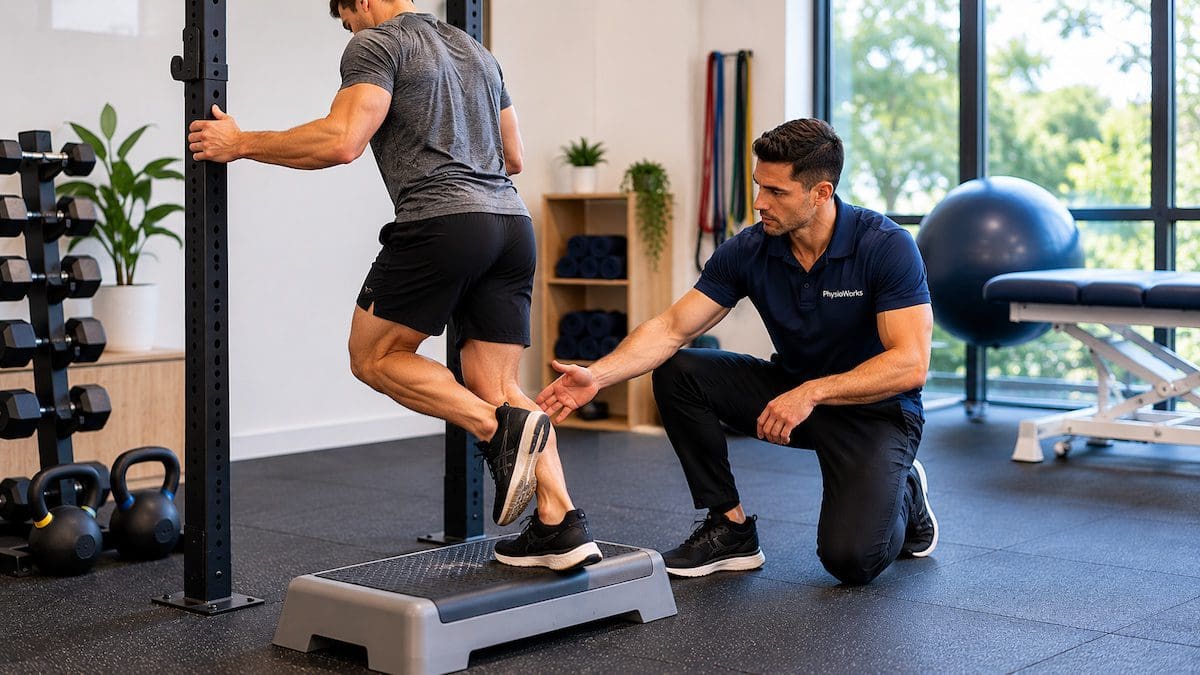
Progressive calf loading can help rebuild strength and Achilles tendon capacity.
How Should You Manage Achilles Tendon Load?
Complete rest is rarely the long-term goal. Instead, many people benefit from reducing the activities that cause significant symptom flare-ups while progressively rebuilding tendon capacity.
Depending on your presentation, this may mean temporarily reducing hills, speed work, jumping, long runs or back-to-back hard sessions rather than stopping all activity.
What Other Treatments May Help?
Exercise and load management usually remain the foundation of rehabilitation. Other strategies may have a role depending on the type of Achilles tendinopathy and how symptoms respond.
- heel lifts or footwear modifications may help reduce tendon compression in some presentations
- shockwave therapy may be considered in some persistent cases
- injections require careful consideration because evidence and potential risks vary
- running technique, training volume and recovery habits may need review
Treatment choices should match the location of symptoms, activity goals and response to rehabilitation rather than relying on one treatment for every Achilles problem.
Can You Keep Running With Achilles Tendinopathy?
Often, yes. However, running load needs to stay within what the tendon can currently tolerate.
Many runners temporarily reduce hills, speed work, distance or consecutive hard sessions while rebuilding calf strength and tendon capacity.
During the run
Monitor whether pain remains manageable or progressively worsens as you continue.
Later that day
Check whether the tendon becomes substantially more painful or stiff after activity.
Next morning
An increase in morning pain or stiffness can indicate that the previous session exceeded current tendon tolerance.
For more information, see common tendon injuries, overuse injuries and load management.
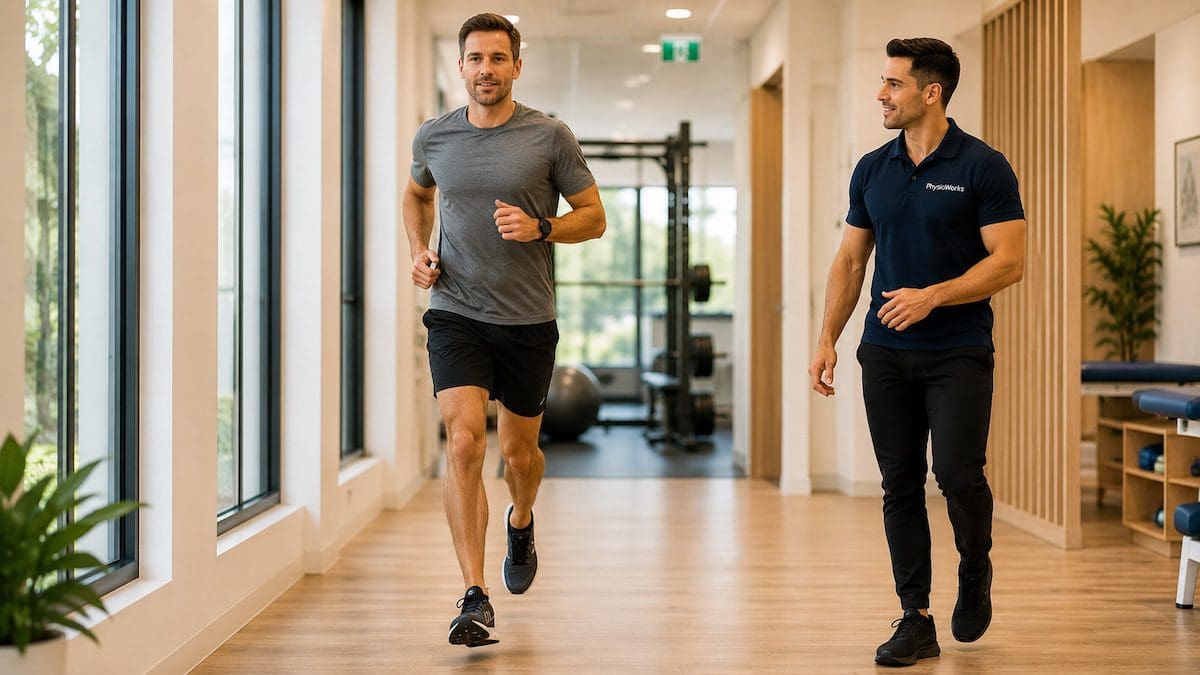
Running can often be reintroduced gradually as calf strength and Achilles tendon tolerance improve.
How Long Does Achilles Tendinopathy Take to Improve?
Recovery time varies. Some people notice meaningful improvement over approximately 8–16 weeks with consistent rehabilitation and sensible load progression. Full rehabilitation and return to higher-load running or sport may take longer, particularly when symptoms are longstanding or more irritable.
Progress depends on factors such as symptom duration, calf strength, tendon location, training demands and how consistently loading can be progressed.
What Should You Do Next?
If Achilles pain keeps returning, begin by identifying the activities that trigger symptoms and temporarily reducing the most aggravating loads rather than stopping all movement.
Progressive calf strengthening can then help rebuild capacity. If pain persists, you cannot hop or push off comfortably, or attempts to return to running or sport repeatedly break down, a physiotherapist can assess contributing factors and guide a staged rehabilitation plan.
Choose your clinic and appointment pathway
Select a PhysioWorks clinic to continue to live booking, an appointment request or reception assistance.
Achilles Tendinopathy FAQs
How long does Achilles tendinopathy take to improve?
Some people notice meaningful improvement over approximately 8–16 weeks with consistent rehabilitation and sensible load progression. Full rehabilitation and return to higher-load running or sport may take longer, particularly when symptoms are longstanding or calf strength and tendon tolerance have reduced.
Can I keep running with Achilles tendinopathy?
Often, yes. Many runners continue with modified training while reducing hills, speed work and sudden load spikes. Your response later that day and the next morning can help indicate whether the tendon tolerated the session.
What exercises are commonly used for Achilles tendinopathy?
Progressive calf raises, heavier resistance exercises and staged tendon-loading programs are commonly used. The appropriate starting point depends on pain level, tendon location, strength and activity goals.
What is the difference between insertional and mid-portion Achilles tendinopathy?
Insertional symptoms occur where the Achilles tendon attaches to the heel bone. Mid-portion symptoms occur higher in the tendon body. The distinction matters because loading positions may need adjustment when insertional symptoms are sensitive to compression.
When should I consider imaging?
Imaging may help when symptoms persist despite rehabilitation, pain behaves unusually or another diagnosis is suspected. Many cases can still be assessed and managed without imaging.
When should I worry about an Achilles rupture?
Seek urgent medical care if you felt a pop, developed sudden sharp pain or cannot push off normally when walking. These symptoms may indicate an Achilles tendon rupture rather than tendinopathy.
References
- Chimenti RL, Neville C, Houck J, Cuddeford T, Carreira D, Martin RL. Achilles pain, stiffness, and muscle power deficits: midportion Achilles tendinopathy revision 2024. J Orthop Sports Phys Ther. 2024;54(12):CPG1-CPG32.
- Ko VMC, Cao M, Leung T, Fu SN. Conservative treatments for insertional Achilles tendinopathy: a systematic review and network meta-analysis. Sports Med Open. 2023.
- Feeney KM, Punnoose A, Pomeroy E, et al. The effectiveness of extracorporeal shockwave therapy for midportion Achilles tendinopathy. J Orthop Surg Res. 2022.
