
ITB Syndrome: Outer Knee Pain in Runners


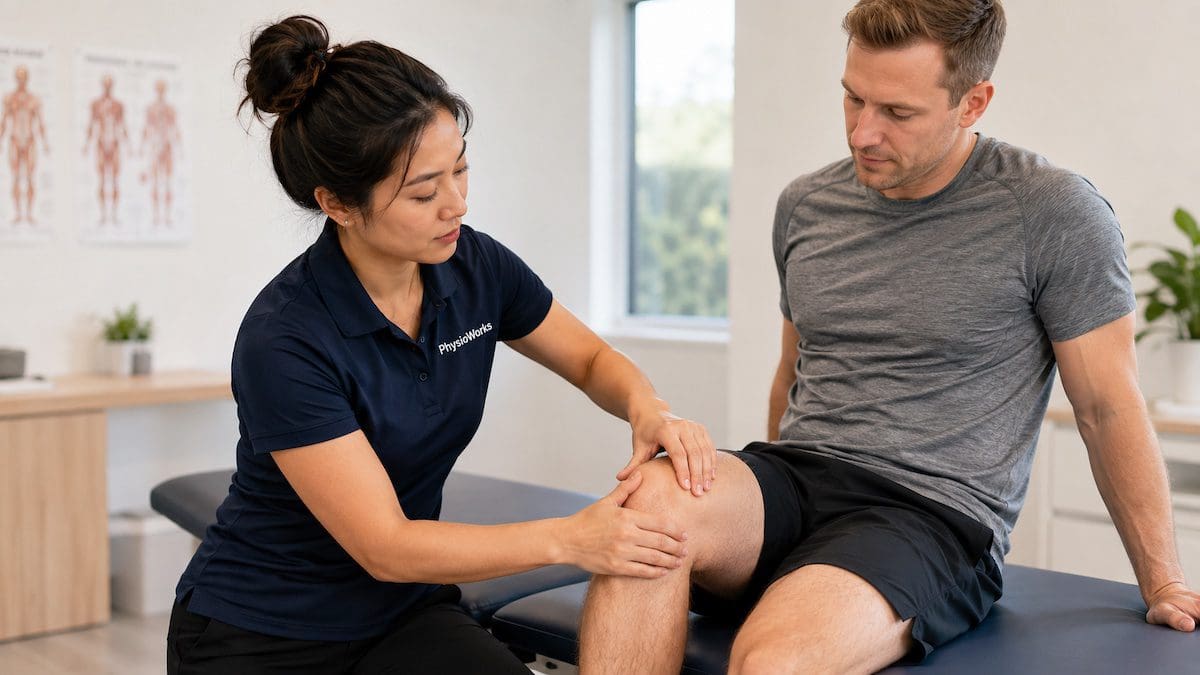
Lateral knee assessment for ITB syndrome.
ITB syndrome is a common running-related cause of outer knee pain. It usually builds gradually when training load, hip control, terrain, or running mechanics overload the lateral knee.
Many people also call it iliotibial band friction syndrome or outer runner’s knee. Pain often appears during or after running and may worsen with hills, longer distances, downhill running, or repeated knee bending. A knee physiotherapy assessment can help identify why symptoms started and how to manage them safely.
Common signs may include:
- Pain on the outside of the knee.
- Pain that worsens with hills, distance, or downhill running.
- Tenderness near the lateral knee joint.
- Symptoms that ease with rest but return when training resumes.
What Is ITB Syndrome?
ITB syndrome is irritation around the outside of the knee linked to repeated loading of the iliotibial band region. It commonly affects runners because each stride repeatedly bends and straightens the knee under load.
The iliotibial band is a thick band of connective tissue running from the outer hip to the outside of the knee. It works with the tensor fascia latae and gluteus maximus to help control leg movement during walking and running.
Common Causes of ITB Syndrome
ITB syndrome usually comes from a mix of training load, running mechanics, strength, and recovery factors. It is rarely due to one isolated cause.
- Sudden increases in running distance, speed, or hills.
- Reduced hip rotator control.
- Reduced core stability.
- Poor foot arch control.
- Running on cambered surfaces or excessive downhill running.
- Footwear that does not suit your running load or mechanics.
What Are the Symptoms of ITB Syndrome?
ITB syndrome typically causes sharp, burning, or aching pain on the outside of the knee. Symptoms often start after a predictable running distance and may worsen if you keep running.
- Sharp or burning pain on the outside of the knee.
- Pain that worsens as running continues.
- Discomfort with stairs, hills, or downhill walking.
- Tenderness near the outer knee joint.
- Pain that settles with rest but returns when training resumes.
ITB Syndrome vs Runner’s Knee
ITB syndrome usually causes pain on the outside of the knee. Runner’s knee, or patellofemoral pain, more commonly causes pain around or behind the kneecap.
Both conditions can affect runners, but they often need different assessment and exercise priorities. If your pain sits more around the front of the knee, read more about patellofemoral pain syndrome and runner’s knee.
How Is ITB Syndrome Diagnosed?
A physiotherapist can usually assess ITB syndrome through your history, symptom pattern, and physical examination. This may include checking hip strength, knee control, flexibility, single-leg loading, and running mechanics.
Scans are not routinely required. However, imaging may be considered if symptoms suggest another knee condition, such as a meniscus injury or lateral knee joint problem.
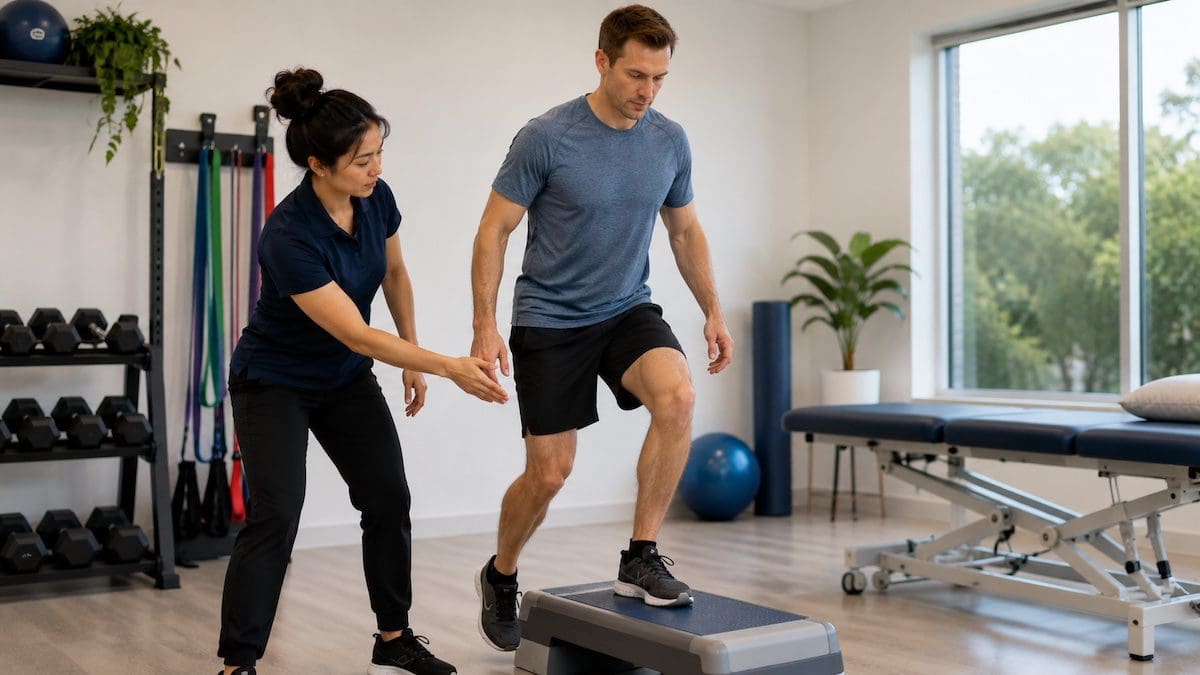
Step-down control helps guide rehab priorities.
Physiotherapy Management for ITB Syndrome
Physiotherapy for ITB syndrome focuses on the factors driving irritation, not just the painful area. Your program may include short-term load changes, strength work, movement retraining, and a gradual return-to-running plan.
- Short-term running load modification.
- Targeted hip, knee, calf, and trunk strengthening.
- Movement control and single-leg loading exercises.
- Running technique review where needed.
- Gradual return-to-running guidance.
- Education around training progression and recovery.
Load Management for ITB Syndrome
Load management for ITB syndrome means reducing irritating running loads, rebuilding strength, then progressing gradually. This helps calm outer knee pain while maintaining fitness where safe.
Common triggers include sudden distance increases, repeated hills, speed sessions, cambered roads, and poor recovery. Your plan should track pain during running, symptoms later that day, and your response over the next 24 to 48 hours.
- Reduce hills, speed work, or long runs during flare-ups.
- Keep pain within a tolerable range during modified training.
- Rebuild hip and leg strength before increasing running volume.
- Avoid sudden spikes in distance, pace, or terrain difficulty.
- Progress running only when symptoms settle predictably.
Foam Rolling and ITB Syndrome
Foam rollers may help manage surrounding muscle tension and comfort. However, foam rolling is usually more useful when combined with strengthening, load management, and movement-based rehabilitation.
Can You Keep Running With ITB Syndrome?
Some people can keep running with ITB syndrome if symptoms remain mild and settle quickly after training. This usually means reducing distance, avoiding hills, slowing pace, and spacing sessions.
You should stop or reduce running if pain worsens during the run, changes your gait, lingers into the next day, or becomes painful during normal walking. In these cases, a physiotherapist can help adjust training while you rebuild strength and tolerance.
How Can You Prevent ITB Syndrome Returning?
Reducing recurrence risk usually means managing running load and keeping the hip, knee, and trunk strong enough for your training demands.
- Build weekly running distance gradually.
- Avoid sudden hill or speed spikes.
- Maintain hip and trunk strength.
- Vary running surfaces where possible.
- Review shoes, cadence, and running form if symptoms keep returning.
When Should You Seek Help for ITB Syndrome?
Seek help if outer knee pain keeps returning, limits your running, affects stairs, or does not improve after a short period of load reduction. Early assessment may help identify the main drivers before symptoms become harder to settle.
What to do now:
- Reduce painful running loads for a short period.
- Avoid hills and downhill running during flare-ups.
- Start controlled hip and knee strengthening.
- Book an assessment if symptoms keep returning.
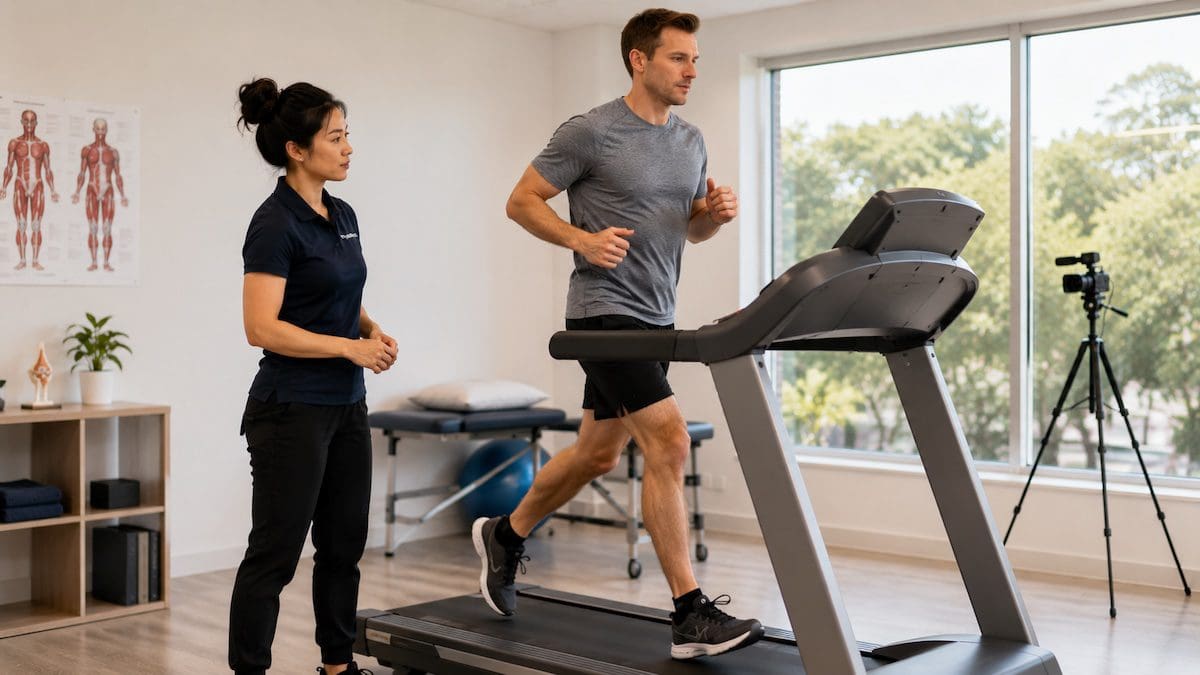
Running review helps guide a safe return.
Frequently Asked Questions About ITB Syndrome
What is ITB syndrome?
ITB syndrome is a running-related condition that commonly causes pain on the outside of the knee. It is often linked to repeated compression near the iliotibial band during running, especially with hills, longer distances, or repeated knee bending.
What causes ITB syndrome in runners?
ITB syndrome in runners often comes from a rapid change in training load, hill running, poor recovery, or reduced hip and trunk control. Footwear, cadence, terrain, and running mechanics may also contribute.
How long does ITB syndrome take to improve?
Recovery time varies. Many people improve over several weeks when they adjust running load, rebuild strength, and address movement factors. Long-standing symptoms may take longer, especially if training errors continue.
Is foam rolling enough to treat ITB syndrome?
Foam rolling may help short-term comfort around the hip and thigh muscles. However, it is rarely enough on its own. Most people need a plan that also addresses strength, running load, movement control, and return-to-running progressions.
Do I need scans for ITB syndrome?
Scans are not always required. A physiotherapist can often assess ITB syndrome through your history and physical examination. Imaging may be considered if symptoms are unusual, severe, or suggest another knee condition.
Can ITB syndrome feel like runner’s knee?
Yes, both can affect runners, but the pain location often differs. ITB syndrome usually causes outer knee pain, while runner’s knee often causes pain around or behind the kneecap. Assessment helps confirm the likely source.
Should I stop running with ITB syndrome?
You may need to reduce or pause running if pain worsens during a run, changes your stride, or remains sore the next day. Mild symptoms may allow modified running, but the training plan should match your symptoms.
What to Do Next
If you have ongoing ITB syndrome or outer knee pain when running, a PhysioWorks physiotherapist can assess your contributing factors and discuss suitable management options.
Book an appointment if you want help with pain control, running load, strength progressions, or return-to-running planning.
Choose your clinic and appointment pathway
Select a PhysioWorks clinic to continue to live booking, an appointment request or reception assistance.
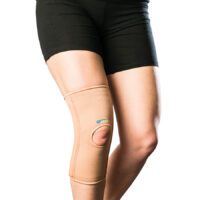
Knee Support Products
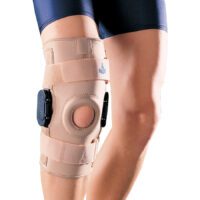
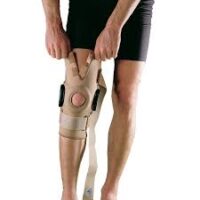
These knee support products are commonly used by our physiotherapists to help reduce strain, improve stability, and support your recovery at home.
-
 Exercise Equipment, Knee, Resistance Band
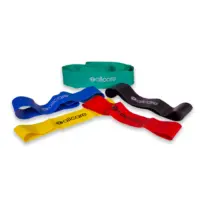
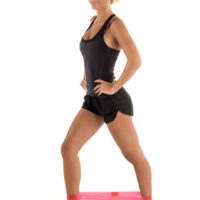
POW.R Fabric Mini Loop Bands
$12.00 – $55.00Select optionsQuick View -
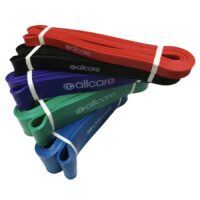
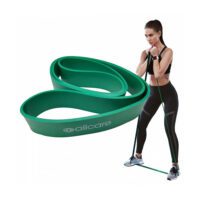 Exercise Equipment, Resistance Band
AllCare Powerloop Bands
$24.95 – $79.95Select optionsQuick View - Liniments & Gels, Massage Liniments, Pain Management
Fisiocrem
$16.95 – $39.95Select optionsQuick View -


-
-
-
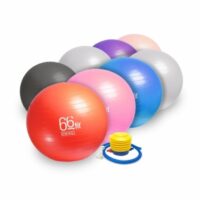
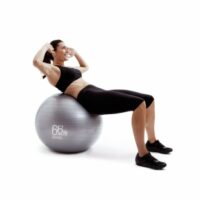 Exercise Balls, Back, Exercise Equipment, Knee, Shoulder
66fit Exercise Balls | Core & Rehab Stability Ball
$32.00 – $57.00Select optionsQuick View -
-
- EMS Machines, Pain Management, TENS Machine, TENS Machine & EMS
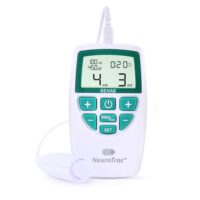
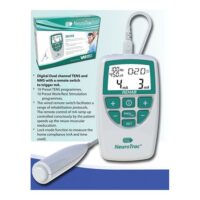
NeuroTrac Rehab (TENS Machine + EMS)
$285.00Add to cartQuick View -

 Calf, Elbow, Ice & Heat, Knee, Pain Management
Victor Elastic Cold Sleeve
$44.00 – $60.00Select optionsQuick View -
-
-




References
- Sanchez-Alvarado A, et al. Effects of conservative treatment strategies for iliotibial band syndrome on pain and function in runners: a systematic review. Front Sports Act Living. 2024.
- Friede MC, et al. Conservative treatment of iliotibial band syndrome in runners. Sports Med. 2022.
- Hutchinson LA, et al. The iliotibial band: a complex structure with versatile functions. Sports Med. 2022.
- Christofi I, et al. The effectiveness and characteristics of physiotherapy interventions for iliotibial band syndrome: a scoping review. Physiotherapy. 2024.
- Hadeed A, Tapscott DC. Iliotibial Band Friction Syndrome. StatPearls. 2023.
