
Text Neck
Text Neck: Symptoms, Causes and What You Can Do
Neck discomfort during prolonged phone, tablet or computer use is common. Understanding your screen habits, movement and neck capacity can help you manage symptoms without becoming worried about finding one “perfect” posture.



Text neck is a common term for neck pain, stiffness or fatigue associated with prolonged use of smartphones, tablets, laptops and other screens. Symptoms may develop when your neck stays in one position for longer than it comfortably tolerates.
Looking down is a normal neck movement and is not automatically harmful. Problems are more likely when prolonged or repetitive screen use combines with limited movement variation, an unsuitable workstation, reduced neck or upper-back capacity, stress, fatigue or a sudden increase in screen time.
Common symptoms
Neck ache, stiffness, fatigue, shoulder-blade discomfort and some neck-related headaches.
Common trigger
Long periods using a phone, tablet or computer without changing position.
Useful approach
Vary your position, adjust your screen when practical and gradually build movement and strength capacity.
What Does Text Neck Feel Like?
Symptoms often build gradually during or after repeated screen use rather than beginning with one clear injury.
Common symptoms may include:
- neck ache or stiffness
- tired or heavy-feeling neck muscles
- tightness across the shoulders
- upper-back or shoulder-blade discomfort
- reduced comfort turning or moving your neck
- symptoms that increase during prolonged phone or computer use
- headaches associated with neck discomfort or sustained positions
- temporary improvement after moving or changing position
Arm pain, pins and needles, numbness or weakness are not simply symptoms to assume are caused by text neck. These symptoms may require assessment for another neck problem. Our guides to neck and arm pain and cervical radiculopathy explain these symptoms in more detail.
Why Can Screen Use Irritate Your Neck?
Your neck is designed to move through many different positions. However, any position can become uncomfortable when you hold it for long enough.
During prolonged device use, several factors may contribute to symptoms:
- spending long periods with little movement variation
- frequently looking down towards a low screen
- working with a laptop or monitor that is poorly positioned
- limited upper-back movement
- reduced neck, shoulder or upper-back endurance
- a rapid increase in study, gaming or computer work
- stress, fatigue or poor sleep increasing muscle tension or pain sensitivity
For detailed workstation advice, see our ergonomics guide.
Is Looking Down at Your Phone Bad for Your Neck?
Not necessarily. Looking down is a normal part of neck movement and you do not need to keep your head perfectly upright throughout the day.
The bigger issue is often how long you stay in one position, how frequently you repeat it and whether your current neck capacity matches the amount of screen-based work you are doing.
Changing position regularly is generally more practical than trying to hold one rigid “correct” posture. Raising your device at times may help, but so can resting your arms, reclining slightly, standing up, changing tasks or simply moving your neck and shoulders.
Does Forward Head Posture Increase Neck Load?
Your head weighs several kilograms, and the muscular demand on your neck can change as your head moves further away from your trunk. However, this does not mean that a particular head angle automatically causes injury.
Older descriptions of text neck sometimes convert estimated mechanical forces into a simple message that looking down “damages” the cervical spine. In practice, symptoms are more complex and vary between people.
Duration, movement variety, physical capacity, overall workload and individual sensitivity are usually more useful considerations than one posture measurement alone.
Is Text Neck Serious?
Most screen-related neck discomfort is not serious and may improve with sensible activity changes, exercise and time. However, not every episode of neck pain comes from device use.
Arrange an assessment if symptoms continue to worsen, frequently disturb sleep or substantially interfere with work, study, driving or normal activity.
How Is Text Neck Assessed?
A physiotherapist can assess your symptoms rather than relying on the label “text neck” alone.
An assessment may include:
- when and how your symptoms started
- which activities or screen positions reproduce symptoms
- neck movement and movement tolerance
- upper-back and shoulder movement
- muscle strength and endurance
- workstation or device habits
- headache behaviour when relevant
- screening for nerve-related or other neck symptoms
Imaging is not routinely required simply because neck discomfort occurs during device use. Your physiotherapist or doctor can advise when further investigation is appropriate.
What Can You Do About Text Neck?
For many people, the first step is not to avoid screens completely. Instead, change how the load is distributed across your day.
-
Change position regularly
Avoid staying in one neck position for long uninterrupted periods. Small changes throughout the day can be useful.
-
Adjust the device when practical
Bring a phone or tablet higher at times, support your elbows or alter your sitting position rather than forcing your shoulders upwards.
-
Break up long screen sessions
Stand, walk, change tasks or move your neck and shoulders periodically. You do not need a complicated stretching routine every time.
-
Improve your workstation
Position your chair, keyboard and monitor so that you can work comfortably and change position without repeatedly straining to see the screen.
-
Keep moving
Gentle neck, shoulder and upper-back movement is usually more useful than guarding your neck or becoming afraid to move it.
-
Build physical capacity
Progressive strengthening can improve the ability of your neck, shoulders and upper back to tolerate work, study and recreational screen use.
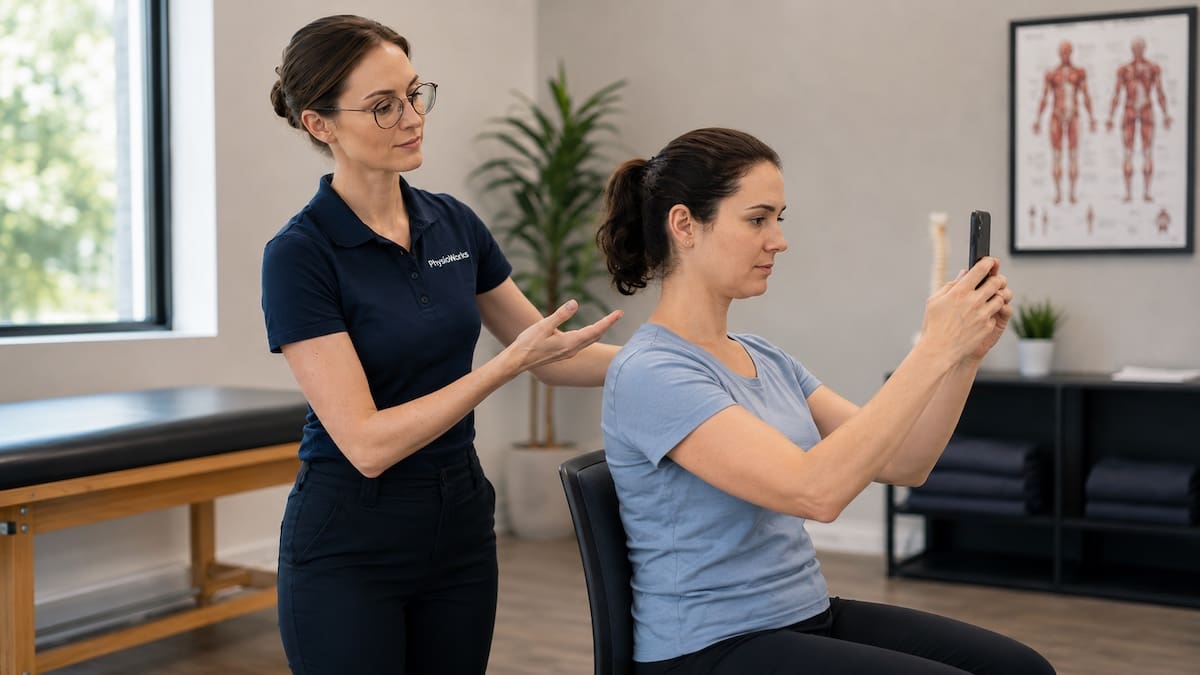
Can Exercise Help Text Neck?
Exercise can help some people improve movement, strength and tolerance for prolonged work or screen use.
A suitable program may include:
- comfortable neck movement exercises
- upper-back mobility exercises
- neck muscle endurance exercises
- shoulder-blade and upper-back strengthening
- gradual strengthening for work, study or sport demands
Exercise should suit your symptoms and current capacity. Progress gradually rather than trying to force your neck into a particular posture.
Our neck exercises guide provides further general information.

How Can Physiotherapy Help?
Physiotherapy may be useful when symptoms persist, keep returning or interfere with normal activities.
Depending on your assessment, physiotherapy may include:
- education about symptom behaviour and activity
- neck and upper-back mobility exercises
- progressive neck and shoulder strengthening
- workstation and device-use advice
- manual therapy when it provides a useful short-term adjunct
- graded return to normal work, study, exercise or sport
The aim is not to force your body into one ideal posture. Instead, treatment should help you understand your triggers, regain comfortable movement and build tolerance for the activities that matter to you.
Can Manual Therapy or Dry Needling Help?
Some people find hands-on treatment useful for short-term symptom relief or movement restriction. Manual therapy should usually sit alongside active rehabilitation rather than replace movement and exercise.
Dry needling may also be considered for selected muscle-related symptoms when your physiotherapist considers it appropriate.
How Can You Reduce the Chance of Symptoms Returning?
You do not need to avoid phones or screens. Instead, aim to make your daily screen exposure more manageable.
- vary your sitting and standing positions
- change tasks during long periods of computer work
- bring screens closer to a comfortable viewing height when useful
- support your forearms when holding a device for longer periods
- keep physically active
- maintain neck, shoulder and upper-back strength
- increase heavy study, gaming or computer workloads gradually where possible
Our information about posture and posture exercises provides more general guidance.
When Should You See a Physiotherapist?
Consider physiotherapy assessment if:
- neck discomfort keeps returning during work or screen use
- symptoms have not settled with simple activity changes
- neck movement is becoming increasingly restricted
- headaches regularly occur with your neck symptoms
- you are unsure which exercises are appropriate
- symptoms are interfering with work, study, driving, sleep or exercise
If you develop arm pain, numbness, pins and needles or weakness, a clinical assessment can help determine whether another neck condition is contributing.
Related Neck and Posture Guides
Text Neck FAQs
What is text neck?
Text neck is a common term for neck pain, stiffness or fatigue associated with prolonged smartphone, tablet or computer use. Symptoms often relate to sustained positions and repeated screen exposure rather than one specific injury.
Can looking down at your phone damage your neck?
Looking down is a normal neck movement and does not automatically cause damage. Symptoms are more likely when a position is held for a long time, repeated frequently or exceeds your current movement and strength capacity.
What does text neck feel like?
Common symptoms include neck ache, stiffness, muscle fatigue, shoulder tightness, upper-back discomfort and some neck-related headaches. Symptoms often increase during prolonged screen use and ease after moving or changing position.
How do you treat text neck?
Management may include changing position more often, improving device or workstation setup, maintaining normal movement and progressively strengthening the neck, shoulders and upper back. Physiotherapy may help when symptoms persist or repeatedly interfere with normal activities.
Can exercises help text neck?
Exercise may help improve neck movement, muscle endurance and tolerance for work or screen use. The most appropriate exercises depend on your symptoms, current capacity and other health factors.
Can text neck cause headaches?
Some people experience headaches alongside screen-related neck discomfort. When a headache is associated with neck movement or neck symptoms, assessment can help determine whether a cervicogenic headache or another headache type may be contributing.
When should I see a physiotherapist for text neck?
Consider assessment when symptoms persist, keep returning, limit neck movement or interfere with work, study, sleep or normal activity. Earlier assessment is also appropriate when symptoms extend into the arm or include numbness, pins and needles or weakness.
What to Do Next
If prolonged phone or computer use is causing persistent neck discomfort, a physiotherapy assessment can help identify the factors that are most relevant to you.
Your physiotherapist can assess your movement, strength, screen habits and symptom behaviour, then recommend practical changes and exercises suited to your goals.
Choose your clinic and appointment pathway
Select a PhysioWorks clinic to continue to live booking, an appointment request or reception assistance.
Neck Products
These neck products are commonly used by our physiotherapists to improve strength, posture, movement, plus assist home exercise programs.
-
-
-


-

 Back, Exercise Equipment, Neck, Resistance Band
66Fit Over Door Neck Traction Unit
$63.00Add to cartQuick View - Liniments & Gels, Massage Liniments, Pain Management
Fisiocrem
$16.95 – $39.95Select optionsQuick View -


-

 Ice & Heat, Pain Management, Uncategorized
PhysiPak Universal Heat pack
$79.00Select optionsQuick View -


-
-


- Christmas Gift Ideas, Neck, Pillows/Cushions
FlexiPillow Alleve Pillow
$109.95Add to cartQuick View -
- EMS Machines, Pain Management, TENS Machine, TENS Machine & EMS
NeuroTrac Rehab (TENS Machine + EMS)
$285.00Add to cartQuick View














References
- Hansraj KK. Assessment of stresses in the cervical spine caused by posture and position of the head. Surgical Technology International. 2014;25:277–279.
- Tsantili AR, et al. Text Neck Syndrome: Disentangling a New Epidemic. Healthcare. 2022.
- Elvan A, et al. The association between mobile phone usage duration, neck muscle endurance, and neck pain among university students. Scientific Reports. 2024.
- Piruta J, et al. Physiotherapy in Text Neck Syndrome: A Scoping Review. 2025.
