What Should You Do First After a Sports Injury?
In the first stage, aim to protect the injured area without stopping all movement unless symptoms demand it. Relative rest usually works better than complete rest. This may mean reducing running, jumping, sprinting, tackling, lifting, or throwing while keeping gentle pain-free movement going.
Compression and elevation may help short-term swelling for some injuries. Ice may help pain early, but it should not replace sensible loading decisions. Modern soft tissue guidance also highlights protection, education, gradual loading, and exercise as recovery progresses. You can read more about staged tissue recovery in our soft tissue injury healing guide.
What Should You Avoid in the First 48 to 72 Hours?
Some early choices can aggravate swelling, bruising, or pain. For many acute injuries, it is sensible to avoid heat, alcohol, hard running, and massage in the first few days if the injury is hot, swollen, or bruised. Our HARM protocol guide explains these early caution points.
Seek help sooner if you notice:
- severe pain or rapid swelling
- inability to walk, run, grip, throw, or use the limb normally
- numbness, pins and needles, or unusual weakness
- joint giving way, locking, or marked instability
- symptoms that keep flaring each time you return to training
Should You Rest Completely or Keep Moving?
Complete rest is rarely the goal for mild to moderate sports injuries. Instead, modify activity to keep symptoms controlled while maintaining safe movement. For example, an athlete with a lower-limb injury may swap running for cycling, pool work, or strength exercises that do not increase pain or swelling.
The key is symptom response. If pain rises sharply during activity, swelling increases, or symptoms are worse the next day, the load is probably too high. If movement feels comfortable and settles well afterwards, it may be a useful part of recovery.
When Should You Book Physiotherapy?
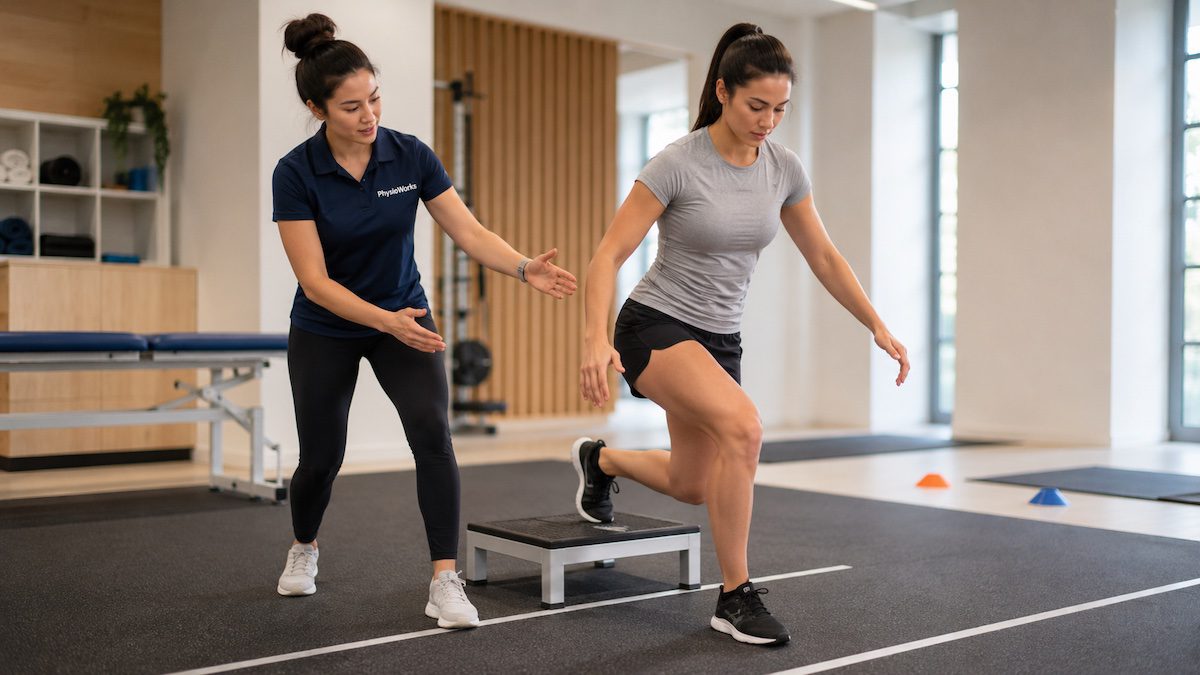
Consider physiotherapy when symptoms are not settling, you are unsure what to load, or the injury keeps returning. A physiotherapist can assess the likely injury, check movement and strength, and help you decide what to protect, what to keep moving, and when to progress.
Assessment is especially useful if sport involves sprinting, jumping, cutting, landing, contact, throwing, or repeated high-load movements. These tasks often need a staged plan rather than a simple “wait until it feels better” approach.
How Does Physiotherapy Guide Sports Injury Management?
Physiotherapy management usually starts by clarifying the injury pattern and the sport demands. Your physiotherapist may assess range of movement, strength, balance, control, swelling, tenderness, and sport-specific movements. This helps guide a plan that fits your injury and your goals.
Management may include education, load planning, hands-on care where useful, exercise rehabilitation, taping or bracing advice, and progressive sport-specific drills. If the injury is recent and painful, early care usually focuses on symptom control and safe movement. Later care usually focuses on strength, power, control, confidence, and training tolerance.
How Do You Return to Sport Safely?
Return to sport should not rely on time alone. A safer progression usually checks pain, swelling, strength, movement quality, sport confidence, and tolerance to training. Our return-to-sport testing page explains how structured testing may guide readiness after injuries such as ankle sprains, hamstring strains, knee injuries, and other sports injuries.
A simple return-to-sport pathway
- Settle symptoms: reduce pain, swelling, limping, or guarding.
- Restore movement: regain comfortable joint and muscle range.
- Build strength: rebuild the injured area and nearby muscle groups.
- Add control: practise balance, landing, cutting, running, or throwing mechanics.
- Rejoin training: start with controlled drills before full competition.
What About Children and Teenagers?
Young athletes need extra care when pain affects growth areas, training load, or confidence. Pain that changes running style, causes limping, or keeps returning should not be ignored. Our kids sports injuries guide explains common warning signs and return-to-sport considerations for children and teenagers.
When Is an Acute Sports Injury Clinic Useful?
An acute sports injury clinic may suit athletes who need early guidance after a sprain, strain, fall, tackle, twist, or flare-up. Early assessment can help you avoid guessing and set a clearer first-week plan.
FAQs About Sports Injury Management
What should I do first after a sports injury?
Start by protecting the injured area and reducing painful load. Use relative rest rather than complete rest where possible. Compression and elevation may help swelling for some injuries. If pain is severe, swelling is increasing, or function is limited, book an assessment.
Should I use ice or heat for a sports injury?
Ice may help short-term pain in the early phase, especially when swelling is present. Heat is usually better saved for later stiffness or muscle guarding. Avoid heat in the first few days if the area is hot, swollen, or bruised.
Can I keep training with a sports injury?
Often, yes, but training usually needs modification. Choose activities that do not increase pain, swelling, limping, or next-day symptoms. A physiotherapist can help you choose safe substitutions and plan a gradual return.
When should I see a physiotherapist?
Consider physiotherapy if pain persists beyond a few days, swelling is significant, movement is restricted, or you are unsure how to return to training. Repeated flare-ups after returning to sport also suggest the injury needs a clearer progression plan.
How do I return to sport safely?
Return gradually. Rebuild movement, strength, balance, control, speed, and sport-specific skills before full competition. Progression should be guided by symptoms, movement quality, and training tolerance rather than time alone.
What to Do Next
If a sports injury is limiting training, confidence, or daily activity, a physiotherapy assessment can help clarify the next step. Early guidance may reduce unnecessary rest, support safer loading, and lower the chance of repeated flare-ups.
Book online with PhysioWorks if you want help planning recovery, training modification, and return to sport.