ACL

ACL Injury FAQs: Symptoms, Surgery, Recovery & Rehab


ACL injury FAQs answer common questions about a torn anterior cruciate ligament, including symptoms, MRI scans, braces, the Cross Bracing Protocol, treatment options, surgery, and recovery. If your knee twisted, swelled quickly, and now feels unstable, you may have an ACL injury and should get it assessed early.

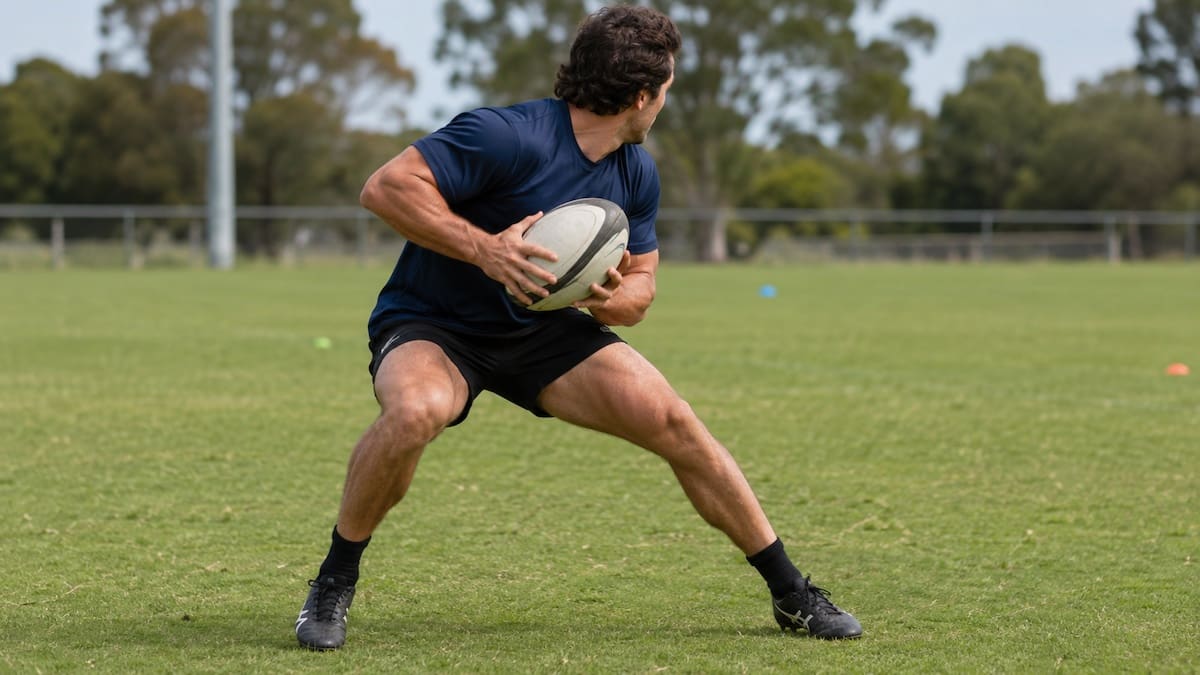
An ACL injury is one of several causes of knee pain and instability. It often happens during pivoting, landing, or sudden change-of-direction sports. This page gives you clear answers first, then links you to more detailed ACL, scan, bracing, rehabilitation, surgery, and return to sport information.

Common early signs of an ACL injury

  • a pop or sudden shift at the time of injury
  • rapid knee swelling over the first few hours
  • pain with walking, twisting, or stairs
  • a feeling that the knee may buckle or give way
  • reduced confidence pushing off, landing, or turning

What is an ACL injury?

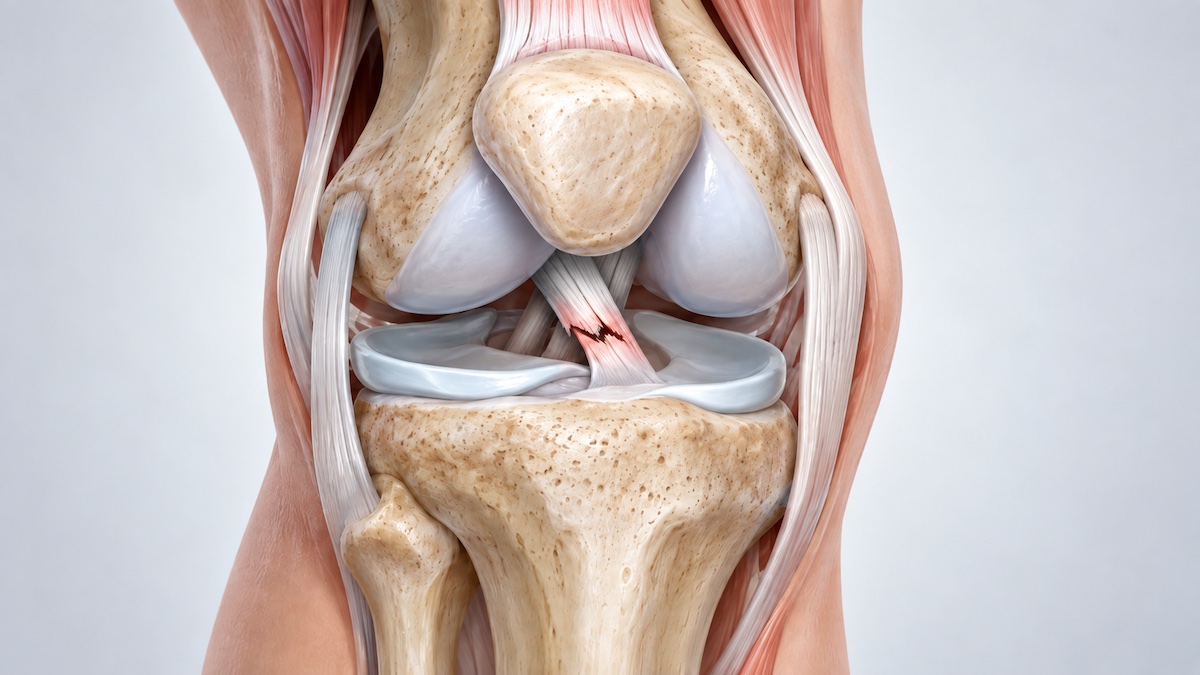
An ACL injury is a sprain or tear of the anterior cruciate ligament inside your knee. The ACL helps control forward movement and rotation of the shin bone, so when it is injured the knee may feel painful, swollen, and unreliable during turning, landing, or quick direction changes.

The ACL is one of the main stabilising ligaments of the knee. As a result, a torn ACL often affects confidence with sport, stairs, uneven ground, and sudden movements. Related injuries can occur at the same time, including meniscus tears, MCL tears, bone bruising, and other knee ligament injuries.

What are the first signs of an ACL tear?

The first signs of an ACL tear are usually a sudden twist or awkward landing, followed by pain, fast swelling, and a feeling that the knee has shifted or given way. Some people hear or feel a pop, while others mainly notice loss of trust in the leg.

Not every ACL injury looks the same. Some people can still walk, but the knee feels unstable with pivoting or single-leg loading. Others struggle to continue sport straight away. For more detail, read what are the symptoms of an ACL tear? and how do you know if you have a torn ACL?

How is an ACL injury diagnosed?

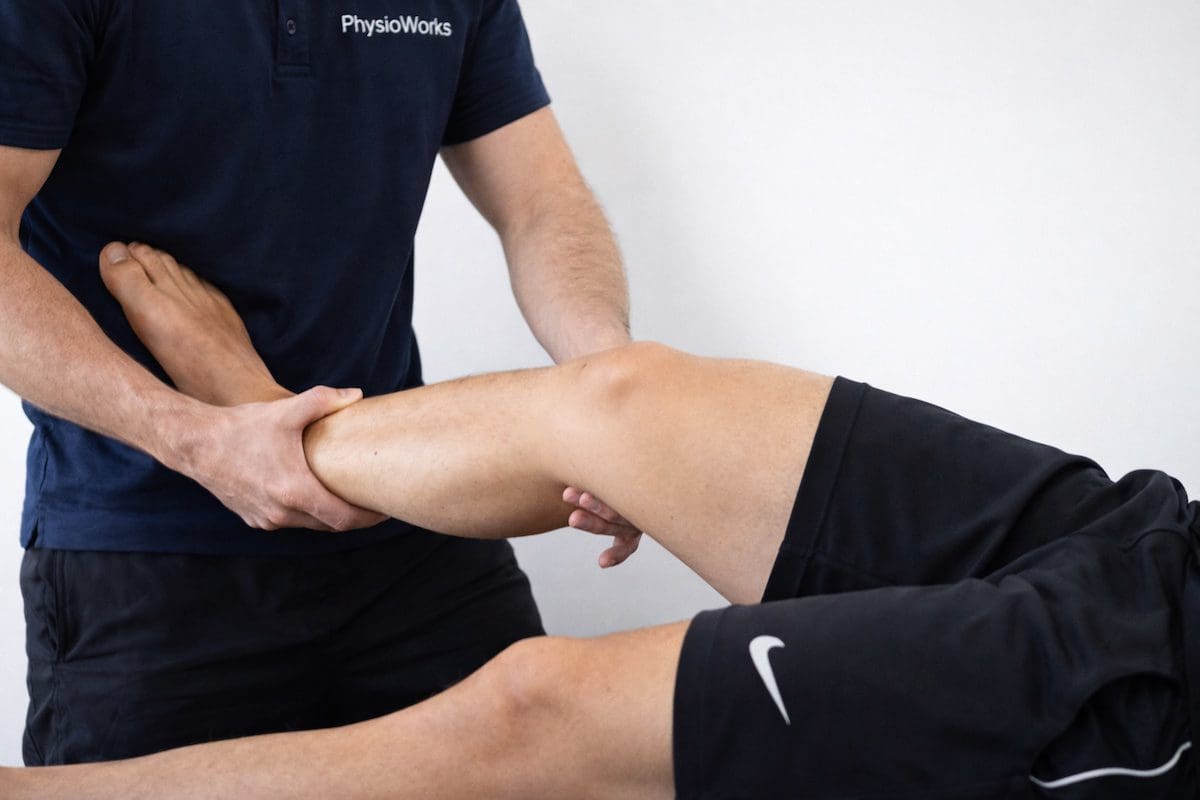
An ACL injury is often suspected from the story of how it happened plus a focused knee examination. A good history and physical assessment remain central because they help identify ACL injury and other possible damage around the knee.

MRI is not always essential to first suspect a torn ACL, but it is often useful to confirm the diagnosis, assess associated injuries such as meniscal, cartilage, or other ligament damage, and help guide treatment planning. You can also read more in how do I know if I need an MRI on my knee? and will my physiotherapist refer me for scans?

When should you get urgent knee review?

  • you cannot weight bear
  • the knee is grossly unstable or locking
  • swelling is severe and keeps increasing
  • you suspect multiple structures are injured
  • pain, swelling, or instability is not settling over the next few days

Do you always need surgery for an ACL injury?

No. Some people do well without surgery, especially if the knee becomes stable with rehabilitation and their sport or work demands are lower. Others are better suited to reconstruction when the knee keeps giving way, sport requires repeated pivoting, or associated injuries increase the risk of ongoing instability.

Good decision-making weighs up your knee stability, age, training goals, and job demands. Physiotherapy matters either way. Many people start with a structured ACL treatment plan, then discuss whether surgery is needed through pages such as what happens if you don’t get ACL surgery?, ACL surgery: pros and cons, and ACL reconstruction.

Do you need ACL surgery?

Not always. Surgery is usually considered when your knee keeps giving way, your sport needs cutting or pivoting, or you have associated injuries that reduce knee stability.

Rehab-first may suit you if:

  • your knee becomes stable
  • you mainly do straight-line exercise
  • daily activity improves well
  • you want to trial structured rehab first

Surgery may be more likely if:

  • the knee repeatedly buckles
  • you play pivoting or contact sport
  • there is meniscus or multi-ligament injury
  • you cannot trust the knee despite rehab

The best option depends on your goals, symptoms, sport, work, age, and knee stability. Not sure which group you fit? A physio assessment can help clarify the most suitable pathway.

Can you live without an ACL?

Yes, some people can live and function well without an ACL, particularly for straight-line exercise and many daily tasks. However, if the knee keeps buckling during turning, landing, or sport, you may irritate other structures and lose confidence in movement.

That is why the right pathway is individual. A rehabilitation-first approach often works best when it improves swelling, strength, balance, landing control, and confidence. If instability continues, your physiotherapist may discuss a surgical opinion. You can also review broader knee ligament injury and doctor or physio for a knee injury guidance.

Cross Bracing Protocol: where does it fit?

The Cross Bracing Protocol is an emerging non-surgical ACL management pathway that combines early bracing with structured rehabilitation. It is getting more attention because early studies found MRI evidence of ACL continuity in many patients. However, it is still developing and is not yet standard care for every ACL tear.

  • best suited to carefully selected acute ACL injuries
  • usually requires early diagnosis and close follow-up
  • should be supervised by clinicians familiar with the protocol
  • does not replace shared decision-making about rehab versus surgery

How long does ACL recovery take?

ACL recovery time depends on whether the ligament is managed with exercise alone or reconstruction plus rehabilitation. In both pathways, recovery usually takes months rather than weeks because the knee needs time to settle, rebuild strength, restore movement quality, and regain confidence under sport-specific load.

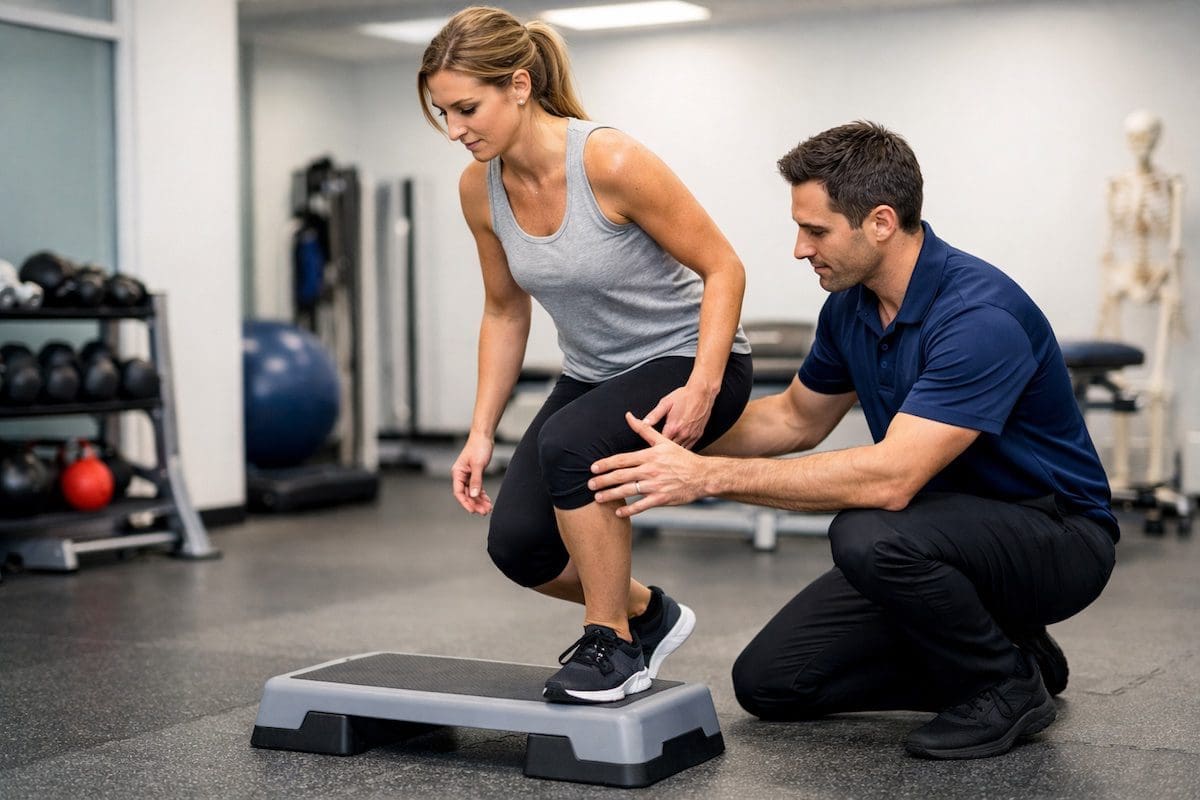
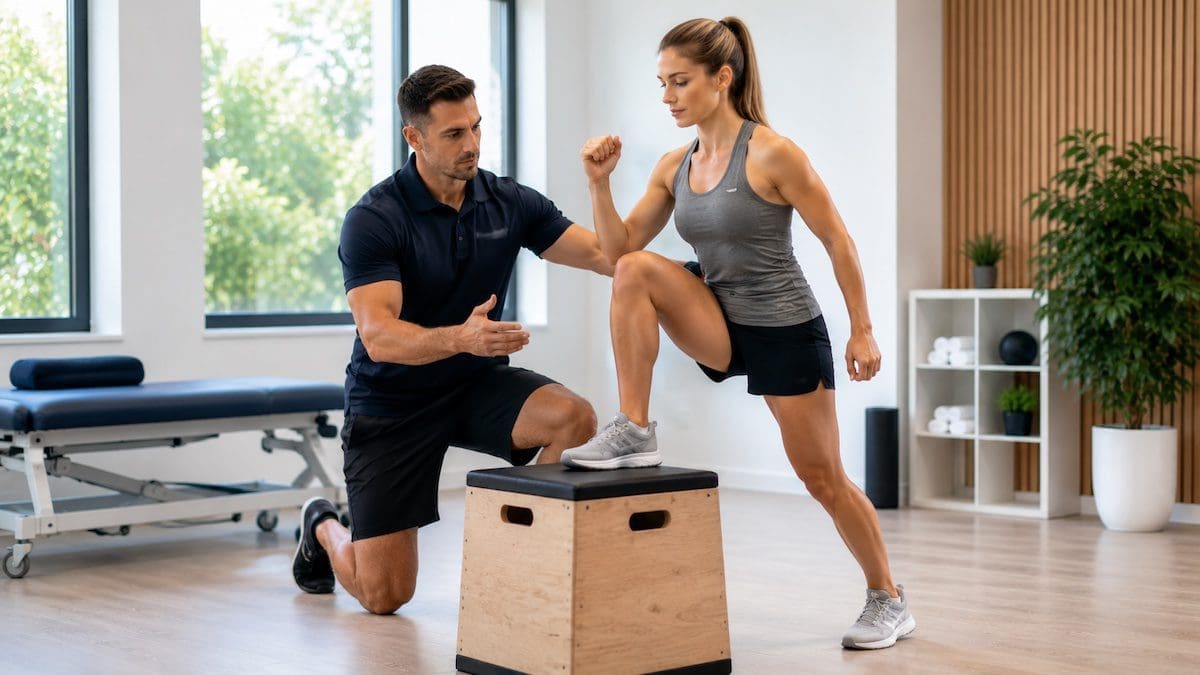
Early rehabilitation often focuses on swelling, full knee extension, walking, and muscle control. Later stages build strength, hopping, landing, acceleration, deceleration, and return-to-sport testing. If surgery is chosen, post-ACL reconstruction rehabilitation, post-operative physiotherapy, and guided return to sport testing become central.

ACL recovery pathway at a glance

1. Early stage

Settle swelling, restore extension, improve walking, and regain muscle activation.

2. Strength stage

Build quadriceps, hamstring, calf, glute, and trunk strength with good movement control.

3. Running and landing

Progress to jogging, hopping, landing, deceleration, and single-leg confidence when ready.

4. Return to sport

Use strength, hop, agility, and sport-specific testing rather than time alone.

Recovery is not one straight line. Your programme should match your symptoms, knee function, sport, and whether you are following a rehab-only or reconstruction pathway.

How can you reduce the risk of another ACL injury?

You can reduce the risk of another ACL injury by improving strength, balance, landing control, cutting mechanics, and training load progression. Neuromuscular warm-ups and prevention programmes are especially useful in pivoting and jumping sports such as football, netball, basketball, soccer, volleyball, and skiing.

Research-backed prevention programmes may lower ACL injury risk, especially when athletes perform them regularly and with good technique. See our ACL injury prevention page.

ACL Injury FAQs

Can you walk on a torn ACL?

Sometimes, yes. Many people can still walk after an ACL injury, but walking does not rule out a tear. The more important issue is whether the knee feels unstable, painful, or increasingly swollen. If it gives way, do not test it repeatedly. Book an assessment.

Do you always need an MRI for an ACL injury?

No. A skilled history and knee examination can strongly suggest an ACL injury. However, MRI is often useful to confirm the diagnosis, look for associated injuries such as meniscal, cartilage, or other ligament damage, and help guide treatment planning.

Is an ACL brace enough to fix the injury?

No. A brace does not replace rehabilitation or restore normal ACL function on its own. For most people after isolated ACL reconstruction, routine functional bracing has not shown clear clinical benefit. Still, some clinicians may use bracing in selected cases for confidence, protection, or specific rehabilitation goals.

What is the Cross Bracing Protocol for ACL injury?

The Cross Bracing Protocol is an emerging non-surgical ACL management approach that combines a structured period of knee bracing with physiotherapist-guided rehabilitation. In the first published clinical series, the brace was locked in flexion early, then gradually opened over 12 weeks. Early MRI findings suggested many ACLs showed continuity, but this approach is still developing and is not yet standard care for every ACL tear.

Can an ACL heal without surgery?

Some ACL injuries may show healing or continuity on MRI without reconstruction, especially in selected rehabilitation or bracing pathways. However, MRI appearance does not automatically mean normal ligament function has returned. Treatment decisions still need to consider knee stability, symptoms, activity goals, associated injuries, and functional testing.

What sports place the ACL most at risk?

ACL injuries are more common in sports that involve pivoting, landing, cutting, and sudden deceleration. That includes football codes, netball, basketball, soccer, touch football, volleyball, and skiing. Risk is higher when strength, landing control, fatigue management, and warm-up quality are poor.

How long does ACL swelling take to settle?

Early swelling often improves over days to a few weeks, but the exact timeline depends on the severity of the injury and whether other structures are involved. Rapid swelling after a twist is a useful clue that something important has happened inside the knee.

What happens if you delay ACL treatment?

Delaying treatment can prolong swelling, stiffness, weakness, and poor movement patterns. If the knee keeps giving way, you may also irritate the meniscus or joint surfaces, so early guidance usually gives you a better path back to normal activity.

When can you return to sport after an ACL injury?

Return to sport depends on symptoms, strength, movement quality, confidence, and sport-specific testing rather than time alone. Rushing back before the knee is ready increases the chance of poor performance and another injury. Your physiotherapist should guide that decision.

When should you seek help for a suspected ACL injury?

Seek help early if your knee swells quickly, feels unstable, locks, or you cannot trust it with walking, stairs, turning, or sport. Early assessment helps protect the meniscus and other joint structures while giving you a clear rehabilitation plan.

Related ACL and knee injury pages

What to do next

If you suspect an ACL injury, avoid testing the knee with repeated twisting or sport. Early guidance can help settle swelling, protect other knee structures, and clarify whether rehabilitation, surgery, or both are likely to suit you best.

A PhysioWorks knee physiotherapist can assess your knee, help guide scan decisions when needed, and build a staged plan for walking, work, training, and return to sport.

Book your appointment – 24/7

Choose your preferred PhysioWorks clinic and book online.

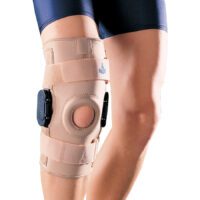
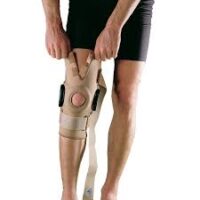
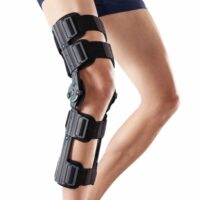
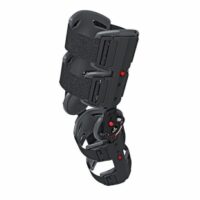
Knee Support Products

These knee support products are commonly used by our physiotherapists to help reduce strain, improve stability, and support your recovery at home.

View all knee support products

Follow PhysioWorks

Get free physiotherapy tips, exercise videos, recovery advice, and blog updates.

Facebook Instagram YouTube B X Email PhysioWorks

References

  1. American Academy of Orthopaedic Surgeons. Management of Anterior Cruciate Ligament Injuries Evidence-Based Clinical Practice Guideline. Published August 22, 2022.
  2. Filbay SR, Dowsett M, Jomaa MC, et al. Healing of acute anterior cruciate ligament rupture on MRI and outcomes following non-surgical management with the Cross Bracing Protocol. Br J Sports Med. 2023;57(23):1490-1497. doi:10.1136/bjsports-2023-106931.
  3. Filbay SR, Roemer FW, Lohmander LS, et al. Evidence of ACL healing on MRI following ACL rupture treated with rehabilitation alone may be associated with better patient-reported outcomes: a secondary analysis from the KANON trial. Br J Sports Med. 2023;57(2):91-98. doi:10.1136/bjsports-2022-105473.
  4. Geeslin AG, Moatshe G, Engebretsen L, et al. Functional anterior cruciate ligament braces may have a role in select patient groups although there is presently limited evidence supporting or refuting their routine use: A scoping review of clinical practice guidelines and an updated bracing classification. Knee Surg Sports Traumatol Arthrosc. 2024;32(7):1690-1699. doi:10.1002/ksa.12203.
  5. Gunadham U, Khaokaew W, Pothikhun P, et al. Effect of knee bracing on clinical outcomes following anterior cruciate ligament reconstruction: A prospective randomised controlled study. Asia Pac J Sports Med Arthrosc Rehabil Technol. 2024;35:19-25.
  6. Kotsifaki R, Korakakis V, King E, et al. Aspetar clinical practice guideline on rehabilitation after anterior cruciate ligament reconstruction. Br J Sports Med. 2023;57(9):500-514.

How Do I Know What Type of Knee Injury I Have?

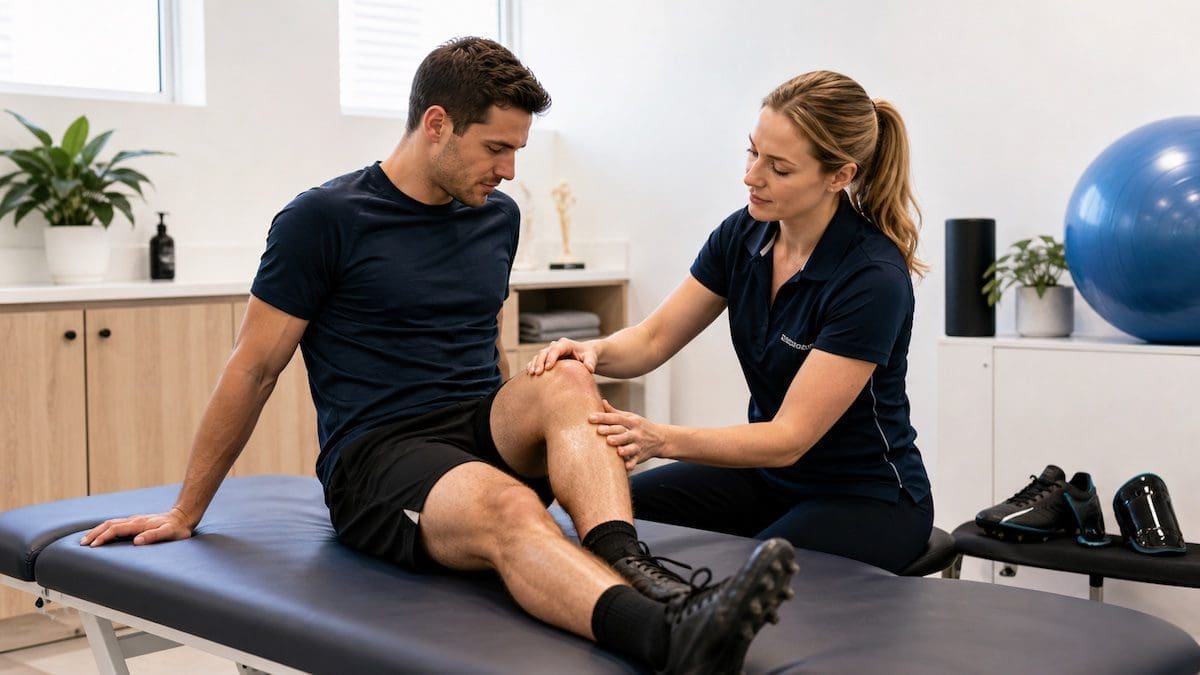
Patient pointing to knee pain while physiotherapist assesses injury in clinic

Identifying the source of knee pain

You can often get useful clues about a knee injury from how it started, where it hurts, how quickly swelling appears, and whether the knee locks, clicks, buckles, or feels unstable. However, several knee problems feel similar early on, so it is not always easy to identify the exact structure without a proper assessment.

The knee contains bones, cartilage, ligaments, tendons, muscles, and nerves. Because more than one structure can be injured at the same time, self-diagnosis can be unreliable. A clear diagnosis helps guide the right treatment and reduces the risk of aggravating the injury.

Common symptom patterns may point towards a meniscus injury, an ACL injury, kneecap-related pain, or a patella tendon injury. If unsure, review our broader guide to knee pain and knee sports injuries.

Quick Clues That May Help

  • Fast swelling within a few hours may suggest a ligament or joint injury.
  • Joint-line pain with clicking, catching, or locking may indicate a meniscus injury.
  • Front knee pain with stairs, squatting, or sitting often relates to the kneecap.
  • Pain directly below the kneecap may indicate patella tendon overload.
  • Buckling or giving way may suggest ligament involvement or reduced control.

What are the main signs that help identify a knee injury?

The most useful indicators include:

  • how the injury occurred
  • pain location
  • swelling speed
  • locking, clicking, or instability
  • which movements aggravate symptoms

A twisting injury often suggests a meniscus or ligament issue. Gradual pain during jumping or running is more consistent with tendon overload. Kneecap-related pain behaves differently again, especially with stairs or prolonged sitting.

A physiotherapist will assess movement, swelling, strength, joint stability, and function. This combined assessment provides a clearer picture than any single symptom.

Common knee injury patterns

Meniscus Injury

Clues: joint-line pain, clicking, locking, twisting pain, delayed swelling.

Learn more

ACL or Ligament Injury

Clues: twist, pop, rapid swelling, instability, giving way.

Learn more

Patellofemoral Pain

Clues: pain around the kneecap, worse with stairs, sitting, squatting, or running.

Learn more

Patella Tendon Injury

Clues: pain below the kneecap, worse with jumping and loading.

Learn more

How do you know if a knee injury might be a meniscus injury?

A meniscus injury often causes pain along the joint line, with clicking, catching, or a feeling that the knee does not move smoothly. Swelling may appear more gradually over several hours rather than immediately after the injury.

Many people describe a twist, pivot, squat, or awkward turn before symptoms begin. Some also notice pain with deeper bending, turning on a planted foot, or getting up from a chair. For more detail, see our guide to meniscus injury symptoms and treatment.

How do you know if a knee injury could be an ACL or ligament injury?

An ACL or other knee ligament injury often causes pain after a change of direction, twist, landing, collision, or sporting tackle. Rapid swelling, a “pop”, and a feeling that the knee is unstable are common features, especially with ACL injuries.

Ligament injuries can affect different parts of the knee depending on which ligament is involved. If your knee feels unstable, see our pages on knee ligament injuries, ACL injury, and PCL injury.

What does pain at the front of the knee usually mean?

Front knee pain often points towards kneecap joint irritation, tendon overload, or patellofemoral problems. The exact pain location matters. Pain around or behind the kneecap often behaves differently from pain felt directly below it.

If your pain worsens with stairs, sitting, squatting, or running, the problem may be linked to the kneecap joint or movement control. In contrast, a very local sore spot just below the kneecap is more suggestive of a patella tendon injury.

Why can it be hard to tell what type of knee injury you have?

Many knee injuries share similar early symptoms, including pain, swelling, stiffness, and reduced confidence with movement. It is also common for more than one structure to be injured at the same time, especially after twisting or sporting injuries.

Because of this, self-diagnosis is often unreliable. A structured assessment that considers how the injury occurred, movement patterns, joint stability, and symptom behaviour provides a clearer and safer diagnosis. Healthdirect also provides a general overview of knee injuries.

When should you get a knee injury checked?

Seek assessment if you notice:

  • significant or rapid swelling
  • locking or inability to straighten
  • repeated giving way
  • difficulty weight bearing
  • worsening or persistent pain
  • recovery is not progressing as expected

Early assessment helps guide appropriate treatment and prevents unnecessary aggravation. It can also help determine whether you may benefit from rehabilitation, taping, bracing, imaging, or medical review.

Related knee injury pages

Frequently Asked Questions About Knee Injuries

Can you tell what knee injury you have from symptoms alone?

Sometimes you can make a reasonable guess from the symptom pattern, but symptoms alone are not always enough. Several knee injuries overlap, and mixed injuries are common. A proper assessment is usually the best way to identify the likely structure involved and plan the next step safely.

Does swelling speed matter after a knee injury?

Yes. Very fast swelling can be more suspicious for a significant ligament or joint injury, while slower swelling may fit some meniscus or overload presentations. However, swelling speed is only one clue and should always be interpreted with the injury mechanism and other symptoms.

What if my knee clicks but does not hurt much?

A click on its own does not always mean a serious problem. However, clicking with pain, locking, catching, swelling, or giving way is more meaningful and should be assessed. Persistent clicking that affects sport or daily function also deserves attention.

Can more than one knee structure be injured at once?

Yes. It is quite common for a knee injury to involve more than one structure, especially after twisting sports injuries, direct impact, or falls. This is one reason why self-diagnosis can be difficult.

Do all knee injuries need imaging?

No. Many knee injuries can be assessed well from the history and physical examination. Imaging is more likely to be useful when symptoms are severe, the knee is unstable, weight bearing is difficult, or recovery is not following the expected pattern.

Is front knee pain always tendon-related?

No. Front knee pain can come from the kneecap joint, the patella tendon, surrounding soft tissues, or movement control issues. Pain location, tenderness, aggravating activities, and loading history help separate these possibilities.

What should you do next?

If unsure, avoid pushing through pain or testing the knee repeatedly. Reduce aggravating loads and arrange an assessment to identify the likely injury and plan recovery.

Your physiotherapist can help identify the most likely injured structure, explain what activities are safe, guide the right exercises, and advise whether you may need bracing, imaging, medical review, or a graded return to sport.

Book your appointment – 24/7

Choose your preferred PhysioWorks clinic and book online.

Supportive options such as braces, straps, or taping may assist some knee conditions. Explore suitable knee pain products based on your injury and recovery stage.

Knee Support Products

These knee support products are commonly used by our physiotherapists to help reduce strain, improve stability, and support your recovery at home.

View all knee support products

Follow PhysioWorks

Get free physiotherapy tips, exercise videos, recovery advice, and blog updates.

Facebook Instagram YouTube B X Email PhysioWorks

References

  1. Logerstedt DS, Scalzitti D, Bennell KL, et al. Knee Pain and Mobility Impairments: Meniscal and Articular Cartilage Lesions Revision 2018. J Orthop Sports Phys Ther. 2018;48(2):A1-A50. doi:10.2519/jospt.2018.0301
  2. Benjaminse A, Gokeler A, van der Schans CP. Clinical diagnosis of an anterior cruciate ligament rupture: a meta-analysis. J Orthop Sports Phys Ther. 2006;36(5):267-288. doi:10.2519/jospt.2006.2011
  3. Beaufils P, Becker R, Kopf S, Matthieu O, Pujol N. Management of traumatic meniscal tear and degenerative meniscal lesions: save the meniscus. Orthop Traumatol Surg Res. 2017;103(8S):S237-S244. doi:10.1016/j.otsr.2017.08.003

ACL Surgery Pros and Cons

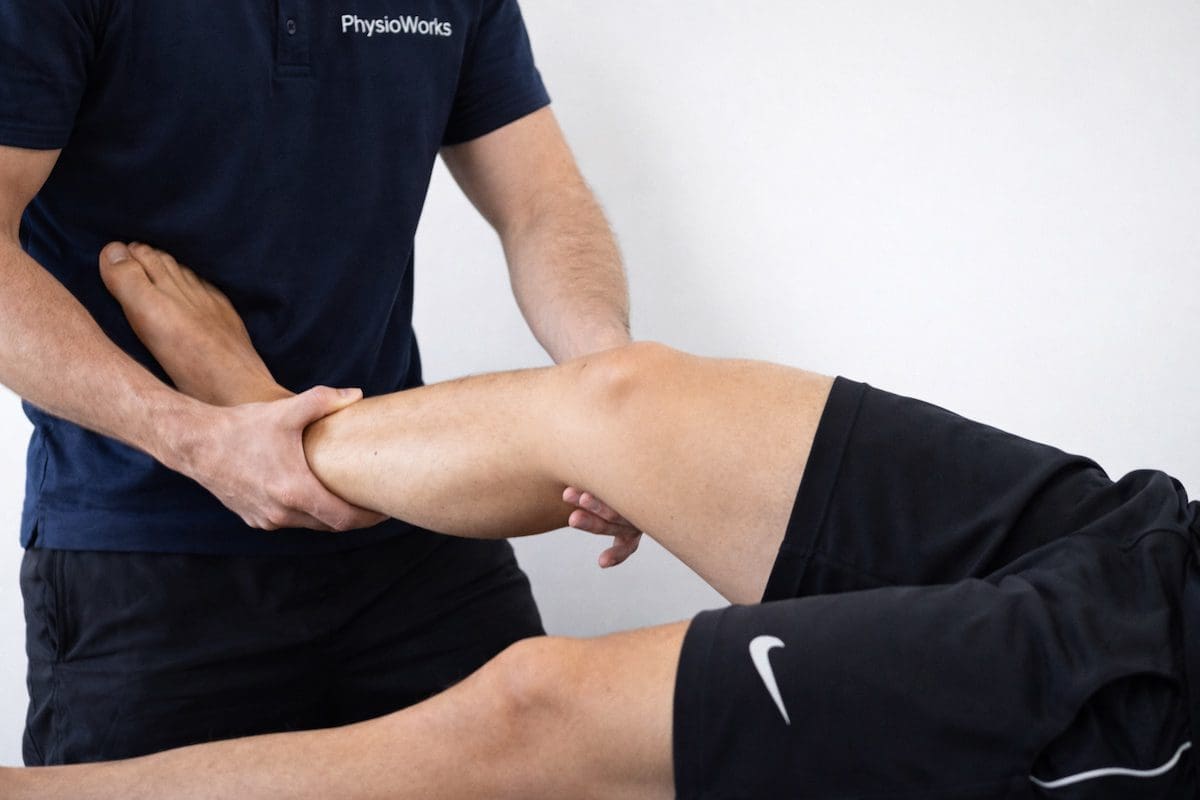
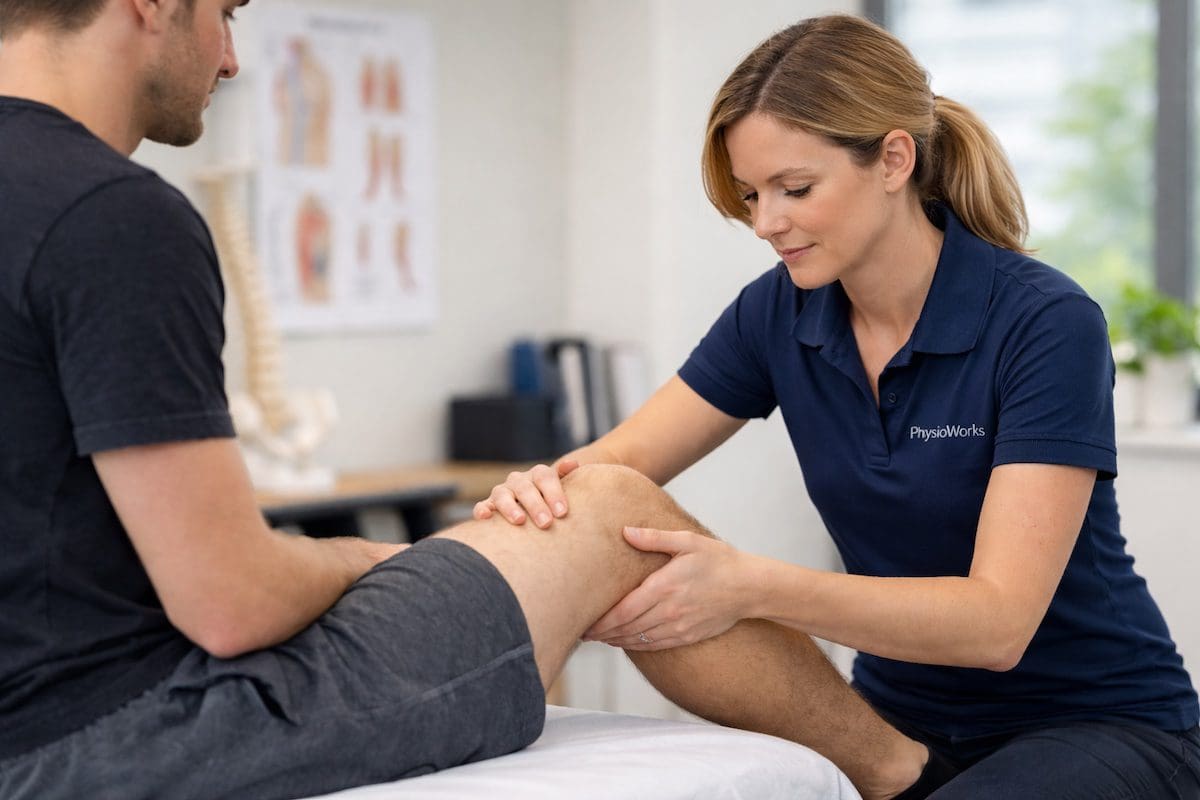
ACL knee assessment physiotherapist performing ligament test on exposed knee in clinic

ACL knee assessment in physiotherapy clinic

ACL surgery can help restore knee stability for some people, but it is not the right choice for everyone. The best option depends on your sport, your instability symptoms, any associated knee damage, and how well you respond to structured ACL treatment, rehabilitation, and progressive knee treatment.

If you have recently injured your knee, start with the broader ACL injury guide and the sports knee injuries hub. These pages explain how ACL tears fit into the wider picture of knee instability, swelling, meniscal injury, and return-to-sport planning.

Quick answer: ACL surgery is more often considered when the knee repeatedly gives way, when there is associated damage such as a meniscal tear, or when the person wants to return to high-demand pivoting sport. However, some people do well with high-quality rehabilitation and delayed surgery only if needed.

  • ACL surgery is more often considered when the knee repeatedly gives way.
  • Some people do well with high-quality rehabilitation and delayed surgery only if needed.
  • Associated injuries such as a meniscus tear can change the decision.
  • Your sport, age, work, goals, and confidence all matter.

What is ACL surgery and what is it trying to achieve?

ACL surgery usually means ACL reconstruction. The torn ligament is replaced with a graft to improve mechanical stability, reduce episodes of giving way, and support a safer return to pivoting sport. However, surgery does not remove the need for rehabilitation. Rehabilitation remains essential whether you choose surgery or non-surgical care.

When is ACL surgery more likely to be worth considering?

ACL surgery is more commonly considered when you want to return to a sport with frequent cutting, twisting, landing, or contact. It is also more relevant when the knee repeatedly gives way during daily activity, work, or training, or when there is concern about associated injury to the meniscus, cartilage, or other ligaments.

Australian guidance supports shared decision-making rather than a one-size-fits-all approach. The Australian Knee Society consensus position statement supports weighing early reconstruction against delayed optional reconstruction after a structured rehabilitation trial.

What are the main pros of ACL surgery?

The main potential benefit of ACL surgery is improved knee stability, particularly for people who want to return to pivoting sport such as AFL, soccer, rugby, basketball, or netball. A more stable knee may also lower the risk of repeated giving-way episodes that could irritate other structures inside the knee.

Some people also feel more confident after reconstruction, especially if instability is the main problem. This can help with progressive strength work, running progressions, change-of-direction drills, and eventual return to sport.

What are the main cons or limits of ACL surgery?

ACL surgery is still major surgery. It involves cost, time away from sport, a long rehabilitation process, and the usual risks associated with surgery such as stiffness, pain, swelling, graft problems, and slower-than-expected recovery. Surgery also does not guarantee a return to the same level of sport.

Importantly, ACL reconstruction is not automatically superior for every person with an isolated ACL tear. Some people achieve good function through rehabilitation alone, particularly if their knee becomes stable and their sport or lifestyle places lower rotational demands on the joint.

Can you avoid ACL surgery?

Yes, some people can avoid ACL surgery. Non-surgical management is more realistic when the knee settles well, the person can build strong dynamic control, and there are no major associated injuries or repeated instability episodes. A detailed ACL injury FAQ page can help compare common questions about scans, swelling, rehabilitation, and surgery timing.

Recent evidence suggests that, for selected isolated ACL injuries, non-operative care with a well-designed rehabilitation program may offer similar functional outcomes for some people, even though reconstructed knees often show better mechanical stability. That is why the decision should be based on the whole person, not the scan alone.

How does rehabilitation influence the ACL surgery decision?

Rehabilitation is one of the biggest decision-makers. Good rehab helps reduce swelling, restore extension, rebuild quadriceps and hamstring strength, improve landing control, and test whether the knee can cope without surgery. It also prepares the knee better if surgery is later chosen.

Whether you have surgery early, delay it, or avoid it, a staged rehab plan still matters. For many people, that plan includes swelling control, movement restoration, progressive strengthening, neuromuscular retraining, hopping and landing drills, and carefully monitored load progression. You can also review ACL injury prevention strategies to reduce future knee stress during cutting and landing tasks.

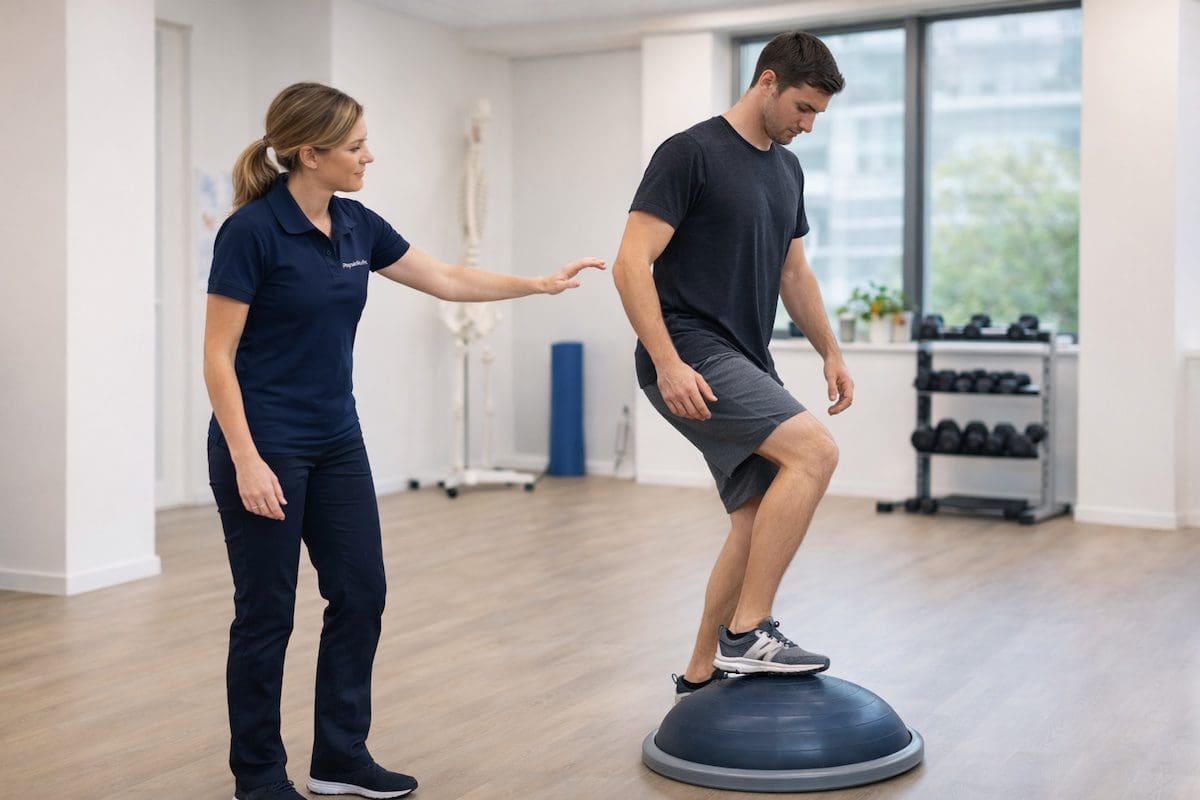
knee stability training using BOSU balance exercise to improve joint control

Knee stability training on BOSU

Knee stability training using a BOSU balance exercise can improve joint control, balance, and lower limb confidence during rehabilitation.

What factors should shape your decision?

Your decision should be based on more than whether the ACL is torn. Important factors include your age, sport, work demands, repeated instability, associated injuries, access to rehabilitation, time goals, and willingness to commit to a long recovery process. If the knee is unstable with daily tasks or sport despite strong rehabilitation, surgery becomes more reasonable.

On the other hand, if the knee feels stable, strength and control improve, and your goals do not involve frequent pivoting, surgery may be less urgent. This is where a physiotherapist and orthopaedic surgeon can help compare the practical pros and cons in your situation.

How do meniscal injuries and tier-one sports influence ACL surgery decisions?

ACL injuries often occur alongside other knee damage, particularly a meniscus tear. These co-existing injuries can significantly influence whether ACL surgery is recommended and how urgently it is considered.

The meniscus plays an important role in load distribution, shock absorption, and joint protection. When a meniscal injury is present with an ACL tear, repeated instability episodes may increase the risk of further cartilage damage and long-term joint changes such as knee osteoarthritis. In these cases, earlier surgical stabilisation may be more strongly considered to protect the knee.

Sporting demands also play a major role. Athletes involved in high-level or tier-one pivoting sports such as AFL, rugby, soccer, and basketball often place greater rotational stress on the knee. Returning to these sports without a functioning ACL can be difficult due to instability, reduced confidence, and increased reinjury risk.

  • Co-existing meniscal injuries may increase the need for surgical stability.
  • Elite or high-demand pivoting sports increase the importance of knee stability.
  • Lower-demand activities may allow successful non-surgical management in some cases.

This is why ACL surgery decisions should consider the whole knee and the individual’s goals. A stable knee for daily life is not always the same as a knee that can tolerate elite sport demands.

Is ACL surgery right for you?

ACL surgery may be worth considering if your knee keeps giving way, your sport involves cutting and pivoting, or associated damage such as a meniscal tear is increasing your risk. If your knee feels stable and responds well to rehabilitation, a non-surgical pathway may still be reasonable.

The best decision is usually based on function, sport demands, and confidence rather than the scan result alone. That is why many people benefit from a sports physiotherapy review before committing to surgery.

Related ACL and knee information

What to do next

If you are weighing up ACL surgery, get your knee properly assessed before making a rushed decision. A sports physiotherapist can help clarify whether your current issue is instability, weakness, swelling, confidence, associated meniscal irritation, or a combination of these.

If needed, your physiotherapist can also guide referral for imaging or orthopaedic review. The goal is to match the treatment plan to your sport, knee function, and future goals rather than assuming surgery is always the first answer.

Common ACL surgery questions

Is ACL surgery always necessary?

No. ACL surgery is not always necessary. Some people manage well with structured rehabilitation and activity modification, especially if the knee becomes functionally stable and their goals do not involve high-demand pivoting sport.

How long is recovery after ACL surgery?

Recovery after ACL surgery is usually measured in months rather than weeks. Many people need a long, staged rehabilitation period before full return to pivoting sport, and progress depends on strength, movement quality, swelling, confidence, and objective testing.

Can physiotherapy help if you do not have ACL surgery?

Yes. Physiotherapy can help reduce swelling, improve strength, restore movement, and build dynamic knee control. For some people, that is enough to return to daily activity and selected sport without reconstruction.

Does ACL surgery prevent arthritis?

Not necessarily. ACL surgery may improve stability, but it does not guarantee protection from later knee osteoarthritis. Long-term joint health still depends on associated injuries, recurrent instability, load management, strength, and overall knee care.

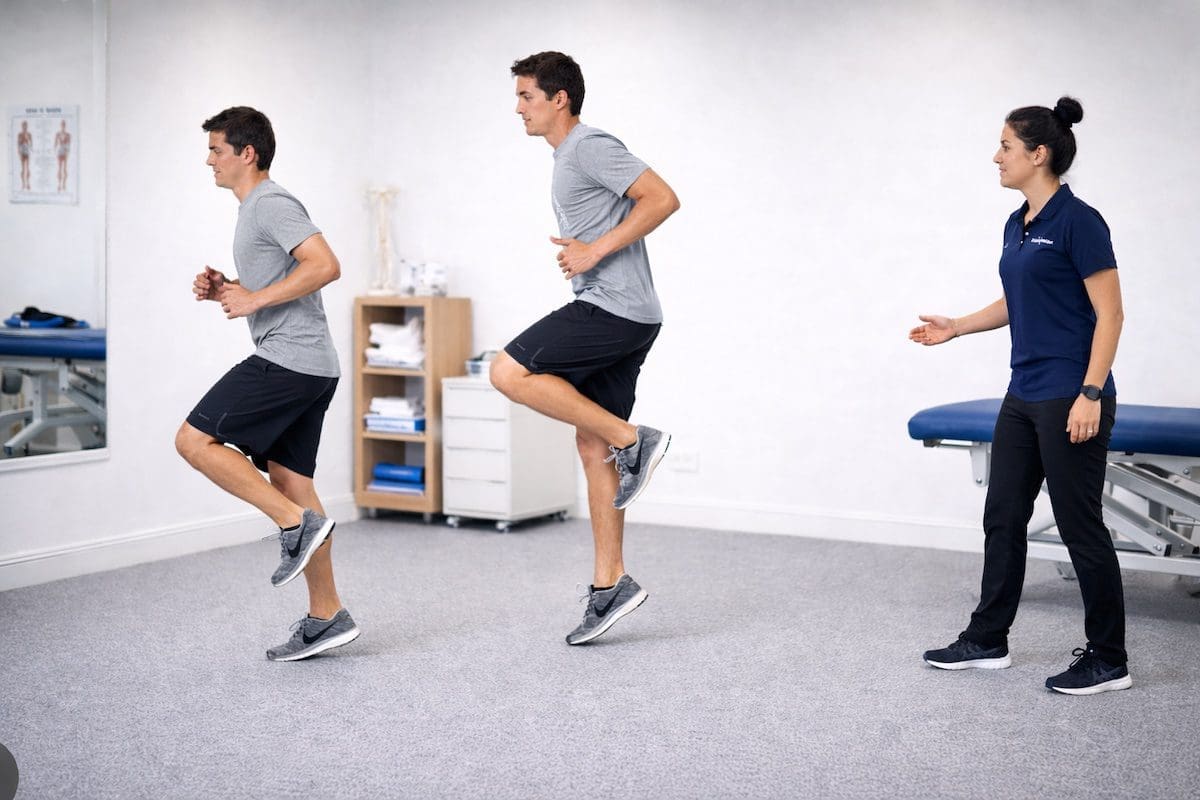
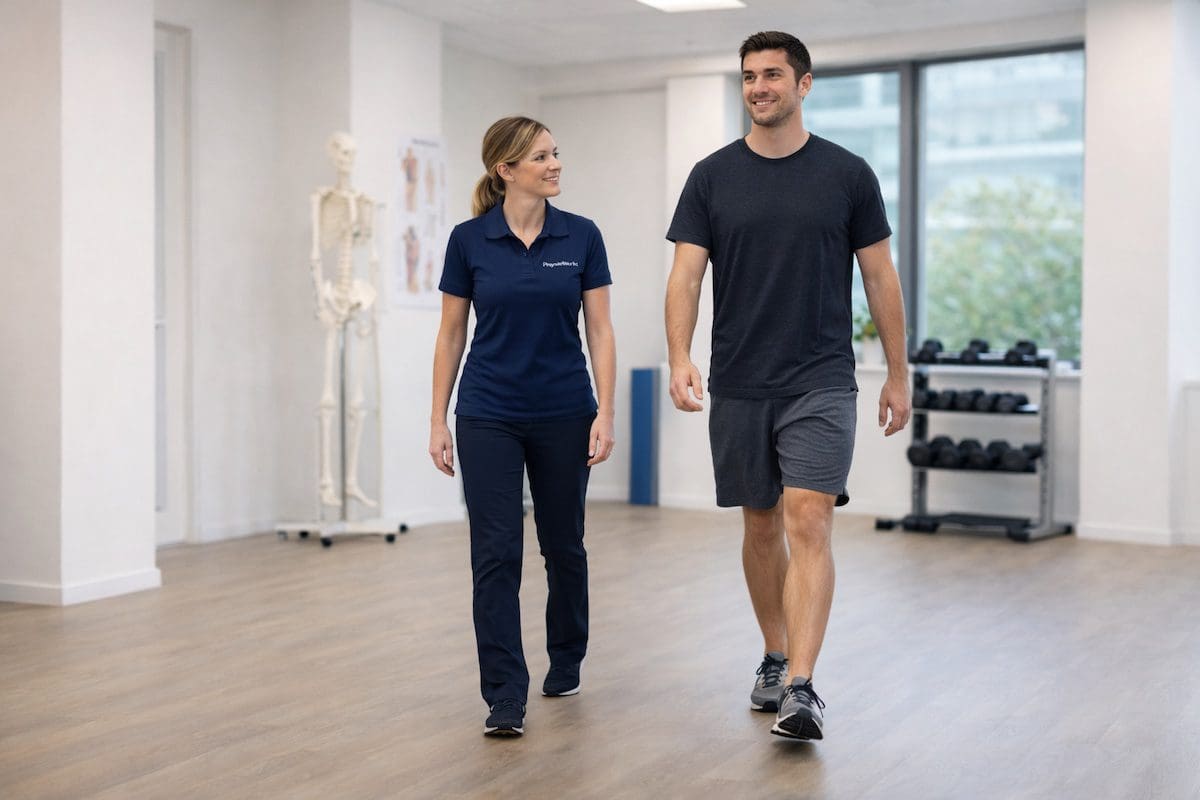
ACL recovery walking confidently after knee rehabilitation with physiotherapist support

Returning to confident walking after ACL injury

With the right rehabilitation and guidance, many people return to confident movement after an ACL injury.

Book your appointment – 24/7

Choose your preferred PhysioWorks clinic and book online.

Knee Support Products

These knee support products are commonly used by our physiotherapists to help reduce strain, improve stability, and support your recovery at home.

View all knee support products

Follow PhysioWorks

Get free physiotherapy tips, exercise videos, recovery advice, and blog updates.

Facebook Instagram YouTube B X Email PhysioWorks

References

  1. Australian Orthopaedic Association, Australian Knee Society. Consensus position statement on non-operative and operative management in anterior cruciate ligament injury. 2021.
  2. Kotsifaki A, Whiteley R, Van Rossom S, et al. Aspetar clinical practice guideline on rehabilitation after anterior cruciate ligament reconstruction. Br J Sports Med. 2023;57(9):500-514.
  3. de Jonge R, Máté M, Kovács N, et al. Nonoperative treatment as an option for isolated anterior cruciate ligament injury: a systematic review and meta-analysis. Orthop J Sports Med. 2024;12(4). doi:10.1177/23259671241239665.
Article by John Miller & Erin Runge

ACL Reconstruction Rehabilitation: What Happens After Surgery?

ACL reconstruction rehabilitation is a structured recovery process that helps restore knee movement, strength, control, and confidence after surgery. Good rehabilitation does more than fill time. It helps reduce reinjury risk and prepares you for daily activity, exercise, and sport.

If you are recovering from surgery, this guide explains what rehabilitation usually involves, how return-to-sport decisions are made, and why progress matters more than simply waiting for the calendar. If you are still deciding about surgery, you may also find our page on whether you need an operation for an ACL tear helpful.

Quick Answer

Most people need many months of guided ACL reconstruction rehabilitation. Early goals include swelling control, knee extension, and walking. Later stages focus on strength, hopping, running, change of direction, and return-to-sport testing. Safe progression depends on symptoms, movement quality, strength, function, and confidence.

Related ACL Pages

This page sits within the broader ACL and knee ligament cluster. You may also find these pages helpful:

ACL Reconstruction Rehabilitation Timeline

ACL rehabilitation usually progresses through clear stages. These timeframes are only a guide. Your knee should be assessed on swelling, strength, control, and function before you move to the next stage.

Phase Usual Timeframe Main Goals
Protection and recovery 0–6 weeks Reduce swelling, regain extension, improve knee bend, normalise walking, activate quadriceps
Strength and control 6–12 weeks Build strength, improve balance, restore single-leg control, progress functional movements
Running and higher-load preparation 3–6 months Introduce running, landing mechanics, hopping, and higher-level gym work
Return to sport or performance 6–12+ months Pass strength and function testing, regain confidence, complete sport-specific drills

Time Alone Does Not Mean You Are Ready

A calendar date does not prove that your knee is ready for running, contact, jumping, or pivoting. ACL reconstruction rehabilitation should be progressed using swelling, movement, quadriceps strength, hop performance, control, and confidence rather than time alone.

What is ACL reconstruction rehabilitation?

ACL reconstruction rehabilitation is the staged physiotherapy program completed after a torn anterior cruciate ligament has been surgically reconstructed. It aims to restore knee range of motion, build quadriceps and hamstring strength, improve balance and landing control, and prepare you for a gradual return to activity. Many people also benefit from guided ACL reconstruction exercises throughout each phase.

Why is rehabilitation after ACL reconstruction so important?

Rehabilitation after ACL reconstruction matters because surgery alone does not restore movement quality, strength symmetry, agility, or sport readiness. Without a structured program, people can be left with stiffness, weakness, swelling, reduced confidence, or poor jumping and landing mechanics. These issues can affect both daily activity and return to demanding sport.

What happens in the early phase after ACL reconstruction?

The first phase usually focuses on settling the knee and restoring basic function. Priorities often include pain and swelling control, regaining full knee extension, improving knee bend, normalising walking, and waking up the quadriceps. At this stage, your physiotherapist also watches for warning signs such as excessive swelling, poor extension, or difficulty activating the thigh muscles.

  • Reduce pain and swelling
  • Restore full knee straightening
  • Improve bending range gradually
  • Normalise walking pattern
  • Begin early strength and control work

How does ACL reconstruction rehabilitation progress?

As your knee settles, rehabilitation becomes more demanding. Strength, control, and loading are progressed step by step. Later phases usually include single-leg strength, balance, hop training, running drills, landing mechanics, and sport-specific change-of-direction work. This progression is especially important for athletes returning to pivoting and cutting sports, but it also matters for recreational exercisers who want their knee to feel reliable again.

Throughout rehabilitation, your physiotherapist may also consider related issues such as MCL injury, meniscus tear, or broader knee ligament injuries that may influence your recovery plan.

Tier 1 Sports Need Stricter Return-to-Sport Standards

Tier 1 sports usually involve jumping, hard pivoting, cutting, fast deceleration, or body contact. These sports place a higher load on the ACL and usually require stricter strength, hop, and movement criteria before return.

Examples of Tier 1 sports include:

Does your sport affect ACL rehabilitation goals?

Yes. Your sport strongly affects rehabilitation targets. Level I or Tier 1 sports such as football, rugby, netball, basketball, volleyball, tennis, and skiing usually demand more pivoting, cutting, jumping, or contact. These activities place greater stress on the reconstructed knee, so return-to-sport testing needs to be stricter. Lower-demand activities may allow an earlier functional return, but they still require good strength, control, and confidence.

How long does ACL reconstruction rehabilitation take?

ACL reconstruction rehabilitation usually takes many months, not weeks. Some people regain good day-to-day function relatively early, but returning to demanding sport often takes much longer. The key point is that time alone does not prove readiness. Progress should also be judged using symptoms, swelling, strength, movement quality, hop testing, confidence, and task-specific performance.

Do age and sex affect return to sport after ACL reconstruction?

They can. Research has shown that younger athletes were more likely to return to level I sport within 12 months, and male athletes in younger age brackets had higher return rates than female athletes. Better limb symmetry and stronger patient-reported knee scores were also associated with better return-to-sport outcomes.

Why does strength symmetry matter after ACL reconstruction?

Strength symmetry matters because large differences between limbs can reflect incomplete recovery. In practical terms, poor symmetry may mean reduced force production, poorer control during landing or cutting, and a higher risk of struggling when you return to sport. This is why ACL reconstruction rehabilitation usually places strong emphasis on quadriceps strength, hop testing, and single-leg control before clearance.

What else should be assessed before return to sport?

Return-to-sport decisions should also consider swelling response, knee extension, landing mechanics, confidence, and how your knee behaves during harder running or cutting drills. If your symptoms keep flaring, it may be worth reviewing the broader ACL injury picture or the wider knee ligament injuries cluster rather than relying on one test result.

Return-to-Sport Checklist

Most athletes should not return to higher-risk sport until they can show more than just time since surgery. Common clearance markers may include:

  • Minimal or no swelling after training
  • Full knee extension and strong movement quality
  • Quadriceps and hamstring strength close to the other leg
  • Hop or landing tests at an acceptable symmetry level
  • Confidence with cutting, jumping, and change of direction
  • Sport-specific training completed without major flare-up

Is passing return-to-sport criteria enough?

No single test can guarantee a safe return. Return decisions should combine time from surgery, symptoms, strength, hopping, movement quality, sport demands, and psychological readiness. A structured checklist helps, but the broader picture still matters.

Common mistakes during ACL reconstruction rehabilitation

  • Rushing back to running or sport too early
  • Ignoring persistent swelling or extension loss
  • Underloading the quadriceps during rehab
  • Relying only on time since surgery
  • Skipping late-stage hopping and agility preparation

What should you do if you are recovering from ACL reconstruction?

If you are recovering from surgery, follow a structured physiotherapy plan and have your progress reviewed regularly. Ask whether your program is measuring range of motion, swelling, quadriceps strength, single-leg control, hop performance, and return-to-sport readiness. If you still have instability or pain, it may also help to review broader ACL injury factors, related ACL FAQs and products, or your meniscus tear and other associated injuries if they apply.

ACL Reconstruction Rehabilitation FAQs

When can I walk normally after ACL reconstruction?

Walking improves gradually over the first few weeks, but the exact timing varies. Full knee extension, reduced swelling, and good quadriceps activation usually help normal walking return sooner.

When can I run after ACL reconstruction?

Running usually begins only after your knee has settled and you have enough strength, control, and landing capacity. Time alone is not enough. Your physiotherapist should assess whether your knee is ready.

When can I return to sport after ACL reconstruction?

Return to sport depends on your sport, symptoms, strength, hop testing, movement quality, and confidence. Pivoting or contact sports generally require a more thorough clearance process than straight-line gym or fitness activity.

Why does my knee still feel weak months after surgery?

Persistent weakness is common, especially in the quadriceps. Swelling, pain, movement loss, and incomplete loading can all slow recovery. This is one reason why progressive rehabilitation is essential.

Can I return to sport just because I am 9 or 12 months after surgery?

No. Time is only one part of the decision. You also need good strength, control, function, and sport readiness. Many reinjuries happen when people return before they are truly ready.

Do I still need physiotherapy if my knee feels good?

Usually, yes. A knee can feel quite good during basic activity but still lack the strength, control, or landing capacity needed for higher-level sport. Physiotherapy helps bridge that gap.

What to do next

If you are working through ACL reconstruction rehabilitation, a physiotherapist can help you progress safely from early recovery through to running, jumping, and return-to-sport testing. A structured program gives you a clearer pathway and reduces the risk of guessing your way back too soon.

Book your appointment – 24/7

Choose your preferred PhysioWorks clinic and book online.

Knee Support Products

These knee support products are commonly used by our physiotherapists to help reduce strain, improve stability, and support your recovery at home.

View all knee support products

Follow PhysioWorks

Get free physiotherapy tips, exercise videos, recovery advice, and blog updates.

Facebook Instagram YouTube B X Email PhysioWorks

References

  1. Webster KE, Feller JA. Return to Level I Sports After Anterior Cruciate Ligament Reconstruction: Evaluation of Age, Sex, and Readiness to Return Criteria. Orthop J Sports Med. 2018;6(8):2325967118788045. doi:10.1177/2325967118788045
  2. Hadley CJ, Rao S, Tjoumakaris FP, et al. Safer Return to Play After Anterior Cruciate Ligament Reconstruction: Evaluation of a Return-to-Play Checklist. Orthop J Sports Med. 2022;10(4):23259671221090412. doi:10.1177/23259671221090412
  3. Paterno MV, Rauh MJ, Thomas S, et al. Return-to-Sport Criteria After Anterior Cruciate Ligament Reconstruction Fail to Identify the Risk of Second ACL Injury. J Athl Train. 2022;57(9-10):937-945. doi:10.4085/1062-6050-0608.21
  4. Ardern CL, Taylor NF, Feller JA, Webster KE. Return-to-Sport Outcomes at 2 to 7 Years After Anterior Cruciate Ligament Reconstruction Surgery. Br J Sports Med. 2016;50(24):1500-1508. doi:10.1136/bjsports-2015-095952
  5. Grindem H, Snyder-Mackler L, Moksnes H, Engebretsen L, Risberg MA. Simple Decision Rules Can Reduce Reinjury Risk by 84% After ACL Reconstruction. Br J Sports Med. 2016;50(13):804-808. doi:10.1136/bjsports-2016-096031

Should You Wear an ACL Brace After an ACL Injury?

ACL brace supporting the knee during early ACL injury rehabilitation
ACL brace setup used during early ACL rehabilitation.

An ACL brace may help support your knee after an ACL injury, especially during early walking, low-risk daily tasks, or the first phase of rehabilitation. While a brace does not repair the ligament on its own, some people feel steadier and more confident when extra support reduces episodes of knee giving way. For a broader overview, visit our ACL injury page.

Your physiotherapist will assess your knee stability, swelling, movement quality, and goals before advising whether ACL bracing is appropriate. They may also compare bracing with other options such as ACL treatment, ACL injury prevention, and progressive rehabilitation for physiotherapy for knee pain.

Does an ACL Brace Help After an ACL Injury?

An ACL brace may help some people feel more stable after injury by limiting movements that stress the knee. It can be useful during early recovery, but it works best alongside physiotherapy, strength work, and movement retraining rather than as a stand-alone solution.

An ACL brace can support flat walking, basic household tasks, and carefully selected rehabilitation exercises. However, it does not restore full ligament function, so long-term progress still depends on strength, balance, landing control, and confidence. If you are unsure whether your knee symptoms fit an ACL injury, read about ACL tear symptoms and what the ACL does.

How Does an ACL Brace Work?

An ACL brace aims to reduce forward movement and rotation of the shin bone under the thigh bone. This mechanical support may lessen giving-way episodes and improve knee awareness while your rehabilitation programme rebuilds strength and control.

Some braces mainly guide straight-line movement, while others also help manage twisting stress. Many people notice improved confidence when they first return to weight-bearing, stairs, or light activity. Even so, bracing should support rehabilitation, not replace it.

When Might an ACL Brace Be Recommended?

Your physiotherapist may recommend an ACL brace when the knee feels unstable, when a partial tear is being managed without surgery, or while you are waiting for an orthopaedic opinion. It may also help when work, study, or parenting demands require extra support in the short term.

  • Early walking after an ACL tear.
  • Partial ACL injuries managed conservatively.
  • Episodes of instability on uneven ground.
  • Added support while progressing rehabilitation.
  • Short-term support while awaiting surgical review.

Bracing decisions should always consider swelling, range of motion, other knee injuries, and your activity goals. Related problems such as MCL tear or meniscus tear can also influence the plan.

What Is the Cross Bracing Protocol?

The Cross Bracing Protocol is a structured non-surgical ACL management approach used for selected acute ACL ruptures. It involves bracing the knee at 90 degrees for the first four weeks, then gradually restoring movement until brace removal at 12 weeks, alongside supervised rehabilitation.

In a 2023 study published in the British Journal of Sports Medicine, 80 people began the protocol within four weeks of injury. At three months, 90% showed MRI evidence of ACL continuity. People with stronger healing on MRI also tended to report better function and knee-related quality of life. Even so, the authors noted that longer-term follow-up and further trials are still needed.

This means the protocol may be promising for some people, but it is not suitable for every ACL tear. Tear location, knee stability, associated damage, and personal goals still matter when deciding whether bracing is appropriate.

Can an ACL Brace Replace Surgery?

An ACL brace does not usually replace surgery when surgery is clearly indicated. Some people cope well without reconstruction through structured rehabilitation and, in selected cases, bracing. Others continue to experience instability that affects work, daily life, or pivoting sport and may need surgical review.

Decision-making should consider your age, sport, work demands, associated knee injuries, and whether the knee repeatedly gives way. For more on this decision, see what happens if you don’t get surgery on your ACL.

How Should You Use an ACL Brace Safely?

An ACL brace should fit firmly without causing skin irritation, numbness, or circulation problems. Your physiotherapist may recommend when to wear it, which activities it suits, and when to reduce reliance on it as your knee control improves.

  • Check the fit and strap tension regularly.
  • Use the brace for the activities advised by your physiotherapist.
  • Keep doing your strengthening and neuromuscular exercises.
  • Monitor for skin irritation, swelling, or discomfort.
  • Have the brace reviewed if it slips or feels ineffective.

Related ACL Information

What to Do Next

If your knee feels unstable after an ACL injury, an early physiotherapy assessment can help determine whether an ACL brace is worth considering and what rehabilitation path best suits you. The right plan depends on your symptoms, knee stability, activity goals, and whether other structures are involved.

Early advice may help you decide between bracing, non-surgical rehabilitation, or referral for orthopaedic review, while giving you a clearer pathway back to work, exercise, and sport.

Book your appointment – 24/7

Choose your preferred PhysioWorks clinic and book online.

ACL Products

These ACL knee support products are commonly used by our physiotherapists to help reduce strain, improve stability, and support your ACL recovery at home.

View all ACL support products

Follow PhysioWorks

Get free physiotherapy tips, exercise videos, recovery advice, and blog updates.

Facebook Instagram YouTube B X Email PhysioWorks

References

  1. Filbay SR, Roemer F, Lohmander LS, et al. Healing of acute anterior cruciate ligament rupture on MRI and clinical outcomes after non-surgical management with the Cross Bracing Protocol. Br J Sports Med. 2023;57(23):1490-1498. doi:10.1136/bjsports-2023-106931
  2. Filbay SR, Culvenor AG, Ackland DC, et al. Evidence of ACL healing on MRI following ACL rupture is associated with better patient-reported outcomes at 2 years. Br J Sports Med. 2023;57(2):91-99.
You've just added this product to the cart: