Sports Injuries

Sports Physiotherapy FAQs

What Is the PhysioWorks Acute Sports Injury Clinic?

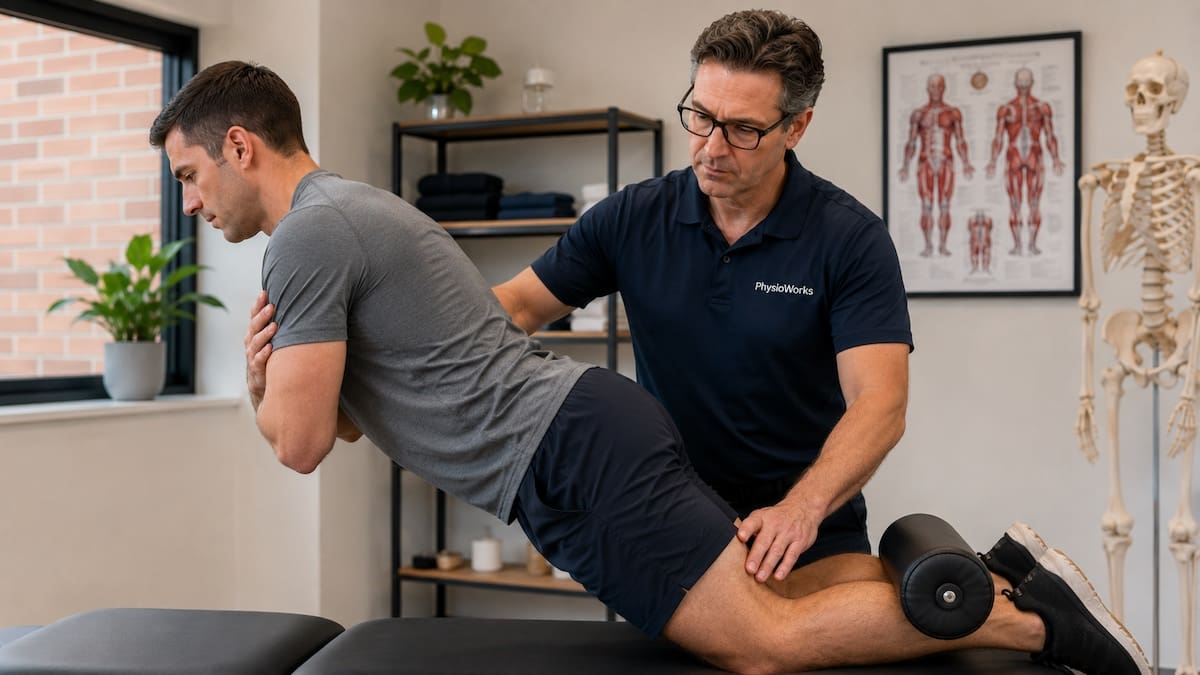
ACL Lachman test knee assessment by physiotherapist stabilising femur and tibia movement

ACL Lachman test assessing knee stability

The PhysioWorks acute sports injury clinic helps athletes and active people get an early physiotherapy assessment after a new injury. It is designed for recent sports injuries that need quick diagnosis, practical first-week advice, and a clear plan for imaging, support, or follow-up care where needed.

If you have injured yourself during training, at the gym, or over the weekend, early assessment can help you understand the problem and choose the right next step. This service fits within our broader sports injuries and sports injury physiotherapy pathway.

Quick guide

  • Best for a new sports injury that needs early assessment
  • Useful if you are unsure whether you need a scan, brace, boot, or crutches
  • Available through PhysioWorks clinics including Ashgrove, Clayfield, and Sandgate
  • Often a lower-cost entry point than a routine longer consultation

Why use an acute sports injury clinic?

An acute sports injury clinic gives you faster direction when the injury is fresh. Instead of waiting and guessing, you can get an early assessment, advice on what to do this week, and guidance on whether you need further care such as imaging, protected weight-bearing, or referral.
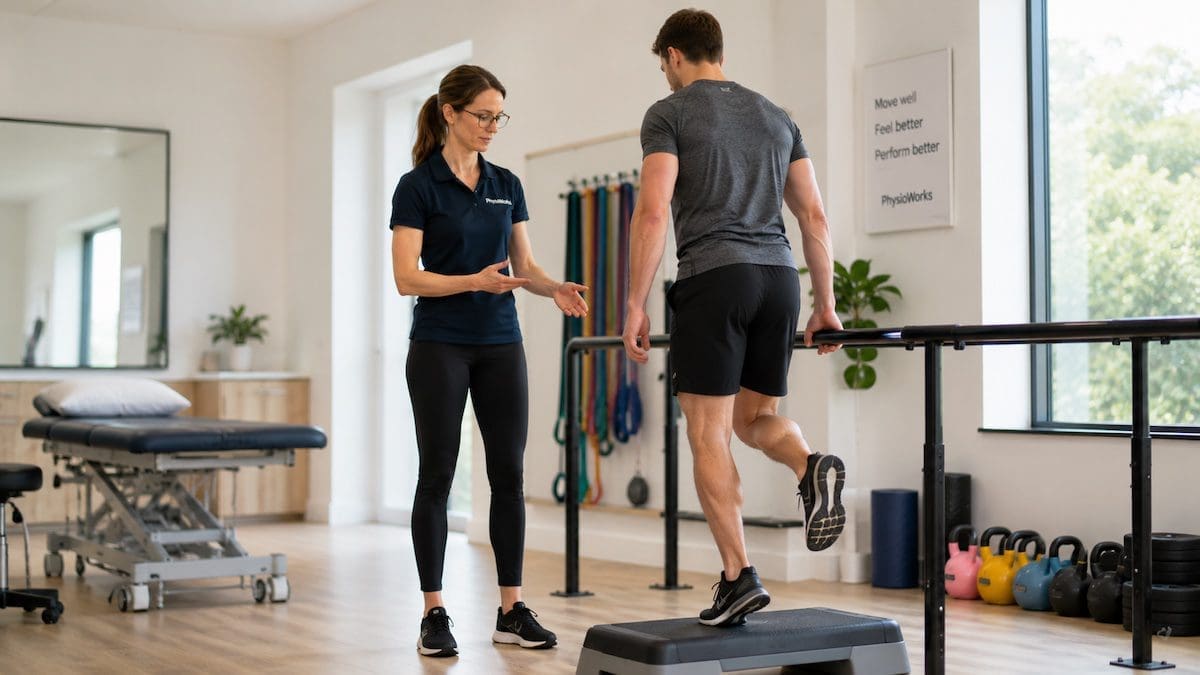
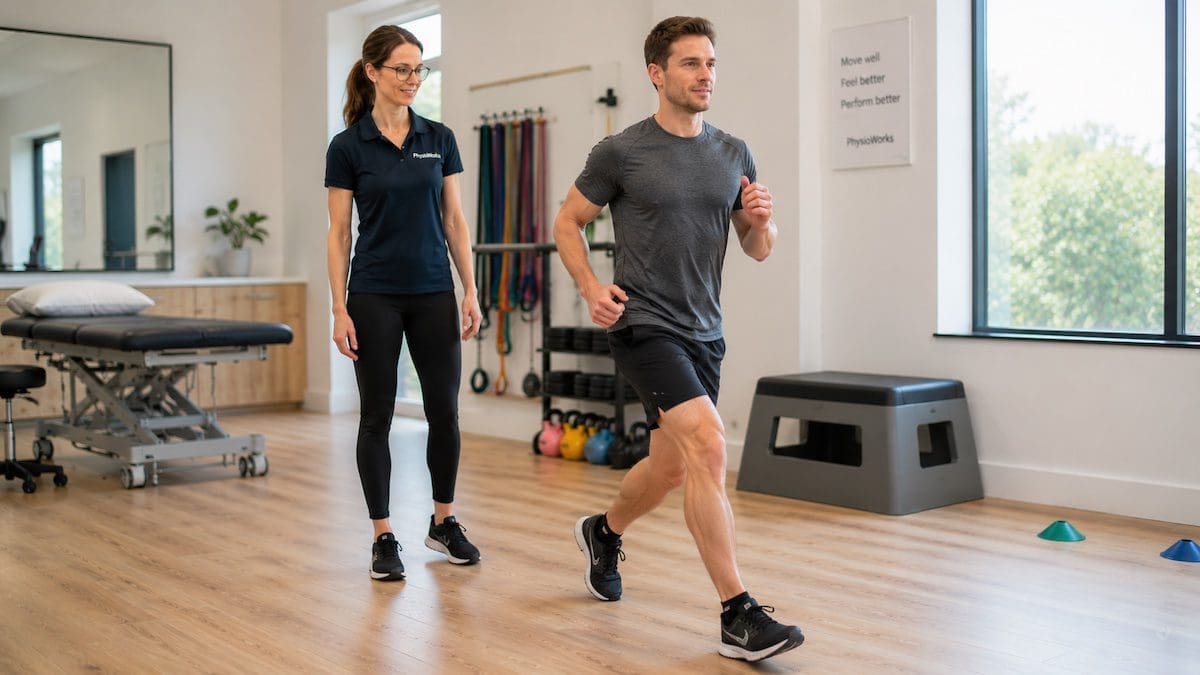
This can be especially helpful after a weekend injury involving swelling, bruising, reduced movement, limping, or difficulty returning to work, training, or sport. Many people also benefit from reading our guides on sports injury management, acute injury treatment, and the HARM protocol.

What happens at an acute sports injury clinic appointment?

Your physiotherapist will assess the injured area, ask how the injury happened, and check your pain, swelling, movement, strength, and function. The aim is to identify the likely injured structure, rule out more serious concerns, and give you a practical first-stage management plan.

Your appointment may include:

  • a prompt working diagnosis and injury explanation
  • advice about loading, movement, compression, support, and recovery priorities
  • guidance on whether you may need X-ray, ultrasound, or MRI referral
  • referral to a GP, Sports Physician, or surgeon if clinically appropriate
  • access to useful supports such as walking boots, braces, or rental crutches when needed
Acute injury crutch walking guidance by physiotherapist during safe partial weight bearing

Crutch walking guidance after acute lower limb injury

Using crutches correctly can help reduce pain and protect injured tissues while you recover. Early guidance can improve safety, confidence, and movement quality in the first few days after injury.

What should you do in the first 48 hours after a sports injury?

The first 48 hours after an acute sports injury are important. A simple early plan can help reduce pain, protect the injured area, and avoid doing too much too soon.

  • Protect the injured area and avoid aggravating movements
  • Modify your activity rather than pushing through pain
  • Use support such as a brace, tape, or crutches if needed
  • Monitor swelling, pain, and your ability to weight-bear

If you are unsure what is safe, an early physiotherapy assessment can give you clear guidance based on your injury.

Why does early assessment matter after a sports injury?

Early assessment matters because the first few days often shape your recovery. A good early plan can reduce confusion, help you avoid doing too much or too little, and give you a clearer path back to normal walking, training, work, or sport.

Healthdirect also notes that sprains, strains, and limb injuries may need structured management, physiotherapy, or medical review depending on severity. You can read their public guidance on sprains and strains and physiotherapy.

Who is this service best suited to?

This service is best suited to people with a recent sports or exercise injury who want early answers and a sensible plan.

It is commonly useful for ankle sprains, knee ligament injuries, muscle strains, calf injuries, shoulder injuries, and other sudden sports-related problems. You may also find these pages useful: sports health, youth sports injuries, and sports injury insurance.

Is this acute injury clinic right for you?

If you have a new injury and are unsure what to do, this service is designed to give you clarity quickly. It is particularly helpful if you are deciding whether you need imaging, a brace, crutches, or follow-up care.

If your goal is to understand your injury early and avoid setbacks, booking an acute injury assessment is often the best first step.

When should you seek urgent medical review instead?

You should seek urgent medical review if you cannot weight-bear, have major deformity, severe swelling, suspected fracture, repeated giving way, large joint locking, head injury symptoms, or other concerning symptoms. In these situations, emergency or same-day medical care may be more appropriate than a routine physiotherapy appointment.

Fee and cover information

The acute sports injury consultation fee is typically lower than a full assessment. Private health cover may reduce your out-of-pocket cost depending on your policy.

What to do next

If you have picked up a new sports injury and are unsure what to do first, book an early physiotherapy assessment. A PhysioWorks clinician can assess the injury, explain the likely diagnosis, and guide your next steps.

knee injury recovery walking in knee brace with physiotherapist observing gait

Walking confidently after knee injury recovery

Early recovery focuses on safe supported walking, building confidence, and progressing activity step by step.

Book your appointment - 24/7

Select your preferred PhysioWorks clinic.

Follow PhysioWorks

Get free physiotherapy tips, exercise videos, and recovery advice.

Facebook Instagram YouTube TikTok X (Twitter) Email

References

  1. Racinais S, Dablainville V, Rousse Y, et al. Cryotherapy for treating soft tissue injuries in sport medicine: a critical review. Br J Sports Med. 2024;58(20):1215-1223. doi:10.1136/bjsports-2024-108304
  2. Kotsifaki R, Korakakis V, Whiteley R, et al. Aspetar clinical practice guideline on rehabilitation after anterior cruciate ligament reconstruction. Br J Sports Med. 2023;57(9):500-514.
  3. Healthdirect. Sprains and strains. Accessed April 12, 2026.
  4. Healthdirect. Physiotherapy. Accessed April 12, 2026.

What Is Sports Physiotherapy?

Sports physiotherapy focuses on assessing, treating, rehabilitating, and helping prevent injuries linked to sport and exercise. It supports athletes and active people through injury recovery, load management, return-to-sport planning, and performance-focused rehabilitation. If you want broader context, start with our sports injuries hub or explore our sports physiotherapy Brisbane service page.

Sports physiotherapy is a type of physiotherapy that treats and helps prevent injuries related to sport and exercise, while guiding people back to training and competition safely.

At PhysioWorks, sports physiotherapy is not just for elite athletes. It may help juniors, weekend warriors, gym-based exercisers, runners, and team sport players who need a plan that matches the physical demands of their sport, training, and recovery.

Sports Physiotherapy at a Glance

  • Assesses sport-specific movement, strength, and training load
  • Helps manage acute injuries and overuse conditions
  • Supports safe and confident return to sport
  • Builds performance, resilience, and injury prevention strategies

What is sports physiotherapy?

Sports physiotherapy is a branch of physiotherapy that focuses on injuries, movement demands, and rehabilitation linked to training, exercise, and sport. It combines clinical assessment with sport-specific rehab so people can recover well, rebuild capacity, and return to activity with more confidence.

Sports injuries often differ from everyday aches because sport places repeated and sometimes high-level loads on muscles, tendons, ligaments, joints, and bones. That is why sports physiotherapy usually looks beyond pain alone and considers factors such as sprinting, jumping, cutting, kicking, throwing, contact, fatigue, and workload spikes.


How is sports physiotherapy different from general physiotherapy?

Sports physiotherapy usually places more emphasis on training load, performance demands, return-to-sport testing, and injury prevention. General physiotherapy may still treat sports injuries well, but sports physiotherapy is more likely to build rehab around the specific movements and goals of your activity.

For example, a runner may need a plan based on mileage progression and running mechanics, while a footballer may need change-of-direction drills, kicking tolerance, and match-readiness testing. If your injury needs fast early assessment, our Acute Sports Injury Clinic may also help.


Who may benefit from sports physiotherapy?

Sports physiotherapy may help anyone whose pain or injury relates to exercise, training, competition, or repeated physical loading. That includes school athletes, recreational exercisers, masters athletes, gym members, and people returning to sport after time away.

  • Field and court sport athletes
  • Runners and endurance athletes
  • Gym and CrossFit participants
  • Racquet sport players
  • Dancers and active teenagers
  • Adults returning to exercise

If you are managing youth-related issues, you may also find our kids sports injuries guide useful.


What does a sports physiotherapist assess?

A sports physiotherapist assesses the injured area, but also looks at why the problem developed and what demands your sport places on you. That wider view helps shape a plan that is safer, more practical, and more specific to your goals.

Your assessment may include strength, flexibility, joint movement, balance, control, running or landing mechanics, training history, previous injury, and return-to-play goals. For some athletes, sports physiotherapy also overlaps with broader sports health topics such as concussion, heat illness, recovery, and load planning.


What injuries can sports physiotherapy help treat?

Sports physiotherapy may help with many acute and overuse injuries. Common examples include muscle strains, tendon pain, ligament sprains, joint injuries, and recurring overload problems linked to poor load progression or incomplete rehabilitation.

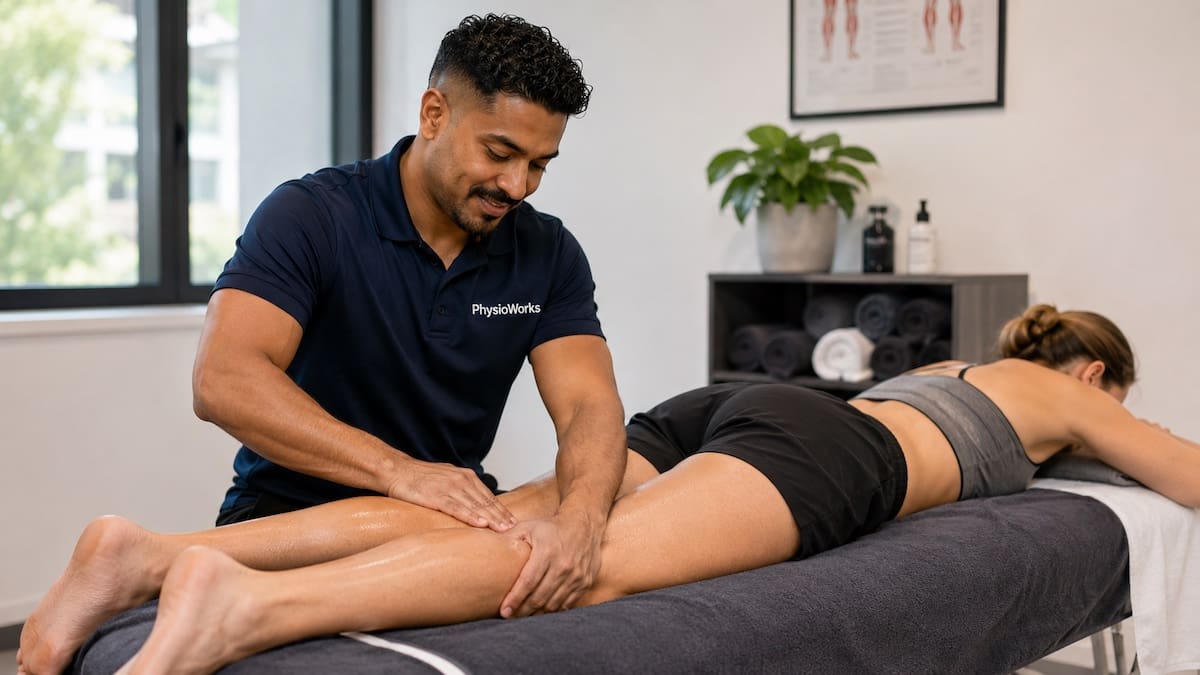
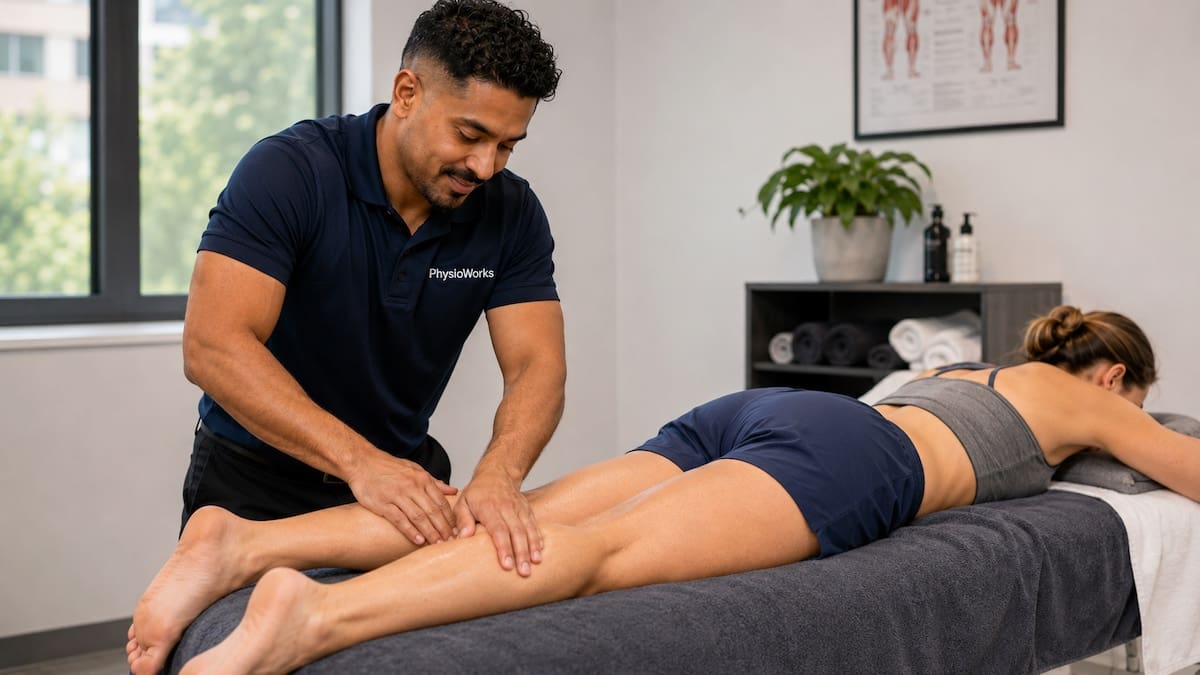
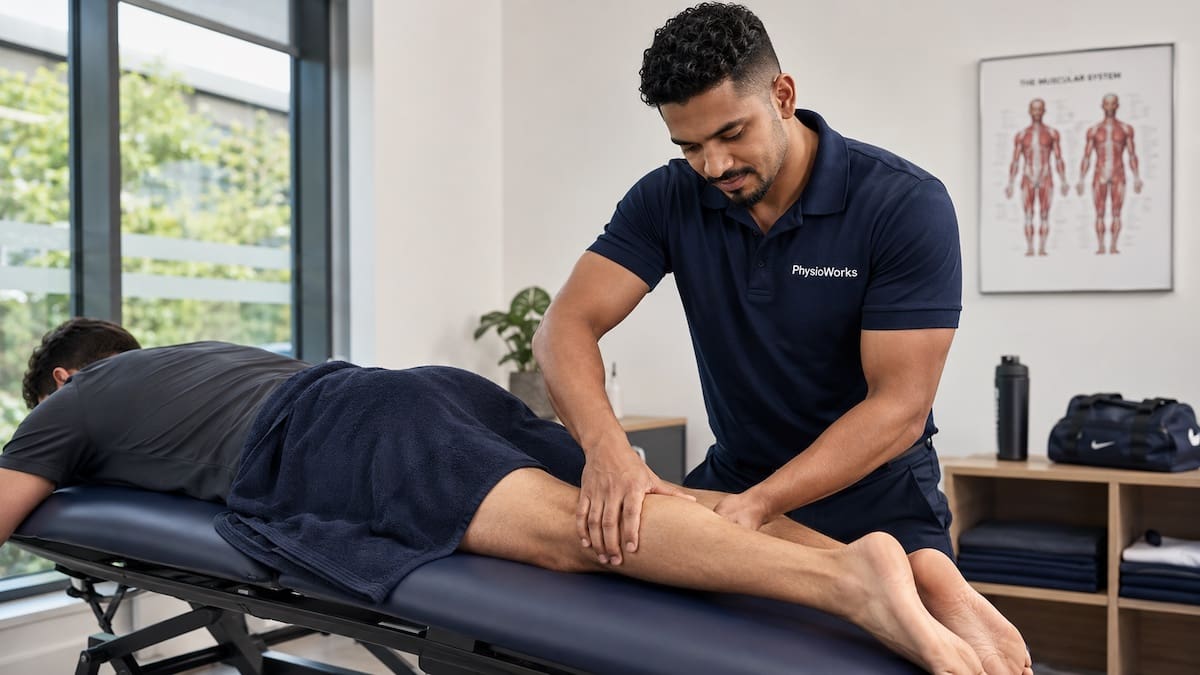
Common examples include knee sports injuries, hamstring strains, calf tears, ankle sprains, shoulder pain in throwing sports, tendon pain, and return-to-sport rehabilitation after surgery. Many people also combine physiotherapy with sports massage or sports recovery massage when appropriate.


When should you see a sports physiotherapist?

You should consider sports physiotherapy when pain is affecting training, movement quality, confidence, or performance. Early assessment often helps clarify the problem, reduce guesswork, and stop a minor issue from becoming a longer interruption.

When to act: Book a sports physiotherapy assessment if your pain is not improving, keeps returning, or is affecting your training, movement, or confidence.

It is especially sensible to book if your symptoms are not settling, keep returning, or involve swelling, weakness, instability, locking, sharp pain, or reduced sporting confidence. If you are trying to judge readiness after an injury, our Return to Sport Testing guide is a useful next read.


Can sports physiotherapy help prevent injuries?

Yes. Sports physiotherapy may help reduce injury risk by identifying weaknesses, movement issues, training errors, and recovery patterns that increase stress on the body. Prevention usually works best when it is practical, sport-specific, and built into your normal training routine.

This may include strength work, landing control, sprint preparation, mobility, warm-up planning, or load progression advice. For a simple public overview of how physiotherapy supports movement and recovery, Healthdirect also provides general information about physiotherapy.


Common Questions About Sports Physiotherapy

Do I need to be an elite athlete to have sports physiotherapy?

No. Sports physiotherapy suits anyone whose pain or injury is linked to exercise or sport. Many patients are recreational runners, gym users, or team sport players who simply want to recover well and return to activity safely.

Does sports physiotherapy only focus on injuries?

No. It also looks at prevention, training load, movement quality, and return-to-sport readiness. In many cases, the aim is not just to settle pain but to reduce recurrence and improve confidence in training or competition.

Can sports physiotherapy help after surgery?

Yes. Sports physiotherapy is commonly used after ACL reconstruction, shoulder surgery, ankle stabilisation, and other procedures that need progressive rehabilitation. Rehab is usually guided by healing, strength, function, and sport demands rather than time alone.

How long does sports physiotherapy take to work?

That depends on the diagnosis, tissue healing, load demands, and how early treatment starts. Some minor injuries improve within weeks, while tendon, bone, ligament, or post-operative rehabilitation may take much longer and need staged progression.

Can sports physiotherapy help with sports insurance claims?

It can often help by documenting your injury, assessment findings, treatment plan, and functional progress. If your injury happened during registered sport, you may also need to review your policy and claim process through our sports injury insurance page.


Related sports physiotherapy articles

What to Do Next

If your injury is affecting your training or performance, a sports physiotherapist can assess the issue and guide your recovery. Early advice often helps reduce downtime and improve your return to sport.

Next step: Book an appointment and bring details about your sport, training load, and symptoms so your plan can match your goals.

Book your appointment - 24/7

Select your preferred PhysioWorks clinic.

Follow PhysioWorks

Get free physiotherapy tips, exercise videos, and recovery advice.

Facebook Instagram YouTube TikTok X (Twitter) Email

References

  1. Cronström A, Tengman E, Häger CK. Risk factors for graft rupture following anterior cruciate ligament reconstruction and return to sport: a systematic review and meta-analysis. Br J Sports Med. 2022;56(8):418-429. doi:10.1136/bjsports-2021-104658
  2. Paster E, Sayeg A, Armistead S, Feldman MD. Rehabilitation Using a Systematic and Holistic Approach for the Injured Athlete Returning to Sport. Arthrosc Sports Med Rehabil. 2022;4(1):e141-e149. doi:10.1016/j.asmr.2021.10.021
  3. Yung PSH, Bittencourt NFN, Wang HK, et al. Characteristics of complex systems in sports injury rehabilitation: examples and implications for practice. Sports Med Open. 2022;8(1):21. doi:10.1186/s40798-022-00433-8

Check If You’re Covered by Sports Injury Insurance

Physiotherapist explaining sports injury treatment and insurance options during consultation

Clear plan and guidance during your physiotherapy consultation

Sports injury insurance physiotherapy may help cover treatment costs after an injury during training or competition. However, cover varies between sporting bodies, insurers, benefit limits, and claim rules. If you are unsure where to begin, start with our broader Funding & Insurance guide and sports injuries hub.

If you play organised sport in Brisbane, the best next step is usually simple: check your club or association policy, confirm whether physiotherapy is included, and book early if you need assessment or treatment. Early care can help clarify your diagnosis, plan rehab, and support the paperwork often needed for a claim.

Quick Answer: Are You Covered by Sports Injury Insurance?

Often, yes. Many Australian sporting associations include some level of personal injury cover with registration. Even so, the amount payable, the treatment types covered, and the documents required can differ from one policy to another.

  • Many sports insurance policies include physiotherapy for eligible sports injuries.
  • Cover usually depends on your club, association, or insurer.
  • You may need claim forms, receipts, referral details, or injury reports.
  • Early assessment can help guide treatment and support your claim process.

Does Sports Injury Insurance Cover Physiotherapy?

Sports injury insurance often contributes to physiotherapy after an eligible sport-related injury. It is most relevant when the injury happened during organised training, competition, or an approved club activity. Some policies also set excess payments, treatment caps, waiting periods, or exclusions.

If your injury is recent, you may also find our sports physiotherapy page and Acute Sports Injury Clinic helpful for your next steps.

How to Check If You’re Covered

Start with the policy linked by your club, school, league, or sporting association. Then confirm whether the policy applies to your specific injury, whether physiotherapy is included, and what documentation you need before treatment or reimbursement.

Simple cover checklist

  1. Confirm your club or association insurance provider.
  2. Check whether your injury happened during an eligible activity.
  3. See whether physiotherapy is listed as a covered service.
  4. Review benefit limits, exclusions, and any excess.
  5. Check what forms, reports, or receipts you must submit.

What Documents Might You Need?

Most claims are easier when you keep your paperwork from the start. Depending on the insurer, you may need your registration details, injury date, claim form, treatment receipts, referral information, and a clinical assessment report. If you are unsure, ask the insurer what they require before you submit anything.

If you also want to compare other payment pathways, see our Funding & Insurance hub and Private Health Insurance Rebates page.

When Should You Book Sports Physiotherapy?

Book early if you have significant pain, swelling, bruising, instability, reduced range of motion, or trouble loading the injured area. Prompt assessment may help clarify the injury, start the right treatment early, and guide safer decisions about rest, training, and return to sport.

If your goal is to get back to training or competition safely, our return to sport testing guide explains how progression and decision-making are usually managed after sports injuries.

Is Sports Massage Covered Too?

Sometimes, but not always. Sports injury insurance is more commonly linked to physiotherapy and other approved treatment pathways. If recovery massage forms part of your broader plan, check whether your insurer lists it specifically. You can also explore sports recovery massage if you want to discuss whether it may suit your situation.

Is This Right for You?

This page is useful if you have been injured during organised sport and want to know whether insurance may help with your physiotherapy costs. It is also useful if you are unsure whether to book now or wait until your claim is clarified.

In most cases, it is better to check your cover early and get timely advice rather than delay treatment. Early assessment often helps you understand the injury, protect your training goals, and avoid unnecessary setbacks.

More Helpful Sports Links

What Should You Do Next?

If you think your injury may be claimable, confirm your insurer, note the injury details, and book your initial physio assessment today. We can assess your injury, explain the likely rehab pathway, and help you understand what documentation may support your claim.

If your injury is severe, unusual, or worsening, seek prompt medical care. For general public guidance on injuries and when to seek further help, Healthdirect’s advice on accidents and injuries is also useful.

FAQs About Sports Injury Insurance

Do all sports registrations include injury insurance?

No. Many do, but not all. Cover depends on the sporting body, policy, and registration level, so it is worth checking your club or association details rather than assuming you are included.

Do I need a referral before physiotherapy?

Not always. Some policies allow you to book directly, while others may ask for claim paperwork or supporting documents first. Check the insurer requirements before your first appointment if you are unsure.

Can I still book before my claim is approved?

Yes, in many cases you can still start treatment. However, reimbursement rules vary, so confirm whether pre-approval, receipts, or extra documentation are required if you want to claim costs back later.

What if my claim is rejected?

You can ask the insurer why the claim was declined and whether more information is needed. Sometimes the issue is documentation rather than treatment eligibility. You can also discuss other payment pathways through private health, self-funding, or other approved schemes where relevant.

How long do sports insurance claims usually take?

Claim timing varies. Some insurers process simple claims relatively quickly once the paperwork is complete, while others take longer if more reports or supporting documents are needed. Delays are more likely when forms are incomplete or the injury details are unclear.

What injuries are usually excluded from sports injury insurance?

Exclusions vary by policy, but they may include non-approved activities, pre-existing problems, some overuse conditions, or injuries outside organised club events. Always check the policy wording because the exact rules, limits, and definitions can differ between insurers.

Book your appointment - 24/7

Select your preferred PhysioWorks clinic.

Our Brisbane Sports Physiotherapists

Our Brisbane sports physiotherapists regularly assess and manage training and competition injuries. We can help guide early treatment, rehabilitation planning, and return-to-sport decisions after many common sporting injuries.

Follow PhysioWorks

Get free physiotherapy tips, exercise videos, and recovery advice.

Facebook Instagram YouTube TikTok X (Twitter) Email

References

  1. Australian Institute of Health and Welfare. Sports injury in Australia: sports participation and injury rates. Updated July 30, 2025. Accessed April 14, 2026.
  2. Healthdirect Australia. Accidents and injuries. Accessed April 14, 2026.