
A post-event recovery massage is often booked later the same day or within 24–48 hours after sport. The best timing depends on the event, how your body feels and what you plan to do next.
When Should You Book a Post-Event Recovery Massage?

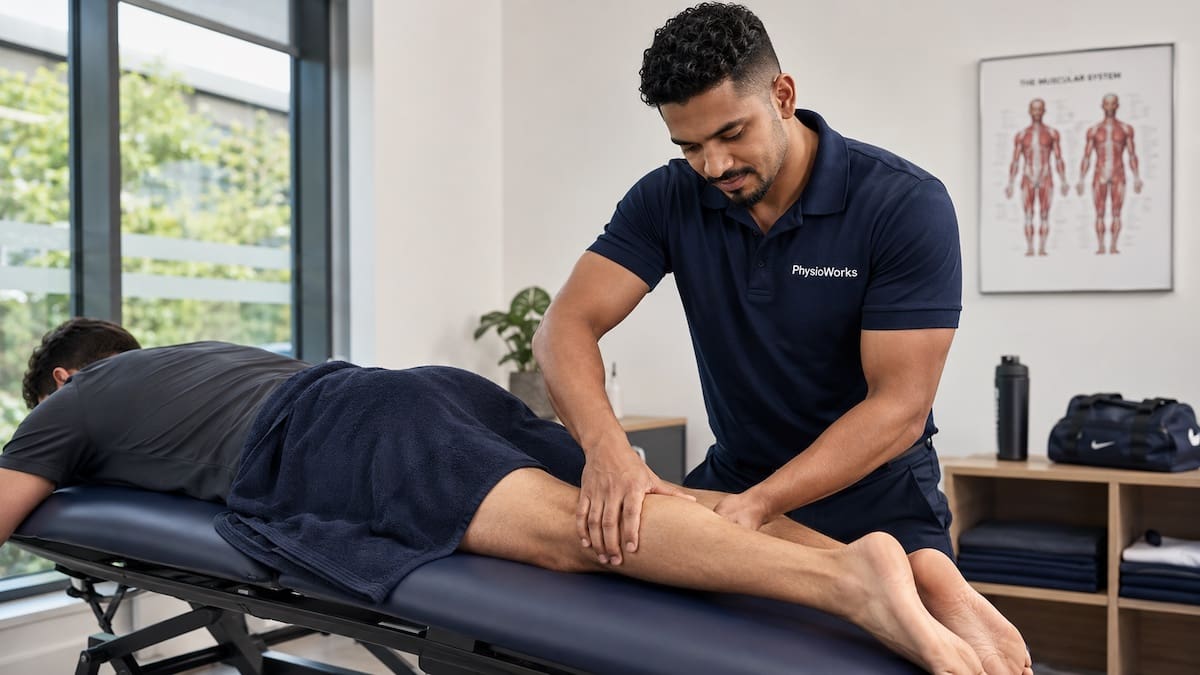
Targeted calf massage may form part of a broader recovery plan after sport.
When is the best time for a recovery massage?
There is no single ideal time for everyone. Your preferred timing will depend on the length and intensity of the event, the symptoms you notice afterwards and the demands of your next training session.
Many people consider a sports recovery massage later the same day or during the following two days. A lighter session may suit general tiredness or tightness soon after exercise. Waiting until the next day may feel better when soreness is still developing.
If your main symptom is widespread post-exercise soreness, compare it with the usual features of delayed onset muscle soreness. DOMS commonly develops after unfamiliar or harder-than-usual exercise and can become more noticeable during the following day.
Choose your timing based on how you feel
Soon after the event
Gentle treatment may suit ordinary fatigue or mild muscle tightness when you otherwise feel well and have no signs of injury.
Later the same day
This may suit general heaviness, stiffness or tired muscles after a moderate event or training session.
Within 24–48 hours
This timing often feels more comfortable after longer events, heavy strength training or when muscle soreness becomes clearer the next day.
Assessment first
Choose physiotherapy or medical advice first when you have sharp pain, marked swelling, bruising, numbness or pain that changes how you walk or move.
How does the type of event affect massage timing?
Running and endurance events
After a shorter race or moderate run, some runners prefer massage later the same day for general calf, thigh or hip tightness. After a long-distance event, waiting until the following day may feel more comfortable.
Team sports
Sprinting, jumping, kicking, tackling and repeated changes of direction can leave several muscle groups feeling tired. A player may consider recovery massage later that day or within 24 hours, particularly when another game or training session is approaching.
Gym and strength training
Hard or unfamiliar resistance training can cause local muscle soreness that develops over the following 24–48 hours. Massage may feel more useful once the location and extent of the soreness are clearer.
How does your next training session affect timing?
Your next activity matters as much as the event you have just completed. Massage may help some people feel more relaxed or comfortable between closely scheduled sessions. However, it should not be used to hide pain or force a return to hard training before your body is ready.
Massage works best as one part of a wider recovery plan. Sleep, food, hydration, light movement, rest and sensible training loads remain important.
When should recovery massage wait?
Do not treat every symptom after sport as ordinary muscle soreness. Massage may not be the right first step when symptoms suggest an injury, illness or another condition requiring assessment.
For a suspected sporting injury, a physiotherapist can assess the painful area and advise whether massage, exercise, load changes or another form of care is suitable. Our guide to common muscle injuries may also help you recognise symptoms that deserve closer review.
Is post-event recovery massage suitable for you?
A recovery massage may be worth considering when your symptoms feel muscular, widespread and consistent with recent exercise rather than a distinct injury.
General muscle tightness
You feel stiff, heavy or tired after sport but can otherwise move normally.
Normal training soreness
Your symptoms developed after a harder or less familiar session and do not include marked swelling, bruising or weakness.
Recovery between sessions
You want support managing muscle comfort between training, events or gym sessions.
Your massage therapist can discuss the treatment area, pressure, positioning and your goals before treatment starts. You may request a pressure change, decline treatment of an area or stop the session at any time.
What to do next
When your symptoms feel like ordinary post-exercise tightness or soreness, choose a recovery massage time that fits your comfort and training week. Waiting until the following day is reasonable when you expect soreness to develop overnight.
Book a physiotherapy assessment instead when pain is sharp, localised, worsening or affecting normal movement. Seek medical advice promptly for unusual calf swelling, breathing symptoms, heat illness or other concerning signs.


Post-Event Recovery Massage FAQs
How soon after sport should I get a recovery massage?
Many people consider a recovery massage later the same day or within 24–48 hours. The best time depends on the event, your symptoms and when you next plan to train or compete.
Is it better to get a massage straight after sport or the next day?
A gentle massage soon after sport may suit mild general tightness. Waiting until the following day may feel better after longer or harder events, when developing soreness is easier to identify.
Can massage help delayed onset muscle soreness?
Massage may help some people feel less sore or more relaxed for a short period. It should form part of a broader recovery plan that includes sleep, hydration, food, light movement and sensible training loads.
When should I see a physiotherapist instead of booking massage?
Book a physiotherapy assessment when you have sharp or localised pain, swelling, bruising, weakness, numbness or pain that changes how you walk or move. Seek medical advice for unusual one-sided calf swelling or other concerning symptoms.
Can I train after a post-event recovery massage?
Light activity may feel comfortable after massage, but your next session should reflect your symptoms, fatigue and overall recovery. Avoid using massage to push through pain or return to hard training before you are ready.
References
- Dupuy O, Douzi W, Theurot D, Bosquet L, Dugué B. An evidence-based approach for choosing post-exercise recovery techniques. Front Physiol. 2018;9:403.
- Poppendieck W, Wegmann M, Ferrauti A, Kellmann M, Pfeiffer M, Meyer T. Massage and performance recovery: a meta-analytical review. Sports Med. 2016;46(2):183–204.
- Davis HL, Alabed S, Chico TJA. Effect of sports massage on performance and recovery: a systematic review and meta-analysis. BMJ Open Sport Exerc Med. 2020;6(1):e000614.
