
How Long Does a Muscle Strain Take to Heal?
Muscle strain recovery can take from a few weeks to several months. The timeframe depends on the size and location of the tear, your symptoms and how well strength and activity tolerance recover.
Muscle strain recovery can take from a few weeks to several months. The timeframe depends on the size and location of the tear, your symptoms and how well strength and activity tolerance recover.


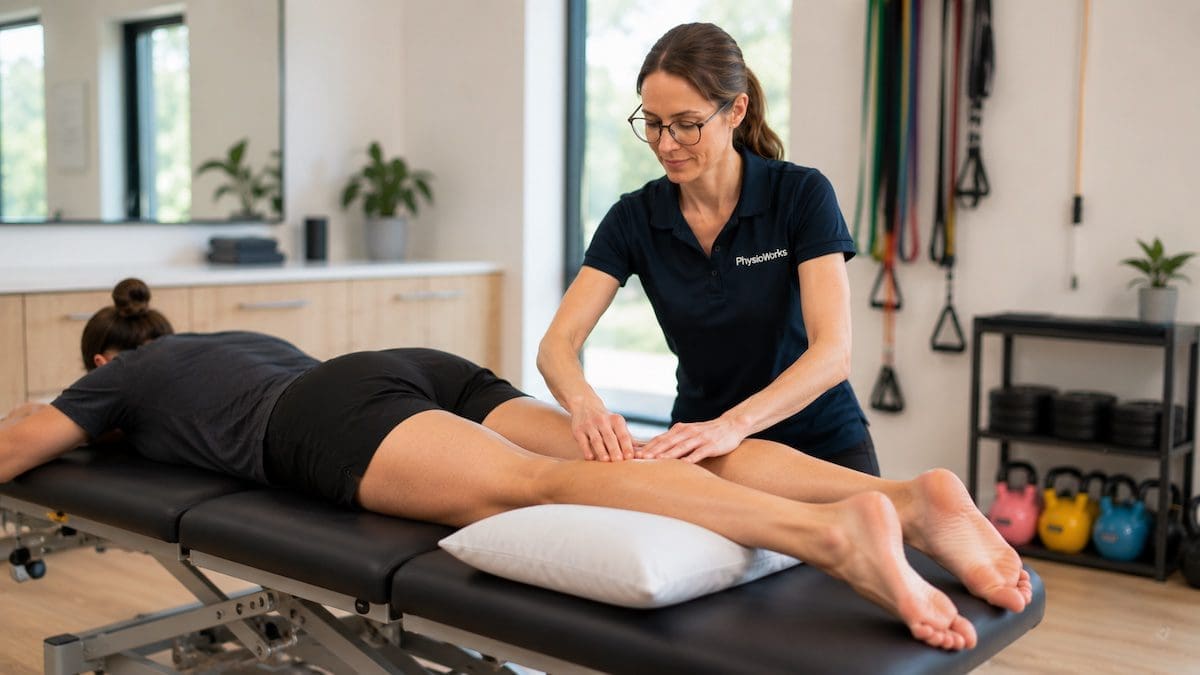
Mild strain
Often around 2–3 weeks.
Moderate tear
Often around 4–8 weeks.
Severe tear
May take several months and can require medical review.
Pain relief does not necessarily mean that the muscle is ready for harder exercise, work or sport. Recovery also involves rebuilding movement, strength, control and tolerance to the loads your activity requires.
For a broader overview, see our Muscle Strain guide or explore the Muscle Pain & Injury information hub.
Muscle strain recovery differs from person to person because each tear, muscle and activity goal places different demands on healing tissue. A small calf strain may progress relatively quickly, while a larger hamstring strain or another substantial muscle tear will usually need longer rehabilitation.
Factors that may influence recovery include:
A physiotherapy assessment can examine movement, strength, function, bruising and symptom behaviour. Your rehabilitation plan can then progress according to what the muscle can tolerate rather than relying on time alone.
Muscle strain rehabilitation usually progresses from settling the early injury to restoring movement, rebuilding strength and finally preparing for normal work, running or sport. The stages overlap, and progression should depend on symptoms and function rather than a fixed calendar.
Early management aims to protect the injured muscle while maintaining appropriate movement. Walking or everyday activity should gradually become more comfortable rather than increasingly difficult.
As symptoms settle, movement can usually increase. The aim is to regain useful range and basic muscle control without repeatedly provoking sharp pain.
Progressive strengthening helps the muscle tolerate increasing force. Exercise should become more demanding as strength and symptom response improve.
The final stage adds the speed, impact, endurance or task-specific demands needed for your normal activities. Return decisions should consider performance as well as pain.
For more information about tissue recovery, read our Soft Tissue Injury Healing Guide. During the early stage, the Acute Soft Tissue Injury guide and information about HARM Factors may also be useful.
Not necessarily. Less pain is encouraging, but pain-free rest does not prove that a muscle has regained its previous strength or ability to tolerate demanding activity.
Before returning to harder exercise, work or sport, you may also need adequate movement, muscle strength, control, endurance and confidence. Running and field sports may require additional speed, acceleration, jumping or change-of-direction testing.
You can often keep exercising during muscle strain recovery, but the type and amount of exercise matter. You may be able to train unaffected areas while initially reducing the load on the injured muscle.
As recovery progresses, rehabilitation may move from gentle movement to controlled strengthening and then to faster or heavier exercise.
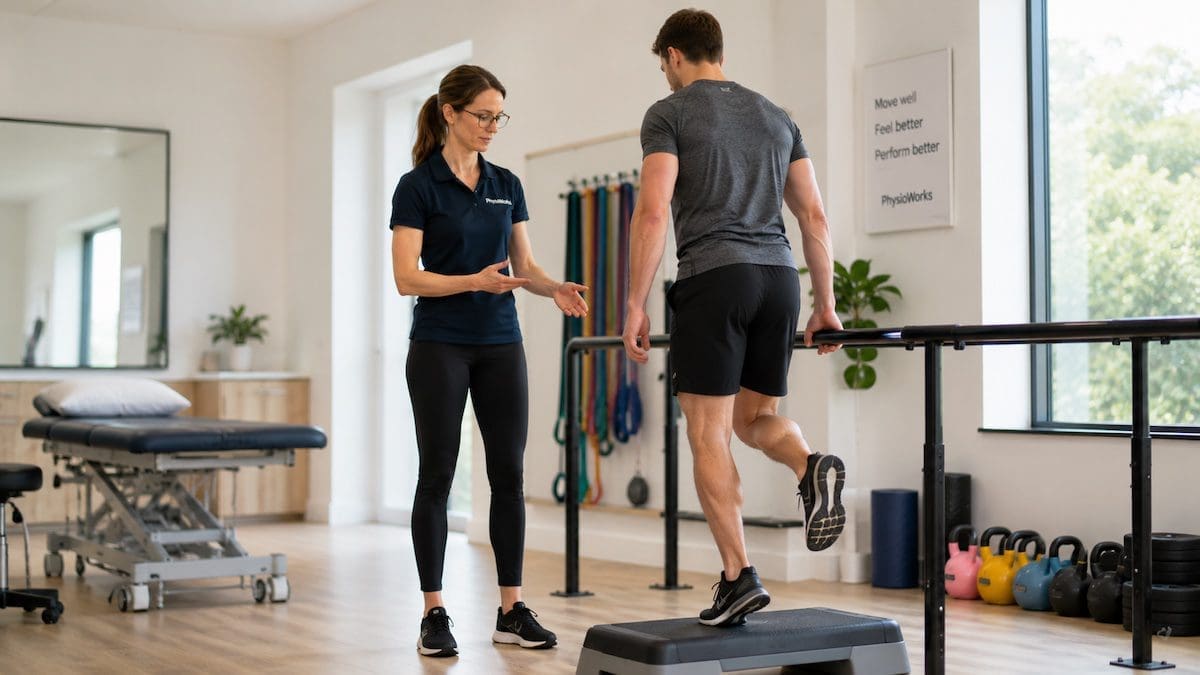
Exercise produces manageable effort without sharp pain, limping or a meaningful increase in symptoms later that day or the next morning.
Pain is building during exercise, movement quality is changing or symptoms remain noticeably worse after the activity.
Stop or reduce the activity if you develop sharp pain, sudden weakness, limping or increasing swelling.
Good exercise load management often involves changing one main variable at a time. Depending on the activity, this may include distance, speed, hills, gym resistance, sport drills or recovery time.
Physiotherapy can help match rehabilitation to the stage and demands of your injury. Early management commonly focuses on protecting the muscle, restoring comfortable movement and keeping daily activities manageable.
Later rehabilitation usually places greater emphasis on strength, muscle capacity and return to normal activity. Depending on your presentation and goals, this may include:
Some people may also use appropriate muscle treatment or short-term symptom-relief strategies as part of their broader rehabilitation. These approaches should support rather than replace progressive loading when rebuilding muscle capacity is required.
Consider a physiotherapy assessment if the injury is not steadily improving, walking remains difficult, weakness is limiting normal activity or you need a structured return to work, gym exercise or sport. Assessment can also help when a muscle strain repeatedly returns.
Mild muscle strains often improve within about 2–3 weeks. Moderate tears may need around 4–8 weeks, while severe tears can take several months. Recovery depends on the size and location of the injury, symptoms, individual health and how strength and activity tolerance progress.
You should generally be able to move and load the muscle comfortably. Returning to sport or demanding work may also require adequate strength, speed, control and confidence. Being pain-free at rest alone does not necessarily mean the muscle is ready.
Often, yes. Exercise may continue in a modified form while the muscle heals. The appropriate type and load depend on the injury stage and your symptom response. Rehabilitation commonly progresses from comfortable movement to strengthening and then more demanding activity.
Repeat strains can have several contributors, including returning before strength and capacity have recovered, rapid increases in training load or incomplete progression to running and sport demands. Assessment can help identify which factors are relevant in your case.
Not always. Many muscle strains can be managed after a clinical assessment. Imaging may be considered when the injury appears substantial, symptoms or examination findings are unusual, or recovery is not progressing as expected.
Recovery commonly involves appropriate early protection, comfortable movement, progressive strengthening and gradual return to normal loads. Sleep, nutrition and general health may also influence recovery.
No. Stretching may form part of rehabilitation for some people, but it does not replace progressive strengthening and rebuilding the muscle’s tolerance to normal work, exercise or sport.
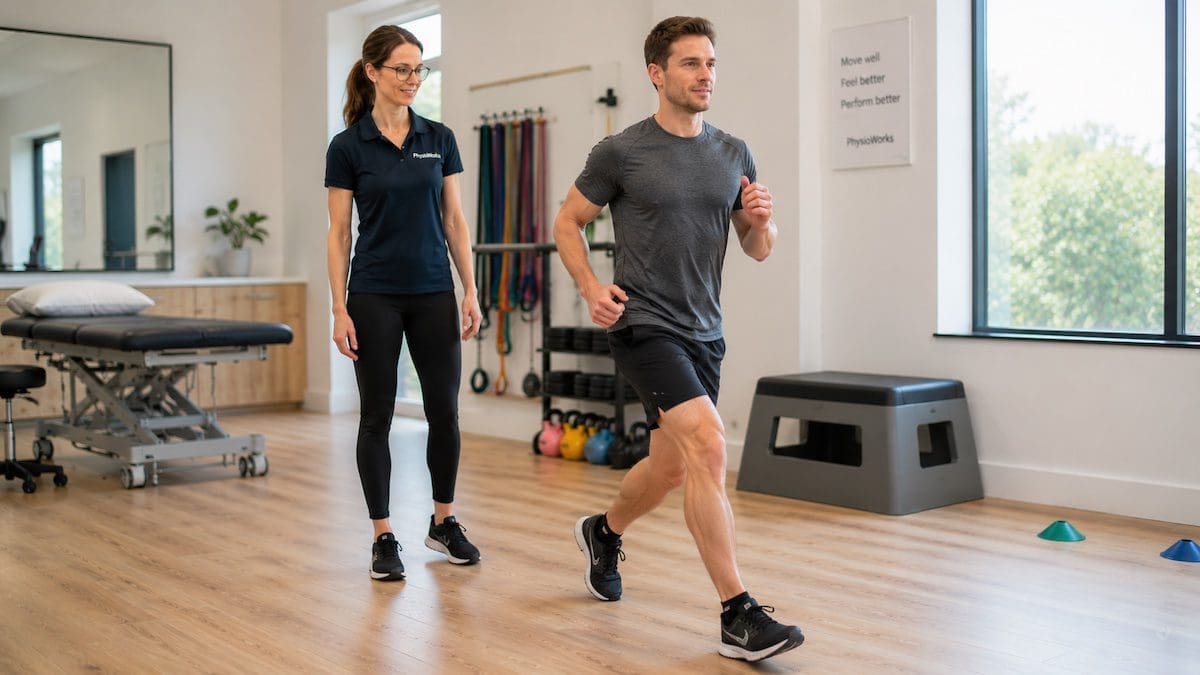
If your muscle strain is not improving, keeps returning or is limiting work, exercise or sport, consider a physiotherapy assessment. Bring any relevant scan reports and information about your usual training or activity. Your physiotherapist can assess your current function and help plan an appropriate progression.
Select a PhysioWorks clinic to continue to live booking, an appointment request or reception assistance.
