
Cervical Radiculopathy
Cervical radiculopathy occurs when a nerve root in the neck becomes irritated or compressed, causing symptoms that can travel into the shoulder, arm or hand.


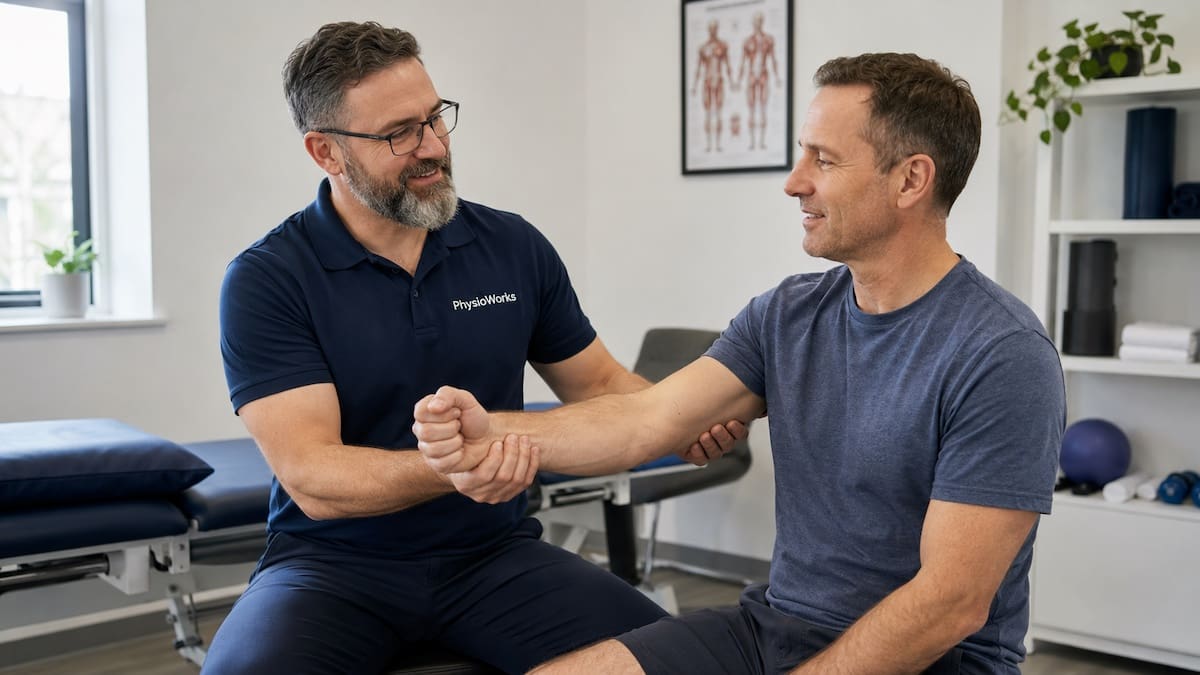
Physiotherapy assessment of neck-related arm pain and neurological symptoms.
Cervical radiculopathy may cause pain, tingling, numbness or weakness in one arm. Some people have relatively little neck pain, while their arm or hand symptoms are much more noticeable.
Symptoms may become more noticeable during desk work, phone use, driving or other sustained neck positions. Looking up or turning your neck may reproduce arm symptoms, while changing position, supporting the arm or gentle movement may provide relief.
People sometimes describe cervical radiculopathy as a pinched nerve in the neck. However, the nerve does not always need to be tightly compressed. Mechanical pressure, inflammation around the nerve root or both may contribute.
Because several neck, shoulder and peripheral nerve problems can produce similar symptoms, assessment should consider movement, strength, sensation, reflexes and symptom behaviour rather than relying on one symptom or scan finding.
Why Does Cervical Radiculopathy Occur?
Cervical radiculopathy develops when a cervical nerve root becomes irritated as it leaves the spine. Disc changes, joint changes, reduced space around the nerve and local inflammation may all contribute.
Mechanical Pressure
A disc bulge or herniation, joint swelling or age-related bony change may reduce the space around a nerve root. The nerve may then become sensitive and produce symptoms further down the arm.
Inflammatory Irritation
Inflammation around a nerve root may also trigger symptoms. Therefore, the severity of pain or tingling does not always match the amount of compression seen on a scan.
What Are the Symptoms of Cervical Radiculopathy?
The most recognisable pattern is pain that travels from the neck towards one shoulder, arm or hand. However, symptoms vary between people.
- Sharp, aching, burning or electric-like arm pain
- Tingling or pins and needles in the arm or hand
- Numbness in part of the forearm, hand or fingers
- Weakness in the arm, wrist, hand or grip
- Reduced or uncomfortable neck movement
- Symptoms that increase during driving or desk work
- Symptoms that change when the neck or arm position changes
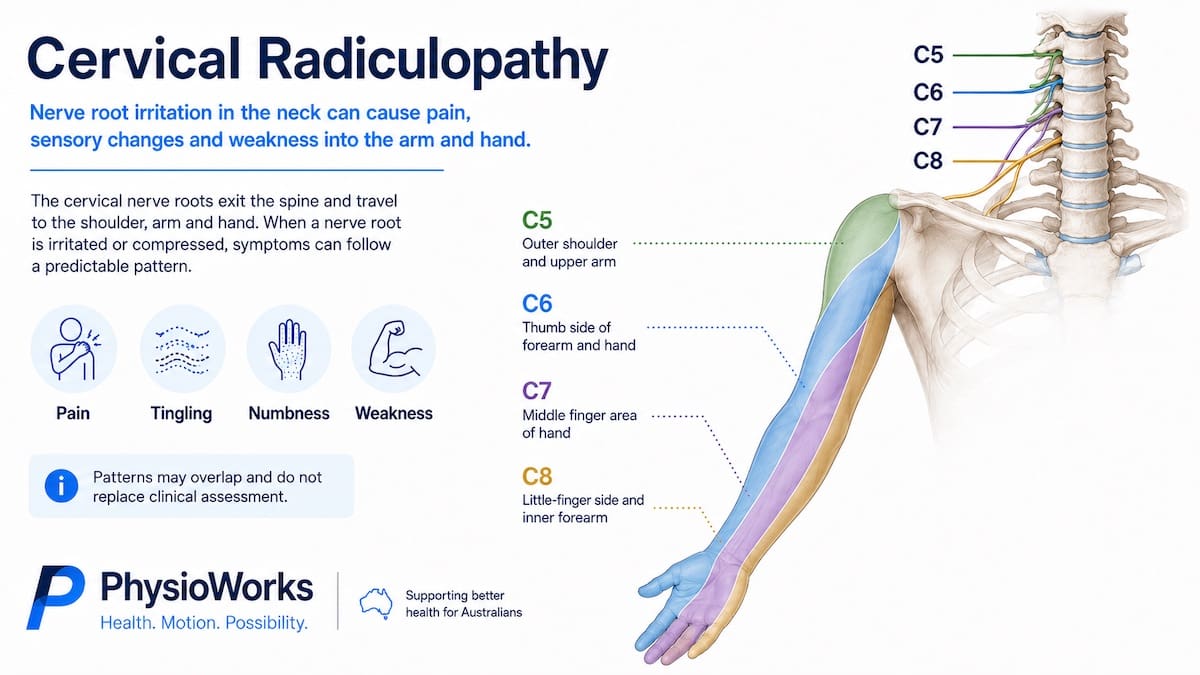
Cervical nerve-root symptoms can follow overlapping patterns through the arm and hand.
Which Cervical Nerve Root May Be Involved?
Different cervical nerve roots may produce different areas of pain, altered sensation and weakness. However, the patterns overlap considerably. They can guide an assessment but do not diagnose the problem by themselves.
C5 Pattern
Symptoms may involve the side of the neck, shoulder or upper arm. Some people notice weakness when lifting the arm away from the body.
C6–C7 Patterns
Symptoms may extend through the forearm towards the thumb, index or middle fingers. Changes in elbow, wrist or pushing strength may also occur.
C8 Pattern
Symptoms may affect the little-finger side of the hand or inner forearm. Grip strength and fine finger control may also change.
A neurological assessment should also consider muscle strength, reflexes, sensation and whether symptoms change when the neck, shoulder or arm moves.
How Is Cervical Radiculopathy Assessed?
A physiotherapist or doctor will usually ask how your symptoms started, where they travel and which movements or activities change them. They may then examine your neck, shoulder and upper limb.
The assessment may include:
- Neck movement testing
- Upper-limb muscle strength testing
- Reflex testing
- Sensation testing
- Nerve mobility or neurodynamic testing
- Shoulder and upper-limb examination
- Work, sleep, lifting or sport-related movements
- A broader neurological screen when required
No single physical test confirms cervical radiculopathy in every person. Current research supports combining the history, neurological findings and relevant physical tests rather than relying on one manoeuvre alone.
An MRI or CT scan is not always required during the early stages. Imaging becomes more relevant when symptoms are severe, neurological weakness is progressing, unusual warning signs are present or recovery is not following the expected course.
What Else Can Cause Similar Symptoms?
Several other conditions can produce pain, tingling, numbness or weakness in the shoulder, arm or hand. Symptom location alone cannot confirm that a cervical nerve root is responsible.
- A shoulder joint or tendon problem
- Peripheral nerve irritation around the elbow, forearm or wrist
- Carpal tunnel syndrome
- Ulnar nerve irritation
- Thoracic outlet-related symptoms
- Referred pain from cervical joints or muscles
- Cervical spinal cord involvement
- Less common neurological or medical conditions
A clinical assessment can help determine whether the symptom pattern is consistent with cervical radiculopathy or whether another source needs investigation.
How Is Cervical Radiculopathy Treated?
Treatment depends on the severity and irritability of your symptoms, how long they have been present, your work and activity demands, and whether measurable weakness or other neurological changes are present.
The overall aims are to reduce aggravating nerve irritation, restore comfortable movement and rebuild strength and normal activity.
Manage Aggravating Loads
Early care may involve temporarily changing positions or activities that repeatedly aggravate arm symptoms. This can include modifying work setup, lifting, driving or sleeping positions.
Complete rest is rarely the long-term goal. Instead, activity is usually adjusted so movement can continue without repeatedly provoking a strong or lasting increase in symptoms.
Restore Neck and Upper-Body Movement
As symptoms settle, treatment may include neck movement, upper-back mobility, shoulder control and carefully graded nerve mobility.
A structured neck strengthening program may be useful once exercise can be performed without causing a sustained increase in arm symptoms.
Rebuild Strength and Function
Progressive exercise may target the neck, shoulder blade and upper-limb muscles. Rehabilitation should gradually prepare you for the activities that matter, such as desk work, lifting, driving, recreation or sport.
Manual Therapy
Hands-on treatment may help some people move more comfortably in the short term. Current evidence suggests manual or neural mobilisation may be useful as part of a broader rehabilitation plan rather than as a stand-alone cure.
Other management may include medication advice from a doctor or pharmacist, injection treatment for selected persistent cases, or a specialist surgical opinion when neurological loss progresses or disabling symptoms remain despite appropriate conservative care.
What Exercises May Help Cervical Radiculopathy?
There is no single exercise that suits every case of cervical radiculopathy. The right exercise depends on which movements settle or aggravate your symptoms and whether weakness is present.
A rehabilitation program may include:
- Gentle neck movement within a comfortable range
- Shoulder blade control exercises
- Upper-back mobility exercises
- Graded nerve mobility exercises
- Deep neck muscle training
- Progressive arm and shoulder strengthening
- Gradual return to lifting, work, driving or sport
How Long Does Cervical Radiculopathy Take to Improve?
Recovery varies. Some people improve substantially over several weeks, while others have symptoms for several months.
Nerve-related symptoms may fluctuate during recovery. A temporary increase does not automatically mean that damage is increasing, particularly when symptoms settle again after changing activity or position.
Recovery may be influenced by:
- The severity and duration of symptoms
- Whether muscle weakness is present
- The degree of nerve sensitivity
- Work, caring and training demands
- Sleep and general health
- The ability to modify repeated aggravating loads
- Participation in staged rehabilitation
Can You Work or Exercise With Cervical Radiculopathy?
Many people can continue working and exercising with temporary modifications. The goal is generally to reduce repeated irritation without unnecessarily avoiding all movement.
Helpful changes may include shorter periods of desk work, better arm support, regular movement breaks, temporary lifting changes and reducing exercises that repeatedly reproduce strong arm symptoms.
As symptoms improve, gradually rebuilding normal activity is usually more useful than waiting until every symptom has completely disappeared.
When Should Cervical Radiculopathy Be Reviewed Urgently?
Cervical Radiculopathy FAQs
Can cervical radiculopathy improve without surgery?
Many cases improve without surgery. Conservative care may include activity modification, physiotherapy, symptom-guided exercise and progressive strengthening. Surgery may be considered when significant neurological loss progresses or disabling symptoms do not respond to appropriate non-surgical care.
Can cervical radiculopathy cause hand numbness or weakness?
Yes. An irritated cervical nerve root may cause tingling, numbness or weakness in part of the arm or hand. The exact area varies and nerve-root symptom patterns often overlap.
When is an MRI needed for cervical radiculopathy?
An MRI is not always needed during the early stages. A doctor may recommend imaging when symptoms are severe, neurological weakness is progressing, unusual warning signs are present or symptoms are not improving as expected.
How long does cervical radiculopathy take to improve?
Some people improve over several weeks, while others take several months. Recovery depends on symptom severity, duration, nerve sensitivity, weakness, workload and how rehabilitation progresses.
What sleeping position is best for cervical radiculopathy?
Many people feel more comfortable when the neck remains supported in a relatively neutral position and the affected arm is relaxed and supported. Pillow height and side or back sleeping may need adjustment according to symptoms.
How is cervical radiculopathy different from cervical myelopathy?
Cervical radiculopathy affects one or more nerve roots and commonly produces symptoms in one arm. Cervical myelopathy involves the spinal cord and may cause walking or balance changes, hand clumsiness or neurological symptoms affecting several limbs. Suspected cervical myelopathy needs prompt medical assessment.
What to Do Next
Choose your clinic and appointment pathway
Select a PhysioWorks clinic to continue to live booking, an appointment request or reception assistance.
Neck Products
These neck products are commonly used by our physiotherapists to improve strength, posture, movement, plus assist home exercise programs.
-
-
- EMS Machines, Pain Management, TENS Machine, TENS Machine & EMS
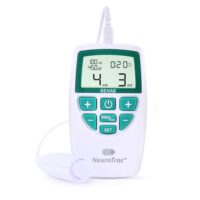
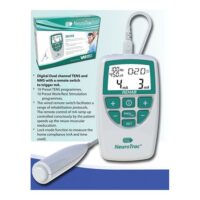
NeuroTrac Rehab (TENS Machine + EMS)
$285.00Add to cartQuick View -
- Christmas Gift Ideas, Neck, Pillows/Cushions
FlexiPillow Alleve Pillow
$109.95Add to cartQuick View -
- Liniments & Gels, Massage Liniments, Pain Management
Fisiocrem
$16.95 – $39.95Select optionsQuick View -

 Back, Exercise Equipment, Neck, Resistance Band
66Fit Over Door Neck Traction Unit
$63.00Add to cartQuick View -
-
-
 Ice & Heat, Pain Management, Uncategorized
PhysiPak Universal Heat pack
$79.00Select optionsQuick View -


-











References
- Plener J, Bussières A, Bronfort G, et al. Conservative management of cervical radiculopathy: a systematic review. J Manipulative Physiol Ther. 2023.
- García-Juez S, et al. Effectiveness of articular and neural mobilization for managing cervical radicular pain: a systematic review with network meta-analysis. J Orthop Sports Phys Ther. 2025;55(7):1-14. doi:10.2519/jospt.2025.12757.
- Yousif MS, Occhipinti G, Bianchini F, et al. Neurological examination for cervical radiculopathy: a scoping review. BMC Musculoskelet Disord. 2025;26:334. doi:10.1186/s12891-025-08560-9.
- Thoomes EJ, et al. Diagnostic accuracy of physical examination tests for painful cervical radiculopathy: update of a systematic review and meta-analysis. BMC Musculoskelet Disord. 2026.
