Ligament

Common Ligament Injuries

Article by John Miller & Erin Runge

Common ligament injuries affect the tough bands of tissue that connect bone to bone at a joint. They often happen after a twist, fall, collision, awkward landing, or sudden change of direction. Many people notice pain, swelling, bruising, reduced movement, or a feeling that the joint is unstable. For a broader overview, see our ligament tear guide.

In practical terms, the most common ligament injuries involve the ankle, knee, shoulder, wrist, hand, and spine. While many ligament sprains improve with the right rehabilitation, some injuries need earlier assessment to check for significant tearing, fracture, dislocation, or ongoing instability.

What are common ligament injuries?

Common ligament injuries are sprains or tears that affect the ligaments around a joint. They can range from a mild overstretch to a complete tear. Symptoms depend on the joint involved, but common signs include pain, swelling, bruising, stiffness, weakness, and reduced confidence using the injured area.

Common signs and symptoms

  • pain after twisting, landing, impact, or overloading a joint
  • swelling and bruising around the joint
  • difficulty walking, gripping, lifting, reaching, or changing direction
  • reduced joint range of motion
  • a feeling that the joint may buckle, shift, or give way

Where do common ligament injuries happen?

Ankle ligament injuries

Ankle ligament injuries often follow a sudden roll, twist, or awkward landing. The most common pattern is a lateral ankle sprain, although the syndesmosis can also be injured. Related pages include Sprained Ankle and High Ankle Sprain.

Knee ligament injuries

Knee ligament injuries are common in sport and can significantly affect stability, walking, pivoting, and return to exercise. Common examples include ACL Injury, PCL Injury, MCL Sprain, LCL Sprain, Posterolateral Corner Injury, Patella Dislocation, and Superior Tibiofibular Joint Sprain.

Shoulder ligament injuries

Shoulder ligament injuries often happen after a fall onto the shoulder or an outstretched hand. They may affect lifting, reaching, sleeping, and contact sport participation. Common examples include AC Joint Injury and Dislocated Shoulder.

Wrist and hand ligament injuries

Wrist and hand ligament injuries are common in ball sports, falls, and workplace accidents. They can interfere with gripping, pinching, writing, lifting, and daily hand use. Common examples include Thumb Sprain and Finger Sprain. You can also see our Hand & Wrist Pain hub.

Spinal ligament injuries

Spinal ligament injuries can involve the neck or back and often follow sudden overload, awkward lifting, posture strain, or trauma. Examples include Back Ligament Sprain, Neck Sprain, and Whiplash.

What causes common ligament injuries?

Most ligament injuries happen when a joint is pushed beyond its normal range. This may occur with twisting, sudden acceleration or deceleration, awkward landings, slips, falls, collisions, or repeated overload. Previous injury, poor balance, fatigue, reduced strength, and fast changes in training load may also increase risk.

How are common ligament injuries diagnosed?

A physiotherapist or doctor will usually start with the injury story, pain location, swelling pattern, movement loss, and stability testing. Some cases can be diagnosed clinically, while others may need an X-ray, ultrasound, or MRI if there is concern about a fracture, dislocation, high-grade tear, or associated joint injury.

How are common ligament injuries treated?

Treatment depends on which ligament is injured, how severe the damage is, and what you need to return to. Early management often focuses on protecting the joint, settling pain and swelling, and restoring movement. Rehabilitation then progresses to strength, balance, control, and graded return to work, exercise, or sport.

Many people improve well with guided physiotherapy. However, some complete tears, recurrent instability problems, or combined injuries may need medical review alongside rehabilitation.

When should you seek help?

You should seek prompt assessment if you cannot bear weight, the joint looks deformed, swelling comes on quickly, the joint keeps giving way, or you have major loss of function. Ongoing pain, repeated sprains, locking, or poor progress over the first few days also deserves review.

Related articles

  1. Ligament Tear - Common Ligament Injuries: A broader guide to ligament injuries, symptoms, causes, and treatment options.
  2. Knee Ligament Injury - A Physiotherapist's Guide & Tips: Covers the common knee ligament structures, injury patterns, and rehabilitation pathways.


  3. Common Ankle Ligament Injuries: A Physiotherapist's Guide: Discusses ankle ligament injury treatment and prevention strategies.
  4. Sprained Ankle Treatment & Recovery Guide: Explains sprained ankle symptoms, treatment, and recovery stages.
  5. Ankle Strapping: Complete Guide to Injury Prevention: Outlines ankle strapping options and injury prevention ideas.
  6. Sub-Acute Soft Tissue Injury: Explains the mid-stage management of soft tissue and ligament injuries.
  7. Sprained Thumb Treatment and Recovery Tips: Covers thumb sprain symptoms, treatment, and return-to-use advice.

FAQs about common ligament injuries

What is the difference between a ligament sprain and a ligament tear?

A ligament sprain is the general term for ligament injury. It can describe anything from a mild overstretch to a partial or complete tear. In everyday use, people often use sprain and tear interchangeably.

Do common ligament injuries heal without surgery?

Yes, many common ligament injuries improve without surgery, especially lower-grade sprains. Surgery is more likely to be considered when there is major instability, a complete tear in a high-demand joint, repeated dislocation, or a poor response to good rehabilitation.

How long do common ligament injuries take to recover?

Recovery time varies by body part, injury severity, and activity goals. Mild sprains may improve within a few weeks, while more significant injuries can take months. Return to sport usually takes longer than return to normal daily activity.

Should I exercise after a ligament injury?

Usually yes, but the right exercise depends on the stage of healing. Early exercises often focus on gentle movement and supported loading. Later rehabilitation builds strength, balance, control, and confidence.

Can a ligament injury cause long-term instability?

Yes, it can. Some people develop repeated ankle sprains, knee instability, shoulder dislocation episodes, or ongoing weakness if the ligament does not recover well or rehabilitation is incomplete.

What to do next

If you think you may have one of the common ligament injuries listed above, an assessment can help identify which structure is involved and how serious it is. This is especially useful if the joint feels unstable, you are struggling to bear weight, or you want to return safely to work or sport.

A physiotherapist may help with diagnosis, swelling management, bracing advice, exercise progression, and return-to-activity planning based on your symptoms and goals.

Book your appointment – 24/7

Choose your preferred PhysioWorks clinic and book online.

Muscle & Soft Tissue Products

These muscle and soft tissue products are commonly used by our physiotherapists to relax or loosen muscles, improve strength, comfort, flexibility, and home exercise programs.

View all muscle & soft tissue products

Follow PhysioWorks

Get free physiotherapy tips, exercise videos, recovery advice, and blog updates.

Facebook Instagram YouTube B X Email PhysioWorks

References

  1. Martin RL, Davenport TE, Fraser JJ, et al. Ankle stability and movement coordination impairments: lateral ankle ligament sprains revision 2021 clinical practice guidelines. J Orthop Sports Phys Ther. 2021;51(4):CPG1-CPG80. doi:10.2519/jospt.2021.0302
  2. Jadidi S, Lee AD, Pierko EJ, Choi H, Jones NS. Non-operative management of acute knee injuries. Curr Rev Musculoskelet Med. 2024;17(1):1-13. doi:10.1007/s12178-023-09875-7
  3. Waldron K, Brown M, Feldman M. Anterior cruciate ligament rehabilitation and return to sport: how fast is too fast?. Arthrosc Sports Med Rehabil. 2022;4(1):e175-e179.

Can You Walk on a Torn Knee Ligament?

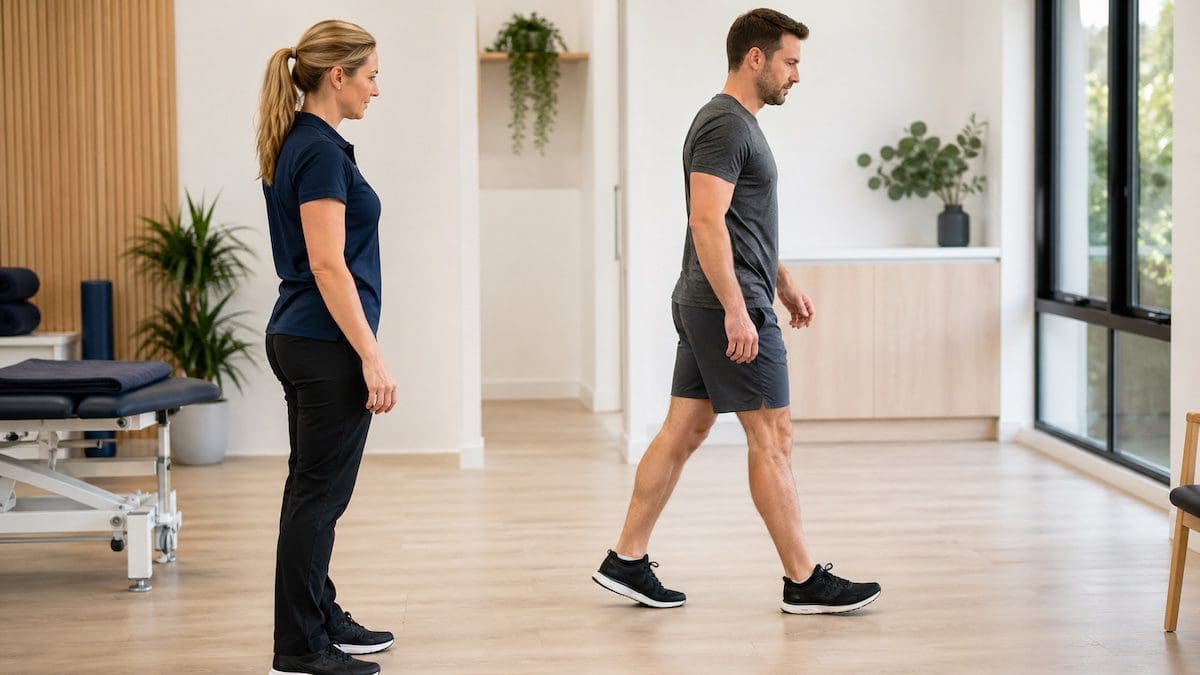
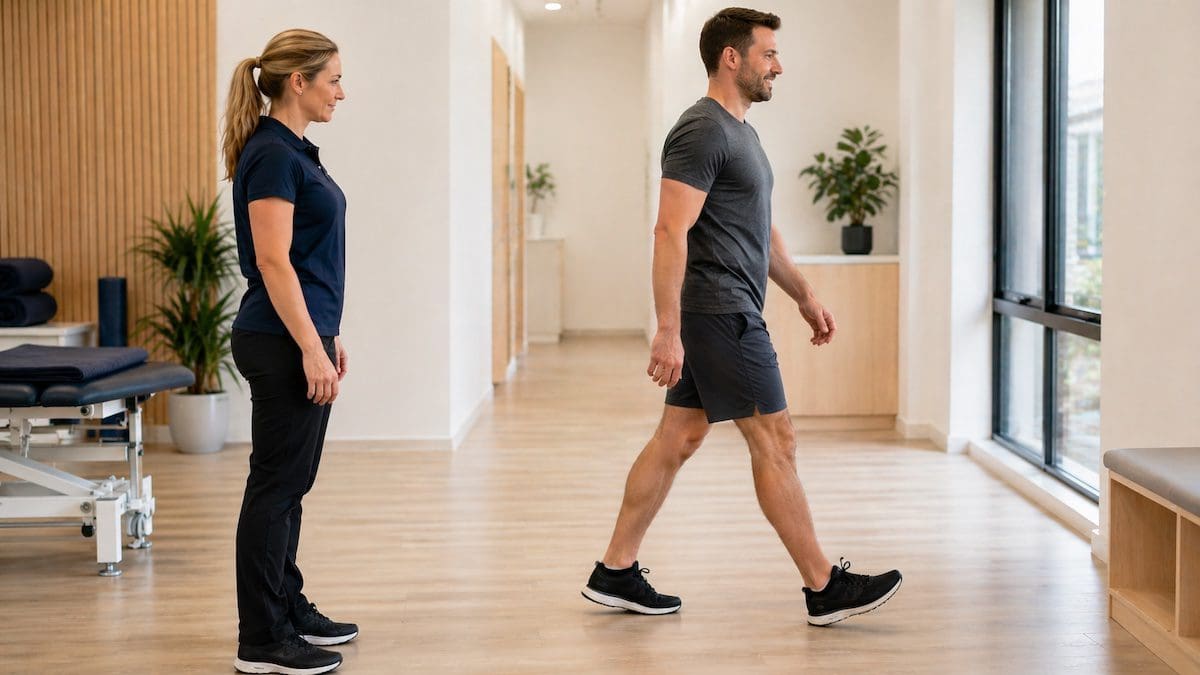
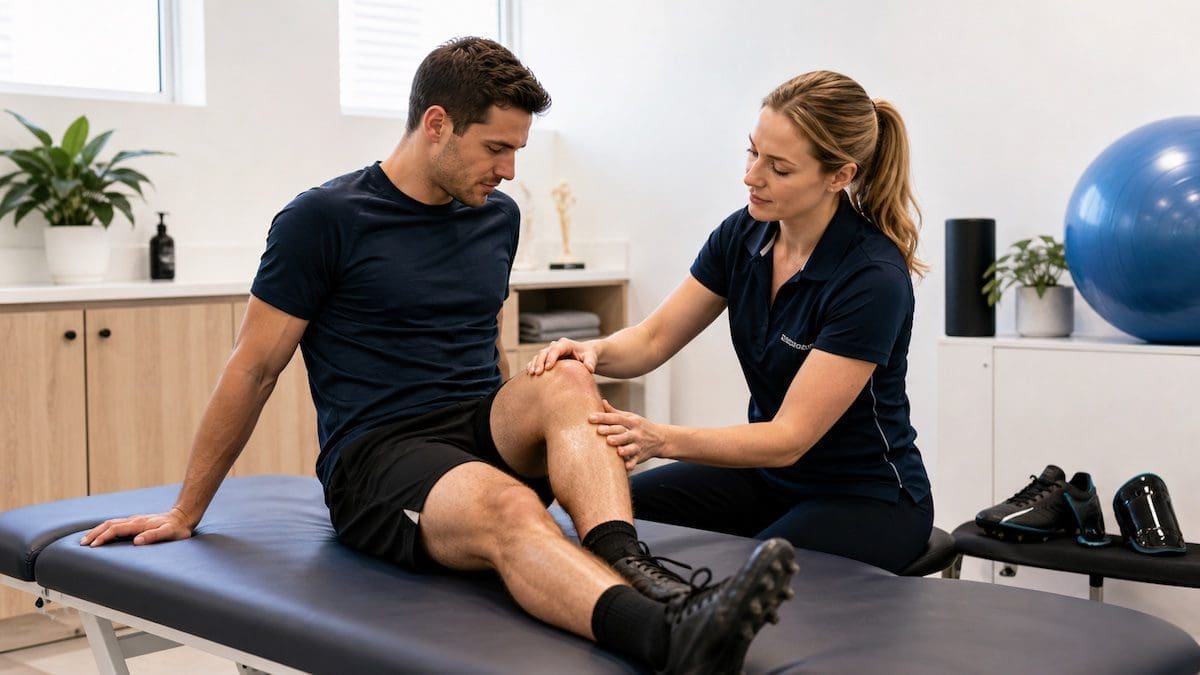
physiotherapist assessing walking safety with torn knee ligament injury

A physiotherapist checks whether walking is safe after a knee ligament injury.

You can sometimes walk on a torn knee ligament — but that doesn’t mean it’s safe. Many people can still walk after a ligament injury, even when the knee is unstable. The key question is not “can you walk?” but “should you keep walking without making it worse?”

Mild sprains may allow short, careful walking. However, swelling, sharp pain, locking, or giving way can suggest a more serious knee ligament injury that needs assessment before you keep loading the knee.

If walking worsens your symptoms, stop and protect the joint. A physiotherapist can assess knee stability, advise whether you need crutches or a brace, and guide safe early rehabilitation.

Should you walk on a torn knee ligament?

  • Usually safe: mild pain, minimal swelling, and the knee feels stable.
  • Be careful: limping, moderate swelling, or uncertain knee stability.
  • Stop walking: giving way, locking, sharp pain, or rapid swelling.

Walking ability does not confirm your injury is minor. When in doubt, reduce load and get assessed.

When Is Walking Safe After a Torn Knee Ligament?

Walking is usually safer when pain stays low, swelling does not increase, and the knee does not buckle. Short, flat-ground walking may form part of early recovery for mild to moderate ligament sprains.

However, a torn knee ligament can feel deceptive. Some people can walk after an ACL injury or other ligament injuries, yet still have significant joint instability. Walking ability alone does not confirm the injury is minor.

When Should You Stop Walking on a Knee Ligament Injury?

You should stop walking if the knee gives way, locks, swells quickly, or causes sharp pain with each step. These signs may suggest a more serious ligament tear or another injury, such as a meniscus tear.

Stop walking and seek prompt advice if you notice:

  • rapid swelling within the first few hours
  • the knee giving way or buckling
  • locking, catching, or inability to straighten the knee
  • severe pain when taking weight
  • difficulty walking more than a few steps

Can Walking Make a Torn Knee Ligament Worse?

Walking too far, too fast, or without support may worsen swelling and irritation. It may also increase the risk of secondary injury if the knee is unstable.

Early care focuses on protecting the joint while keeping safe movement where appropriate. This balance helps reduce stiffness without overloading injured tissue.

Symptom Walking Advice
Mild pain, little swelling, stable knee Short, careful walking may be reasonable.
Moderate swelling or limp Reduce walking and seek assessment.
Giving way, locking, or rapid swelling Avoid walking and arrange prompt review.
Unable to take weight Seek urgent medical assessment.

Why Knee Ligaments Matter for Walking

Knee ligaments act like strong bands that guide and stabilise the joint. The ACL, PCL, MCL, and LCL each help control different directions of movement.

Muscles, tendons, cartilage, and the joint capsule also support stability. This combined support explains why some people can still walk after a ligament tear. Even so, pain, swelling, and instability can limit safe movement and confidence.

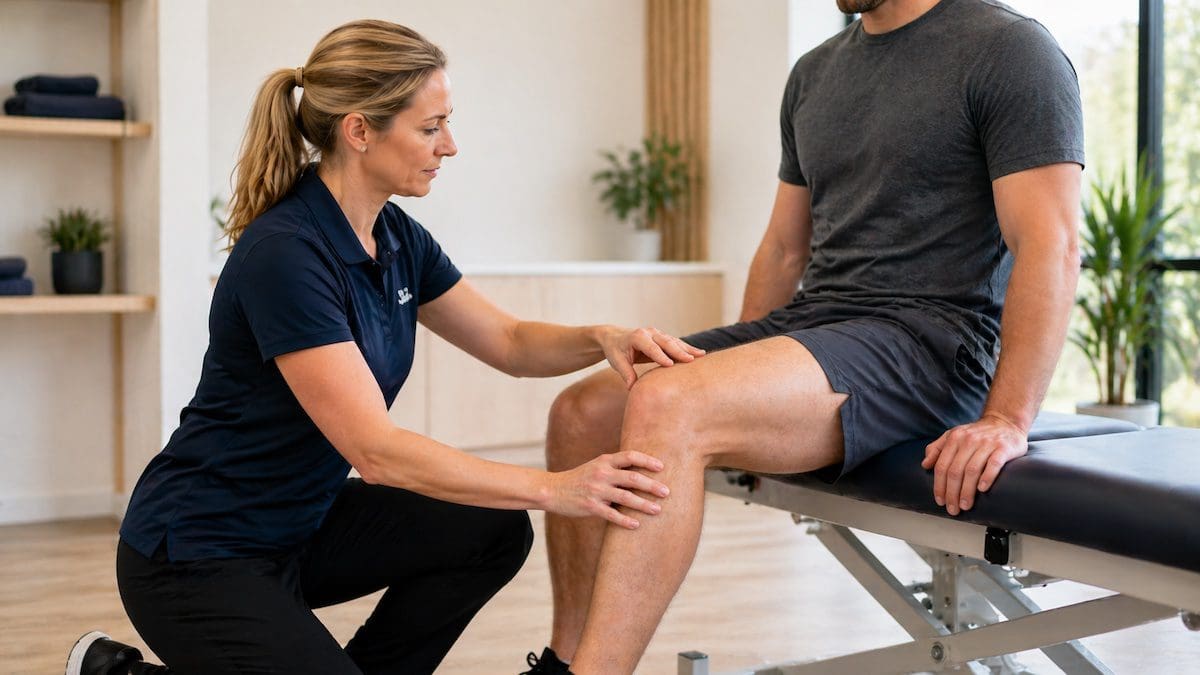
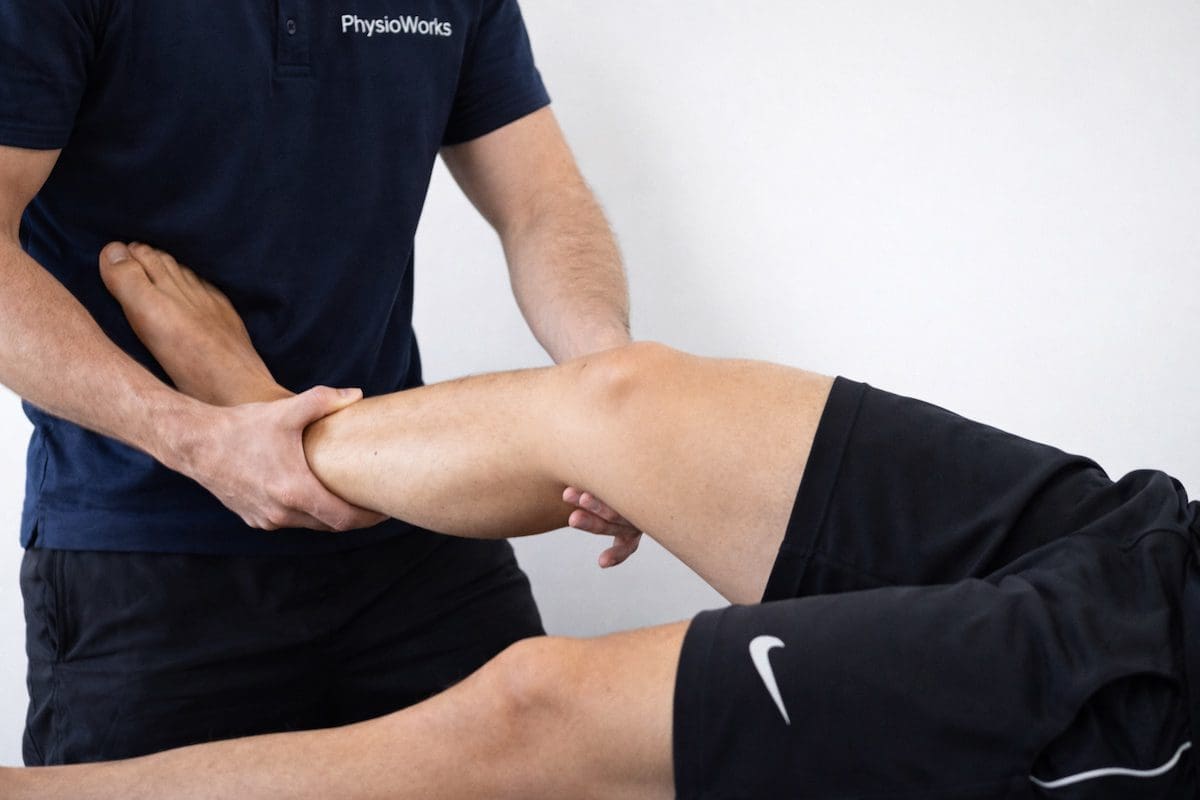
physiotherapist assessing knee ligament stability during movement test

Controlled testing helps identify knee ligament stability and safe movement.

How Can Physiotherapy Help a Torn Knee Ligament?

Physiotherapy may help by assessing knee stability, controlling swelling, restoring movement, and rebuilding strength. Your plan may include walking advice, bracing guidance, balance retraining, and staged exercises.

Rehabilitation often starts with symptom control and safe movement. Later stages focus on strength, balance, landing control, direction change, and sport-specific loading where needed.

Should You Use Crutches or a Knee Brace?

Crutches or a brace may help if walking increases pain, swelling, or instability. Your physiotherapist or doctor can advise whether support is useful and how long to use it.

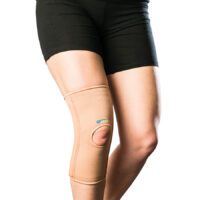
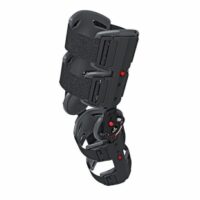
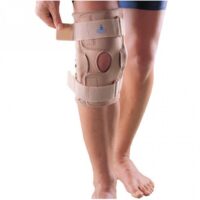
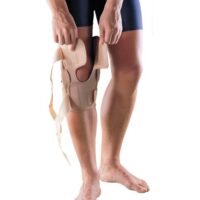
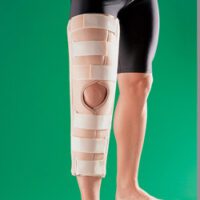
Some ligament injuries need short-term protection, while others need closer medical review. You can view knee support options in the knee braces and supports section.

What Should You Do Next?

If you suspect a torn knee ligament, avoid testing the knee repeatedly or pushing through pain. Book a physiotherapy assessment if you have swelling, instability, a limp, or trouble returning to normal walking.

Your physiotherapist can help decide whether you need imaging, bracing, a knee surgeon opinion, or a structured rehabilitation plan. You can also review our knee pain overview and sports physiotherapy information.

The good news: Most knee ligament injuries improve well with the right guidance. Early assessment helps you avoid setbacks and return to normal walking with more confidence.

walking normally after knee ligament injury rehabilitation

Most people return to normal walking with guided rehabilitation.

Book your appointment – 24/7

Choose your preferred PhysioWorks clinic and book online.

Knee Support Products

These knee support products are commonly used by our physiotherapists to help reduce strain, improve stability, and support your recovery at home.

View all knee support products

Follow PhysioWorks

Get free physiotherapy tips, exercise videos, recovery advice, and blog updates.

Facebook Instagram YouTube B X Email PhysioWorks

Related Knee Articles

For a general medical overview, you can also review this ACL injury article on NCBI.

FAQs About Walking on a Torn Knee Ligament

Can you still walk with a torn ligament in your knee?

Some people can walk short distances with a torn knee ligament, especially with a mild sprain. However, walking is not a reliable test of severity. If your knee gives way, locks, swells rapidly, or pain increases, stop walking and arrange an assessment.

How do you know if a knee ligament injury is serious?

A knee ligament injury may be more serious if you heard a pop, developed rapid swelling, cannot take weight, or feel the knee buckle. Locking or catching may suggest another injury inside the knee, such as a meniscus tear.

Should you rest or keep moving after a torn knee ligament?

Early movement can help some knee ligament injuries, but it must stay controlled and symptom-guided. Rest from aggravating activity, protect the knee, and seek guidance before returning to sport, running, pivoting, or heavy gym work.

Can a torn knee ligament heal without surgery?

Some partial ligament tears can settle without surgery. Some complete ligament injuries may also be managed without surgery if the knee remains stable and the person follows a structured rehabilitation plan. A physiotherapist or knee surgeon can help guide this decision.

When should you see a physiotherapist?

Book a physiotherapist if you suspect a knee ligament injury, especially if swelling, instability, pain, or limping persists. Early assessment can guide safe walking, bracing, exercises, and whether imaging or medical review is needed.

References

  1. Svantesson J, Hamrin Senorski E, Sundemo D, et al. Rehabilitation of medial collateral ligament injuries: A systematic review. Knee. 2024.
  2. Lucidi GA, Solaro L, Grassi A, et al. Current trends in the management of medial knee injuries: Beyond the medial collateral ligament. J Orthop Traumatol. 2024.
  3. Bingöl I, Erden T, Yıldız F, et al. PCL injury following high-energy trauma: Clinical patterns and considerations. J Orthop Surg Res. 2024.
  4. Arundale AJH, Bizzini M, Hewett TE, et al. Exercise-based knee and anterior cruciate ligament injury prevention programmes: A systematic review. J Orthop Sports Phys Ther. 2023.
  5. Jaibaji M, Najim O, Alali H, et al. Single-stage versus multistage reconstruction for multiligament knee injuries: Systematic review and meta-analysis. J Clin Med. 2025.
You've just added this product to the cart: