Neck Pain FAQs: Causes, Treatment & When to Seek Help


Neck Pain FAQs: Causes, Treatment & When to Seek Help


Neck pain physiotherapy assessment observing cervical movement and posture in clinic

Assessing neck movement and posture


Neck pain FAQs help you quickly find reliable answers about common causes, treatment options, exercises, posture, pillows, headaches, dizziness, and when to seek help. If you want the broader overview first, start with our Neck Pain guide, then use the sections below to jump to the most relevant question.

Many people with neck symptoms are not sure whether the main issue is simple stiffness, text neck, cervical radiculopathy, acute wry neck, a neck-related headache, or posture and load problems building over time. This guide pulls those answers together in one place.


Quick Neck Pain Guide

  • Local stiffness often fits a mechanical neck pain pattern.
  • Pain into the arm may suggest nerve irritation.
  • Headaches and dizziness can sometimes come from the neck.
  • Poor sleep support and posture habits may keep symptoms going.
  • Persistent, worsening, or traumatic neck pain deserves assessment.


What causes neck pain?

Neck pain can come from several sources, including muscle overload, joint irritation, nerve sensitivity, posture strain, sleep position problems, and sudden twists or awkward movements. This FAQ guide also links you to focused pages on exercises, headaches, dizziness, pillows, and treatment options so you can choose the right next step more quickly.

General Neck Pain FAQs

Symptoms linked with neck pain

How can physiotherapy help neck pain?

Physiotherapy for neck pain may help reduce pain, improve movement, settle nerve irritation, and build better tolerance for work, driving, sleep, sport, and gym training. Treatment usually combines assessment, practical advice, targeted exercise, and hands-on care matched to your symptoms and goals.

If you are deciding whether to book, read Do I Need Physiotherapy for Neck Pain?. If your main issue is stiffness and reduced control, our Neck Strengthening page explains how specific exercise fits into recovery.

Treatment and management FAQs

What exercises and daily habits help neck pain?

The best starting points for neck pain usually include gentle mobility, posture resets, progressive strength work, and better daily load management. Simple changes to desk setup, phone use, driving posture, sleep support, and movement breaks often matter just as much as the exercises themselves.


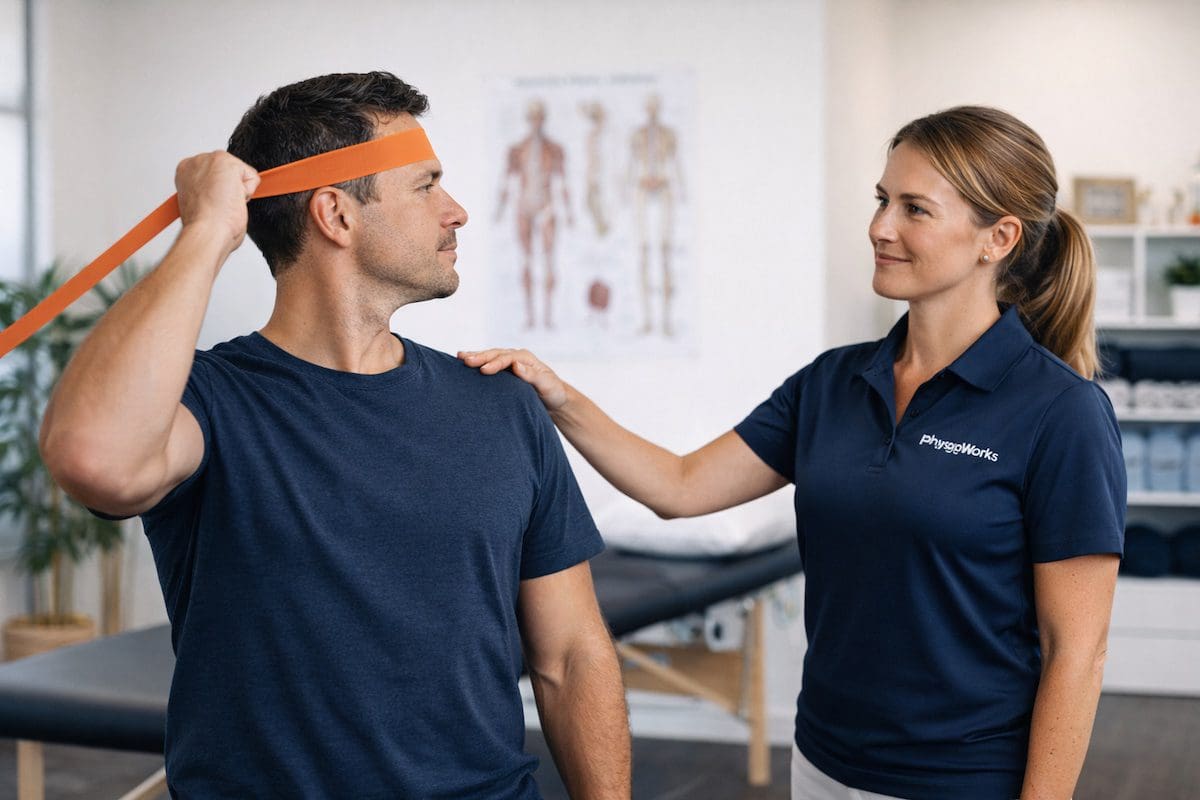
Neck physiotherapy exercise with guided cervical movement and posture control

Guided neck movement and posture control


For practical next steps, visit Neck Exercises for Pain Relief, Good Neck Posture Tips, and Posture Correction.

Exercise, posture, and sleep FAQs

Can neck pain cause headaches or dizziness?

Yes, neck pain can sometimes contribute to headaches or dizziness, especially when upper neck joints, muscles, posture, or movement control are involved. However, not every headache or dizzy spell comes from the neck, so the full symptom pattern still matters.

Read more about cervicogenic neck headache, how to get rid of a neck headache, and cervicogenic dizziness if those symptoms sound familiar.

When should you seek help for neck pain?

You should seek help for neck pain when it follows trauma, keeps recurring, limits driving or sleep, causes arm pain, numbness, weakness, dizziness, or headaches, or simply does not settle as expected. Early assessment is also sensible when you are unsure which type of neck problem you may have.

If your symptoms are severe or changing, start with When Should You Be Concerned About Neck Pain?. For broader posture and movement contributors, you can also review What Is Good Posture? and Posture Exercises.

Common Neck Pain Questions

What are common causes of neck pain?

Common causes of neck pain include muscle overload, joint irritation, poor posture tolerance, awkward sleeping positions, repetitive desk work, and nerve irritation. Some people also develop symptoms from a sudden twist, sport, stress-related muscle tension, or longer-term degenerative change.

Can bad posture cause neck pain?

Posture can contribute to neck pain, but it is rarely the only reason. Symptoms usually build from a mix of sustained positions, low movement variety, stress, weakness, stiffness, and daily load. That is why treatment works best when it targets the whole pattern rather than posture alone.

What helps neck pain at home?

Short-term neck pain often responds to relative rest, gentle movement, heat or cold, posture changes, and avoiding one position for too long. However, repeated flare-ups usually improve more reliably when you also address strength, movement control, work habits, and sleep support.

Can neck pain cause dizziness or headaches?

Yes, it can. Some headaches are referred from the neck, and some dizziness patterns relate to neck dysfunction, especially after injury or with ongoing stiffness and poor movement control. Because other causes also exist, assessment is useful if symptoms keep returning or feel unclear.

Do you need scans for neck pain?

Not always. Many cases of neck pain improve with good assessment and conservative care without immediate imaging. Scans are more likely to be considered when symptoms follow trauma, do not improve, involve significant arm symptoms, or suggest something more serious.

When should you see a physiotherapist for neck pain?

You should consider physiotherapy when neck pain affects work, sleep, exercise, driving, concentration, or confidence to move. It is also sensible when pain keeps returning, spreads into the arm, or links with headaches, dizziness, or reduced movement that is not settling well.

What to do next

If you are trying to work out what your neck pain means, start with the main Neck Pain guide, then use the linked FAQs above to narrow down the most likely issue. If your symptoms are ongoing, changing, or affecting daily life, a physiotherapy assessment can help clarify the cause and guide the right treatment plan.

If neck pain is already interfering with work, sleep, study, training, headaches, or arm symptoms, booking early is often the fastest way to stop guessing and start making progress.




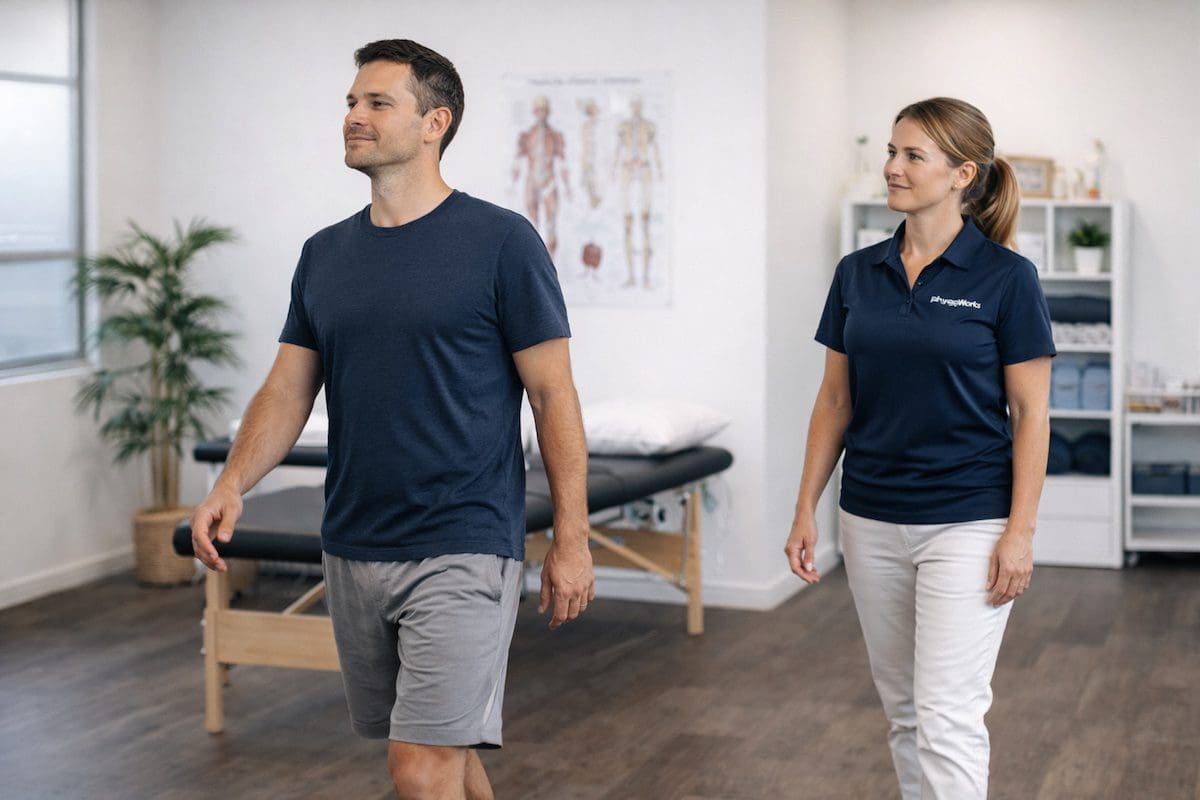
Neck pain recovery with normal movement and relaxed posture in physiotherapy clinic

Comfortable movement after neck pain


Book your appointment – 24/7

Choose your preferred PhysioWorks clinic and book online.

Neck Products

These neck products are commonly used by our physiotherapists to improve strength, posture, movement, plus assist home exercise programs.

View all neck products

Follow PhysioWorks

Get free physiotherapy tips, exercise videos, recovery advice, and blog updates.

Facebook Instagram YouTube B X Email PhysioWorks


References

  1. Sterling M, Zoëte RMJ, Coppieters I, Farrell SF. Best evidence rehabilitation for chronic pain part 4: Neck pain. J Clin Med. 2019;8(8):1219. doi:10.3390/jcm8081219
  2. Blanpied PR, Gross AR, Elliott JM, et al. Neck pain: Revision 2017 clinical practice guidelines linked to the International Classification of Functioning, Disability and Health. J Orthop Sports Phys Ther. 2017;47(7):A1-A83. doi:10.2519/jospt.2017.0302
  3. Healthdirect Australia. Neck pain. Accessed April 9, 2026.


You've just added this product to the cart: