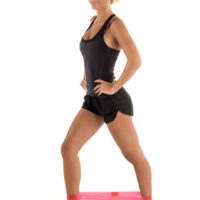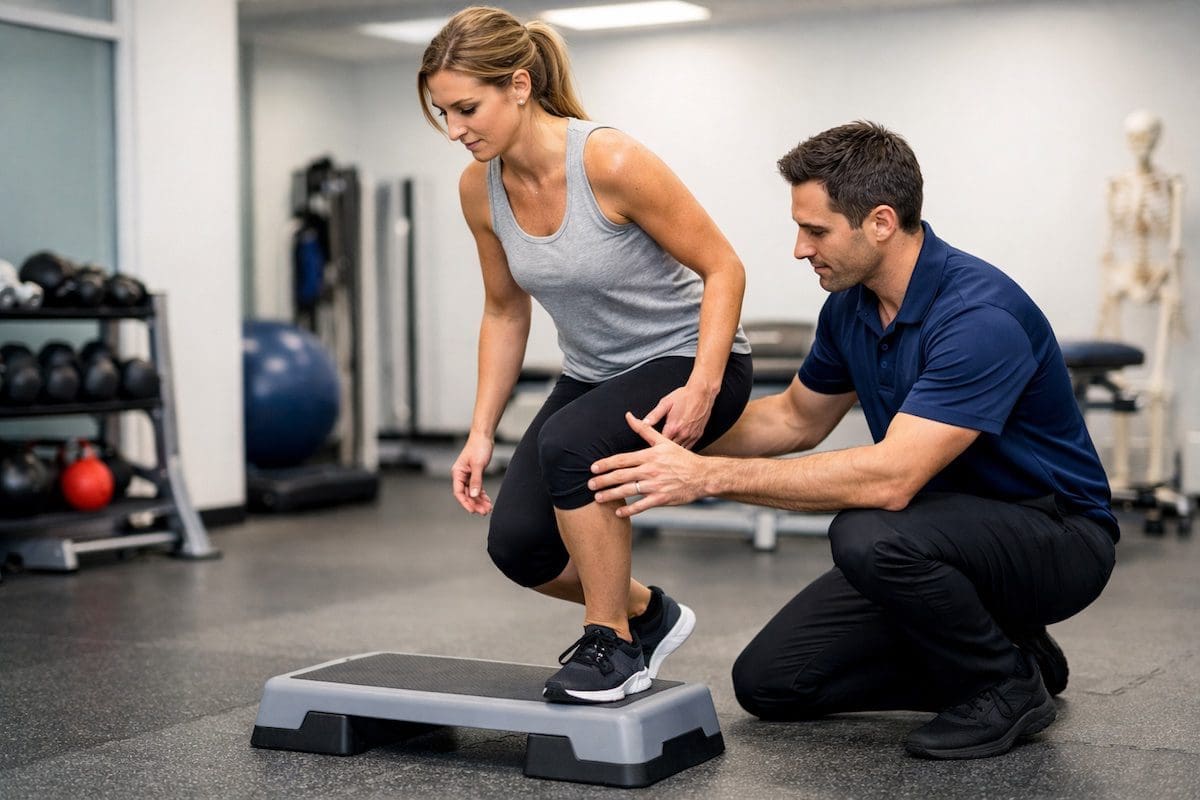
Assessing knee control during a step-down movement.


Assessing knee control during a step-down movement.
A painless clicking knee is usually not a sign of serious damage. Knee clicks can come from normal tendon movement, kneecap movement or pressure changes inside the joint. Seek assessment when clicking occurs with pain, swelling, locking, catching, giving way or a recent injury.
This guide explains the common causes of knee clicking, warning signs to watch for and when exercises or physiotherapy may help. For a broader overview, visit our Knee Pain Guide. You can also read Healthdirect Australia’s knee pain advice.
A clicking knee is usually not concerning when the sound is painless, brief and not linked with swelling, weakness or reduced movement. Many healthy knees make occasional clicking, popping or cracking sounds.
Clicking becomes more important when the knee also hurts, swells, locks, catches or feels unreliable. The pattern of symptoms matters more than the sound itself.
Knee noise may come from normal soft-tissue movement, pressure changes inside the joint or irritation of structures such as the kneecap or meniscus. An assessment considers where you feel the click, which movement causes it and whether other symptoms occur.
Tendons and other soft tissues can move over bony points as your knee bends and straightens. Pressure changes within the joint fluid may also create a popping sound.
This type of clicking is often harmless when you have:
The meniscus is a C-shaped cartilage pad that helps cushion and guide the knee. A meniscus tear may follow a twist, deep squat or awkward landing. It can also develop gradually as the joint changes with age.
Possible meniscus symptoms include:
Clicking alone does not confirm a meniscus tear. Your history, swelling pattern, movement and physical examination help determine the likely cause.
Crepitus describes a grating, crackling or crunchy feeling during movement. It can occur with knee osteoarthritis, but it may also occur in people who have little or no pain.
An arthritis-related pattern may include:
Management commonly focuses on strength, movement, pacing and maintaining useful physical activity. Arthritis Australia provides further information about osteoarthritis.
The kneecap glides over the end of the thigh bone as the knee bends and straightens. If this joint becomes sensitive or overloaded, you may notice clicking, popping, grinding or pain around the front of the knee.
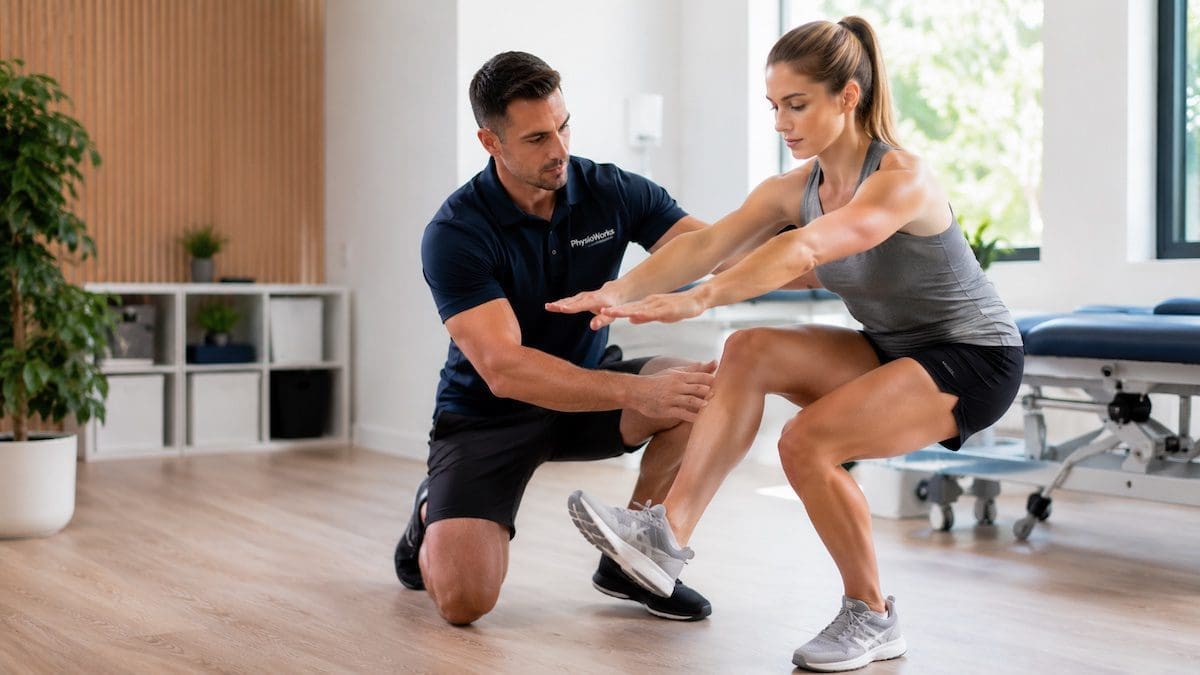
Checking kneecap and thigh control during single-leg movement.
A kneecap-related pattern may include:
Read more about Patellofemoral Pain Syndrome and Chondromalacia Patella.
The following guide does not diagnose the cause. However, it can help you decide whether monitoring or assessment is the more sensible next step.
What it may mean: Normal joint pressure change or soft-tissue movement.
Next step: Stay active and monitor for pain, swelling or instability.
What it may mean: Joint irritation or an injury inside the knee.
Next step: Reduce aggravating load and arrange an assessment.
What it may mean: A possible meniscus injury or another mechanical joint problem.
Next step: Seek professional advice, especially if the knee becomes stuck.
What it may mean: Kneecap irritation, reduced load tolerance or an arthritis pattern.
Next step: Review strength, movement and activity load.
What it may mean: A recent knee injury involving the meniscus, ligament, cartilage or another joint structure.
Next step: Arrange an early assessment, particularly if swelling, limping or giving way develops.
Arrange an assessment when clicking changes how you walk, exercise or use the knee. Pain, swelling, locking, catching or giving way make an examination more important.
Book a physiotherapy or medical review if you notice:
Seek prompt medical advice after major trauma, a visible deformity, inability to bear weight, severe swelling, fever, a hot red joint or other signs of infection.
Exercises may help when knee clicking is linked with reduced strength, poor kneecap control, stiffness or a sudden increase in activity. The program should match your symptoms, goals and current capacity.
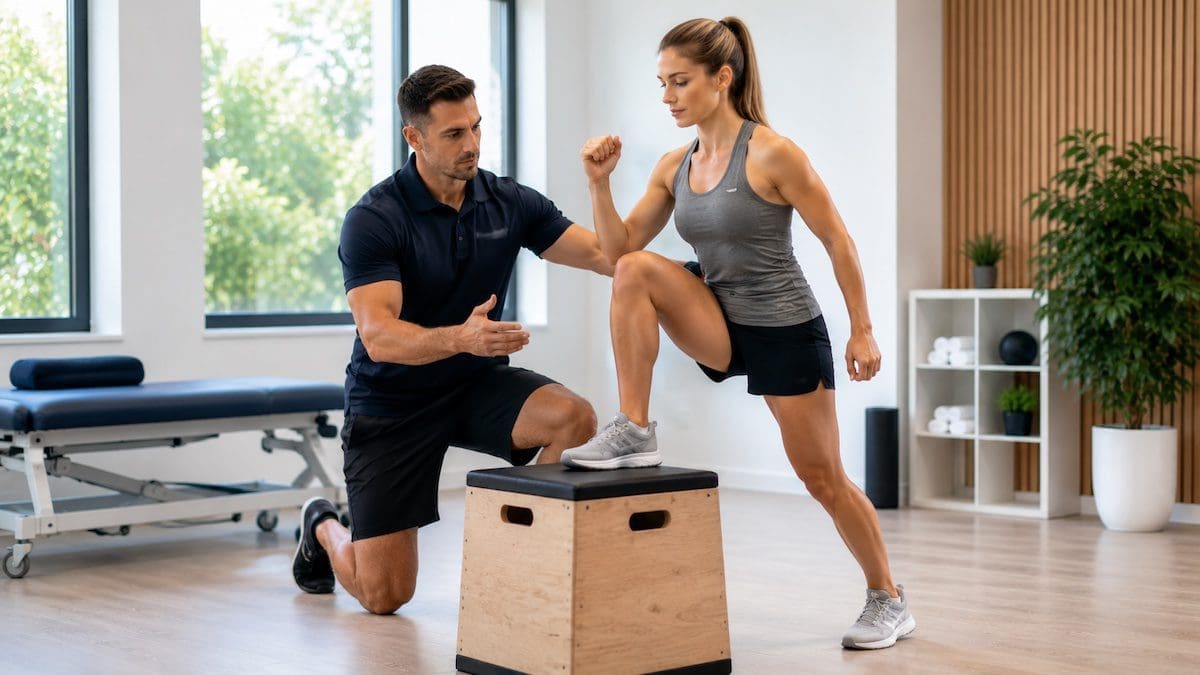
Guided knee strengthening can improve control and movement confidence.
A physiotherapy exercise program may include:
General activity guidance is available from the Australian Government physical activity resources. People returning to sport may also benefit from a structured sports physiotherapy plan.
Clicking can occur after knee surgery as swelling, strength and movement patterns change. Some noises settle as rehabilitation progresses.
Ask your surgeon or physiotherapist about new clicking that is painful, worsening or linked with swelling, locking, giving way or reduced movement. Follow your specific post-operative restrictions rather than using general exercise advice.
A physiotherapist can assess whether your knee clicking appears harmless or is linked with a movement, strength or joint problem. The assessment may include swelling, joint movement, kneecap control, muscle strength, balance and the tasks that reproduce your symptoms.
Management may include education, exercise rehabilitation, taping, bracing advice, load planning, gait or running guidance and referral for imaging or medical review when needed. Learn more about the broader pathway on our Physiotherapy Brisbane page.
Your knee may click because soft tissues move over bone, pressure changes occur inside the joint or the kneecap moves across the thigh bone. If the clicking is painless and there is no swelling, locking or instability, it is often not serious.
Painless clicking is usually less concerning. Keep active and monitor the knee. Arrange an assessment if the clicking becomes painful, swollen, unstable or begins after an injury or sudden change in training.
Painful clicking may come from the kneecap joint, meniscus, cartilage or another irritated structure. The location of pain, swelling pattern and movement that causes the click help guide the likely cause.
Yes. A meniscus tear can cause painful clicking, catching, swelling, locking or difficulty fully straightening the knee. However, clicking alone does not confirm a meniscus tear.
Exercises may reduce clicking when strength, kneecap control, stiffness or activity load contributes. A program may include hip, thigh, calf and step-control exercises. Harmless joint noise may remain even when the knee is healthy and strong.
Seek advice when clicking is painful, swollen, locking, giving way, worsening or linked with trauma. An assessment can clarify whether you need exercise rehabilitation, load changes, imaging or medical review.
If your knee clicks without pain, swelling, locking or instability, continue sensible activity and monitor it. You do not need to stop exercise because of noise alone.
If the clicking is painful, persistent, follows an injury or limits walking, work, stairs, gym or sport, book a physiotherapy assessment. Your physiotherapist can identify the likely cause and guide a plan matched to your goals.
Select a PhysioWorks clinic to continue to live booking, an appointment request or reception assistance.
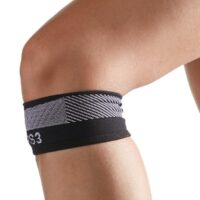
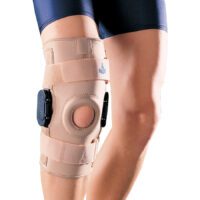
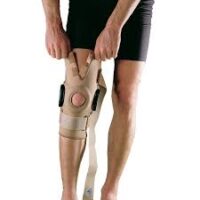
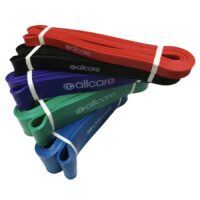
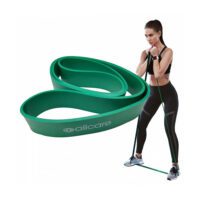
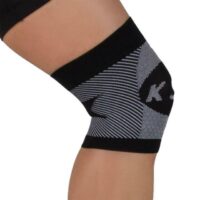
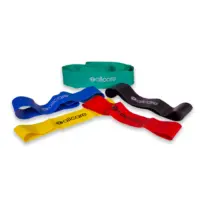
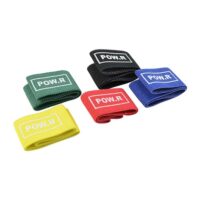
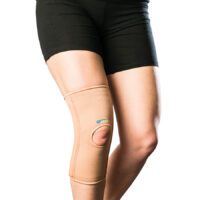
These knee support products are commonly used by our physiotherapists to help reduce strain, improve stability, and support your recovery at home.