
Groin Pain
Groin Pain
Groin pain can develop around the inner thigh, pubic bone, lower abdomen or front of the hip. It may follow a sudden sporting injury or build gradually with activity. Muscles, tendons, the hip joint and other structures can contribute, so the right management depends on the cause.


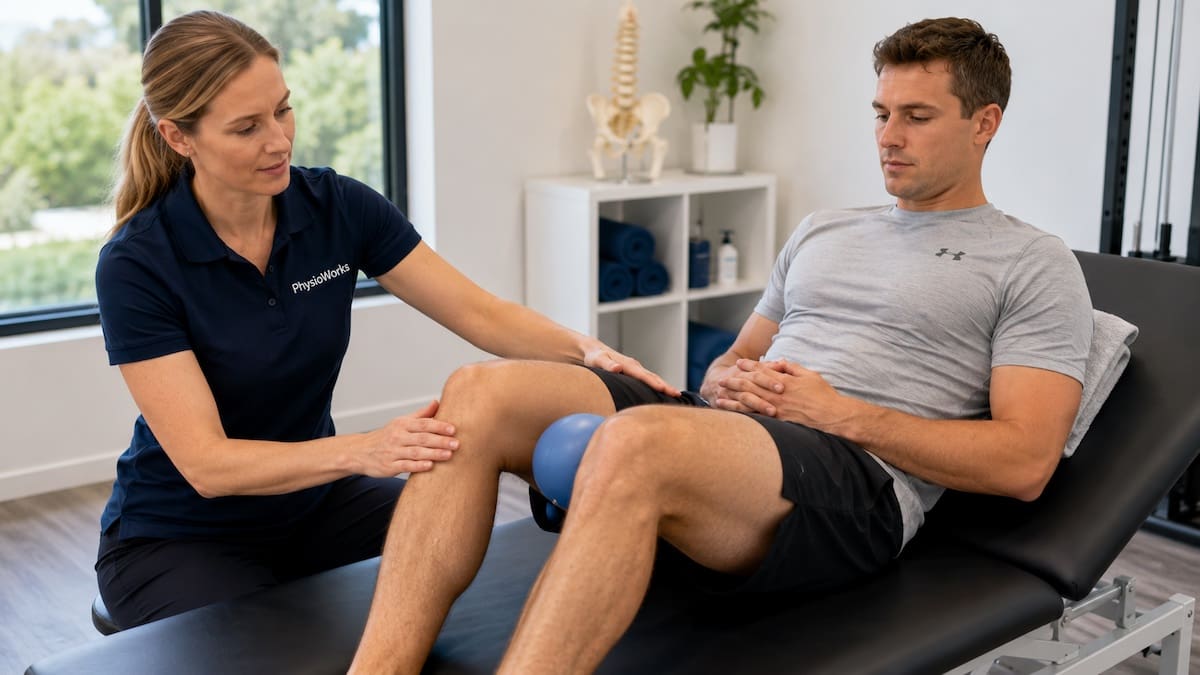
Groin pain can affect walking, stairs, running, kicking and changing direction. Pain may also come from outside the groin, including the lower back. For a broader comparison of possible pain sources, read our hip, groin and buttock pain guide.
What Are the Symptoms of Groin Pain?
Groin symptoms vary according to the structures involved and the demands placed on them. You may notice one or more of these patterns:
- Pain or tenderness along the inner thigh or near the pubic bone.
- Discomfort with running, kicking, sprinting or changing direction.
- Pain when squeezing the knees together or performing resisted movements.
- Deep front-of-hip pain, stiffness, pinching, clicking or catching.
- Pain with walking, stairs, standing on one leg or getting in and out of a car.
- Discomfort during abdominal exercises, twisting or getting up from sitting.
These symptoms overlap. No single symptom or self-test can reliably identify every cause.
What Causes Groin Pain?
Some problems follow a clear injury. Others develop as training, work or daily activity loads exceed the current capacity of the affected tissues.
Adductor Strain
A groin strain involves injury to an inner-thigh muscle, often during sprinting, kicking, a sudden change of direction or an overstretch. Pain may start suddenly, with local tenderness and weakness.
Hip Adductor Tendinopathy
Hip adductor tendinopathy can cause pain close to the pubic attachment of the adductor tendons. Symptoms often build with repeated running, kicking or strengthening loads and may settle when those demands are reduced.
Pubic and Inguinal-Related Groin Pain
Pain near the pubic bone or lower abdomen may involve several related structures. Osteitis pubis is one recognised source of pubic-region pain. In athletes, clinicians also consider inguinal-related and other defined groin pain patterns. These require assessment rather than self-diagnosis.
Femoroacetabular Impingement Syndrome (FAIS)
Femoroacetabular impingement syndrome may cause deep groin or front-of-hip pain during movements such as deep squatting, hip rotation or prolonged sitting. Imaging findings alone do not establish the syndrome; symptoms and examination matter too.
Hip Labral Problems
A hip labral tear affects the cartilage rim around the hip socket. Some people report deep groin pain, catching or clicking. However, these symptoms do not always mean the labrum is the cause.
Hip Osteoarthritis
Hip arthritis may present as groin pain with stiffness and reduced movement, particularly during walking, stairs or everyday activities.
Bone Stress Injury and Other Causes
Less common but important causes include a stress injury to the femoral neck or pelvis, a hernia, lower-back referred pain and medical conditions involving nearby organs. Deep pain that becomes worse with weight-bearing, particularly after a recent increase in running or impact load, needs prompt assessment for possible bone stress injury.
Does the Location of Groin Pain Help Identify the Cause?
The location provides clues, but it is not a diagnosis. Clinicians combine it with your injury history, activity response and examination findings.
Inner thigh
Adductor muscle or tendon pain is one possibility, especially when squeezing, running or kicking hurts.
Deep front of hip
Hip-joint conditions can cause pain with flexion, rotation, squatting or sitting, sometimes with stiffness.
Pubic bone or lower abdomen
Pubic-related, abdominal-wall or inguinal-region causes may need to be considered.
Pain spreading from the back or around the pelvis can further complicate the picture. An assessment helps distinguish these patterns.
When Is Groin Pain Serious?
Many activity-related groin problems improve with suitable load management and rehabilitation. However, not every groin symptom is a sports or muscle injury.
Arrange prompt medical review for unexplained severe or night pain, a suspected bone stress injury, a new lump, swelling, unusual urinary symptoms or symptoms that do not fit a typical musculoskeletal injury. See our hip and groin pain warning-sign guide for more information.
How Is Groin Pain Assessed?
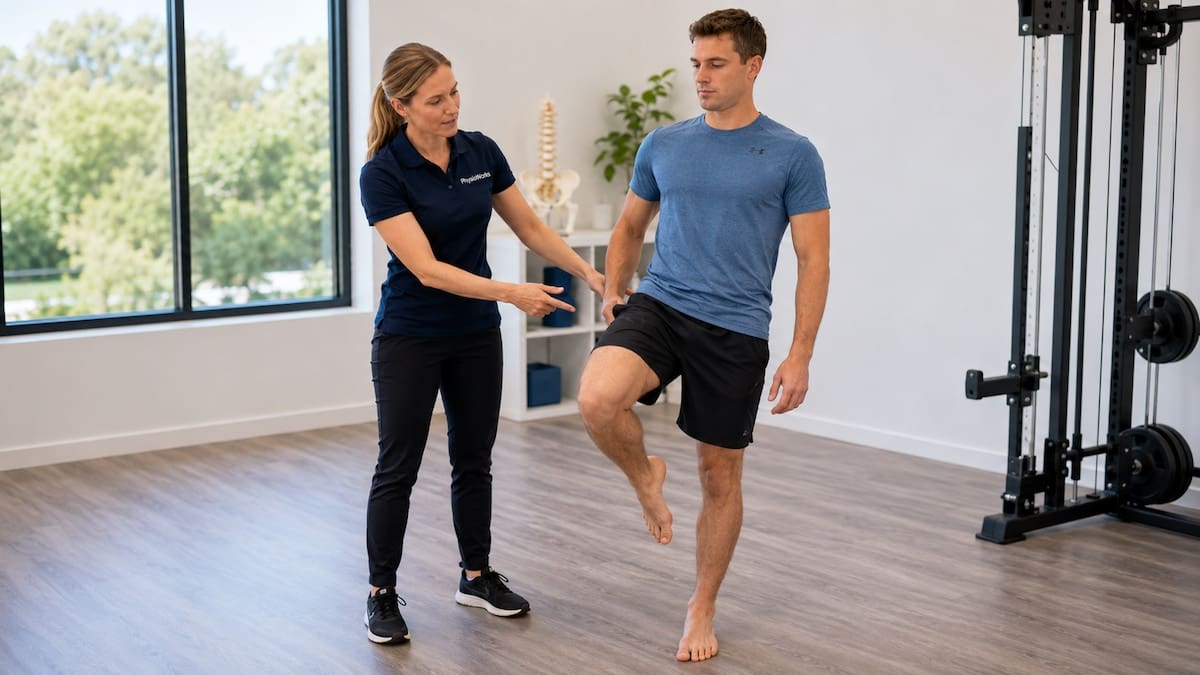
A physiotherapist will ask how your symptoms started, where you feel them and which activities change the pain. The assessment considers possible muscle, tendon, hip-joint, pubic, spinal and non-musculoskeletal causes.
Depending on your presentation, your physiotherapist may assess:
- Hip and lower-back movement and symptom response.
- Adductor, hip and trunk strength, including appropriate squeeze tests.
- Local tenderness around the inner thigh and pubic region.
- Walking, squatting, single-leg control and relevant sport movements.
- Training history, recent changes in workload and return-to-activity goals.
Not everyone needs imaging. An X-ray, ultrasound or MRI may be considered when a bone injury, another medical cause or an uncertain diagnosis makes it appropriate. Test findings need to be interpreted alongside symptoms and examination results.
How Is Groin Pain Treated?
Management depends on the cause and the activities you want to resume. Many musculoskeletal groin conditions benefit from a progressive rehabilitation plan rather than prolonged complete rest.
-
Settle the most aggravating loads
Temporarily adjust sprinting, kicking, cutting, impact training or heavy lifting when they repeatedly flare symptoms. Maintain comfortable activity where suitable.
-
Rebuild strength
Progress adductor and hip loading to suit your symptoms, starting capacity and diagnosis. Some people also benefit from exercises for the trunk muscles and deep hip rotators.
-
Restore movement and control
Use exercises matched to the movement limits, strength deficits or coordination demands identified during assessment. The program should reflect your condition and goals.
-
Progress towards your activity
Gradually rebuild walking, running, gym work, kicking and change-of-direction demands, with progression guided by symptoms, strength and function.
-
Review the response
If progress stalls or symptoms worsen, reassess the diagnosis, loading plan and need for medical investigation.
Can You Keep Exercising With Groin Pain?
Often, yes—provided a clinician has not identified a condition that needs rest, protection or urgent investigation. Choose activities that do not cause sharp or escalating pain, a limp, or a clear worsening later that day or the following day.
Hard stretching is not automatically helpful, particularly with an irritated or recently strained adductor. The aim is to restore tolerance to the movements and loads you need, not simply to stretch away pain.
When Should You See a Physiotherapist?
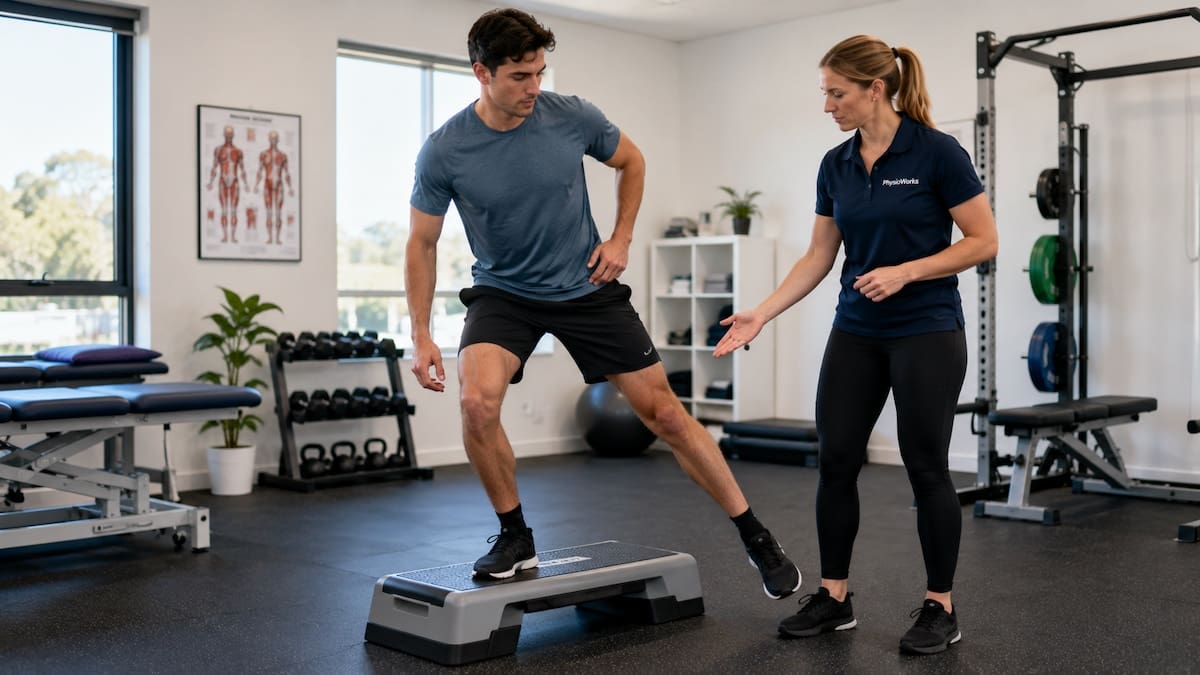
Consider an assessment when groin pain limits walking, work, exercise or sport; returns whenever you increase activity; persists despite sensible load changes; or makes you unsure how to progress. Seek medical care first when warning signs are present.
What to Do Next
A physiotherapist can assess the likely musculoskeletal causes of your groin pain and help plan appropriate strengthening, activity changes and return to sport or daily movement. Choose a PhysioWorks clinic and use its available booking or appointment-request pathway.
Choose your clinic and appointment pathway
Select a PhysioWorks clinic to continue to live booking, an appointment request or reception assistance.
Groin Products
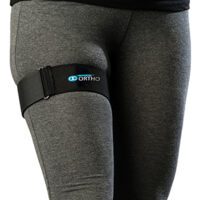
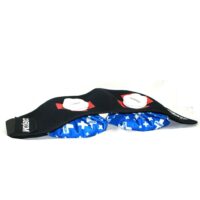
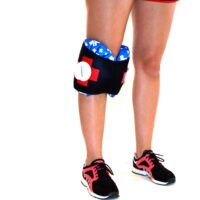
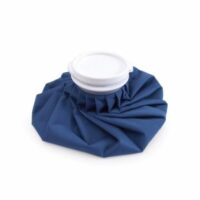
These groin products are commonly used by our physiotherapists to improve groin pain, strength, balance, proprioception, endurance and flexibility, plus assist home exercise programs.
-
-
 Exercise Equipment, Knee, Resistance Band
POW.R Fabric Mini Loop Bands
$12.00 – $55.00Select optionsQuick View -
-
-
-
-

- Liniments & Gels, Massage Liniments, Pain Management
Fisiocrem
$16.95 – $39.95Select optionsQuick View -
 Ankle, Back, Braces & Supports, Calf, Foot, Groin, Heel, Hip, Knee, Thigh, Walking
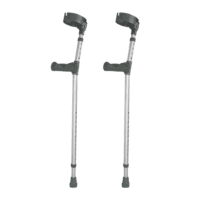
Forearm Crutches
$64.00Select optionsQuick View -
-
-
-
-
 Exercise Equipment, Resistance Band
AllCare Powerloop Bands
$24.95 – $79.95Select optionsQuick View



Groin Pain FAQs
What is the most common cause of groin pain?
Adductor muscle and tendon problems are common in active people, but hip-joint and pubic-region conditions can also cause groin pain. The likely cause depends on your age, symptoms, activity and injury history.
Can groin pain come from the hip joint?
Yes. Hip conditions such as femoroacetabular impingement syndrome, labral problems and osteoarthritis can cause pain felt in the groin. Symptoms and examination help determine whether the hip is contributing.
How long does groin pain take to recover?
Recovery varies with the diagnosis, injury severity and the loads you need to return to. A mild muscle strain may improve within weeks, while longer-standing tendon, pubic or hip problems may need a more gradual program.
Should I stop sport if I have groin pain?
Not necessarily. Some people can continue modified training while progressively rebuilding capacity. Stop activities that cause sharp or worsening pain or a limp, and seek assessment if symptoms persist. Suspected bone injury needs medical review before continuing impact activity.
Should I stretch groin pain?
Gentle mobility may suit some presentations, but forceful stretching can aggravate an injured muscle or irritable tendon. Loading and exercise choices should match the cause and stage of recovery.
Can physiotherapy help groin pain?
Physiotherapy may help identify musculoskeletal contributors, guide activity changes, develop strength and plan a graduated return to normal activities or sport. Results vary with the underlying condition.
References
- Thorborg K, Reiman MP, Weir A, et al. Clinical examination, diagnostic imaging, and testing of athletes with groin pain: an evidence-based approach to effective management. J Orthop Sports Phys Ther. 2018;48(4):239–249.
- Weir A, Brukner P, Delahunt E, et al. Doha agreement meeting on terminology and definitions in groin pain in athletes. Br J Sports Med. 2015;49(12):768–774.
- Nielsen MF, Ishøi L, Juhl C, Hölmich P, Thorborg K. Pain provocation tests and clinical entities in male football players with longstanding groin pain are associated with pain intensity and disability. Musculoskelet Sci Pract. 2023;63:102719.
- Thorborg K. Current clinical concepts: exercise and load management of adductor strains, adductor ruptures, and long-standing adductor-related groin pain. J Athl Train. 2023;58(7–8):589–601.
