
Deep Hip Rotators


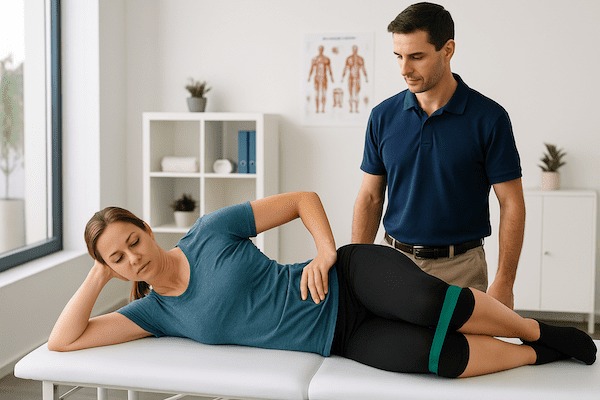
Deep hip rotators strengthening under physiotherapist guidance.
Deep hip rotators are small stabilising muscles that help keep your hip joint centred during walking, running, squatting, twisting, and single-leg balance. When they lose strength, timing, or endurance, hip control can drop away and place extra stress on nearby tendons, joints, and soft tissues.
These muscles sit within the broader hip pain cluster and can contribute to both lateral hip and groin pain. Although they sit deep beneath the gluteal muscles, they play an important role in pelvic control, movement quality, and load transfer through the lower limb.
Common signs your deep hip rotators may need attention
- pain on the outside of the hip or deep in the buttock
- hip or pelvic drift during walking, running, or stairs
- reduced confidence standing on one leg
- loss of control during squats, lunges, or step-downs
- hip flare-ups after sport, hills, or longer walks
What are the deep hip rotators?
The deep hip rotators are six small muscles that sit behind the hip joint under the larger gluteal muscles. They include the piriformis, gemellus superior, obturator internus, gemellus inferior, obturator externus, and quadratus femoris. Together, they help rotate the hip, steady the femoral head in the socket, and improve control during single-leg tasks.
Because these muscles work quietly in the background, people often overlook them until movement faults, weakness, or pain appear. Problems in this area may overlap with piriformis syndrome, deep buttock discomfort, or reduced hip stability during sport and exercise.
Why do deep hip rotators matter?
Deep hip rotators matter because they guide hip position under load. When they work well, they help the hip stay centred and stable during walking, running, stair climbing, and direction changes. When they do not, larger muscles often overwork and the joint may move less efficiently.
This pattern can increase load on nearby tissues and contribute to problems such as gluteal tendinopathy, Greater Trochanteric Pain Syndrome (GTPS), trochanteric bursitis, or front-of-hip irritation linked to a hip labral tear or FAIS.
What causes deep hip rotator weakness or poor control?
Deep hip rotator problems rarely come from one cause alone. More often, they build through pain, reduced activity, weakness after injury, training errors, or long periods of compensation around another hip problem. A painful hip often changes the way muscles switch on, which can reduce fine motor control around the joint.
Common contributing factors include recent hip injury, rapid increases in running or gym load, poor pelvic control, lower limb weakness, prolonged sitting, and ongoing compensation from lateral hip or groin pain. In some people, deep rotator underperformance sits beside a broader hip capacity problem rather than acting as the only source of symptoms.
How do physiotherapists assess deep hip rotators?
A physiotherapist assesses deep hip rotators by looking at movement quality, single-leg control, hip strength, rotation range, pain behaviour, and pelvic control under load. The goal is to work out whether the deep stabilisers are doing their job or whether surrounding muscles are compensating.
Assessment may include gait review, step-down tasks, squats, resisted rotation testing, and palpation of the buttock and lateral hip. For some people, real-time ultrasound retraining may help show muscle activation patterns and improve exercise accuracy when motor control is difficult to restore.
How can you improve deep hip rotators?
You improve deep hip rotators with progressive exercise that starts with control and builds toward strength, endurance, and function. Early rehab often targets low-load activation, pelvic positioning, and simple single-leg stability before progressing to stronger tasks such as step-downs, resisted rotation, split squats, and higher-load hip work.
Many people also benefit from broader strength training, hip stability exercises, and hip strengthening exercises because deep hip control works best when the trunk, pelvis, gluteals, and lower limb all contribute.
Rehab usually follows three stages
- Settle symptoms: reduce aggravating loads and restore comfortable movement.
- Rebuild control: improve hip positioning, balance, and low-load muscle activation.
- Reload function: progress to strength, stairs, hills, running, gym work, and sport-specific tasks.
Load management for deep hip rotators
Load management matters when these muscles are irritated or underperforming. First, reduce the activities that flare symptoms. Next, rebuild control and strength with manageable exercise. Then, progress back to hills, stairs, running, gym work, or sport in stages.
This reduce, rebuild, then progress approach helps the hip settle while still moving forward. It also lowers the risk of repeated flare-ups that happen when people rest too long or return to higher-load activity before control comes back.
When should you seek help for deep hip rotators?
You should seek help if hip or buttock pain keeps returning, walking or stairs feel unstable, or you cannot load one leg with confidence. Ongoing symptoms can reflect a deeper hip control problem, especially when self-management has not settled things.
Early assessment can also help separate deep hip rotator problems from other causes of hip pain such as GTPS, labral irritation, groin-related pain, or lumbar referral. A clearer diagnosis makes your exercise program more accurate and more efficient.
Deep Hip Rotators FAQs
Can weak deep hip rotators cause hip pain?
Yes. Weak or poorly coordinated deep hip rotators can reduce hip stability and increase stress on surrounding tissues. This may contribute to lateral hip pain, deep buttock pain, groin pain, or overload in structures such as the gluteal tendons.
Do deep hip rotators help with running and stairs?
Yes. These muscles help control the pelvis and guide hip position during single-leg tasks such as running, stair climbing, lunging, and stepping down. If they do not work well, you may notice hip drop, twisting, poor balance, or reduced confidence.
Are the deep hip rotators the same as the piriformis?
No. The piriformis is one of the deep hip rotators, but it is only one muscle in the group. The other muscles also contribute to hip rotation and joint control.
What exercises help deep hip rotators most?
The best exercises depend on your symptoms and current control. Early-stage rehab may use low-load activation and pelvic control drills. Later stages often include resisted hip rotation, step-downs, split squats, balance work, and progressive strengthening.
Can deep hip rotator problems contribute to groin pain?
They can contribute. Poor hip control may change how forces move through the front of the hip and groin, especially during running, kicking, twisting, or sport. However, groin pain can also come from adductors, hip flexors, FAIS, labral irritation, or other joint and soft tissue sources.
How long does it take to improve deep hip rotators?
That depends on pain levels, fitness, and how long the issue has been present. Some people notice better control within a few weeks, while others need a longer strengthening phase. The key is steady progression and matching load to what the hip can tolerate.
What to do next
If you suspect poor hip control is contributing to your symptoms, book a physiotherapy assessment. A tailored program can identify whether your deep hip rotators, gluteals, groin muscles, or joint mechanics need the most attention.
Early guidance may help reduce flare-ups, improve movement confidence, and build a stronger return to walking, gym, work, or sport.
Book your appointment – 24/7
Choose your preferred PhysioWorks clinic and book online.
Hip Products
These hip products are commonly used by our physiotherapists to improve strength, posture, movement, plus assist home exercise programs.
-
 Ankle, Back, Braces & Supports, Calf, Foot, Groin, Heel, Hip, Knee, Thigh, Walking
Forearm Crutches
$64.00Select optionsQuick View - Liniments & Gels, Massage Liniments, Pain Management
Fisiocrem
$13.98 – $35.50Select optionsQuick View -
-
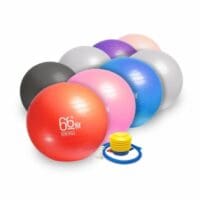
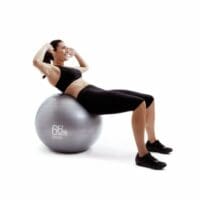 Exercise Balls, Back, Exercise Equipment, Knee, Shoulder
66fit Exercise Balls | Core & Rehab Stability Ball
$32.00 – $57.00Select optionsQuick View -
-
-
-
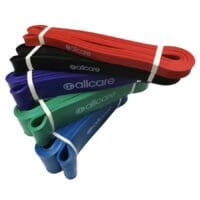
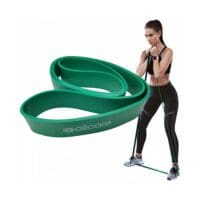 Exercise Equipment, Resistance Band
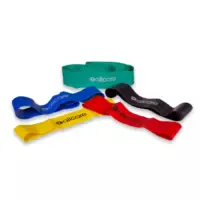
AllCare Powerloop Bands
$22.00 – $65.00Select optionsQuick View - Exercise Equipment, Resistance Band
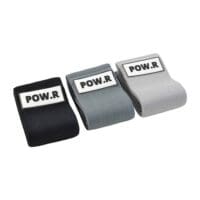
POW.R Wide Fabric Loop Resistance Band
$14.95 – $49.95Select optionsQuick View -
-
 Exercise Equipment, Knee, Resistance Band
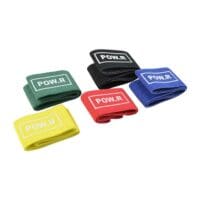
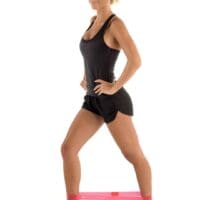
POW.R Fabric Mini Loop Bands
$12.00 – $55.00Select optionsQuick View -
-
-
-
-




Follow PhysioWorks
Get free physiotherapy tips, exercise videos, recovery advice, and blog updates.
 |  |  | B |  |  |
References
- Meinders E, Pizzolato C, Gonçalves B, Lloyd DG, Saxby DJ, Diamond LE. Activation of the deep hip muscles can change the direction of loading at the hip. J Biomech. 2022;135:111019.
- Kemp JL, Mosler AB, Hart HF, et al. Improving function in people with hip-related pain: a systematic review and meta-analysis of physiotherapist-led interventions for hip-related pain. Br J Sports Med. 2020;54(23):1382-1394.
- Grimaldi A. Current and future advances in practice: tendinopathies of the hip. Rheumatology Advances in Practice. 2024;8(2):rkae022.
- Weber AE, Bell JA, Bolia IK. Hip Abductor and Peritrochanteric Space Conditions. Clin Sports Med. 2021;40(2):311-322.
- Short S, Short G, Lehman G, Friesen J, Johnson B. A Critical Review of Trunk and Hip Exercise Prescription: Applying Evidence for a Modern Approach. Int J Sports Phys Ther. 2025;20(3):448-475.